 Japan
JapanAbout
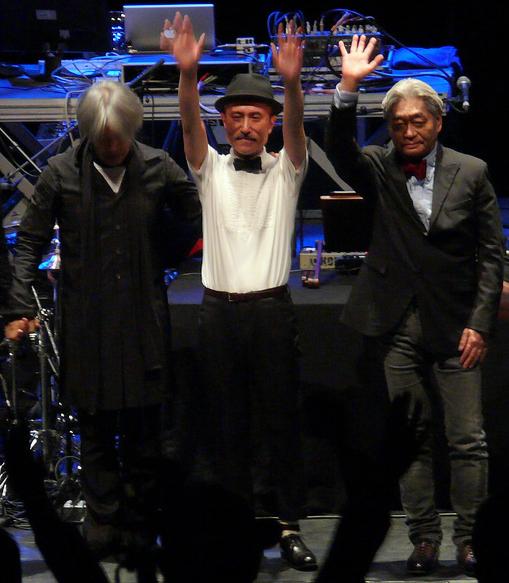
Yellow Magic Orchestra is a Japanese electronic music group.
They are celebrated pioneers of synth-pop and electronic music, renowned for their innovative use of synthesizers, samplers, and drum machines like the Roland TR-808. Their distinctive sound, blending Japanese traditional music, funk, disco, and the electronic experiments of Kraftwerk, has influenced countless artists. YMO released seven studio albums between their debut and final album, evolving their sound over time. Their tracks have been sampled by major artists, and their song "Behind the Mask" was covered by Michael Jackson. They have achieved significant global success, including selling 400,000 copies of a single in the U.S. and reaching the UK Top 20. YMO continues to be recognized for their groundbreaking contributions to electronic music, solidifying their legacy as architects of the genre.
Formation Story
Yellow Magic Orchestra (YMO) was formed in Tokyo, Japan, in 1978, bringing together three distinct and already established figures in the Japanese music scene. Unlike traditional audition-based groups, YMO emerged from a series of individual collaborations among its future members. Haruomi Hosono, the eldest (born 1947), had a rich musical history, co-founding the influential folk-rock band Happy End and also playing in the psychedelic band Apryl Fool, before venturing into electronic and exotica sounds. Yukihiro Takahashi (1952–2023) was the accomplished drummer for Sadistic Mika Band, a successful act that achieved international recognition and even toured with Elton John. Ryuichi Sakamoto (1952–2023) was a classically trained pianist and composer, who was already experimenting with cutting-edge synthesizers like Buchla, Moog, and ARP at the Tokyo National University of Fine Arts and Music, integrating them into his compositions. Their paths decisively converged in 1978 when Hosono invited Takahashi and Sakamoto to contribute to his solo album Pacific. This period also saw Takahashi and Sakamoto collaborating on Takahashi's Saravah! and Sakamoto's Thousand Knives, solidifying their creative bond.
The immediate and palpable chemistry among the trio during these solo projects led Hosono to propose forming a new group. They decided on the name Yellow Magic Orchestra, a clever and provocative choice that served as a nod to the "yellow-peril" stereotype while simultaneously celebrating the "magic" of electronic music. To fully realize their vision of a technologically advanced sound, which drew from diverse influences including Japanese traditional music, funk, disco, and the electronic experiments of pioneers like Kraftwerk and Isao Tomita, they enlisted Hideki Matsutake. Matsutake, a skilled programmer and former assistant to Isao Tomita himself, was brought in to expertly handle the sequencers and computers essential to their unique sonic landscape. With the lineup complete, their eponymous debut album, Yellow Magic Orchestra, was recorded quickly and officially released on November 25, 1978.
The album featured the groundbreaking single "Computer Game / Firecracker." The track "Computer Game" was particularly innovative, uniquely incorporating sound effects directly from the immensely popular arcade game Space Invaders, which had just exploded in popularity worldwide. This pioneering use of game audio required special permission from its developer, Taito. Blending these distinctive arcade bleeps with infectious disco rhythms, the single became an unexpected and significant hit. It sold an impressive 400,000 copies in the U.S. and successfully reached the UK Top 20, effectively launching Yellow Magic Orchestra onto the world stage and marking their definitive breakthrough into international recognition.
Members

Musical Style
YMO's music was a radical fusion of technology and tradition. They combined synthesizers, drum machines, and sequencers with Japanese pentatonic scales and traditional instruments like the koto. Their early work, especially on Yellow Magic Orchestra and Solid State Survivor, was upbeat and playful, with catchy melodies and robotic vocals processed through a vocoder. Songs like "Rydeen" (named after a character from the manga Mazinger Z) and "Computer Game" sounded like a video game come to life.
As the 1980s began, YMO's sound grew darker and more experimental. BGM (1981) made heavy use of the Roland TR-808 drum machine, whose booming bass drum and crisp snares became a signature. The album's lyrics tackled themes of consumerism and technology. Technodelic (1981) pushed further into sampling and tape loops, creating a dense, collage-like sound. On Naughty Boys (1983), the band returned to a more pop-oriented style, but with a cynical edge. Throughout their career, YMO balanced accessibility with avant-garde experimentation, influencing genres from synthpop to techno to ambient.
Discography
| Title | Year |
|---|---|
| Technodon | 1993 |
| Naughty Boys | 1983 |
| Technodelic | 1981 |
| BGM | 1981 |
| X∞Multiplies | 1980 |
| Public Pressure | 1980 |
| Solid State Survivor | 1979 |
| Yellow Magic Orchestra | 1978 |
Tours
World Tour 1980
1980
1993 Reunion Tour
1993 · 2 shows
2007 Live Earth
2007 · 1 shows
Cultural Impact
YMO's impact on music is vast. They are often credited as pioneers of synthpop and electro, and their use of the TR-808 helped define the sound of hip-hop and dance music for decades. In Japan, they broke down barriers between popular and experimental music, paving the way for artists like Cornelius and Capsule. Their fashion sense, with matching yellow suits and futuristic aesthetics, influenced visual kei and Japanese pop culture.
Internationally, YMO introduced Western audiences to Japanese electronic music. Their appearance on Soul Train in 1980 was a landmark, exposing them to a broad American audience. Michael Jackson's cover of "Behind the Mask" (released posthumously in 2010) and samples by hip-hop producers showed their reach. The band's influence can be heard in the work of Kraftwerk's successors, Daft Punk, and the entire synthwave genre. In 2007, Rolling Stone hailed their Live Earth reunion as the festival's best, underscoring their enduring relevance. Their 1993 reunion tour included two shows at the Tokyo Dome drawing 100,000 people, with The Orb as opening act.
Fandom Culture
YMO's fandom, while not as organized as modern K-pop fandoms, was passionate and dedicated. In Japan, fans flocked to their concerts, and the band's albums regularly topped the Oricon charts. The group's use of a yellow logo and futuristic imagery inspired fan art and cosplay. Notable fan moments include the 1993 Tokyo Dome concerts, which drew 100,000 people over two nights, with fans waving glow sticks and singing along to every song. After the band's hiatus, a dedicated online community kept their legacy alive, sharing bootlegs and rare recordings. The deaths of Takahashi and Sakamoto in 2023 prompted global tributes from fans and fellow musicians. The band also performed at the Fuji Rock Festival in 2011 and the No Nukes 2012 concerts.
Awards & Accolades
View 4 records, honours and achievementsMilestones
Formation and debut album release
Solid State Survivor tops Japanese charts for 55 weeks
First live performance with Roland TR-808 at Nippon Budokan
Band goes on indefinite hiatus
Reunion tour and album Technodon
Performs at Live Earth in Kyoto
Deaths of Yukihiro Takahashi and Ryuichi Sakamoto
Fame & Fandom (iFAMOUS Rankings)
Trivia
YMO's debut single "Computer Game" used actual sound effects from the arcade game Space Invaders. The band had to get permission from the game's manufacturer, Taito, to use the sounds. Hideki Matsutake, the group's programmer, was known as the "fourth member" of YMO. He wrote the sequencer parts and operated the computers during live shows. The Roland TR-808 drum machine made its first public live appearance at YMO's 1980 concert at Nippon Budokan. The band's song "Rydeen" was named after a character from the manga Mazinger Z. YMO's album Solid State Survivor spent 55 weeks on the Japanese charts, a record at the time for an electronic album. The band is said to be the first to use the Vocoder VP-330 and the first to release an album that heavily used samples and loops.
Keywords
Sources
Quick Facts
- Formed
- 1978
- Origin
- Tokyo, Japan
- Label
- Alfa Records, EMI Music Japan, Sony Music Entertainment Japan
- Genres
- synth-pop, J-pop, avant-garde, exotica, electro, electronic rock
- Members
- 3
- Status
- Inactive
Group Info
- Formed
- 1978
- Debut
- 1978-11-25
- Debut Song
- Computer Game / Firecracker
- Origin
- Tokyo, Japan
- Label
- Alfa Records, EMI Music Japan, Sony Music Entertainment Japan
- Status
- Disbanded
Social Media
Also Known As
Join the community
fans discussing