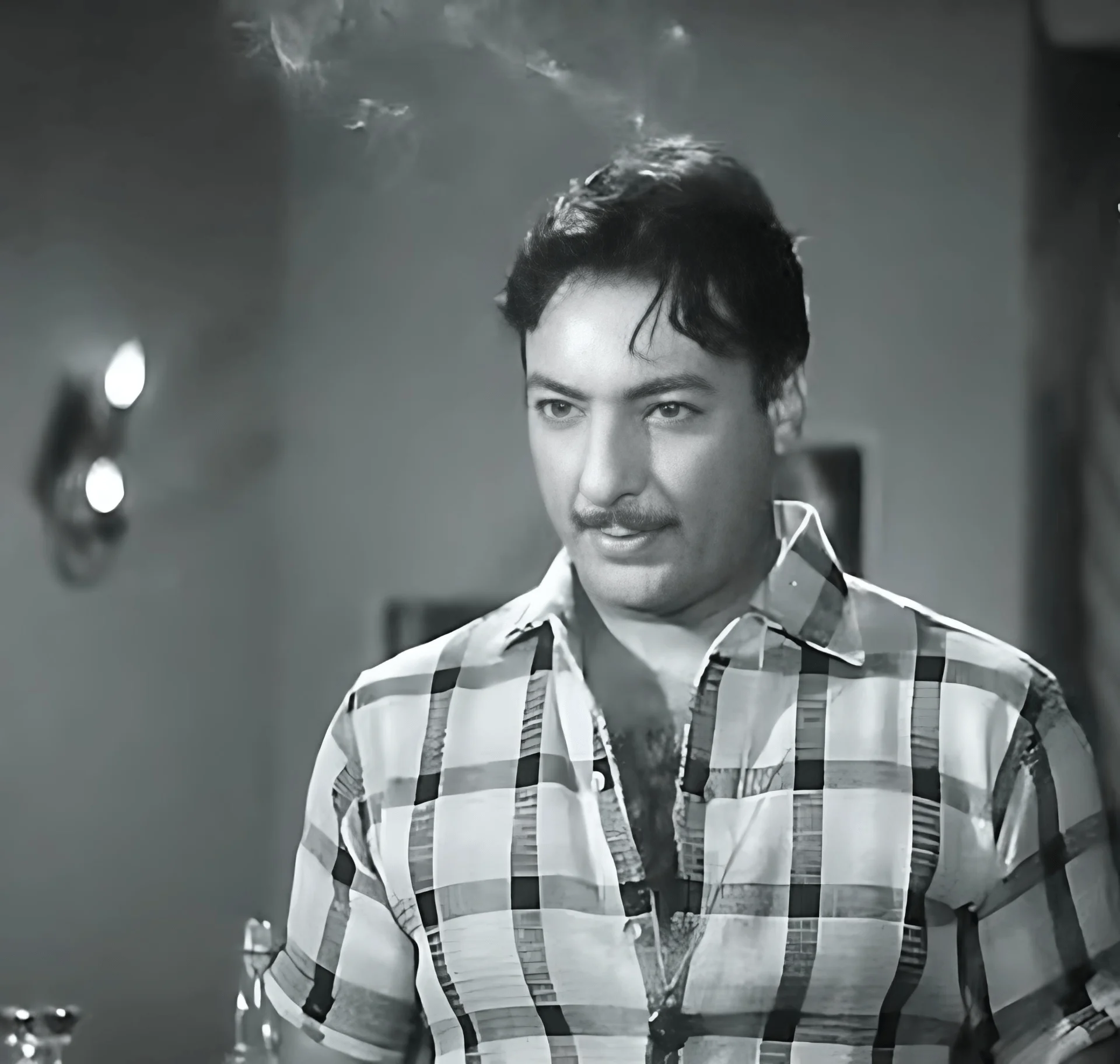
Rushdy Abaza
 Egypt
EgyptAlso known as: Rushdy Said Bughdady Abaza, Rushdy Saiid Bughdadi Abaza
Birthday
August 3, 1926
Birth Sign
Leo
Birthplace
Zagazig, Egypt
Age
Died at 53
About
Rushdy Abaza was an Egyptian actor, singer, and screenwriter who became one of the most beloved figures in Arab cinema. Born into the aristocratic Abaza family, he carried himself with a natural elegance that earned him the nickname "Prince of Egyptian Cinema." Over a career that lasted more than three decades, he starred in over 150 films and numerous television productions, moving effortlessly between romantic leads, action heroes, and complex dramatic roles.
His performances in classics such as The Leech (1956) and The Night of Counting the Years (1969) remain benchmarks of Egyptian filmmaking. He also appeared in the Hollywood epic The Ten Commandments. Abaza's charisma and versatility made him a favorite among audiences and directors alike, and his films continue to be broadcast across the Arab world today.
He died on July 27, 1980, in Cairo, after a battle with brain cancer, at the age of 53. His legacy endures through the enduring popularity of his work and the admiration of fans who still celebrate his contributions to cinema.
Early Life & Background
Rushdy Saeed Baghdadi Abaza was born on August 3, 1926, in Zagazig, a city in Egypt's Sharkia Governorate. His father, a police officer, and his Italian mother, Tereza Luigi, gave him a distinctive Mediterranean look that set him apart. The Abaza family, of Circassian origin, was one of Egypt's most prominent aristocratic families, and Rushdy grew up with a sense of privilege and refinement.
He attended St. Mark's College in Alexandria, a prestigious institution that shaped his polished demeanor. After completing his baccalaureate, he initially pursued a career in law, but the lure of the arts proved stronger. He began acting in the late 1940s, taking on small roles in Egyptian films while honing his craft. His breakthrough came in the early 1950s when his striking looks and natural charm caught the attention of directors, leading to more substantial parts.
By the mid-1950s, he had established himself as a rising star, but it was his performance in The Leech (1956) that truly catapulted him into the spotlight. The film showcased his ability to portray complex, morally ambiguous characters, setting the stage for a career that would make him a household name.
Career Growth
Following the success of The Leech, Rushdy Abaza became one of the most sought-after actors in Egyptian cinema. He starred in a string of hits throughout the 1960s, including The Night of Counting the Years (1969) and The Mummy (1969), both directed by Shadi Abdel Salam. These films are now considered masterpieces of Arab cinema, and Abaza's performances were praised for their depth and intensity.
He also appeared in the Hollywood production The Ten Commandments, directed by Cecil B. DeMille, which gave him international exposure. In addition to his film work, Abaza was a talented singer and screenwriter, contributing to several projects behind the scenes. His television appearances in the 1970s further cemented his popularity with a new generation of viewers.
Despite his untimely death in 1980, his films have remained in circulation, regularly shown on Arab television networks and streaming platforms. His influence can be seen in the work of countless actors who cite him as an inspiration, and he is consistently ranked among the greatest performers in the history of Egyptian cinema.
Career Timeline
Public Image & Style
Rushdy Abaza's public image was that of the quintessential leading man: suave, sophisticated, and effortlessly charismatic. He was often compared to Hollywood stars like Clark Gable and Tyrone Power, and his Mediterranean looks made him a heartthrob across the Arab world.
His fashion sense was ahead of its time, and he popularized the "Abaza look", tailored suits, silk scarves, and a well-groomed mustache. He was equally comfortable in action roles, where he performed many of his own stunts, and in romantic dramas, where his intense gaze could melt hearts.
Fans admired his versatility and his ability to bring depth to every character. He was also respected by critics for his willingness to take on challenging roles that explored social issues. His off-screen persona was that of a bon vivant, but he was also known for his professionalism and dedication to his craft.
Fame & Fandom (iFAMOUS Rankings)
Rushdy Abaza commands a legacy defined not by digital mobilization but by the enduring, intergenerational reverence of an audience that remembers the Golden Age of Egyptian cinema. His admirers do not operate as a formalized collective with a specific name or organized campaigns; instead, they manifest as cultural custodians who periodically commemorate his death anniversary and celebrate his films as timeless classics rather than products of modern marketing. This absence of a structured fandom reflects the era in which he lived, where interaction was limited to the screen and his personal charisma alone sustained his status as a romantic icon. Despite the lack of contemporary fan clubs or social media drives, his influence persists through retrospective tributes and the continuous broadcast of his work across Arab television networks. The iFANN Global Fame Engine has evaluated this figure based on current consumption signals and historical data. Rushdy Abaza does not currently hold a placement in the published rankings (Global Top 1,000 or a Top-100 scope list). While no specific fandom name exists for his supporters, the scale of his recognition remains significant enough to secure a position within the global top tier of historical figures.
Interesting Facts and Legends
Rushdy Abaza was renowned for his impeccable style, frequently wearing tailored suits and sporting a distinctive mustache that became his trademark. An accomplished horseman, he enjoyed hunting, hobbies befitting his aristocratic upbringing. He spoke Arabic, Italian, and French fluently, a skill that served him well in his international work. His Italian heritage was a source of pride, often referenced in interviews. A lesser-known fact is his close friendship with King Farouk, with whom he shared a passion for fast cars and nightlife. Before his acting career took off, he worked briefly as a model appearing in advertisements for luxury goods. His nickname, "Prince of Egyptian Cinema," reflected both his noble lineage and his regal on-screen presence. Legends surrounding him include the story that he was the primary choice for the role of Lawrence of Arabia before Omar Sharif accepted it, a tale often cited to highlight his near-miss with global superstardom. Additionally, he was universally known as the "Don Juan of Egyptian Cinema" due to his charming roles and high-profile personal life involving five marriages. His tragic death from brain cancer in 1980 at age 53 cut short a career spanning over 100 films, leaving behind a mythos built on romance and untimely loss.
Family & Personal Life
Rushdy Abaza was born into the distinguished Abaza family, known for their political and social influence in Egypt. His father, Saeed Pasha Abaza, served as a police officer, while his mother, Tereza Luigi, was of Italian descent. He had several siblings, though details about them are scarce.
He was married three times, each to a legendary figure in Arab entertainment: Taheyya Kariokka, Samia Gamal, and Sabah. The marriages were high-profile and often made headlines. He did not have any children from these unions, a fact that he reportedly regretted.
In his later years, he lived in a villa in Cairo's upscale Zamalek district, where he entertained friends and colleagues. He was known for his hospitality and love of good food, often hosting lavish dinner parties.
Notable Connections
Rushdy Abaza was associated with some of the most iconic figures in Arab entertainment. His wives, Taheyya Kariokka, Samia Gamal, and Sabah, were all legendary performers in their own right. He also worked with renowned directors such as Shadi Abdel Salam and Youssef Chahine, and his co-stars included Omar Sharif and Faten Hamama. His aristocratic family background connected him to political and social circles, and he counted King Farouk among his acquaintances.
Relationships & Dating History
Rushdy Abaza's personal life was as dramatic as his on-screen roles. He was married three times, each to a celebrated entertainer. His first notable marriage was to Taheyya Kariokka, a renowned belly dancer and actress. The marriage was short-lived but kept him in the public eye.
He then married Samia Gamal, another iconic dancer and actress of Egyptian cinema's golden age. This union was also brief, ending in divorce. His third and final marriage was to Sabah, the legendary Lebanese-Egyptian singer and actress. Their relationship was highly publicized, but it too ended in divorce.
At the time of his death in 1980, Abaza was not married, having divorced Sabah several years earlier. He had no children from any of his marriages.
- MarriedTaheyya Kariokka1955 - 1957Married to the renowned belly dancer and actress; ended in divorce.
- MarriedSamia Gamal1958 - 1960Married to the famous dancer and actress; marriage was brief.
- MarriedSabah1963 - 1968Married to the iconic singer and actress; divorced.
Death & Aftermath
Died
July 27, 1980 (aged 53)
Death Place
Unknown
Cause of Death
Brain cancer
Rushdy Abaza, a prominent Egyptian actor, singer, and screenwriter, passed away in 1980 at the age of 53 following a battle with brain cancer. Historical accounts regarding the precise date of his death vary between late July and late August, with some sources citing August 27 while others reference dates in late July. The specific hospital or city where he died remains unrecorded in the search results, though his career was centered in Cairo.
Public reaction to his passing has been characterized by retrospective tributes rather than immediate legal proceedings or disputes over the cause of death. Major media outlets have published anniversary features remembering him as a handsome, sophisticated, and charismatic figure who represented one of the brightest stars in classical cinema. These commemorations highlight his fluency in five languages and his international work in Italy, cementing his status as a legend of Egypt's Golden Age of Cinema.
The legacy of Rushdy Abaza continues through the enduring presence of his filmography on streaming platforms like Apple TV and IMDb, which list extensive works including The Ten Commandments and Ghuroob wa Shurooq. His life and work remain subjects of cultural discussion and historical appreciation within the Egyptian film community.
Net Worth (Estate Value)
$5 Million
iFANN Editorial Team estimate
The estate of Rushdy Abaza continues to generate revenue from the enduring popularity of his films, which remain staples on Arab television networks and streaming platforms. Per iFANN's editorial analysis, the net worth of his estate as of 2026 is estimated at $5 Million. This valuation is derived from royalties, licensing fees, and the sale of his image rights. His extensive filmography, comprising over 100 films, ensures a steady stream of income. Additionally, his work as a singer and screenwriter contributes to the estate's revenue. While specific figures are not publicly disclosed, the ongoing interest in his legacy suggests a stable financial standing.
Awards & Accolades
View 2 records, honours and achievementsKnown For
The Leech
1956 · Actor
The Night of Counting the Years
1969 · Actor
The Mummy
1969 · Actor
The Ten Commandments
1956 · Actor
Keywords
Sources
Quick Facts
- Profession
- actor, singer, screenwriter
- Born
- August 3, 1926
- Birthplace
- Zagazig, Egypt
- Died
- July 27, 1980
- Death Place
- Cairo, Egypt
- Gender
- Male
- Spouse
- Taheyya Kariokka, Samia Gamal, Sabah
- Birth Sign
- Leo
Personal Details
- Full Name
- Rushdy Saeed Baghdadi Abaza
- Spouse
- Taheyya Kariokka, Samia Gamal, Sabah
- Education
- St. Mark's College, Alexandria
Filmography
150
Total
150
Film
10
TV
Frequently Asked Questions
What was Rushdy Abaza's cause of death?
Who was Rushdy Abaza married to?
How many films did Rushdy Abaza appear in?
Why was Rushdy Abaza called the 'Prince of Egyptian Cinema'?
What was Rushdy Abaza's nationality and heritage?
Similar People
Join the community
fans discussing