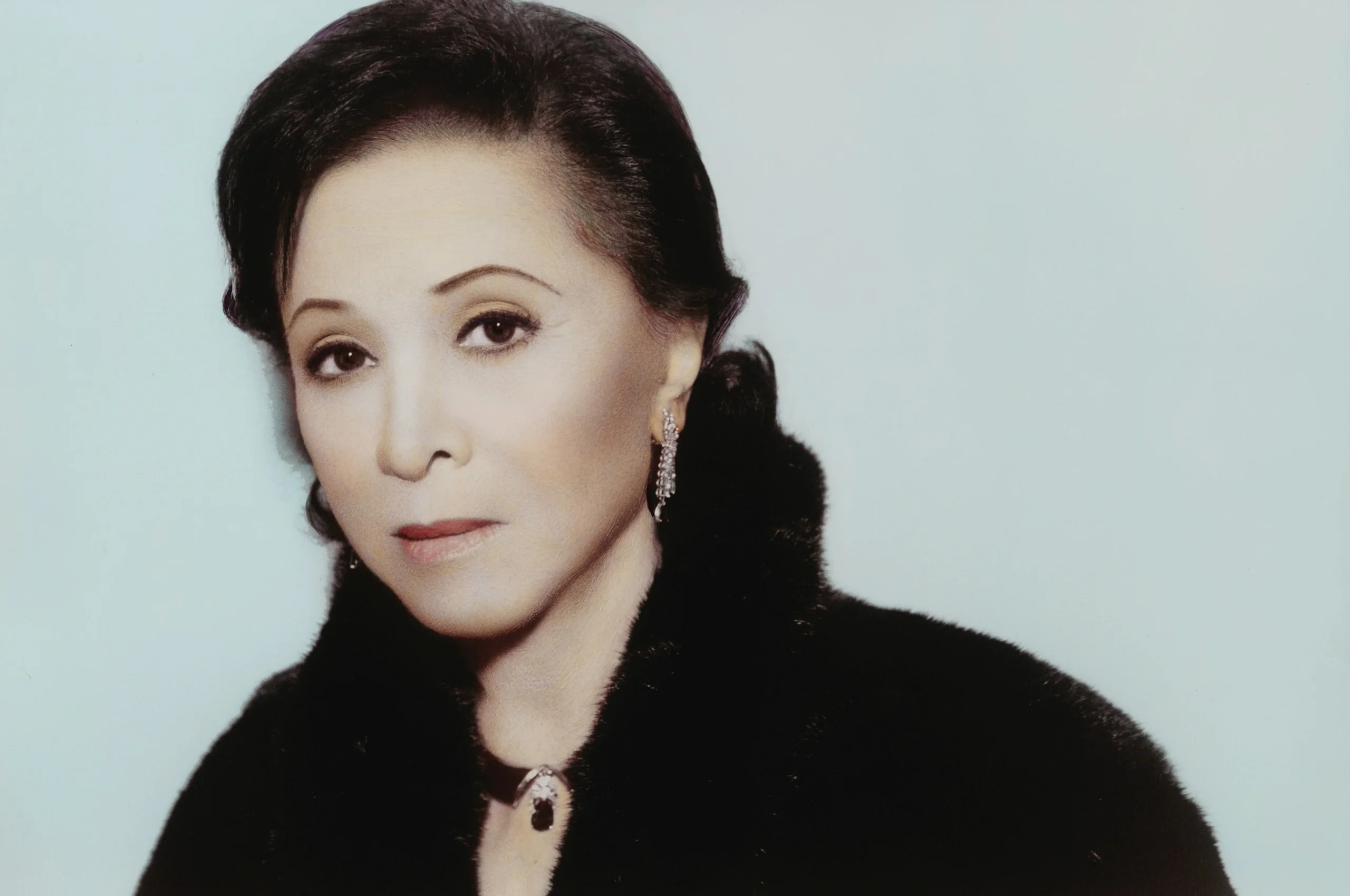
Faten Hamama
 Egypt
actor•film actor•film producer
Also known as: Faten Ahmed Hamama, Lady of the Arabic Screen, Sittat al-Shash al-Arabi
Birthday
May 27, 1931
Birth Sign
Sagittarius
Birthplace
El-Senbellawein, Dakahlia Governorate, Egypt
Age
Died at 83
Height
5 ft 5 in (1.65 m)
About
Faten Hamama, universally revered as the "Lady of the Arabic Screen" (Sittat al-Shash al-Arabi), was an Egyptian actress and producer whose career spanned nearly eighty years, transforming her into a towering cultural icon in Egypt and the Arab world. Born on May 27, 1931, in El-Senbellawein, she made her screen debut at the remarkably young age of seven in 1939. Her journey began in the small town of El-Senbellawein before she moved to Cairo to train at the Higher Institute of Dramatic Arts. Throughout her life, she became a towering figure in Arabic cinema, starring in over 100 films and television series that challenged societal norms regarding women's roles.
Her legacy is defined by a profound commitment to socially relevant storytelling, portraying women who evolve from submissive figures into independent individuals. She collaborated frequently with director Youssef Chahine and actor Omar Sharif, creating a cinematic chemistry that defined an era of Arabic cinema. In 2000, after a seven-year hiatus, she returned to the screen with the highly anticipated television series Wageh El Amar (Face of the Moon). Her contributions were formally recognized when nine of her films were listed among the top hundred films in Egyptian cinema history by the Cairo International Film Festival in 1996.
Early Life & Background
Faten Hamama was born Faten Ahmed Hamama on May 27, 1931, in El-Senbellawein, a city in the Dakahlia Governorate of Egypt. Her family lived modestly, but the arts played a central role in her upbringing. She attended the Higher Institute of Dramatic Arts in Cairo, where she formalized her training and honed her craft before fully committing to the silver screen. Before her rise to fame, Hamama navigated the Egyptian film industry from the bottom up, starting with small roles that gradually evolved into leading parts. Her early life was marked by a deep engagement with the arts, and she possessed a natural talent that caught the attention of directors even as a child.
Her first appearance on screen occurred in 1939 when she was just seven years old in the film Al-Badil. This early start was unusual for the time, yet it set the stage for a lifelong dedication to acting. During the 1940s and early 1950s, she appeared in various supporting roles, building a reputation for reliability and emotional depth. These formative years allowed her to study the nuances of performance without the pressure of carrying a film alone. She worked alongside established stars of the era, learning the ropes of the industry and developing the discipline that would later define her public image. By the late 1950s, she had transitioned from bit parts to becoming a sought-after leading lady, ready to take on the complex characters that would make her a legend.
Career Growth
A pivotal breakthrough occurred in 1958 with the film The Blazing Sun (Al-Qamar fi Al-Layl), which established her as a serious dramatic actress capable of handling heavy themes. However, her most culturally significant role came in 1963 with Youssef Chahine's masterpiece El Bab El Maftouh (The Open Door). In this film, she portrayed Laila, a woman who evolves from a submissive housewife into an independent, self-determined individual. This narrative shift is widely credited by historians and critics as a catalyst for Egypt's feminist awakening, sparking extraordinary public debate and cementing her status as a symbol of female empowerment. Throughout the 1960s and 1970s, she collaborated frequently with director Youssef Chahine and actor Omar Sharif, creating a cinematic chemistry that defined an era of Arabic cinema.
In 2000, after a seven-year hiatus from acting, she made a highly anticipated return with the television series Wageh El Amar (Face of the Moon). Her contributions were formally recognized in 1996 when nine of her films were listed among the top hundred films in Egyptian cinema history by the Cairo International Film Festival. In 2000, the Egyptian Writers and Critics Association named her the "Star of the Century." Her prolific output included collaborations with other legends like Rushdy Abaza and Shukry Sarhan, solidifying her place as the premier actress of her generation. Even after her death, her films continue to be re-released and studied, ensuring her cultural impact remains vibrant.
Career Timeline
Public Image & Style
Faten Hamama stood approximately 1.65 meters (5 feet 5 inches) tall. She was known for her elegant, timeless style, often appearing in traditional Egyptian attire or sophisticated Western fashion depending on the role. Her public image was one of dignity, strength, and artistic integrity. She was portrayed by the media as a pioneer who broke barriers for women in the entertainment industry and society at large. Her content and persona were characterized by a serious, dramatic tone, reflecting her commitment to socially relevant storytelling. She was seen as a mother figure to the nation, embodying the struggles and aspirations of real Egyptian women.
Fame & Fandom (iFAMOUS Rankings)
The streets of Cairo fell silent in January 2015 as thousands gathered to mourn Faten Hamama, a woman whose face had graced the silver screen for over seven decades. Her legacy endures not merely through nostalgia but through active, structured reverence that places her firmly among the most significant cultural figures of the Arab world. According to the latest iFANN Global Fame Rankings data from October 2026, she holds the position of the 86th most famous person in Egypt, a placement that has held steady since the previous cycle. While modern pop stars often rely on organized, named fan clubs to drive metrics, Hamama's audience operates differently. There is no formalized group with a specific title; instead, admirers collectively identify as followers of the "Lady of the Arabic Screen," a moniker that serves as both a tribute and a unifying designation for the entire generation of cinema enthusiasts who revere her work.
This lack of a branded fandom does not diminish influence. The institutionalization of her memory drives cultural recognition today, seen in events like the honoring of Asser Yassin with the Faten Hamama Excellence Award at the Cairo International Film Festival in October 2026. Her impact was so profound that nine of her films were listed among the top hundred in Egyptian cinema history by critics in 1996. Even after her death, the scale of her mourning, where her coffin was carried through Egyptian streets, mirrored the grief reserved for national figures. The iFANN system tracks this enduring global attention across media coverage, search trends, and consumption signals worldwide, confirming that her status remains untarnished by time. She was featured at No. 84 in the September 2026 iFAMOUS Rankings.
Interesting Facts and Legends
Hamama refused to be recruited as a spy by Egyptian intelligence during the Nasser era, a story often cited to highlight her integrity and moral fortitude. She lived in the Lebon Building in Cairo, a historic apartment complex that housed many other Egyptian stars, fostering a unique artistic community. Despite her immense fame, she maintained a relatively private personal life outside of her professional commitments. Her film Empire M (1972) was screened in Saudi Arabia in late 2025, decades after its release, to commemorate her legacy. She famously stated, "I am not a star; I am an actress," emphasizing her dedication to craft over celebrity. Another legendary story surrounding her life involves her refusal to be recruited as a spy by Egyptian intelligence during the Nasser era, a fact often recounted to highlight her integrity and complex relationship with political rulers.
Notable Quotes
“I am not a star; I am an actress.”
“My characters were meant to reflect the struggles and aspirations of real Egyptian women.”
Family & Personal Life
Faten Hamama was married three times. Her first marriage was to Ezz El Dine Zulficar, a prominent actor and director, in 1954. The couple had one daughter, Hala Zulficar, born in 1955. Their marriage ended in divorce in 1960 due to professional and personal differences. Following her divorce from Zulficar, she began a high-profile relationship with fellow actor Omar Sharif in 1960. They married on July 20, 1960, marking the beginning of one of the most iconic pairings in Arab cinema history. Together, they starred in numerous successful films, including Nasser 56 and The Blazing Sun. They had two children: a son, Tarek Sharif (born 1963), and a daughter, Sherif Sharif (born 1965).
The marriage was plagued by infidelity rumors and conflicting careers, particularly Sharif's increasing focus on Hollywood projects. They divorced in 1974. Her third marriage was to Abdelwahab El-Messiri, a businessman, in 1975. This union was shorter and less publicized than her previous marriages, and it ended in divorce in 1978. As of her death, she had no current partner. Her final years were spent managing her legacy and supporting her children. Her children, Tarek and Sherif Sharif, have continued to manage her estate and preserve her memory through various initiatives.
Notable Connections
Relationships & Dating History
Faten Hamama was married three times. Her first marriage was to Ezz El Dine Zulficar, a prominent actor and director, in 1954. The couple had one daughter, Hala Zulficar, born in 1955. Their marriage ended in divorce in 1960 due to professional and personal differences. Following her divorce from Zulficar, she began a high-profile relationship with fellow actor Omar Sharif in 1960. They married on July 20, 1960, marking the beginning of one of the most iconic pairings in Arab cinema history. Together, they starred in numerous successful films, including Nasser 56 and The Blazing Sun. They had two children: a son, Tarek Sharif (born 1963), and a daughter, Sherif Sharif (born 1965).
The marriage was plagued by infidelity rumors and conflicting careers, particularly Sharif's increasing focus on Hollywood projects. They divorced in 1974. Her third marriage was to Abdelwahab El-Messiri, a businessman, in 1975. This union was shorter and less publicized than her previous marriages, and it ended in divorce in 1978. As of her death in 2015, she had no current partner. Her final years were spent managing her legacy and supporting her children.
- MarriedEzz El Dine Zulficar1954 - 1960One daughter together, Hala Zulficar; divorced due to professional and personal differences.
- MarriedOmar Sharif1960 - 1974Two children together, Tarek and Sherif Sharif; marriage ended due to career conflicts and infidelity rumors.
- MarriedAbdelwahab El-Messiri1975 - 1978Shorter marriage, less publicized, ended in divorce.
Death & Aftermath
Died
January 17, 2015 (aged 83)
Death Place
Cairo, Egypt
Cause of Death
Natural causes related to advanced age
The Arab world paused as news spread that the "Lady of the Arabic Screen" had passed, triggering an immediate outpouring of grief across media outlets from New York to Cairo. Tributes poured in from peers and institutions alike, with major publications hailing her as a towering icon whose career spanned nearly one hundred films. Her son, Tarek Sharif, confirmed the loss to the press on January 18, 2015, following her passing on January 17, 2015, though initial reports sometimes cited the announcement date due to timing delays. Hamama died in Cairo at the age of 83, with official records treating the event as a natural occurrence given her advanced years.
Funeral arrangements took place in Cairo, consistent with the state-level honors typically afforded to national icons, though exact details regarding attendees or burial specifics remained unverified in available accounts. Thousands gathered in the streets to carry her coffin through the city, a display of mourning usually reserved for heads of state. Her legacy has since been actively preserved through significant cultural initiatives. The Cairo International Film Festival established the "Faten Hamama Award of Excellence" to honor distinguished artists, while her films continue to be screened globally to commemorate her life, including the 1972 classic Empire M shown in Saudi Arabian cinemas decades later. The prestige associated with her estate remains evident, with her former apartment in Cairo's Lebon Building noted for its high value in recent years.
Net Worth (Estate Value)
$7 Million
iFANN Editorial Team estimate
As of 2026, research by the iFANN Editorial Team puts Faten Hamama's estate value at around $7 million. This estimate reflects the enduring financial viability of her legacy, managed by her children Tarek and Sherif Sharif. The estate generates revenue through the licensing of her extensive film catalog, merchandise sales, and royalties from television broadcasts. Posthumous releases and screenings, such as the showing of Empire M in Saudi Arabia in 2025, demonstrate the continued commercial interest in her work. The estate has successfully navigated the post-2015 landscape, maintaining a steady income stream that honors her contributions to the industry.
Awards Won (2)
Faten Hamama received numerous accolades throughout her career, primarily within the Arab world and Egypt. She received the "Star of the Century" award from the Egyptian Writers and Critics organization in 2000. In 1996, the Cairo International Film Festival included nine of her films in its list of the top 100 Egyptian films, a distinction that serves as a testament to her enduring impact. She was also honored with honorary degrees and various lifetime achievement awards from Egyptian cultural institutions.
2000 · Lifetime Achievement
Egyptian Writers and Critics Association
1996 · Film Selection
Cairo International Film Festival
Known For
El Bab El Maftouh
1963 · Laila
The Blazing Sun
1958 · Lead
Nasser 56
1960 · Nawal
Wageh El Amar
2000 · Lead
Empire M
1972 · Lead
Keywords
Sources
Quick Facts
- Profession
- actor, film actor, film producer
- Born
- May 27, 1931
- Birthplace
- El-Senbellawein
- Died
- January 17, 2015
- Death Place
- Cairo
- Gender
- Female
- Spouse
- Ezz El Dine Zulficar, Omar Sharif, Abdelwahab
- Birth Sign
- Sagittarius
Personal Details
- Full Name
- Faten Ahmed Hamama
- Height
- 5 ft 5 in (1.65 m)
- Spouse
- Ezz El Dine Zulficar, Omar Sharif, Abdelwahab El-Messiri
- Children
- Hala Zulficar, Tarek Sharif, Sherif Sharif
- Education
- Higher Institute of Dramatic Arts, Cairo
Filmography
100
Total
90
Film
10
TV
Frequently Asked Questions
What happened to Omar Sharif's wife?
What is Faten Hamama's ethnicity?
How many times did Omar Sharif marry?
What was Faten Hamama's religion?
Why is Faten Hamama famous?
Similar People
Join the community
fans discussing