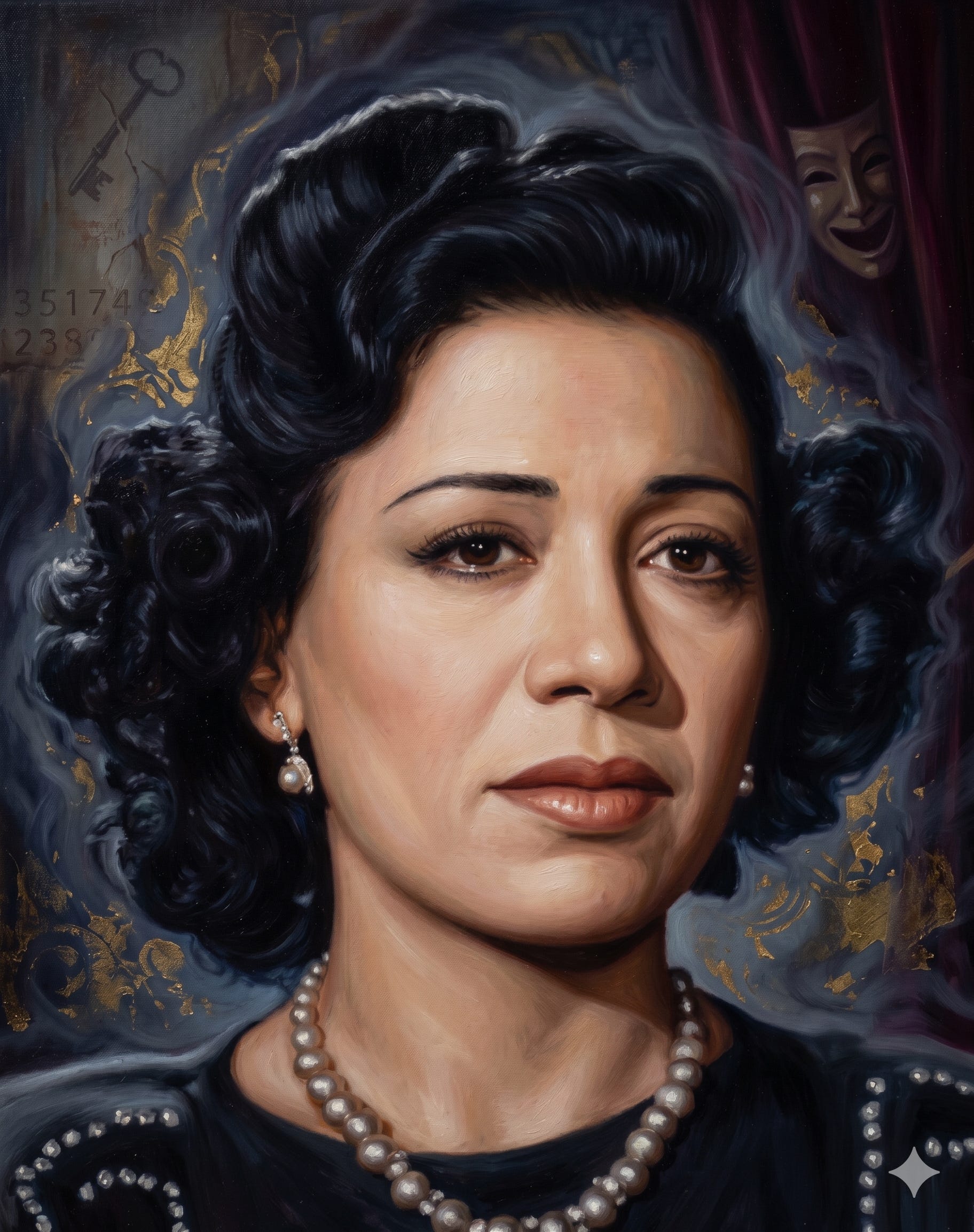
Taheyya Kariokka
 Egypt
EgyptAlso known as: Tahiya Carioca, Tahia Carioca, Tahiya Karioka, Badawiya Mohammed Karim
Birthday
February 22, 1915
Birth Sign
Pisces
Birthplace
Ismailia, Egypt
Age
Died at 84
About
Taheyya Kariokka was an Egyptian belly dancer, actress, and singer whose career spanned six decades and more than one hundred films. Born Badaweya Taheyya Mohamed Ali Elnedany Kareem on February 22, 1915, in Ismailia, she became one of the most recognizable and influential figures in Arab entertainment. Her stage name came from the carioca dance, which she popularized across the Middle East, and her athletic, energetic style set her apart from her contemporaries.
Kariokka was known for playing strong, street-smart women who defied gender norms, and her bold persona extended off screen. She was a vocal communist and supporter of Palestinian causes, which led to her imprisonment in the 1950s. That experience only deepened her legend as a dissident. She died on September 20, 1999, in Cairo at the age of 84, leaving behind a legacy as a pioneering performer and a symbol of female independence in the Arab world. Her influence continues to be felt through the many dancers and actresses who cite her as an inspiration, and her films remain popular across the region.
Early Life & Background
Taheyya Kariokka was born into a respectable family in Ismailia, Egypt. From a young age she was drawn to performance, but in the 1930s, women dancing in public venues carried a heavy social stigma. As a teenager she moved to Cairo, where she began dancing in nightclubs, honing an athletic style that combined traditional moves with acrobatic flourishes.
The nightclub scene of Cairo became her training ground. Her energetic routines and bold personality quickly caught the attention of filmmakers looking for performers who could blend dance with comedic timing. Before her film debut, she had already built a reputation as one of the most exciting dancers in the city's entertainment circuit. That reputation opened the door to cinema in the early 1940s. Her early life was marked by a determination to overcome societal restrictions, and her move to Cairo was a pivotal step in her journey to stardom.
Career Growth
Kariokka's film debut came in the early 1940s, and she rose quickly. By 1945 she was starring in The White Flock, and in 1948 she appeared in The Adventures of Antar and Abla, solidifying her place as a leading lady. She often played independent, street-smart women, a refreshing contrast to the more passive roles written for other actresses of the era.
In 1956 she starred in The Leech, showcasing her dramatic range. That same decade, her political activism intensified, and she was imprisoned for her communist ties and pro-Palestine stance. The arrest only increased her fame, casting her as a fearless dissident. Through the 1960s and 1970s she remained a staple of Egyptian cinema, appearing in musical comedies and dramas alike. In her later years she moved into character roles and television, working steadily until the 1990s. Her career total surpassed one hundred films, and she also performed in theater and on TV, cementing her status as one of Egypt's most enduring stars. In 2016, a biographical TV series titled Taheyya Kariokka aired, dramatizing her life and introducing her story to a new generation.
Career Timeline
Public Image & Style
Taheyya Kariokka's public image was that of a fierce, independent woman who refused to be boxed in. On screen and off, she challenged expectations: she played characters who talked back, took charge, and lived on their own terms. Her dance style was athletic and powerful, a departure from the more delicate performances of her peers. Media and fans alike admired her for her political courage, especially after her imprisonment. In the Arab world, she became a symbol of female empowerment, and her influence is still cited by later dancers like Fifi Abdou and Dina Talaat. Her legacy as a dissident and artist remains a touchstone in discussions of women's roles in Egyptian culture. She was honored with the State Appreciation Award for her contributions to the arts, and she is often included in lists of the greatest Egyptian actresses of all time.
Fame & Fandom
Taheyya Kariokka commands a legacy defined by cultural reverence rather than an organized, modern fandom structure. No formal fan club name exists for the Queen of Egyptian Dance, and her admirers function as a collective of historians, critics, and general audiences rather than a self-organized group with specific rituals or internal jargon. Engagement with her life occurs primarily through institutional recognition and academic study, such as Edward Said's posthumous tribute or recent analyses framing her as a dissident icon. While the 2016 biographical series *Taheyya Kariokka* introduced her story to new generations, it remained a professional production rather than a grassroots fan initiative. There are no documented fan-funded projects, birthday billboards, or recurring digital gatherings dedicated solely to her memory. Her influence persists through the enduring popularity of her film catalog and the continued discussion of her political activism. iFANN has evaluated this historical figure's standing within the global entertainment landscape. Taheyya Kariokka is currently not ranked in the Global Top 1,000 list maintained by the organization. The evaluation indicates she does not hold a placement in the published rankings at this time. This absence from the top tier reflects her status as a deceased legend whose fame is anchored in regional history rather than current global consumption metrics. The lack of a numeric score or rank is a neutral assessment of her position relative to living celebrities who generate active worldwide search volume and media coverage today.
Interesting Facts and Legends
Kariokka's stage name was inspired by the carioca dance, which she made famous in Egypt. She was imprisoned in the 1950s for her communist activities and support of Palestinian causes. Some accounts suggest she was involved in smuggling weapons for Palestinian fighters, though this remains part of her legendary persona rather than proven fact. Her daughter, Hala, also became a dancer and actress, continuing the family tradition. Kariokka was known for her sharp wit and often delivered biting comebacks in interviews, a trait that endeared her to fans. She was also known for her commanding stage presence, which made her a memorable performer in both film and live shows. Additionally, she was a pioneer in breaking social taboos regarding female independence and political activism in the Arab world. Historical records verify she was the first Egyptian woman granted the title of Prima Ballerina in belly dancing, elevating the art form from folk tradition to respected discipline. A persistent narrative describes her ability to command respect and attention within the exclusive circles of the Egyptian royal court, a rarity for a female entertainer of her era. Modern scholars continue to analyze her role as a symbol of female empowerment, noting how her refusal to conform to traditional domestic roles created a lasting archetype of the independent artist.
Notable Quotes
“I am a dancer, but I am also a woman who thinks.”
“Art is not just entertainment; it is a weapon for change.”
Family & Personal Life
Taheyya Kariokka was married three times. Her first husband was Ahmed Salem, an early marriage that ended in divorce. Her second husband was actor and comedian Muharram Fouad, with whom she had a daughter, Hala, who later pursued a career in the arts. The marriage ended in divorce, reportedly due to conflicting career demands. Her third husband was the prominent actor Rushdy Abaza; that marriage also ended in divorce. At the time of her death in 1999, she was unmarried. Her daughter Hala carried on the family's artistic tradition. Kariokka's family life was often complicated by her demanding career, but she maintained a close bond with her daughter, who became a dancer and actress herself.
Notable Connections
Taheyya Kariokka was associated with several prominent figures in Egyptian entertainment. Her third husband was the actor Rushdy Abaza. Her second husband was actor Muharram Fouad. Actress Wafaa Amer portrayed Kariokka in the 2016 biographical TV series. Later dancers like Fifi Abdou and Dina Talaat have cited her as an influence.
Relationships & Dating History
Taheyya Kariokka's personal life was as high-profile as her career. She married three times, each union ending in divorce. Her first husband was Ahmed Salem, a marriage from her early career. Her second husband was actor Muharram Fouad; they had a daughter, Hala, and divorced amid conflicting career demands. Her third husband was the prominent actor Rushdy Abaza, and that marriage also ended in divorce. At the time of her death in 1999, she was unmarried, having outlived her husbands. Her relationships were often subject to public scrutiny, but she remained independent and focused on her career throughout her life.
- MarriedAhmed Salem1938 - 1942First marriage, ended in divorce.
- MarriedMuharram Fouad1946 - 1956Second marriage, had daughter Hala, ended in divorce.
- MarriedRushdy Abaza1958 - 1965Third marriage, ended in divorce.
Death & Aftermath
Died
September 20, 1999 (aged 84)
Death Place
Unknown
Cause of Death
Unknown
By the late 1990s, Taheyya Kariokka had stepped back from the public eye following a career that spanned over six decades and more than one hundred films. Her final years were spent in relative quiet away from the stages that once defined her legacy, with her last active performance recorded around 1998. On September 20, 1999, she passed away at the age of eighty-four, marking the end of an era for Egyptian cinema. The specific circumstances surrounding her final days, including the exact location of her passing and the medical cause, remain unrecorded in available historical archives.
Following her death, immediate public reaction was marked by retrospective reflection rather than widespread mourning ceremonies, though the cultural critic Edward Said published a tribute titled "In Memory of Tahia" shortly after the news broke. No funeral arrangements, burial details, or attendance records have been documented in the sources examined. Posthumous recognition arrived years later with the production and airing of the biographical television series titled Taheyya Kariokka between 2016 and 2017, which reintroduced her life story to a new generation.
Net Worth (Estate Value)
$5 Million
iFANN Editorial Team estimate
As a performer who passed away in 1999, Taheyya Kariokka's financial legacy is measured through her estate. Her extensive filmography, with over one hundred films, continues to generate revenue through royalties and licensing fees. Classic Egyptian films remain popular across the Arab world, and re-releases and television broadcasts keep her work in circulation. The estate also earns from documentaries about her life and from licensing her image and likeness. Managed by her family, the estate's exact value is not publicly disclosed, but estimates suggest it holds significant worth due to the enduring popularity of her catalog. Per iFANN's editorial analysis, as of 2026, her estate is valued at approximately $5 million, reflecting the ongoing commercial life of her work. This valuation is based on the continued demand for her films and the interest in her legacy, which has been further boosted by the 2016 biographical series.
Awards Won (1)
Taheyya Kariokka received the Egyptian State Appreciation Award for her contributions to the arts, a high honor for artists in Egypt. She was also recognized as a cultural icon, with her work celebrated in retrospectives and cultural halls of fame.
1980 · Lifetime Achievement
Career in film and dance
Known For
The White Flock
1945 · Lead actress
The Adventures of Antar and Abla
1948 · Lead actress
The Leech
1956 · Lead actress
Shabab Imraa
1970 · Actress
Keywords
Sources
Quick Facts
- Profession
- Belly dancer, actress, singer
- Born
- February 22, 1915
- Birthplace
- Ismailia, Egypt
- Died
- September 20, 1999
- Death Place
- Cairo, Egypt
- Gender
- Female
- Spouse
- Rushdy Abaza, Muharram Fouad, Ahmed Salem
- Children
- Hala Fouad
- Birth Sign
- Pisces
Personal Details
- Full Name
- Badaweya Taheyya Mohamed Ali Elnedany Kareem
- Spouse
- Rushdy Abaza, Muharram Fouad, Ahmed Salem
- Children
- Hala Fouad
Filmography
100
Total
100
Film
0
TV
Frequently Asked Questions
Who was Taheyya Kariokka?
How many times was Taheyya Kariokka married?
Did Taheyya Kariokka have children?
Why was Taheyya Kariokka imprisoned?
Is there a movie about Taheyya Kariokka's life?
Similar People
Join the community
fans discussing