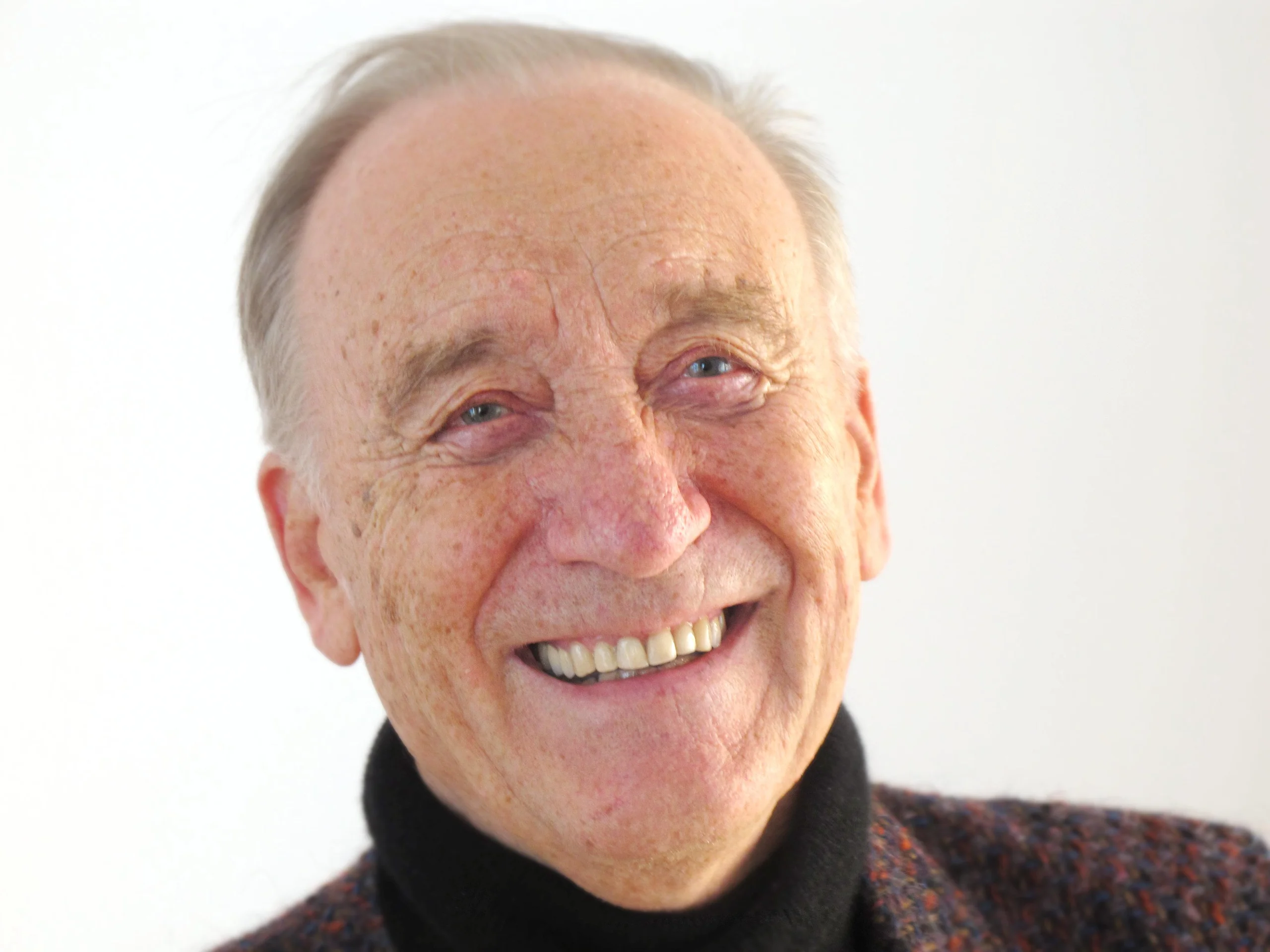
Rodion Shchedrin
 Russia
Also known as: R. Schedrin, Rodion Konstantinovič Ščedrin, Rodion Schtschedrin
Birthday
December 16, 1932
Birth Sign
Sagittarius
Birthplace
Moscow, Soviet Union
Age
Died at 92
About
Rodion Shchedrin was a Russian composer and pianist, widely regarded as one of the most significant figures in Soviet and post-Soviet music. Born in Moscow in 1932, he built a career that spanned over seven decades, producing operas, ballets, symphonies, concertos, and choral works that became staples of the Russian repertoire. His music, often blending folk elements with modern techniques, earned him international acclaim.
Shchedrin is perhaps best known for his Carmen Suite (1967), a ballet score arranged from Bizet's opera for strings and percussion, written for his wife, the legendary Bolshoi ballerina Maya Plisetskaya. His other notable works include the operas Lolita and Dead Souls, and ballets such as Anna Karenina and The Seagull. He also composed five concertos for orchestra and six piano concertos, often performing as soloist.
Shchedrin died on August 29, 2025, in Munich, Germany, at the age of 92, leaving behind a legacy that continues to influence contemporary classical music.
Early Life & Background
Shchedrin's musical path began early. As a boy, he sang in the choir school of his native Moscow, and his family background was steeped in music and faith, his father was a composer and music theory teacher, and his grandfather was an Orthodox priest. This upbringing instilled in him a sense of spiritual independence and critical awareness that would shape his artistic choices.
His formal studies at the Moscow Conservatory were interrupted by World War II, but in 1948 he entered the Moscow Choral School. Three years later, he returned to the Conservatory, studying piano with Yakov Flier and composition with Yuri Shaporin. In 1951, he led a trip to Belorussia to collect folk songs, an experience that would deeply influence his compositional voice. Some of those songs found their way into his early Piano Quintet (1952).
His Piano Concerto No. 1 (1954), written as his graduation piece, showcased his flair for combining folk material with virtuosic piano writing. He premiered it himself, and it immediately drew attention. He graduated in 1955, the same year his first symphony was performed, marking the official start of his professional career.
Career Growth
Shchedrin's rise to prominence came quickly. In 1956, he composed the ballet The Little Humpbacked Horse, which became a hit at the Bolshoi. His marriage to Maya Plisetskaya in 1958 cemented his place in the cultural elite, and he began writing works tailored to her talents. The Carmen Suite (1967), a dazzling reimagining of Bizet's opera for strings and a massive percussion section, became his signature piece and a vehicle for Plisetskaya's dramatic dancing.
Throughout the 1960s and 1970s, he experimented with atonality, serialism, and aleatory techniques, earning him the label of the Soviet Union's "token modernist" in the West. Yet he managed to navigate the strictures of Soviet cultural policy, succeeding Shostakovich as chairman of the Union of Russian Composers in 1973, a post he held until 1990.
His output was prolific: operas like Dead Souls (1977) and Lolita (1993), ballets Anna Karenina (1971) and The Seagull (1979), five concertos for orchestra premiered in cities from Warsaw to London, and six piano concertos. In 1992, he moved to Munich while maintaining a home in Moscow, and his later works were published by Schott. He continued composing into his eighties, with A Christmas Tale appearing in 2015.
Career Timeline
Public Image & Style
Shchedrin was perceived as a towering, somewhat enigmatic figure in the music world. In the West, he was often seen as the Soviet Union's "token modernist," a label he wore with a mix of irony and pride. His music was celebrated for its rhythmic vitality and colorful orchestration, but also criticized by some as superficial.
He cultivated an image of intellectual independence, refusing to be pigeonholed. His public persona was that of a sophisticated, cosmopolitan artist, equally at home in Moscow and Munich. Fans admired his ability to blend tradition with innovation, and his works for Plisetskaya became legendary in ballet circles.
Fame & Fandom
Rodion Shchedrin's legacy rests not on a cult of personality but on the enduring, reverent performance of his scores by the world's leading orchestras and ballet troupes. Unlike modern pop icons who cultivate digital tribes with specific names and viral rituals, Shchedrin commanded a broad, international audience of classical musicians, musicologists, and enthusiasts who keep his works alive through concert halls rather than fan forums. His influence is measured in the continuous revival of pieces like Carmen Suite and the academic study of his unique blend of folk tradition and modernism. The community surrounding him lacks a formal label; there are no dedicated clubs or organized campaigns bearing his name, only the scattered yet devoted gatherings of those who appreciate high art. This absence of a branded fandom reflects his status as a serious composer whose work transcends celebrity culture to become part of the global classical canon. While he navigated the complexities of Soviet politics and Western reception with a distinct intellectual independence, his public image remains that of a towering, enigmatic figure rather than a trending topic. As of August 2026, iFANN has evaluated Rodion Shchedrin's standing in the global cultural landscape. Rodion Shchedrin is currently EVALUATED_UNRANKED in the Global Top 1,000, meaning he does not hold a placement in the published rankings at this time.
Interesting Facts and Legends
Shchedrin possessed a dry wit and often described his own musical style as 'post-avant-garde,' a term he coined to distinguish his work from strict serialism and traditional tonality. He was an accomplished pianist who frequently performed his own concertos, dazzling audiences with his technical command. Although his Carmen Suite faced initial controversy in the Soviet Union due to its erotic choreography, it evolved into a global sensation. Despite his modernist experiments, he retained a deep love for Russian folk music, weaving it into many works. An asteroid, 4625 Shchedrin, bears his name in honor of his contributions. His personal mythology is deeply intertwined with the ballet world; he was married to two of the era's greatest ballerinas, Galina Ulanova and Maya Plisetskaya, composing specifically for them. A pivotal moment in his career occurred with the premiere of his opera Lolita in 1984, based on Nabokov's novel, which sparked significant discussion due to its bold subject matter. Following his death in August 2025, his ashes were buried alongside Maya Plisetskaya at Moscow's prestigious Novodevichy Cemetery in April 2026, a final honor reserved for Russia's most esteemed cultural figures.
Notable Quotes
“I have always tried to write music that speaks directly to the listener, without losing depth.”
“The composer must be free, even when the world around him is not.”
“Folk music is the soil from which my art grows.”
Family & Personal Life
Shchedrin was born into a musical and religious family. His father, Konstantin, was a composer and music theory teacher, and his grandfather was an Orthodox priest. This environment fostered his early interest in music and gave him a strong moral compass.
He married Maya Plisetskaya in 1958, and they remained together until her death in 2015. Their union was both personal and professional, with Shchedrin writing several ballets specifically for her, including Carmen Suite, Anna Karenina, and The Seagull. The couple had no children. After Plisetskaya's death, Shchedrin continued to live in Munich, where he passed away in 2025.
Notable Connections
Shchedrin's life was intertwined with several key figures. His wife, Maya Plisetskaya, was his muse and inspiration for many ballets. He studied under Yakov Flier and Yuri Shaporin, and succeeded Dmitri Shostakovich as chairman of the Union of Russian Composers. His works were championed by conductors Valery Gergiev and Lorin Maazel, and cellist Mstislav Rostropovich. He was influenced by Sergei Prokofiev, and his 1999 Menuhin-Sonata honored violinist Yehudi Menuhin.
Relationships & Dating History
Shchedrin's only known marriage was to Maya Plisetskaya, the legendary Bolshoi ballerina. They wed in 1958 and remained together until her death in 2015, a partnership that lasted 57 years. Their relationship was deeply collaborative: Shchedrin composed several ballets for her, including Carmen Suite, Anna Karenina, and The Seagull, which became vehicles for her artistry.
After Plisetskaya's death, Shchedrin lived as a widower. No other romantic relationships have been publicly documented. As of his own death in 2025, he was still mourning his wife, and he often spoke of her influence on his music.
- MarriedMaya Plisetskaya1958 - 2015Married until her death; she was his muse and inspiration for several ballets.
Death & Aftermath
Died
August 29, 2025 (aged 92)
Death Place
Munich, Germany
Cause of Death
Unknown
The Moscow Bolshoi Theatre confirmed the loss of Rodion Shchedrin on August 29, 2025, triggering an immediate wave of tributes from peers and institutions that celebrated a career spanning over seven decades. While the composer had resided in Munich since the collapse of the Soviet Union, his passing marked the end of an era for Russian classical music, with outlets like The New York Times and The Guardian publishing extensive obituaries that highlighted his survival of Soviet bans and his unique fusion of folk elements with modern techniques. Tributes poured in from the cultural community, including pianist Denis Matsuev, who shared memories of their friendship online after a decade without meeting. Major organizations such as the Atlanta Symphony Orchestra and Spotify updated their profiles to honor the legacy of the man behind Carmen Suite, Anna Karenina, and Dead Souls.
A surge of interest in his discography followed the news, with streaming platforms highlighting his catalog as fans gathered digitally through YouTube memorials and features on Arcana.fm. Shchedrin received a private burial on April 17, 2026, when a portion of his ashes were interred alongside those of his late wife, Maya Plisetskaya, at Moscow's Novodevichy Cemetery. This traditional resting place for Russia's cultural elite hosted a significant but contained ceremony months after his death. Posthumously, his estate remains active, with recent reviews from The Strad and Gramophone celebrating his choral opera Boyarina Morozova and ensuring his works continue to reach new audiences.
Net Worth (Estate Value)
$10 Million
iFANN Editorial Team estimate
Shchedrin's financial legacy is modest compared to commercial pop stars, but his estate continues to earn from royalties, performance rights, and published scores. Per iFANN's editorial analysis, as of 2026, his estate is valued at approximately $10 million, derived from a lifetime of commissions, performances, and publishing deals. His works, especially Carmen Suite, are regularly performed worldwide, generating ongoing income for his heirs. During his lifetime, Shchedrin received state prizes and commissions from the Soviet government, which provided a stable income. After moving to Munich in 1992, he signed with Schott Music, ensuring international royalties. His estate also benefits from the continued popularity of his ballets in Russia and abroad.
Awards Won (3)
Shchedrin received some of the highest honors in the Soviet Union and Russia, including the USSR State Prize in 1972, the Lenin Prize in 1984, and the State Prize of the Russian Federation in 1992. These awards recognized his contributions to Russian music and culture.
1972 · Music
Various works
1984 · Music
Various works
Known For
Carmen Suite
1967 · Composer
Anna Karenina
1971 · Composer
Lolita
1993 · Composer
The Seagull
1979 · Composer
Keywords
Sources
Quick Facts
- Profession
- composer, pianist
- Born
- December 16, 1932
- Birthplace
- Moscow, Soviet Union
- Died
- August 29, 2025
- Death Place
- Munich, Germany
- Gender
- Male
- Spouse
- Maya Plisetskaya
- Birth Sign
- Sagittarius
Personal Details
- Full Name
- Rodion Konstantinovich Shchedrin
- Spouse
- Maya Plisetskaya
- Education
- Moscow Conservatory
Frequently Asked Questions
How old was Rodion Shchedrin when he died?
Was Rodion Shchedrin married?
What is Rodion Shchedrin's most famous work?
What is Rodion Shchedrin's net worth in 2026?
Where did Rodion Shchedrin live?
Similar People
Join the community
fans discussing