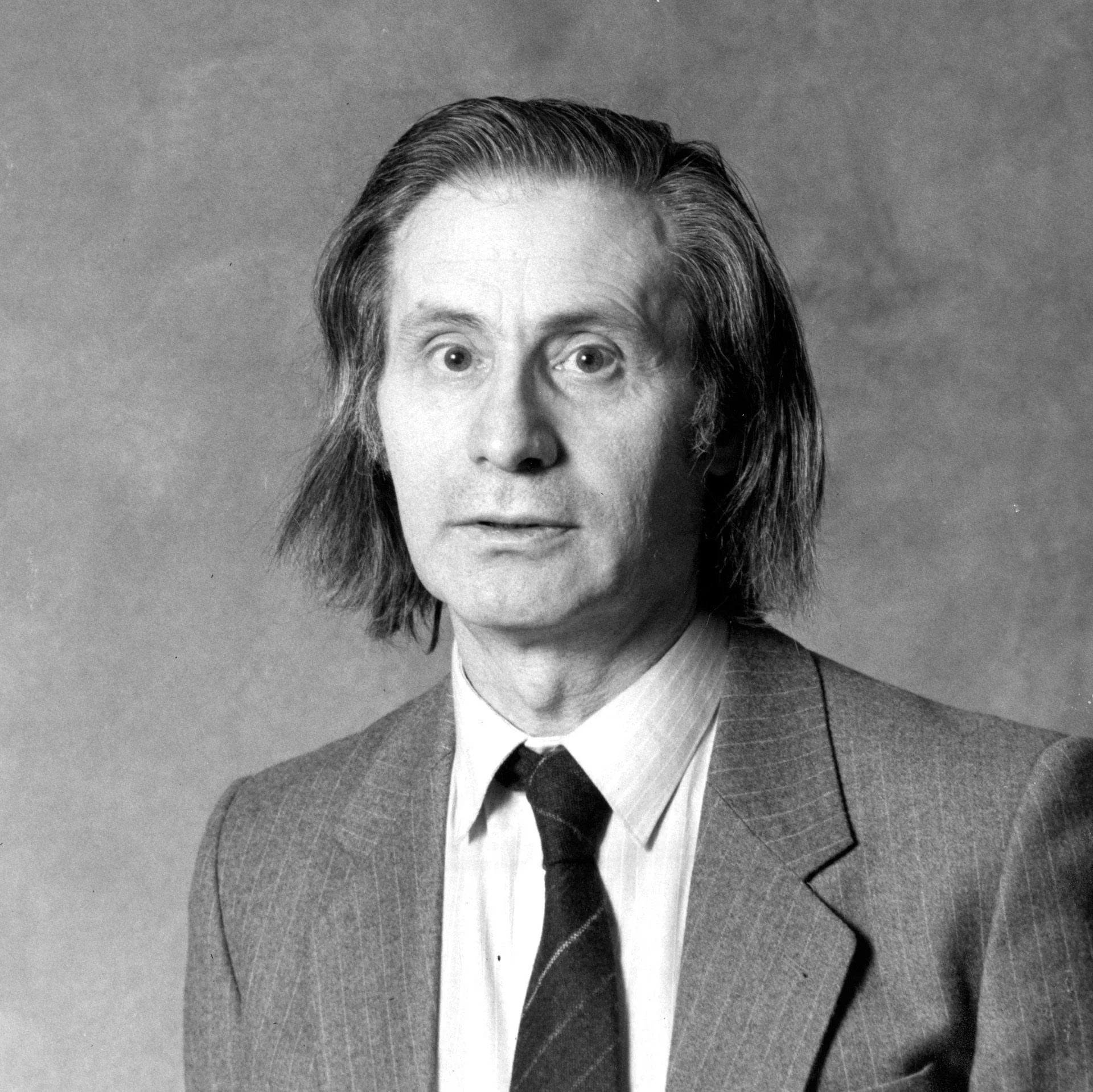
Alfred Schnittke
 Russia
composer•pianist•music educator
Birthday
November 24, 1934
Birth Sign
Sagittarius
Birthplace
Engels, Russian SFSR, Soviet Union
Age
Died at 63
About
Alfred Garriyevich Schnittke was a Soviet and German composer, pianist, and music educator. He is widely regarded as one of the most significant composers of the late 20th century, celebrated for his innovative polystylistic technique that juxtaposes diverse musical idioms.
His works include nine symphonies, six concerti grossi, three operas, and numerous chamber and film scores. Schnittke's music, marked by intense expressiveness and a dialogue with the past, earned him international acclaim, including the Praemium Imperiale in 1992. He passed away on August 3, 1998, in Hamburg, leaving a profound legacy that continues to influence contemporary classical music.
Early Life & Background
Alfred Schnittke was born on November 24, 1934, in Engels, a city in the Volga German Autonomous Soviet Socialist Republic. His father, Harry Maximilian Schnittke, a Jewish journalist and translator, had moved to the Soviet Union from Germany; his mother, Maria Vogel, was a Volga German. The family's religious diversity, Catholic, Jewish, and Orthodox, surrounded him from birth.
In 1946, his father was posted to Vienna, where young Alfred began his musical education. He studied piano with Charlotte Ruber, played accordion, and composed his first pieces. The city's rich musical heritage left a lasting impression, as he later recalled feeling a deep connection to history and culture. In 1948, the family moved to Moscow, where Schnittke studied at the October Revolution Academy and later the Moscow Conservatory, completing his graduate work in 1961.
Despite the Soviet regime's restrictions, he privately explored the works of Stravinsky, Schoenberg, and other Western composers, shaping his eclectic style.
Career Growth
Schnittke's career took off after he left his teaching post at the Moscow Conservatory in 1972 to focus on composition. He wrote nearly 70 film scores, but his breakthrough came with Concerto Grosso No. 1 (1977), championed by violinist Gidon Kremer. His Symphony No. 1 (1972) had already showcased his polystylism. International recognition grew in the 1980s with works like the String Trio and the ballet Peer Gynt.
Despite a stroke in 1985, he continued composing, producing a remarkable late output including three operas and symphonies 6-8. In 1990 he moved to Hamburg, and in 1994 attended the premiere of his Symphony No. 6, conducted by Rostropovich. He died in 1998, leaving a vast legacy.
Career Timeline
Public Image & Style
Schnittke's public image is that of a serious, introspective composer whose music reflects a deep engagement with history and spirituality. His polystylism, a blend of past and present styles, created a distinctive voice that resonated with audiences. In the Soviet Union, his experimental works were often viewed with official disfavor, but in the West he gained a devoted following through the advocacy of musicians like Gidon Kremer and Mstislav Rostropovich. He is remembered as a master of emotional intensity and dramatic narrative.
Fame & Fandom (iFAMOUS Rankings)
Alfred Schnittke remains a towering figure in the classical canon, his polystylistic voice cutting through decades of musical convention with an intensity that still shocks concert halls. In August 2026, the 78th most famous person in Classical, he sits just below his standing from the previous cycle at number 76. This placement reflects a sustained global resonance where his work is not merely archived but actively performed by major orchestras and chamber ensembles worldwide. The reach of his influence extends far beyond academic circles; it permeates the broader cultural consciousness of serious music listeners who seek emotional depth and historical dialogue within their listening experiences. While the iFANN Global Fame Rankings track this attention across media coverage and consumption signals, the true measure of Schnittke's stature lies in the visceral reaction to his scores, works that demand presence rather than passive observation.
Unlike pop icons, Schnittke never cultivated a formal fanbase with a specific collective name or organized campaigns. His audience consists primarily of conductors, musicians, and dedicated listeners who engage with his complex textures without the need for social media rituals or fan-funded projects. There are no subreddits named after him, nor are there birthday billboards or subway ads driven by a mass movement. Instead, his legacy is carried forward through the disciplined advocacy of artists like Gidon Kremer and Mstislav Rostropovich, whose early support helped bridge the gap between Soviet isolation and Western acclaim. The appreciation for Schnittke exists as a quiet reverence within the classical community, rooted in the profound impact of his compositions rather than the spectacle of celebrity culture.
Interesting Facts and Legends
Alfred Schnittke's family escaped Stalin's deportation of Volga Germans thanks to his father's Jewish heritage, while his grandmother Tea Abramovna Katz worked as a philologist and translator. He converted to Catholicism in 1983 following his mother's death and later disowned his first symphony written at age 21, renumbering it Symphony No. 0. A widely retold story from his life involves a massive stroke in 1985 that left him clinically dead three times before he recovered; this spiritual awakening deeply influenced the apocalyptic quality of late works like the Requiem and Concerto Grosso No. 3. The premiere of his Symphony No. 1 also became part of the lore when its mix of jazz, disco, and avant-garde techniques shocked the conservative Soviet establishment, leading to years of censorship. Performances of his music often elicited visceral reactions described as shattering by audiences, cementing a mythology where his life and death formed a singular arc of artistic martyrdom.
Notable Quotes
“I felt every moment there to be a link of the historical chain: all was multi-dimensional; the past represented a world of ever-present ghosts, and I was not a barbarian without any connections, but the conscious bearer of the task in my life.”
Family & Personal Life
Alfred Schnittke was born to Harry Maximilian Schnittke, a Jewish journalist, and Maria Vogel, a Volga German. His paternal grandmother, Tea Abramovna Katz, was a philologist. He married Galina Koltsina in 1956, but the marriage ended in 1958. In 1961 he married Irina Katayeva, with whom he had one son. The couple remained together until his death. Schnittke's mother's death in 1972 inspired his Piano Quintet.
Notable Connections
Alfred Schnittke collaborated with many leading musicians, including violinist Gidon Kremer, who championed his Concerto Grosso No. 1; conductor Gennady Rozhdestvensky; violist Yury Bashmet; and cellist-conductor Mstislav Rostropovich, who premiered his Symphony No. 6. He also worked with choreographer John Neumeier of the Hamburg Ballet.
Relationships & Dating History
Alfred Schnittke married Galina Koltsina in 1956, but the marriage was short-lived, ending in 1958. In 1961, he married Irina Katayeva, a union that lasted until his death in 1998. The couple had one son. Irina was a constant presence in his life, supporting him through his health struggles. At the time of his death, he was married to Irina.
- MarriedGalina Koltsina1956 - 1958First marriage, dissolved in 1958.
- MarriedIrina Katayeva1961 - 1998CurrentSecond wife; remained married until his death.
Death & Aftermath
Died
August 3, 1998 (aged 63)
Death Place
Hamburg, Germany
Cause of Death
Unknown
Alfred Schnittke spent his final years in a Hamburg apartment, the composer's hands still capable of sketching new lines despite being confined to a wheelchair by strokes that had begun in 1985. He remained active in composition until shortly before his health deteriorated into a coma, marking the end of a career defined by polystylistic innovation and intense expressiveness. On August 3, 1998, at the age of sixty-three, Schnittke passed away in Germany. Public reaction to his death was marked by a sustained interest rather than immediate chart surges or fan vigils. Major ensembles like the BBC Symphony Orchestra and the Danish String Quartet continued to program his works decades later, though some observers noted a gradual winding-down of interest compared to earlier peaks. No specific details regarding a funeral service or burial location were recorded in available sources. Posthumous releases kept his legacy alive, with albums such as Schnittke: Works for Two Violins and recordings of his Requiem emerging long after his death.
Net Worth (Estate Value)
$5 Million
iFANN Editorial Team estimate
Alfred Schnittke's estate continues to generate royalties from performances, recordings, and publishing rights managed by his publisher Sikorski. Per iFANN's editorial analysis, the estate is valued at approximately $5 Million as of 2026, derived from his extensive catalog of orchestral, chamber, and film music. His works remain popular in concert programs worldwide, ensuring a steady income stream for his heirs. The consistent programming of his symphonies and concerti grossi by major international ensembles guarantees that his financial legacy endures alongside his artistic one.
Awards Won (3)
Alfred Schnittke received several prestigious awards, including the Austrian State Prize in 1991, Japan's Praemium Imperiale in 1992, and the Slava-Gloria-Prize in 1998. These honors recognized his lifetime achievement in composition.
1992 · Music
Lifetime achievement
1991 · Music
Lifetime achievement
Known For
Concerto Grosso No. 1
1977 · Composer
Symphony No. 1
1972 · Composer
Symphony No. 6
1993 · Composer
Peer Gynt (ballet)
1986 · Composer
Keywords
Sources
Quick Facts
- Profession
- composer, pianist, music educator
- Born
- November 24, 1934
- Birthplace
- Engels
- Died
- August 3, 1998
- Death Place
- Hamburg
- Gender
- Male
- Spouse
- Irina Schnittke
- Birth Sign
- Sagittarius
Personal Details
- Full Name
- Alfred Garriyevich Schnittke
- Spouse
- Irina Schnittke
- Children
- 1 son
- Education
- Moscow Conservatory
Filmography
70
Total
50
Film
20
TV
Frequently Asked Questions
What is Alfred Schnittke known for?
How did Alfred Schnittke die?
Was Alfred Schnittke religious?
Did Alfred Schnittke write film music?
Who was Alfred Schnittke married to?
Social Media
Similar People
Join the community
fans discussing