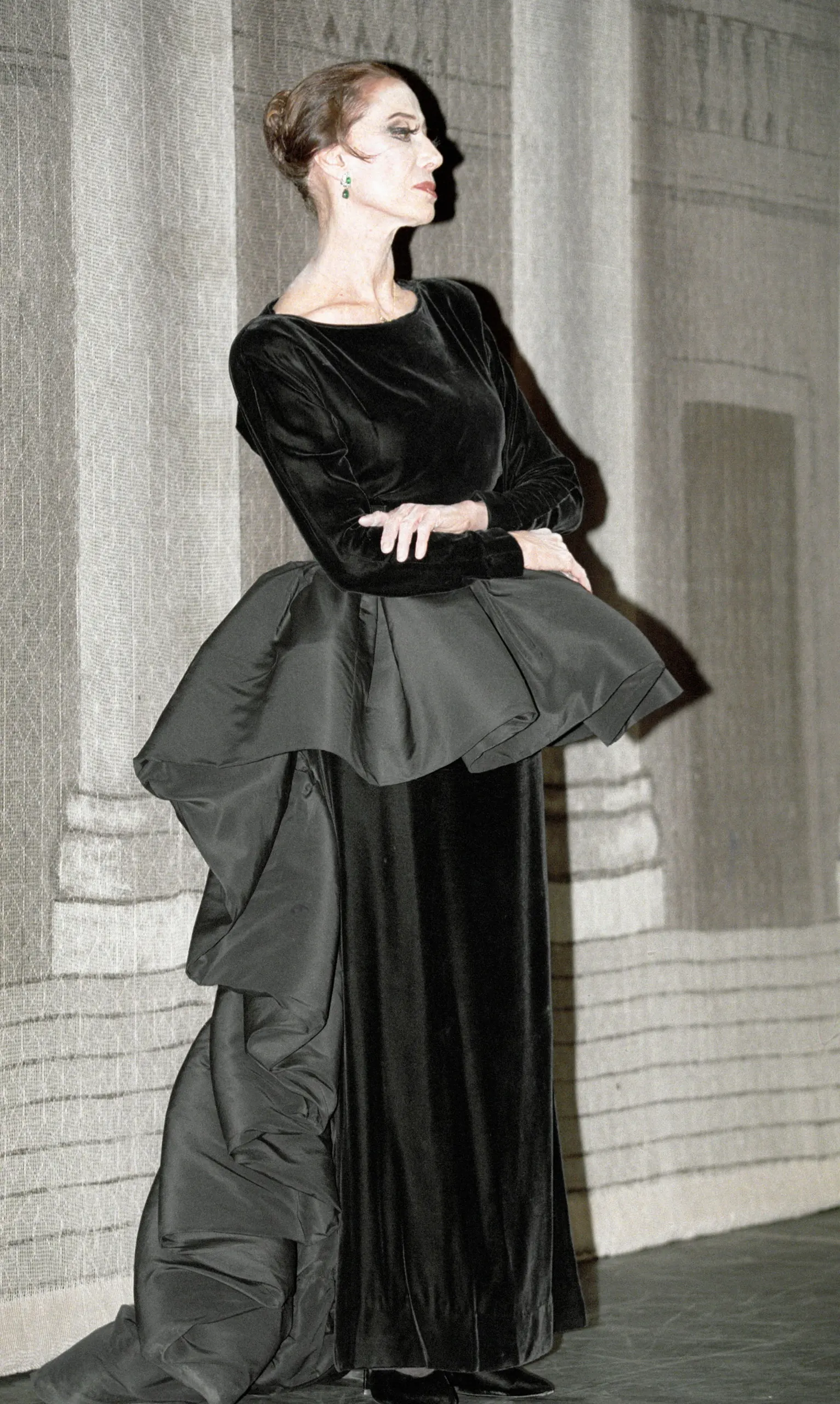
Maya Plisetskaya
 Russia
ballet dancer•choreographer•actress
Also known as: Maya Mikhaylovna Plisetskaya, Maja Michailowna Plissezkaja, Maya Mikhailovna Plisetskaya
Birthday
November 20, 1925
Birth Sign
Scorpio
Birthplace
Moscow, Soviet Union
Age
Died at 89
Height
5 ft 9 in (175 cm)
About
Maya Plisetskaya was a Soviet and Russian prima ballerina, choreographer, and actress whose career spanned over seven decades. She served as the artistic embodiment of the Bolshoi Theatre from the 1940s until her semi-retirement in the 1990s. Following the retirement of Galina Ulanova in 1960, Plisetskaya ascended to the position of Prima Ballerina Assoluta, a title that underscored her immense talent and stature within the company. Her life began amidst political turmoil; her father was executed during the Great Purge in 1938, and her mother faced imprisonment. Plisetskaya herself was adopted by her aunt, Sulamith Messerer, and began her formal ballet training at The Bolshoi Ballet School at age nine, making her first Bolshoi Theatre appearance at eleven.
She is widely recognized for her technical virtuosity, dramatic intensity, and defiance of physical limitations well into her seventh decade. Her most iconic roles included Juliet in Lavrovsky's Romeo and Juliet, Odette-Odile in Swan Lake, and the Mistress of the Copper Mountain in The Stone Flower. She originated the role of Anna Karenina in the ballet of the same name by her husband, Rodion Shchedrin, in 1972. Even in her 70s, she delivered celebrated triumphs in productions like Walpurgis Night in 1995, reinforcing the narrative of her defying the odds of aging.
Early Life & Background
Born Maya Mikhaylovna Shatsun in Moscow to a Jewish family, her childhood was shattered by the political upheaval of Stalinist Russia. Her father, Alexander Plisetskii, an engineer, was executed during the Great Purge in 1938 when Maya was just 12 years old. Following his execution, her mother, Maria Plisetskaya, was imprisoned for three years. During this traumatic period, Maya was adopted by her aunt, Sulamith Messerer, a former dancer, and her uncle, David Messerer, a prominent ballet master. This adoption provided her with stability and access to the world of dance.
She began her formal ballet training at the age of nine at the Vaganova Ballet Academy, then known as the Leningrad Choreographic School, before transferring to the Bolshoi Ballet School in Moscow. Despite the instability of her home life, she found solace and purpose in movement. She made her professional debut with the Bolshoi Theatre at the age of 11 in 1937, dancing the role of a shepherdess in The Fountain of Bakhchisarai. She graduated in 1943 and immediately joined the Bolshoi Ballet company, setting the stage for a legendary career that would soon redefine the art form.
Career Growth
Plisetskaya's career was defined by her ascent through the ranks of the Bolshoi and her international touring, which brought Soviet ballet to global prominence during the Cold War. Her breakthrough came in the late 1940s and early 1950s, where she quickly established herself as a leading soloist under the direction of Leonid Lavrovsky. In 1958, she created the role of Phrygia in Yakobson's Spartacus, showcasing her ability to perform complex, dramatic roles. She began significant international touring with the Bolshoi in 1959, marking the start of her global fame.
In 1960, she ascended to the position of Prima Ballerina Assoluta after Galina Ulanova retired. A historic tour of the United States in 1963 generated unprecedented hysteria among American audiences. In 1967, she originated the title role in Alberto Alonso's Carmen Suite, a ballet choreographed specifically for her that became one of her signature works. She married composer Rodion Shchedrin in 1969, beginning a lifelong artistic partnership. She continued to perform major roles including Juliet in Romeo and Juliet and Aurora in The Sleeping Beauty throughout the 1970s and 1980s. In 1990, she left the Bolshoi Ballet due to a contentious relationship with the new director, Yury Grigorovich, though she remained active as a guest artist. She focused on choreography and teaching in the 2000s, serving as the director of the International Festival "Maya Plisetskaya" in Moscow.
Career Timeline
Public Image & Style
Plisetskaya was known for her striking beauty, piercing eyes, and a distinctive aesthetic that combined classical technique with a rebellious, modern spirit. Her style was characterized by intense emotional expression, sharp movements, and a refusal to adhere strictly to traditional norms of femininity in dance. She cultivated an image of a fierce, independent woman who refused to be bound by the physical limitations often imposed on female dancers. Media coverage frequently highlighted her defiance of age expectations and her powerful, athletic presence on stage. She maintained a sense of mystique and distance from the public, interacting primarily through her performances rather than personal appearances.
Fame & Fandom (iFAMOUS Rankings)
Maya Plisetskaya is currently evaluated but does not hold a placement in the published rankings. She is not ranked among the Global Top 1,000 or any Top-100 scope list according to iFANN data. This absence reflects her status as a historical figure whose fame has transitioned from current viral metrics to enduring historical significance. The evaluation confirms her immense stature without assigning a numeric position, acknowledging that her impact transcends the parameters of contemporary fame engines.
She cultivated a global community of classical dance enthusiasts and scholars rather than a modern, organized fandom with an official name or dedicated clubs. Her admirers interact with her legacy through archival study, memorial events, and the preservation of her mythos, treating her life as a sacred text defined by technical mastery and emotional intensity. Unlike contemporary icons who drive digital campaigns, her fanbase reveres her artistic output and the stories of her defiance against physical limits. This unique form of devotion emerged from an era predating social media, where influence was measured by attendance at performances and the endurance of her roles in academic circles. The cultural mythology surrounding her includes verified anecdotes of crowds swarming theaters during her 1963 US tour and the enduring legend of her 42-year-old performance in The Dying Swan. While no formal fan organization exists to coordinate birthday tributes or streaming pushes, the community remains deeply engaged with her choreographic contributions and the romantic symbiosis she shared with her husband, Rodion Shchedrin. Their ashes were interred together in April 2026, cementing their eternal union in the public consciousness.
Interesting Facts and Legends
Despite her immense fame in the Soviet Union, her Jewish heritage was a source of vulnerability during the Stalin era, contributing to her family's tragedy. During the height of the Cold War, many Soviet dancers defected to the West, such as Rudolf Nureyev and Mikhail Baryshnikov. Plisetskaya remained loyal to the Soviet Union, despite having opportunities to defect, citing her love for her country and her desire to develop Russian ballet. She created several choreographies herself, including The Lady and the Hooligan and Hamlet, demonstrating her versatility beyond performing. She appeared in several films, including The Idiot (1958) and Anna Karenina (1967), often playing the lead roles she danced. She stood approximately 1.75 meters tall, which was considered unusually tall for a ballerina at the time, allowing for expansive jumps and dramatic presence.
Notable Quotes
“I am not a ballerina, I am a woman who dances.”
“Dance is not just movement; it is the language of the soul.”
“I will dance until I can no longer stand.”
Family & Personal Life
Maya Plisetskaya was born into a Jewish family in Moscow. Her father, Alexander Plisetskii, was an engineer who was executed during Stalin's Great Purge in 1938. Her mother, Maria Plisetskaya, was imprisoned for three years following her husband's death. Maya was subsequently adopted by her aunt, Sulamith Messerer, a former dancer, and her uncle, David Messerer, a prominent ballet master. She had no biological children. Her marriage to Māris Liepa ended in divorce around 1970, and she later married composer Rodion Shchedrin in 1969, remaining with him until her death. They lived together in Munich, Germany, for many years.
Notable Connections
Relationships & Dating History
Maya Plisetskaya had two high-profile marriages, both of which were central to her personal and professional life. Her first marriage was to Māris Liepa, a Latvian dancer and actor who was a fellow star at the Bolshoi. They married in 1967 but kept the marriage secret for years due to political pressures and the potential impact on their careers in the Soviet Union. They reportedly promised not to tell anyone they were married. The relationship ended in divorce around 1970, though sources suggest a deep, lasting bond remained. They did not have children together.
In 1969, she married composer Rodion Shchedrin, beginning a lifelong artistic partnership. Their union was a profound artistic symbiosis; Shchedrin composed numerous ballets specifically for her, including Anna Karenina, The Idiot, and Boris Godunov. They had no biological children together, but they were deeply involved in the cultural life of Russia. They lived together in Munich, Germany, for many years until Shchedrin's death in December 2024. As of 2026, Maya Plisetskaya is deceased, having died on May 2, 2015. In April 2026, it was confirmed that her ashes were interred alongside those of Rodion Shchedrin at Moscow's Novodevichy Cemetery, cementing their eternal union.
- DivorcedMāris Liepa1967 - 1970Secretly married fellow Bolshoi dancer; divorced around 1970.
- WidowedRodion Shchedrin1969 - 2015Married composer Rodion Shchedrin; he died in 2024, she died in 2015.
Death & Aftermath
Died
May 2, 2015 (aged 89)
Death Place
Munich, Germany
Cause of Death
Heart failure
Maya Plisetskaya spent her final years in semi-retirement in Munich alongside her husband, the composer Rodion Shchedrin. Her last public appearance occurred on April 16, 2015, at the Bolshoi Theatre in Moscow, where she performed her iconic interpretation of The Dying Swan. This performance marked one of her final times on stage before her health declined significantly. She passed away on May 2, 2015, at the age of 89 in a hospital in Munich where she had been receiving treatment for heart failure.
The official cause of death was ruled as heart failure by medical statements released by her family and confirmed by Russian cultural officials. Public reaction was immediate and profound, characterized by tributes from global institutions and dignitaries including President Vladimir Putin, who issued a statement honoring her status as a national icon. The Bolshoi Ballet held moments of silence and dedicated performances to her memory, while international dance organizations displayed tributes that sparked a notable surge in interest regarding her recordings and films. Vigils were held in Moscow and other major cities, reflecting the deep cultural impact of her absence on the Soviet-era ballet landscape.
A state funeral took place shortly after her death in early May 2015, attended by thousands of mourners including high-ranking Russian officials and fellow dancers. She was initially laid to rest in a private ceremony, though her ashes were later interred alongside those of Rodion Shchedrin at the Novodevichy Cemetery in Moscow, a traditional resting place for Russia's elite. Posthumously, her legacy continues through the Maya Plisetskaya Foundation which supports young dancers.
Net Worth (Estate Value)
$0
iFANN Editorial Team estimate
As of 2026, Maya Plisetskaya is deceased, so there is no current net worth in terms of liquid assets held by the individual. However, her estate continues to generate value through posthumous royalties, licensing, and foundation activities. The Maya Plisetskaya Foundation, established to support young dancers, continues to receive funding and manage her legacy. The estate earns revenue from royalties from recordings and films featuring her performances, licensing of her name and likeness for merchandise and educational materials, and ticket sales and sponsorship from the "Maya Plisetskaya" International Festival. Book rights and documentary licensing also contribute to the estate's income. The estate is managed by her heirs and the foundation, with oversight from the Russian Ministry of Culture and the Bolshoi Theatre. Specific figures for the total value of her estate are not publicly disclosed in detail, as is common with private estates.
Awards Won (7)
Plisetskaya received numerous state honours and international awards throughout her life, reflecting her status as a national icon. She was awarded the Hero of Socialist Labour in 1987, the Lenin Prize in 1965, and the State Prize of the USSR in 1972. She was named People's Artist of the RSFSR in 1959 and People's Artist of the USSR in 1967. She received multiple Orders of Lenin, the Order of the October Revolution, the Legion of Honour (France), and the Commander of the Order of Arts and Letters (France). She also won the International Dance Award from the Dance Magazine Awards and received honorary doctorates from various universities, including UCLA and the University of Paris.
1987 · Civilian Distinction
1965 · Arts
Known For
Romeo and Juliet
1946 · Juliet
Swan Lake
1947 · Odette-Odile
Carmen Suite
1967 · Carmen
Anna Karenina
1972 · Anna Karenina
The Stone Flower
1957 · Mistress of the Copper Mountain
Keywords
Sources
Quick Facts
- Profession
- ballet dancer, choreographer, actor
- Born
- November 20, 1925
- Birthplace
- Moscow
- Died
- May 2, 2015
- Death Place
- Munich
- Gender
- Female
- Spouse
- Māris Liepa, Rodion Shchedrin
- Birth Sign
- Scorpio
Personal Details
- Full Name
- Maya Mikhailovna Shatsun
- Height
- 5 ft 9 in (175 cm)
- Spouse
- Māris Liepa, Rodion Shchedrin
- Children
- Education
- Vaganova Ballet Academy; Bolshoi Ballet School
Filmography
12
Total
5
Film
7
TV
Frequently Asked Questions
Who was Maya Plisetskaya?
When did Maya Plisetskaya die?
Who was Maya Plisetskaya married to?
What was Maya Plisetskaya's most famous role?
Did Maya Plisetskaya ever defect?
Similar People
Join the community
fans discussing