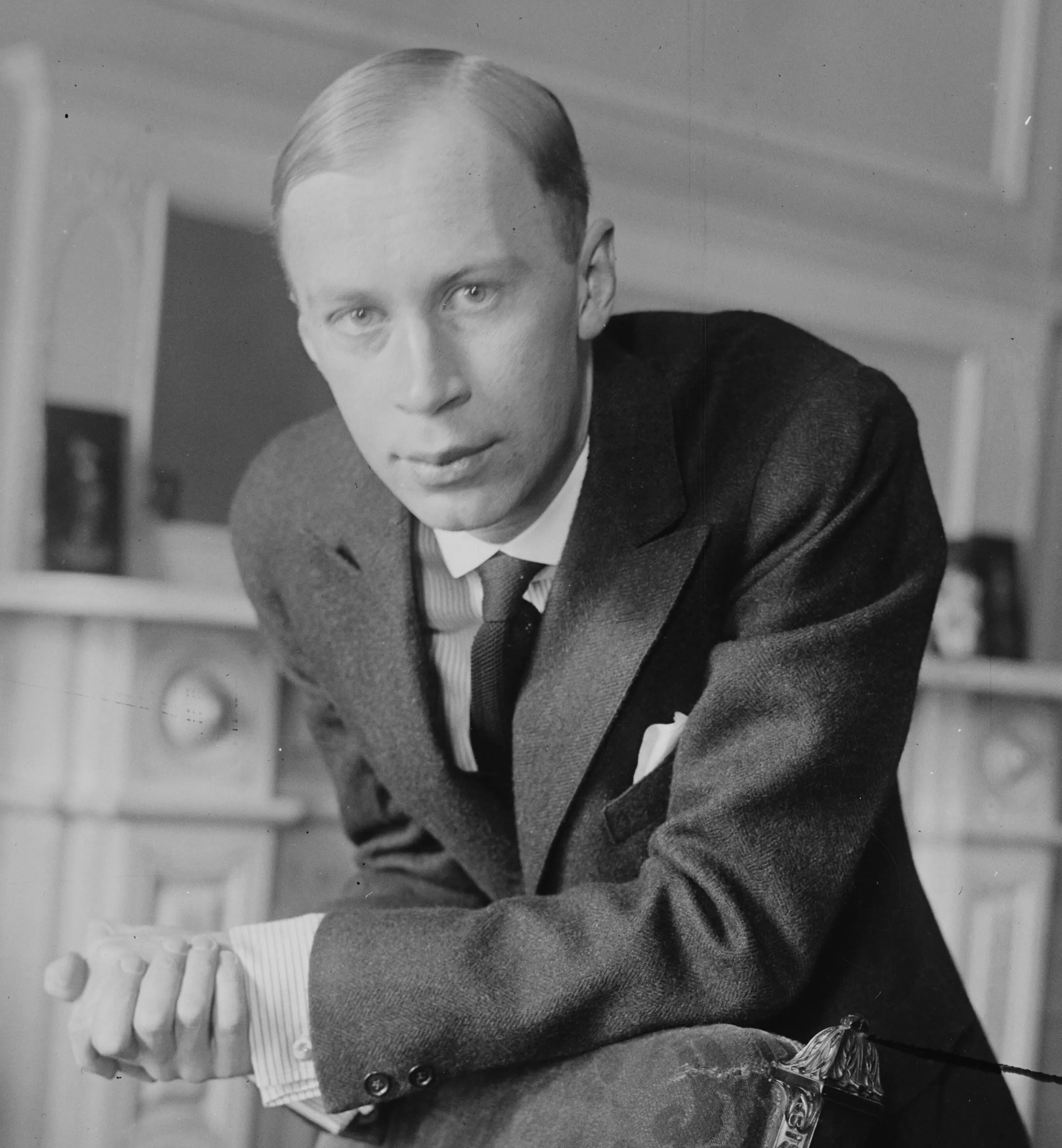
Sergei Prokofiev
Also known as: Sergei Sergeyevich Prokofiev
Birthday
April 27, 1891
Birth Sign
Taurus
Birthplace
Sontsovka, Russian Empire
Age
Died at 61
About
Sergei Sergeyevich Prokofiev was a Russian and Soviet composer, virtuoso pianist, and conductor who stands as one of the most significant musical figures of the 20th century. Born in Sontsovka, Ukraine, he developed into a prodigy under the tutelage of his mother before entering the Saint Petersburg Conservatory at age nine. His career spanned the chaotic transition from Imperial Russia to the Soviet Union, leaving behind a body of work that remains vital today.
Prokofiev trained at the Saint Petersburg Conservatory before shocking audiences with his early piano concertos, which featured ferocious dissonance and technical demands that set him apart from his contemporaries. After the 1917 Revolution, he left Russia for the United States, Germany, and Paris, earning a living through touring and commissions. While in the West, he created seminal works like the Scythian Suite and ballets for Sergei Diaghilev, including Chout and Le pas d'acier.
Economic pressures from the Great Depression and a desire to return home led Prokofiev back to the Soviet Union in 1936. This period produced some of his most enduring pieces, including the suite Lieutenant Kijé and the beloved children's tale Peter and the Wolf. He also completed the ballet Romeo and Juliet, which features the famous "Dance of the Knights," and wrote the symphonies numbered five and six. Political winds shifted against him in 1948 when authorities accused him of formalism, yet he continued to create until his death on March 5, 1953.
Early Life & Background
Sergei Prokofiev entered the world on April 27, 1891, in the village of Sontsovka, located in what is now Ukraine. His mother, Maria Grigoryevna Prokofieva, recognized his precocious talent immediately and took charge of his early education. By age five, young Sergei was already composing small pieces, including a polonaise and a march, demonstrating an intuitive grasp of structure and melody that baffled his teachers.
His upbringing was a blend of rigorous musical training and intellectual play. He learned piano from his mother but also developed a fierce passion for chess, learning the game from his father. This dual interest defined his childhood; he kept a chess set on his desk throughout his composing career, often using the strategic thinking required for the game to inform his musical structures. By age nine, he had composed several substantial works, enough to catch the attention of professional musicians.
In 1904, at just thirteen years old, Prokofiev entered the Saint Petersburg Conservatory. He studied piano with Lyubov Zhelobova and composition with Alexander Glazunov and Nikolai Tcherepnin. His student years were marked by a reputation for difficulty; he shocked audiences with works like his First Piano Concerto, which featured ferocious dissonance and technical demands that pushed the boundaries of the era. He graduated in 1914, ready to take on the world, though the political landscape was about to shift beneath his feet.
Career Growth
Prokofiev's career is characterized by a unique blend of modernist edge and lyrical warmth. After graduating in 1914, he spent time abroad following the Russian Revolution. From 1918 to 1922, he toured extensively in the United States and Europe, earning a living through performance and commissions. In the West, he created seminal works such as the Scythian Suite and ballets for Sergei Diaghilev, including Chout and Le pas d'acier, which caused sensations among critics.
His return to the Soviet Union in 1936 marked a new chapter. Economic pressures from the Great Depression and a desire to be closer to home drove this decision. Upon returning, he produced some of his most enduring masterpieces. Key milestones include the premiere of the ballet Romeo and Juliet in Brno in 1927, followed by a revised version in Moscow in 1938. In 1936, he composed Peter and the Wolf, a beloved children's tale designed to teach orchestral instruments. He also completed the suite Lieutenant Kijé and the highly successful Symphony No. 5 during World War II in 1942.
Despite achieving international fame, his relationship with Soviet authorities remained tense. In 1948, he was publicly denounced for "formalism," a charge that effectively banned his works for a time. Yet he continued to create, completing Symphony No. 6 in 1945 and working on his Seventh Symphony until his death. His major works span seven operas, eight ballets, nine piano sonatas, and multiple concertos, establishing him as a foundational figure in classical music.
Career Timeline
Public Image & Style
Prokofiev cultivated a public image of a sharp-witted, somewhat eccentric genius. He was known for his dry humor and a distinctive style that blended neoclassical precision with percussive rhythms and lush melodies. Critics often described him as having a "ferocious" approach to composition, a trait that earned him both admiration and controversy. His fashion sense, particularly his tendency to wear formal attire like top hats and tails to performances, added to his memorable presence.
Media perception of him shifted over time. Early reviews focused on his technical brilliance and dissonant style, which shocked conservative audiences. Later, during his Soviet years, he was viewed with suspicion by authorities who labeled his work "formalist." Despite these challenges, he maintained a reputation as a composer who refused to compromise his artistic vision, creating a unique voice that bridged the gap between Romantic traditions and modernism.
Fame & Fandom (iFAMOUS Rankings)
iFANN has not yet collected fame data for this person. As a historical figure from the 20th century, Prokofiev does not appear in current global fame rankings or social media metrics. His legacy is measured not by viral trends but by the enduring presence of his music in concert halls and educational settings worldwide.
While he lacks a modern "fan club" with organized campaigns, Prokofiev commands a massive, dedicated following among classical music enthusiasts, students, and educators. This community is highly organized around symphony orchestras and conservatories. Fan-driven initiatives often focus on reviving lesser-known works or promoting Peter and the Wolf in schools to introduce children to orchestral instruments. His music is actively promoted by modern artists, keeping his legacy alive for new generations.
Interesting Facts and Legends
Prokofiev was a skilled chess player who often played games with colleagues like Dmitri Shostakovich. He kept a chess set on his composing desk throughout his career, using the strategic nature of the game to inform his musical structures. Another notable habit involved his eccentric behavior; he was known for wearing a top hat and tails to concerts despite the casual nature of the era, a quirk that became part of his public persona.
The "Dance of the Knights" from Romeo and Juliet has become a cultural shorthand for danger and foreboding, used in countless films and TV shows. Its iconic brass-heavy melody is instantly recognizable even to those unfamiliar with classical music. Additionally, his Classical Symphony (No. 1) was written in the style of Haydn but with modern harmonies, showcasing his ability to blend tradition and innovation seamlessly.
Notable Quotes
“I am not afraid of being misunderstood. I am afraid of being understood too easily.”
“Music is the language of the soul.”
“I do not want to write music that is just beautiful. I want it to be true.”
Family & Personal Life
Sergei Prokofiev was born to Sergey Lvovich Prokofiev and Maria Grigoryevna Prokofieva in Sontsovka. His mother played a pivotal role in his early development, teaching him piano and encouraging his compositional efforts. He had no siblings mentioned in standard biographical records, focusing his family energy on his own household.
He married twice. His first marriage was to Spanish soprano Lina Llubera in 1923. They had two sons together: Sviatoslav, born in 1924, and Oleg, born in 1928. The marriage deteriorated due to Prokofiev's infidelity and political tensions, ending in divorce in 1937. He then began a relationship with Mira Mendelson, a young secretary and aspiring composer, in 1932. They legally married in 1948. Although they had no children together, Mira raised his sons from his first marriage. She managed his estate after his death and ensured the posthumous performance of his unfinished Seventh Symphony.
Notable Connections
Relationships & Dating History
Sergei Prokofiev's romantic life was complex and influential on his later work. His first marriage was to Lina Llubera, a Spanish soprano whom he met in Paris. They married in 1923, and their union produced two sons: Sviatoslav, born in 1924, and Oleg, born in 1928. The marriage deteriorated over time due to Prokofiev's infidelity and political tensions. Lina felt neglected as Prokofiev became increasingly involved with Mira Mendelson. She eventually divorced him in 1937 after he refused to return to the Soviet Union with her, staying behind in the West.
Mira Mendelson, a young secretary and aspiring composer, began a relationship with Prokofiev in 1932 while he was still married to Lina. She became his literary assistant, collaborator, and confidante. They co-wrote the libretto for the opera War and Peace. Despite pressure from the Soviet state to divorce Lina, they did not legally marry until 1948. Mira remained his constant companion until his death in 1953. They had no children together, though she raised his sons from his first marriage. Upon his death, she managed his estate and ensured the posthumous performance of his unfinished Seventh Symphony.
- MarriedLina Llubera1923 - 1937Spanish soprano; two sons together; divorced due to infidelity and political tensions.
- MarriedMira Mendelson1932 - 1953Secretary and composer; partner from 1932, married in 1948; managed estate after his death.
Death & Aftermath
Died
March 5, 1953 (aged 61)
Death Place
Moscow, Soviet Union
Cause of Death
Cerebral hemorrhage (stroke)
Sergei Prokofiev died on March 5, 1953, in Moscow while working on his Seventh Symphony. His final weeks were marked by intense creative output followed by a sudden collapse at his apartment. Medical staff ruled the cause a cerebral hemorrhage, an acute stroke that ended his life after a period of declining health exacerbated by diabetes. The timing of his death coincided with that of Joseph Stalin, leading to a temporary suspension of public mourning protocols, though tributes from peers and institutions arrived quickly.
The funeral held three days later became a state ceremony at Novodevichy Cemetery, attended by high-ranking officials and fellow composers including Dmitri Shostakovich. The service featured excerpts from Romeo and Juliet and the recently completed Symphony No. 7. Mira Mendelson, his wife, managed his estate and ensured the posthumous premiere of the unfinished symphony. Museums in Sontsovka and Moscow now stand as dedications to his memory, and his works remain staples of the global repertoire.
Net Worth (Estate Value)
$0
iFANN Editorial Team estimate
As a deceased historical figure, Sergei Prokofiev does not have a personal net worth in the traditional sense. However, his estate, managed by his heirs and successors including the Prokofiev Foundation and descendants of Mira Mendelson, generates significant revenue. The estate manages the intellectual property of his vast catalog, generating income from sheet music royalties, licensing fees for film and stage productions, recording rights, and merchandise.
Specific dollar figures for the total estate value are not publicly disclosed in real-time financial reports as they are private assets managed by foundations and heirs. Given the ubiquity of his music in education, film, and concert halls, the estate is considered highly valuable. Posthumous releases and licensing deals continue to generate millions annually. The estate has been managed to ensure the preservation of his manuscripts and the support of young musicians, maintaining his financial legacy long after his passing.
Awards Won (4)
Prokofiev received numerous prestigious state honors within the USSR and international recognition posthumously. He won the Stalin Prize (First Class) in 1941 for his film score Alexander Nevsky and the Stalin Prize (Second Class) in 1946 for Symphony No. 5. He was awarded the Order of Lenin multiple times during his lifetime. Posthumously, he received the Hero of Socialist Labour and the Lenin Prize in 1957. His works remain staples of the global repertoire, frequently performed by major orchestras worldwide.
1941 · Film Score
Alexander Nevsky
1946 · Symphony
Symphony No. 5
Known For
Romeo and Juliet
1938 · Composer
Peter and the Wolf
1936 · Composer
Lieutenant Kijé
1934 · Composer
The Love for Three Oranges
1921 · Composer
Keywords
Sources
Quick Facts
- Profession
- composer, pianist, conductor
- Born
- April 27, 1891
- Birthplace
- Sontsovka, Russian Empire
- Died
- March 5, 1953
- Death Place
- Moscow, Soviet Union
- Gender
- Male
- Spouse
- Lina Llubera, Mira Mendelson
- Birth Sign
- Taurus
Personal Details
- Full Name
- Sergei Sergeyevich Prokofiev
- Spouse
- Lina Llubera, Mira Mendelson
- Children
- Sviatoslav Prokofiev, Oleg Prokofiev
- Education
- Saint Petersburg Conservatory
Filmography
12
Total
5
Film
0
TV
Frequently Asked Questions
What is Sergei Prokofiev famous for?
Who was Sergei Prokofiev married to?
How did Sergei Prokofiev die?
What is the significance of Peter and the Wolf?
Why was Prokofiev accused of formalism?
Similar People
Join the community
fans discussing