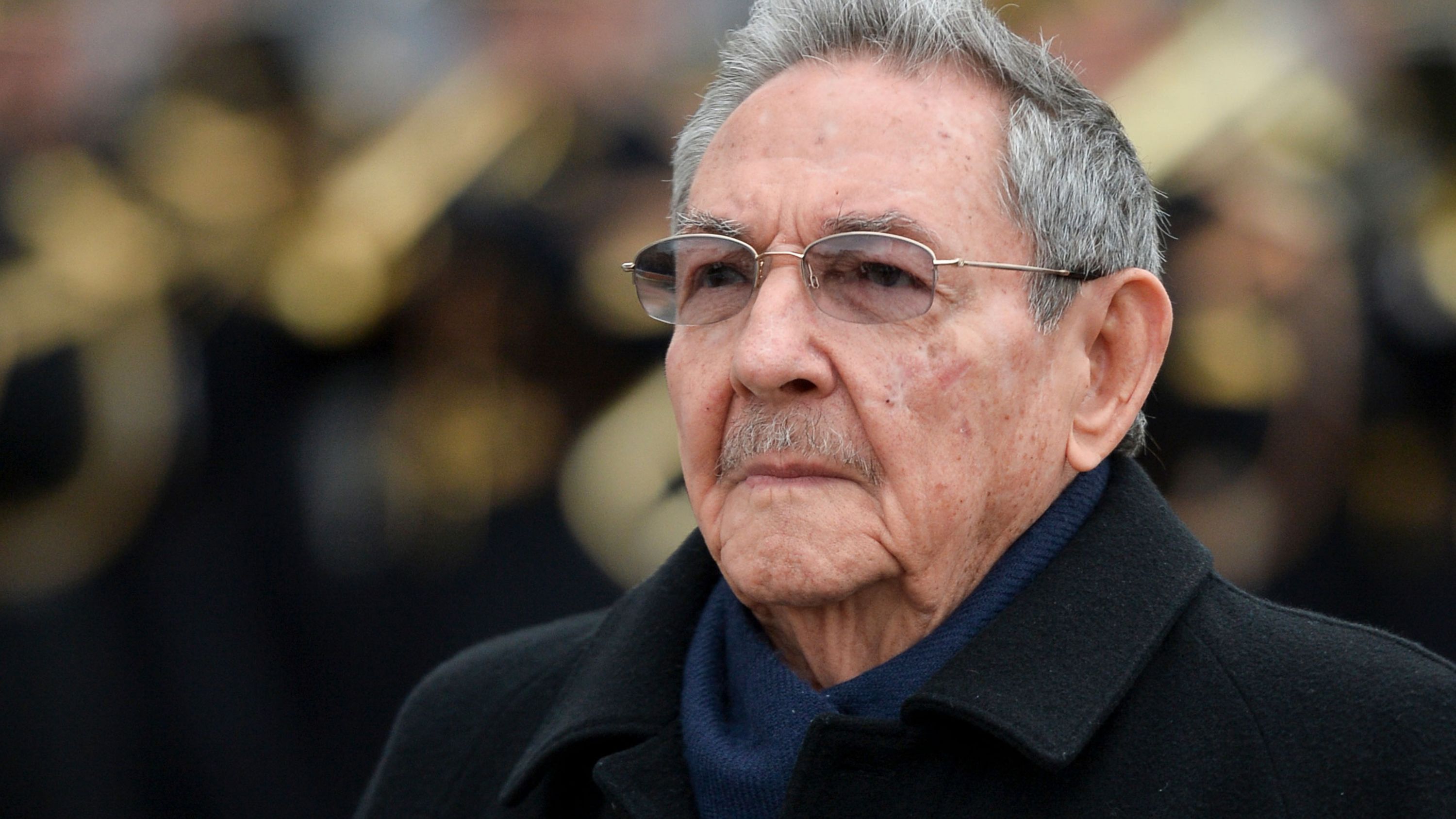
Raúl Castro
 Cuba
CubaAlso known as: Raúl Modesto Castro Ruz, El Comandante, Raúlito
Birthday
June 3, 1931
Birth Sign
Gemini
Birthplace
Birán, Holguín Province, Cuba
Age
95 years old
Height
5 ft 10 in (178 cm)
About
Raúl Modesto Castro Ruz is a Cuban politician and military general who served as the de facto leader of Cuba for over half a century. Born on June 3, 1931, in Birán, Holguín Province, he rose to prominence as the younger brother of Fidel Castro and a central figure in the Cuban Revolution. He held the highest offices in the Cuban state, serving as President from 2008 to 2018 and First Secretary of the Communist Party of Cuba from 2011 to 2021. His career began with the Cuban Revolution, where he served alongside his brother Fidel as a key military commander. After the revolution succeeded in 1959, Raúl took charge as Minister of the Armed Forces, holding that post for nearly five decades until 2008. This tenure made him the longest-serving defense minister in Cuban history. Throughout this period, he also held the title of First Secretary of the Communist Party from 2011 to 2021, cementing his role as the supreme authority within the state apparatus.
Even after stepping down from both major offices in favor of Miguel Díaz-Canel, Raúl retained influence as a member of the National Assembly representing Santiago de Cuba. In April 2026, the U.S. Department of Justice indicted Raúl Castro along with three other former Cuban officials for conspiracy to kill U.S. nationals related to the 1996 shooting down of two civilian planes by Cuban MiG fighters. Despite the indictment, Castro made a rare public appearance on August 13, 2026, at a centenary event honoring his brother Fidel, waving to crowds from a balcony. However, reports from early September 2026 indicate a severe decline in his condition, with multiple South Florida-based outlets reporting that Castro suffered a stroke and was gravely ill, reportedly hospitalized in critical condition. As of September 2, 2026, his exact location and condition remain unconfirmed by official Cuban state media, though international reports suggest he is receiving intensive care. His life story reflects the intense political climate of the 20th century and the ongoing complexities of the 21st century regarding his health and legal status.
Early Life & Background
Raúl was born into a rural family in Birán, Holguín Province, on June 3, 1931. His father, Ángel Castro Argiz, was a wealthy Spanish immigrant farmer, while his mother, Lina Ruz González, worked as a domestic worker. The family lived on the El Rubí plantation, where Raúl spent his early years working in the fields alongside his siblings. Unlike his older brother Fidel, Raúl initially attended Catholic schools but later shifted his focus toward political activism. He enrolled at the University of Havana's law school, where he became deeply involved in student protests against the government of Gerardo Machado and later Fulgencio Batista. His political activities led to his expulsion from the university in 1950.
Before fully committing to the revolutionary cause, he briefly studied medicine and worked as a doctor in a rural clinic. These formative experiences shaped his pragmatic approach to governance and his deep connection to the struggles of the working class. In 1947, he joined the Revolutionary Directorate (DR) at the University of Havana. He participated in an abortive attack on the Moncada Barracks alongside Fidel in 1953. Following the attack, Raúl was imprisoned but released in 1955 due to a general amnesty. He then traveled to Mexico to reorganize the 26th of July Movement with Fidel, setting the stage for their return to Cuba aboard the Granma in 1956. He also served as the first director of the Interior Ministry, managing internal security and intelligence before the final victory.
Career Growth
Upon returning to Cuba in 1956, Raúl served as a key military commander during the guerrilla war in the Sierra Maestra mountains. He was promoted to Colonel and later General, playing a crucial role in the victory over the Batista regime in 1959. Immediately after the revolution, Fidel appointed him Minister of the Armed Forces, a position he held for nearly five decades. During this time, he oversaw the militarization of the Cuban economy and the construction of the country's defense infrastructure. He also oversaw the controversial trials and executions of former Batista collaborators during the 1959 purge, a period marked by intense ideological cleansing.
In 2006, when Fidel Castro fell seriously ill, Raúl assumed acting presidential duties. He was officially elected President of Cuba and Commander-in-Chief of the Armed Forces in February 2008, succeeding his brother. As president, he initiated significant economic reforms, including limited market liberalization and opening to foreign tourism and investment, while maintaining strict political control. In 2011, he was elected First Secretary of the Communist Party of Cuba, consolidating his power as the supreme authority. In 2016, delivering a speech at the International Workers' Day parade, he announced his intention to retire, marking the end of the "Castro era." Raúl stepped down as President in April 2018, succeeded by Miguel Díaz-Canel. He continued to serve as First Secretary until April 2021, when he resigned at age 89, officially ending his formal leadership role. Despite retiring from these positions, he remained influential within the party apparatus and the National Assembly. His legacy includes transforming Cuba's military structure and navigating the country through the post-Soviet era and the U.S. embargo.
Career Timeline
Public Image & Style
Raúl stands approximately 5'10" (178 cm) with a distinctive mustache, often worn short and neatly trimmed. He prefers military fatigues or simple civilian attire like guayaberas. His public image evolved from a stern, ideological hardliner to a more pragmatic, albeit still authoritarian, administrator. Media portrayals often depict him as the "calm" counterpart to Fidel's fiery rhetoric, emphasizing his organizational skills and discipline. He is known for his stoicism and strategic thinking, which defined his approach to governance during the transition periods in Cuban politics. The most legendary aspect of his life is his role as a guerrilla commander, where stories of his tactical brilliance and stoicism during the mountain campaign are foundational to Cuban revolutionary mythology. He received numerous state honors, including the Order of Lenin, the Hero of the Republic of Cuba, and the Order of José Martí, reflecting his status as a head of state and revolutionary leader.
Fame & Fandom (iFAMOUS Rankings)
iFANN has not yet collected fame data for this person. Raúl Castro does not have a traditional fandom in the pop culture sense. Instead, he commands a devoted base of supporters within the Communist Party and among left-wing movements globally who view him as a symbol of anti-imperialism and sovereignty. Conversely, he faces a vast opposition group, particularly among Cuban exiles in the United States, who view him as a dictator responsible for human rights abuses. Fan-like campaigns exist only in the form of political activism: pro-Castro rallies in countries like Venezuela and Nicaragua, and protest vigils in Miami demanding accountability. He does not maintain a personal social media presence; his communications are disseminated exclusively through official state media channels like Granma and Cubadebate. As of late 2026, his potential passing could trigger a succession crisis, further intensifying global attention on his legacy.
Interesting Facts and Legends
Raúl spoke very little English throughout his life, relying on translators for most interactions with American officials, unlike his brother Fidel who was fluent. He is known to enjoy playing golf, a sport that was once restricted in Cuba but became more accessible to the elite under his tenure. He holds the rank of General of the Army, the highest rank in the Cuban military. His famous quotes include "We will not sell our soul for a piece of bread," referring to resistance against U.S. sanctions, and "The revolution is not a bed of roses," a common refrain used to justify hardships. As of September 2026, he is considered 95 years old. There are unconfirmed reports that he is gravely ill following a stroke, but Cuban officials have not confirmed his death. If deceased, his estate would likely be subject to complex legal battles involving the Cuban government and his family members.
Notable Quotes
“We will not sell our soul for a piece of bread.”
“The revolution is not a bed of roses.”
“I am not leaving; I am retiring.”
Family & Personal Life
Raúl was married to Vilma Espin Guillois from 1959 until her death in 2007. The couple met in the early 1950s during their university years in Havana; she was a fellow revolutionary activist. Their marriage was both a personal union and a political alliance, as Espin founded the Federation of Cuban Women (FMC), which she led until her death. They had four children: Raúl Antonio (known as "Raito"), Alejandro, Alina Fernández, and José Ramón. Following Vilma's death, no widely confirmed public marriages or long-term romantic relationships were reported. His daughter Alina emigrated to Spain and became a vocal critic of the regime, while his son Raito remained close to the family business and government interests. The relationship between Raúl and his daughter Alina remains particularly strained, with her writing books criticizing the regime after defecting.
Notable Connections
Relationships & Dating History
Raúl Castro was married to Vilma Espin Guillois from 1959 until her death in 2007. The couple met in the early 1950s during their university years in Havana; she was a fellow revolutionary activist. Their marriage was both a personal union and a political alliance, as Espin founded the Federation of Cuban Women (FMC), which she led until her death. They had four children together: Raúl Antonio (Raito), Alejandro, Alina Fernández, and José Ramón. Following Vilma's death in 2007, there were no widely confirmed public marriages or long-term romantic relationships reported in credible sources. While rumors occasionally surfaced regarding associates or distant relatives, no specific partner has been publicly acknowledged since 2007. As of late 2026, Raúl Castro is considered widowed. His children have had varying degrees of public visibility; notably, his daughter Alina Fernández emigrated to Spain and became a vocal critic of the regime, while his son Raito remained close to the family business and government interests. His relationship with his daughter Alina Fernández remains particularly strained due to her defection and criticism.
- MarriedVilma Espin Guillois1959 - 2007Met during university years; she founded the Federation of Cuban Women.
Salary, Net Worth In 2026
$10 Million
iFANN Editorial Team estimate
Exact net worth figures for Raúl Castro are notoriously difficult to verify due to the opaque nature of the Cuban state economy and his position as a head of state. However, estimates suggest he accumulated significant wealth through state-controlled mechanisms, though much of it is tied up in assets rather than liquid cash. Various financial analysts and investigative reports estimate his personal wealth, including real estate, luxury goods, and access to state resources, to be between $5 million and $15 million USD, though some speculative reports claim higher figures if all state-linked assets are counted. These figures are not audited public records.
His income primarily came from his salary as a high-ranking government official, which was modest by Western standards but provided access to exclusive housing, vehicles, and healthcare. The bulk of his "wealth" is likely derived from the ability to acquire property and goods through state channels, as well as potential offshore holdings or investments managed by trusted associates. There is no public disclosure of an estate value as of 2026. Given the recent reports of his critical illness, any estate planning would be private. The U.S. indictment in May 2026 carries potential life sentences, adding a layer of legal complexity to his financial standing.
Awards Won (3)
Raúl Castro received numerous state honors rather than entertainment awards. He was awarded the Order of Lenin multiple times by the Soviet Union, the Hero of the Republic of Cuba, and the Order of José Martí. He also received honorary doctorates from universities in Latin America, Europe, and Asia. His military rank of General of the Army stands as the highest distinction in the Cuban armed forces.
Multiple · State Honor
Service to the Soviet Union and Cuba
1975 · National Distinction
Service in the Cuban Revolution
Known For
Cuban Revolution
1953-1959 · Military Commander
President of Cuba
2008-2018 · Head of State
First Secretary of the Communist Party
2011-2021 · Party Leader
Keywords
Sources
Quick Facts
- Profession
- politician, military personnel
- Born
- June 3, 1931
- Birthplace
- Birán, Holguín Province, Cuba
- Gender
- Male
- Spouse
- Vilma Espin Guillois
- Birth Sign
- Gemini
Personal Details
- Full Name
- Raúl Modesto Castro Ruz
- Height
- 5 ft 10 in (178 cm)
- Spouse
- Vilma Espin Guillois
- Children
- Raúl Antonio Castro Espín, Alejandro Castro Espín, Alina Fernández Castro, José Ramón Castro Espín
- Education
- University of Havana (Law), University of Havana (Medicine)
Frequently Asked Questions
How old is Raúl Castro?
Is Raúl Castro dead?
Who is Raúl Castro married to?
Why was Raúl Castro indicted by the US?
What is Raúl Castro's net worth?
Join the community
fans discussing