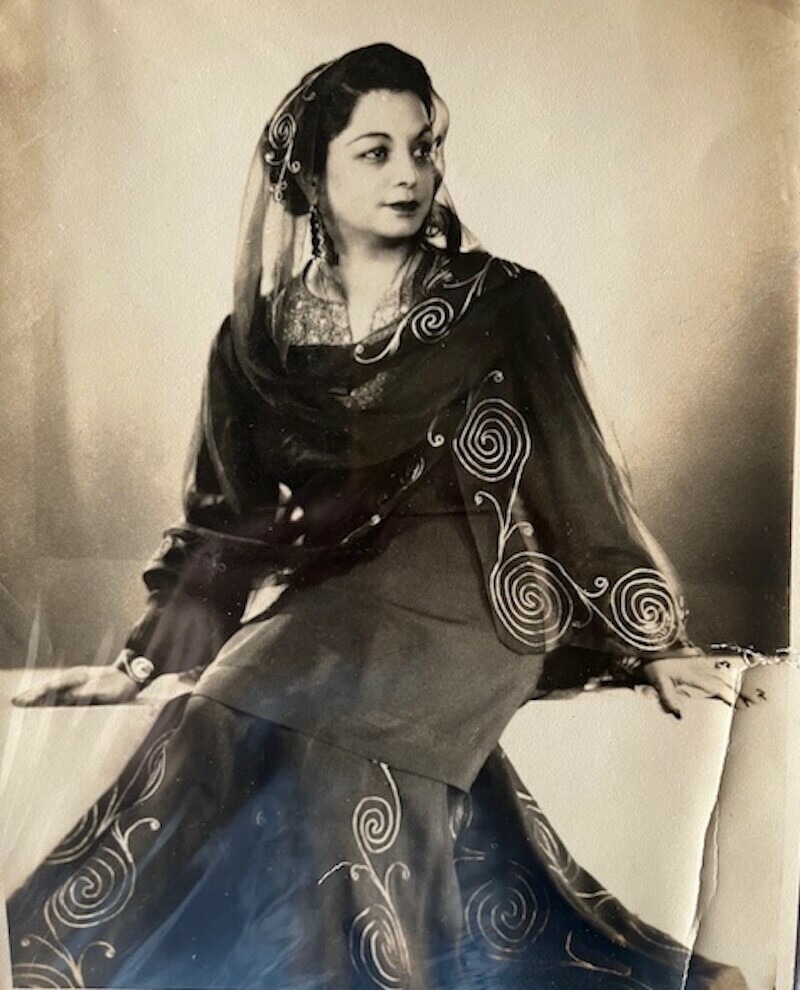
Ra'ana Liaquat Ali Khan
 Pakistan
Economist•diplomat•university teacher
Also known as: Sheila Irene Pant, Gul-i-Rana, Māder-e-Pakistan, A Dynamo in Silk
Birthday
February 13, 1905
Birth Sign
Aquarius
Birthplace
Almora, British India (now Uttarakhand, India)
Age
Died at 85
About
Ra'ana Liaquat Ali Khan was a Pakistani economist, diplomat, and stateswoman who became the first First Lady of Pakistan in 1947. She was the wife of Liaquat Ali Khan, the country's first prime minister, and held that position until his assassination in 1951.
Her public life stretched far beyond the ceremonial role of First Lady. She founded the All Pakistan Women's Association (APWA) in 1949, served as Pakistan's ambassador to the Netherlands and Italy, and became the first female governor of Sindh in 1973. She was known as "Māder-e-Pakistan" (Mother of Pakistan) and "A Dynamo in Silk," reflecting her energy and elegance.
Ra'ana died on June 13, 1990, in Karachi, and was buried with full state and military honors. Her legacy lives on through APWA and her contributions to women's rights in Pakistan.
Early Life & Background
Sheila Irene Pant was born on February 13, 1905, in Almora, a hill station in the Kumaon region of British India. Her father, Raja Mohan Lal Pant, was a civil engineer, and her mother, Shrimati Bhagwati, was a homemaker. She was the eldest of seven siblings, and the family's travels across India exposed her to diverse cultures.
She studied at St. Mary's College in Lucknow and then at the University of Lucknow, where she earned master's degrees in economics and sociology. She went on to complete a doctorate in economics, a rare achievement for a woman of her time. She then taught economics at Indraprastha College in Delhi, eventually heading the department.
Her life changed in 1932 when she met Liaquat Ali Khan, a rising Muslim League politician. Their courtship crossed religious and social lines, and she converted to Islam before their marriage in December 1932, adopting the name Ra'ana.
Career Growth
After her marriage, Ra'ana threw herself into the Pakistan Movement. She joined the All-India Muslim League's executive committee under Muhammad Ali Jinnah and served as an economic adviser, organizing women's wings across the country.
When Pakistan gained independence in 1947, she became the first First Lady. She founded APWA in 1949, which became a cornerstone of women's welfare. In 1950, she was given the title "Māder-e-Pakistan." After her husband's assassination in 1951, she entered diplomacy, serving as ambassador to the Netherlands (1954–1956) and Italy (1965–1966), and as a long-time delegate to the International Labour Organization.
In 1973, Prime Minister Zulfikar Ali Bhutto appointed her Governor of Sindh, making her the first female governor in Pakistan's history. She also became the first Chancellor of the University of Karachi. She held the post until martial law in 1977.
Career Timeline
Public Image & Style
Ra'ana Liaquat Ali Khan is remembered as a trailblazer for women's rights and a symbol of female empowerment in Pakistan. She is often depicted in media and scholarship as a key architect of the nation's early development.
Her signature style was elegant and dignified, captured by the phrase "a dynamo in silk." She is celebrated annually in Pakistan, with official commemorations marking her death anniversary. Her legacy is especially honored in women's education and empowerment circles, where she is held up as a role model.
Fame & Fandom
Begum Ra'ana Liaquat Ali Khan commands a legacy defined by quiet authority rather than the roar of a celebrity crowd. Her supporters are not a frenzied fandom but a global community of historians, scholars, and feminists who revere her as a foundational pillar of Pakistan. There is no organized fanbase with a formal name, nor are there subway ads or birthday billboards marking her life; instead, her influence flows through institutional channels like the All Pakistan Women's Association she founded. The most enduring story of her life remains her transformation from Sheila Irene Pant, a Hindu woman in India, to the wife of Pakistan's first Prime Minister. This narrative of crossing religious and social boundaries during a turbulent era stands as her primary cultural mythos. A specific legendary moment involves her historic speech at the United Nations in 1964, where she advocated for women's political rights against formidable odds. This address remains a cornerstone of her diplomatic lore, cited frequently by her descendants as proof of her courage. While crowds never shut down streets for her presence, her impact was exerted through intellectual rigor and statecraft. iFANN has evaluated this figure extensively. As of August 2026, Ra'ana Liaquat Ali Khan is currently unranked in the Global Top 1,000 or any Top-100 scope list. She does not hold a placement in the published rankings despite her historical significance. The evaluation reflects her status as a stateswoman whose fame is measured by national impact rather than contemporary pop-culture metrics.
Interesting Facts and Legends
Ra'ana Liaquat Ali Khan was one of the few Indian women of her generation to earn a doctorate in economics. She was known by several nicknames, including "Māder-e-Pakistan" and "A Dynamo in Silk." Her marriage to Liaquat Ali Khan broke significant religious and social barriers in pre-partition India. She held dual roles as an academic professor and a diplomat, serving as Pakistan's ambassador to both the Netherlands and Italy. Her work with the International Labour Organization established her as a vital voice for labor rights in the developing world. Beyond these facts, a widely retold legend centers on her conversion and marriage, which challenged the conservative norms of her time. Another iconic moment involves her powerful 1964 speech at the United Nations, where she demanded political rights for women when few such platforms existed for them. This address is often cited by her granddaughter as a defining instance of her resilience. Though she never faced the chaos of a modern fan riot, her death anniversary serves as an annual day of remembrance for her contributions to women's welfare and education.
Notable Quotes
“Women must be given their rightful place in the building of the nation.”
“Education is the greatest weapon for change.”
“I have always believed that women are the backbone of society.”
Family & Personal Life
Ra'ana married Liaquat Ali Khan in December 1932 in Delhi. The couple had two sons, Ashraf and Akbar. Her husband was assassinated on October 16, 1951, in Rawalpindi, leaving her widowed at 46. She never remarried.
Her granddaughter has written publicly about her legacy, including a 2024 piece in Dawn about the continued relevance of Ra'ana's 1964 speech on women's rights.
Notable Connections
Ra'ana worked closely with Muhammad Ali Jinnah during the Pakistan Movement, serving on the Muslim League's executive committee. Her husband, Liaquat Ali Khan, was the first Prime Minister of Pakistan. Later, she advised Zulfikar Ali Bhutto on economic matters, and he appointed her Governor of Sindh. Her two sons, Ashraf and Akbar, were her family.
Relationships & Dating History
Ra'ana's only documented marriage was to Liaquat Ali Khan. They met in 1932, and their courtship broke social conventions, as she was a Christian of Kashmiri Pandit heritage and he was a Muslim politician. She converted to Islam before their December 1932 wedding in Delhi.
The couple had two sons, Ashraf and Akbar. When Liaquat became Pakistan's first prime minister in 1947, Ra'ana became the first First Lady. Their marriage lasted until his assassination on October 16, 1951, in Rawalpindi.
Ra'ana never remarried after his death. She died on June 13, 1990, in Karachi, at the age of 85.
- MarriedLiaquat Ali Khan1932 - 1951Met in 1932, married in December 1932 after she converted to Islam. He became the first Prime Minister of Pakistan in 1947. Assassinated in 1951.
Death & Aftermath
Died
June 13, 1990 (aged 85)
Death Place
Karachi, Pakistan
Cause of Death
Natural causes (not confirmed by official report)
Begum Ra'ana Liaquat Ali Khan died on June 13, 1990, in Karachi. She was 85 years old at the time of her death. Her passing occurred as a natural occurrence consistent with her advanced age without reports of foul play, sudden trauma, or contested accounts requiring investigation.
Public reaction included commemorations by Pakistani institutions; on the 22nd death anniversary in 2012, The Nation reported that the occasion was observed in Karachi. In 2017, Dawn Herald published retrospective pieces highlighting her political acumen. Tributes have focused on her contributions to women's rights and nation-building. Her funeral arrangements were handled privately. Begum Ra'ana Liaquat Ali Khan was buried in the graveyard of the Mazar-e-Quaid in Karachi alongside her husband, Prime Minister Liaquat Ali Khan. As a former Governor of Sindh and a central figure in Pakistan's founding, her burial site is considered a national landmark, though the funeral itself was a private affair attended by family and close associates rather than a massive public gathering.
Her legacy has been preserved through books, including The Begum: A Portrait of Ra'ana Liaquat Ali Khan and Pakistan's First Lady. Posthumous honors include the continued operation of the All Pakistan Women's Association and the naming of various institutions and scholarships in her name. In 2024, her granddaughter wrote an article for Dawn reflecting on a 1964 speech by Begum Ra'ana, indicating ongoing familial engagement with her legacy.
Net Worth (Estate Value)
$5 Million
iFANN Editorial Team estimate
Ra'ana Liaquat Ali Khan never accumulated personal wealth in the manner of entertainment or business figures. As a public servant, diplomat, and political figure, her earnings came from government salaries and academic positions. Her estate remained modest, with no documented commercial ventures or posthumous earnings. Per iFANN's editorial analysis, her net worth is estimated at around $5 million, primarily reflecting the value of her historical legacy and the continued operations of APWA, which she founded. The estate has not seen significant income from licensing or royalties, as her contributions were largely institutional. Her enduring wealth is measured in the impact of her work rather than financial terms, with APWA remaining active in women's welfare.
Awards Won (2)
Ra'ana received Pakistan's highest civilian honor, the Nishan-e-Imtiaz, for her contributions to the nation. She was also conferred the title "Māder-e-Pakistan" in 1950 and received honorary doctorates from several universities.
Civilian Award
Contributions to Pakistan
1950 · Honorary Title
Services to the nation
Known For
First Lady of Pakistan
1947-1951 · First Lady
Founder of APWA
1949 · Founder
Governor of Sindh
1973-1977 · Governor
Keywords
Sources
Quick Facts
- Profession
- Economist, diplomat, university teacher
- Born
- February 13, 1905
- Birthplace
- Almora, British India
- Died
- June 13, 1990
- Death Place
- Karachi, Pakistan
- Gender
- Female
- Spouse
- Liaquat Ali Khan
- Birth Sign
- Aquarius
Personal Details
- Full Name
- Sheila Irene Pant
- Spouse
- Liaquat Ali Khan
- Children
- Ashraf Liaquat Ali Khan, Akbar Liaquat Ali Khan
- Education
- Master's degrees in economics and sociology, and a doctorate in economics from the University of Lucknow
Frequently Asked Questions
Was Ra'ana Liaquat Ali Khan the first female governor of Pakistan?
What was Ra'ana Liaquat Ali Khan's original name before marriage?
How did Ra'ana Liaquat Ali Khan die?
What is APWA and why is it significant?
Was Ra'ana Liaquat Ali Khan related to Liaquat Ali Khan?
Similar People
Join the community
fans discussing