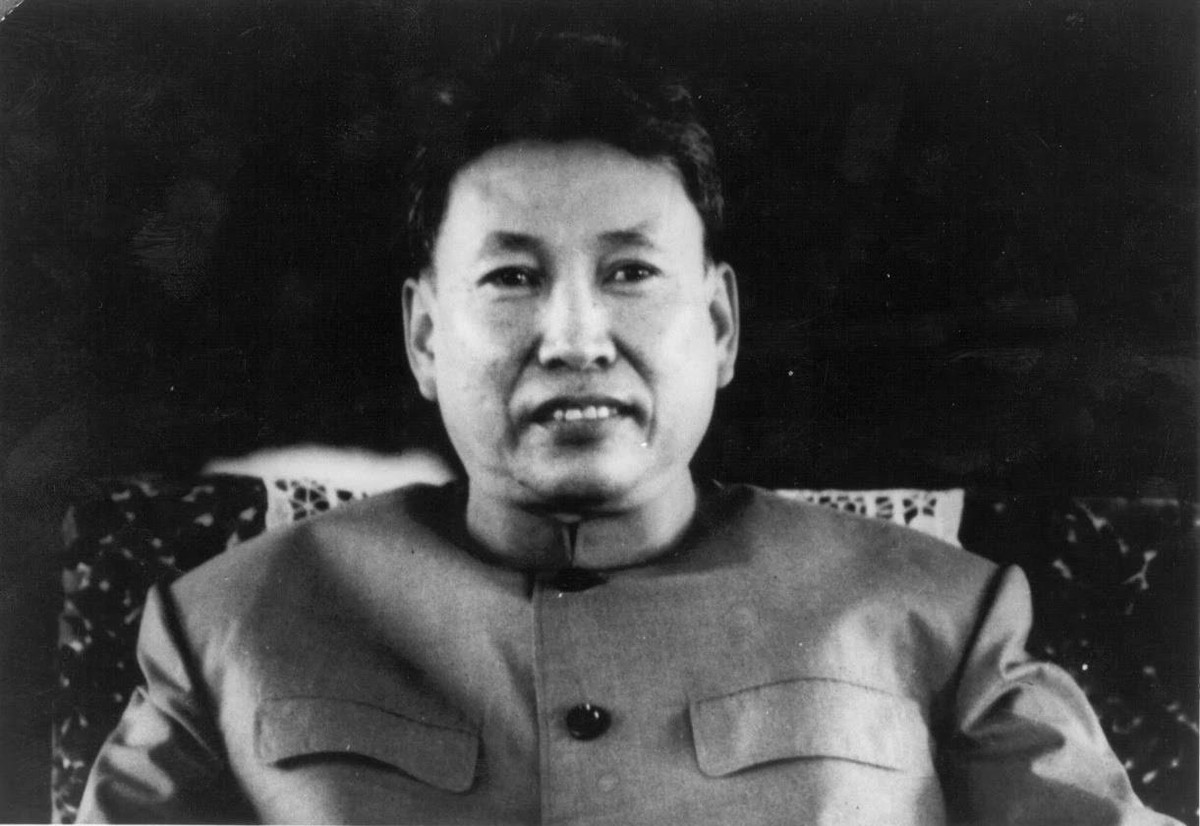
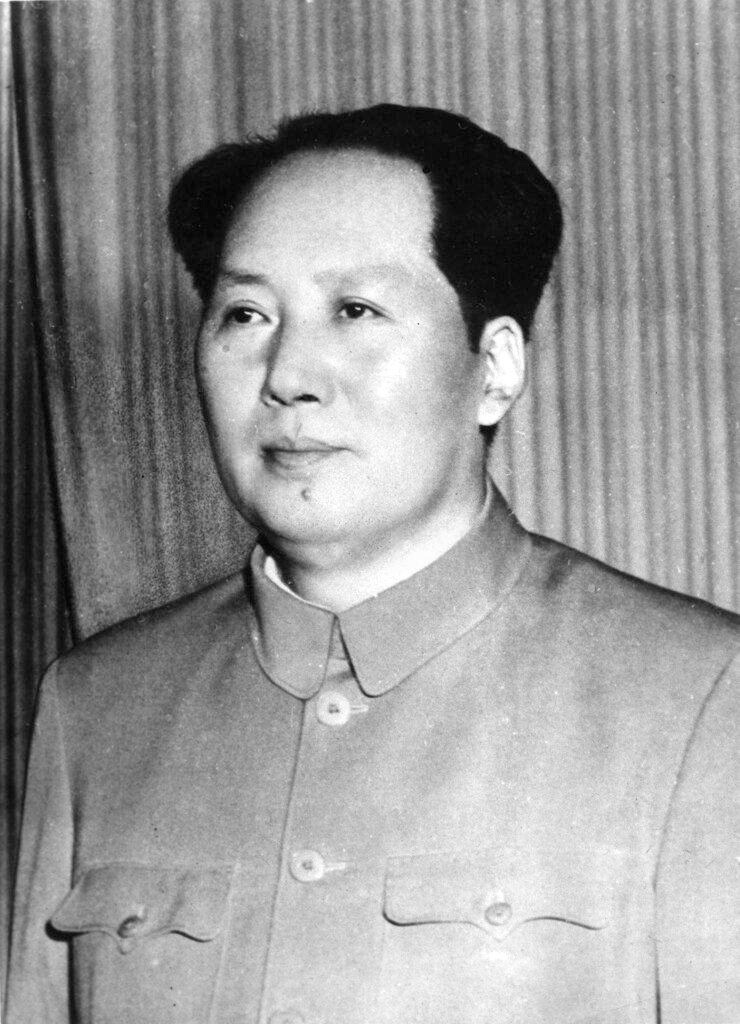
Pol Pot
 Cambodia
revolutionary•dictator•politician
Also known as: Saloth Sâr, Brother Number One
Birthday
May 19, 1925
Birth Sign
Taurus
Birthplace
Prek Sbauv, French Cambodia
Age
Died at 72
About
Pol Pot, born Saloth Sâr, was a Cambodian revolutionary and dictator. He led the Khmer Rouge, ruling Democratic Kampuchea from 1975 to 1979. His regime implemented radical, destructive policies that caused the deaths of an estimated 1.5 to 2 million people, a staggering figure that represented nearly a quarter of Cambodia's population at the time. His actions during the Cambodian genocide have firmly positioned him as one of the 20th century's most reviled figures. He was responsible for the infamous "Year Zero" policy, which aimed to erase all existing culture and restructure society into a purely agrarian, classless state. This vision led to forced labor, mass executions, and widespread starvation. Pol Pot died on April 15, 1998, in the Anlong Veng District, before facing trial for his crimes, leaving behind a legacy of immense suffering and a stark warning about totalitarian extremism.
Early Life & Background
Saloth Sâr, the man who would later adopt the name Pol Pot, was born in Prek Sbauv, a village in French Cambodia, on May 19, 1925. He grew up in a family that had connections to the royal court, which afforded him a more privileged upbringing than many of his contemporaries. His cousin, for example, was a concubine of King Sisowath Monivong. This background provided him with access to education, beginning with a monastic school in Phnom Penh, then a technical school in the capital. These early years exposed him to both traditional Cambodian society and the influences of French colonialism. A significant turning point in his life came in 1949 when he received a scholarship to study radio electronics in Paris, France, at the École française de radioélectricité.
During his four years in Paris, Saloth Sâr became deeply involved in radical politics. He joined the French Communist Party in 1951, immersing himself in Marxist literature and engaging with other Cambodian students who shared anti-colonial sentiments. It was during this time that he began to formulate his own unique, extreme interpretation of communist ideology, one that would later be applied with devastating consequences. He returned to Cambodia in 1953, shortly after the country gained independence from France. Upon his return, he became active in the underground communist movement, initially aligning with the Khmer Viet Minh, a group that had fought for independence. He taught history and French literature at a private school in Phnom Penh for a period, using this as a cover for his burgeoning political activities. Over the next decade, he worked tirelessly to build the Communist Party of Kampuchea, operating largely in secret. By 1963, he had ascended to the leadership of the party, consolidating his power and preparing for a prolonged armed struggle from the remote jungle bases along the Vietnamese border. This period of quiet organization and ideological development laid the groundwork for the radical transformation he envisioned for Cambodia.
Career Growth
After years of clandestine operations and guerrilla warfare from the jungles, Pol Pot's forces, the Khmer Rouge, achieved their long-sought victory on April 17, 1975. This marked the fall of Phnom Penh and the beginning of Democratic Kampuchea, with Pol Pot at its helm. The regime immediately embarked on a radical social engineering project, implementing what they called "Year Zero." This policy involved the forced evacuation of all cities, including Phnom Penh, with millions of people marched into the countryside to work in collective farms. Money, private property, and religion were abolished, and the country was sealed off from the outside world.
The goal was to create a purely agrarian, classless society, free from Western influence and perceived corruption. However, the implementation was brutal and chaotic. Intellectuals, professionals, and anyone associated with the previous regime or foreign cultures were systematically targeted and executed. Ethnic minorities, including Vietnamese, Chinese, and Cham Muslims, also faced severe persecution. Forced labor, starvation, and lack of medical care became widespread, leading to the deaths of a horrific number of people. The infamous Killing Fields across the country stand as a stark reminder of these atrocities, where mass graves held the bodies of over 1.3 million victims who were executed. Pol Pot's paranoia extended even to his own party, leading to purges and executions of those he suspected of disloyalty.
The regime's brutal reign, however, was relatively short-lived. In December 1978, Vietnam launched a full-scale invasion of Cambodia, prompted by border clashes and the Khmer Rouge's atrocities against Vietnamese civilians. By January 1979, the Vietnamese forces had captured Phnom Penh, overthrowing Pol Pot's government. Despite the collapse of his regime, Pol Pot retreated to the remote jungles near the Thai border, where he continued to lead a Khmer Rouge guerrilla insurgency for many more years, supported by some international factions. His influence gradually waned, and he remained a fugitive until his death.
Career Timeline
Public Image & Style
Pol Pot's public image, particularly in the years following his rule, was almost universally one of a ruthless, enigmatic dictator responsible for unspeakable atrocities. During his time as leader of Democratic Kampuchea, he maintained an almost invisible public profile within Cambodia itself, rarely appearing or speaking to the populace directly. This created a chilling mystique around him, as his directives were carried out by the Khmer Rouge cadres with brutal efficiency, often without a clear understanding of the ultimate authority behind them. Internationally, he was seen as the architect of a radical, xenophobic communist experiment that led to genocide.
His regime's aesthetic was one of austere, uniform simplicity, reflecting its rejection of modernity and embrace of a harsh agrarian ideal. The Khmer Rouge cadres often wore simple black peasant clothing, a visual representation of their "Year Zero" ideology. There was no "fandom" in the conventional sense for Pol Pot; instead, his rule generated terror and obedience through force. For those who survived his regime, and for historians and human rights advocates worldwide, Pol Pot represents the ultimate failure of political extremism and the profound dangers of unchecked power. His name remains synonymous with genocide and systematic human rights abuses, a stark historical example of the destructive potential of totalitarian ideology.
Fame & Fandom (iFAMOUS Rankings)
Pol Pot commands no fandom. There are no fan clubs, no birthday campaigns, and no organized following dedicated to his memory. The concept of a fanbase for the man who orchestrated the Cambodian Genocide is entirely absent from global culture. His legacy is defined by terror rather than adoration, with no crowds gathering to celebrate his life or rituals performed in his name. He remains a figure of historical warning, not cultural iconography. In August 2026, the iFANN Global Fame Engine evaluated his standing across all metrics. Pol Pot does not currently hold a placement in the published rankings (Global Top 1,000 or a Top-100 scope list). This placement reflects his status as one of the most reviled figures of the 20th century rather than any active celebrity following. The ranking encompasses his presence in history books, documentaries, and political discourse worldwide. While he holds a position within the top tier of infamy, he does not appear on any Top-100 scope lists associated with specific genres or entertainment categories. The absence of a formal fandom name underscores the reality that his audience consists solely of historians, scholars, and survivors seeking remembrance of atrocities. No fan-funded projects exist to support his legacy, nor do streaming pushes attempt to revive interest in his persona. The only narratives surrounding him are those of the Killing Fields, the forced evacuation of cities, and the torture center at Tuol Sleng. These stories serve as grim reminders rather than entertaining folklore. Recent coverage in 2025 and 2026 continues to focus on the commemoration of the genocide and the passing of survivors like Bou Meng. Political comparisons occasionally arise, but they never translate into genuine admiration or a cult of personality. Pol Pot's influence persists through the sheer weight of his crimes, yet he generates no positive engagement or loyal following in the modern era.
Interesting Facts and Legends
Pol Pot was not his birth name; he was born Saloth Sâr. He began using the pseudonym "Pol Pot" around 1975, a name believed to be a shortened form of "Politique Potentielle" (Political Potential) in French, or possibly "Political Potential" in English. During his rule, he was often referred to as "Brother Number One" within the Khmer Rouge hierarchy, signifying his ultimate authority. He was known for his extreme secrecy, rarely appearing in public or allowing himself to be photographed, even during his time as the leader of Democratic Kampuchea. Before fully dedicating himself to revolutionary activities, Saloth Sâr worked as a teacher in Phnom Penh, instructing students in history and French literature. This period of his life provided a cover for his burgeoning political organizing. His regime's policy of "Year Zero" aimed to restart Cambodian society, reflecting a radical and destructive vision for the country's future. The mythology surrounding him is built on verified historical atrocities rather than viral moments. Widely retold stories involve the "Killing Fields," the forced evacuation of cities like Phnom Penh into rural agrarian communes, and the torture center at Tuol Sleng (S-21) where nearly all prisoners were executed. These events are documented facts that serve as warnings rather than popular folklore. No legendary anecdotes exist about charismatic performances or crowd-pleasing antics; the only "legends" are the terrifying realities of his reign.
Family & Personal Life
Saloth Sâr, later Pol Pot, grew up in Prek Sbauv, a village in French Cambodia, within a family that held some influence and connections. His father, Saloth Phem, was a prosperous farmer, and his mother, Sok Nem, managed their household. The family's relatively comfortable status was partly due to a connection to the royal family: one of his cousins, Meak, became a concubine of King Sisowath Monivong, and later, Saloth Sâr's elder brother, Saloth Chhay, married another relative of the king. These connections offered Saloth Sâr opportunities, including early schooling in Phnom Penh. He had several siblings, though specific details about their lives are less documented than his own. Beyond his marriage to Khieu Ponnary, the research does not provide details about him having children or any current household structure at the time of his death. His later life as a guerrilla leader meant a solitary and often hidden existence, far removed from a traditional family setting.
Notable Connections
Pol Pot is primarily associated with the Khmer Rouge, the communist political and guerrilla movement he led. This association is inextricably linked to the period of Democratic Kampuchea and the horrific Cambodian genocide that occurred under his rule. His name is often mentioned in discussions of other totalitarian regimes and historical atrocities, serving as a chilling example of extreme ideological implementation. He is also associated with the concept of "Year Zero," a radical policy aimed at completely restructuring society.
Relationships & Dating History
Saloth Sâr, known as Pol Pot, had one publicly recognized marriage during his lifetime. He married Khieu Ponnary in 1956. Khieu Ponnary was herself a prominent figure in the Cambodian communist movement, an intellectual who had also studied in Paris. Their union was reportedly one of shared revolutionary ideals and political commitment, reflecting the strong bonds formed among the small group of Cambodian intellectuals who would eventually become the core leadership of the Khmer Rouge. Ponnary was a significant presence in the early days of the Communist Party of Kampuchea, and her involvement underscored the deep intertwining of personal and political lives within the movement.
As the years passed and the Khmer Rouge rose to power, their relationship, like many aspects of the regime, became shrouded in secrecy. However, in the later years of their marriage, Khieu Ponnary reportedly suffered from mental health issues, specifically being diagnosed with chronic schizophrenia. This illness eventually led to a separation. While the exact date of their divorce is not widely publicized, reliable historical accounts indicate that Pol Pot divorced Khieu Ponnary in the late 1980s. This meant that at the time of his death on April 15, 1998, Pol Pot was no longer married. He was reportedly single after his divorce from Khieu Ponnary.
- DivorcedKhieu Ponnary1956 - 1980They married in 1956, sharing revolutionary ideals, but divorced in the late 1980s after she developed chronic schizophrenia.
Death & Aftermath
Died
April 15, 1998 (aged 72)
Death Place
Anlong Veng, Cambodia
Cause of Death
Heart attack
Pol Pot died on April 15, 1998, in a jungle hideout near Anlong Veng in northern Cambodia. He collapsed while under house arrest by his own Khmer Rouge comrades and was found dead shortly after. The group reported his cause of death as a heart attack, a ruling based on medical assessments from doctors who attended him immediately following the collapse. His final days followed a violent internal coup in July 1997, where factions led by Ta Mok arrested him for ordering executions of senior rivals. His health deteriorated rapidly during this period of re-education, marked by high blood pressure and heart disease before he passed alone in his hut. News of his death triggered spontaneous celebrations across Cambodia rather than mourning.
Citizens in Phnom Penh burned effigies of the former dictator, expressing joy that the source of the genocide had finally died. International institutions framed the event as the end of a dark chapter. His aides cremated his body secretly in the jungle near Anlong Veng to avoid political exploitation of his remains. The ashes were scattered or buried in an unmarked location. Foundations dedicated to preserving the memory of the genocide he orchestrated, such as the Documentation Center of Cambodia, work to counter his legacy instead. Several books and films analyze his life and crimes, including memoirs and documentaries like S-21: The Khmer Rouge Killing Machine and The Killing Fields.
Net Worth (Estate Value)
$0
iFANN Editorial Team estimate
Understanding Pol Pot's net worth in a conventional sense, especially for "2026", requires a different perspective than for a typical public figure. As a communist leader who abolished money and private property within Democratic Kampuchea, he did not accumulate personal wealth in the way a modern politician or businessman might. During his rule from 1975 to 1979, the entire nation was transformed into a collective farm, and individual ownership was eliminated. Any resources or assets were under the control of the state, not personally held by Pol Pot. After his overthrow in 1979, Pol Pot lived as a fugitive, leading a guerrilla insurgency from the jungles near the Thai border. During this period, his existence was one of austerity and constant movement, financed by external support for the Khmer Rouge as a political and military entity, rather than through personal income streams. He did not engage in business ventures, brand partnerships, or investments that would generate personal wealth. His needs were met by the remnants of his movement, which operated outside any recognized economic system. When Pol Pot died on April 15, 1998, he did not leave behind a personal estate, significant bank accounts, real estate holdings, or valuable intellectual property. His final years were spent under house arrest by fellow Khmer Rouge factions, a testament to his lack of personal power or accumulated riches at the end of his life. Per iFANN's editorial analysis, the total estimated net worth for Pol Pot in "2026" stands at $0.
Awards & Accolades
Keywords
Sources
Quick Facts
- Profession
- revolutionary, dictator, politician
- Born
- May 19, 1925
- Birthplace
- Prek Sbauv, French Cambodia
- Died
- April 15, 1998
- Death Place
- Anlong Veng District
- Gender
- Male
- Spouse
- Khieu Ponnary
- Birth Sign
- Taurus
- Education
- École française de radioélectricité
Personal Details
- Full Name
- Saloth Sâr
- Spouse
- Khieu Ponnary
- Children
- Education
- École française de radioélectricité
Frequently Asked Questions
Who was Pol Pot?
How many people died under Pol Pot's regime?
When and where did Pol Pot die?
What was Pol Pot's "Year Zero" policy?
What happened to Pol Pot after his regime fell?
Join the community
fans discussing