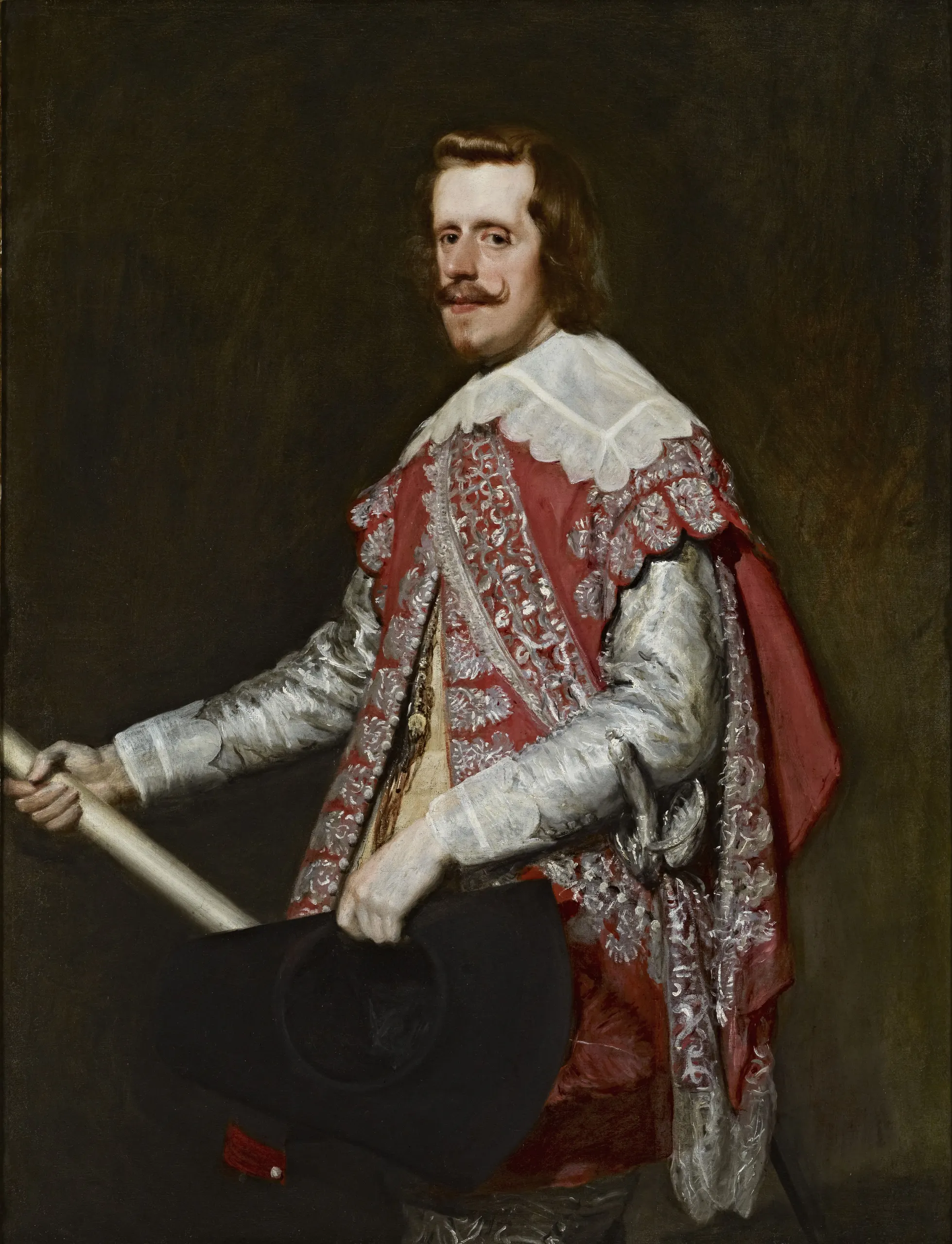
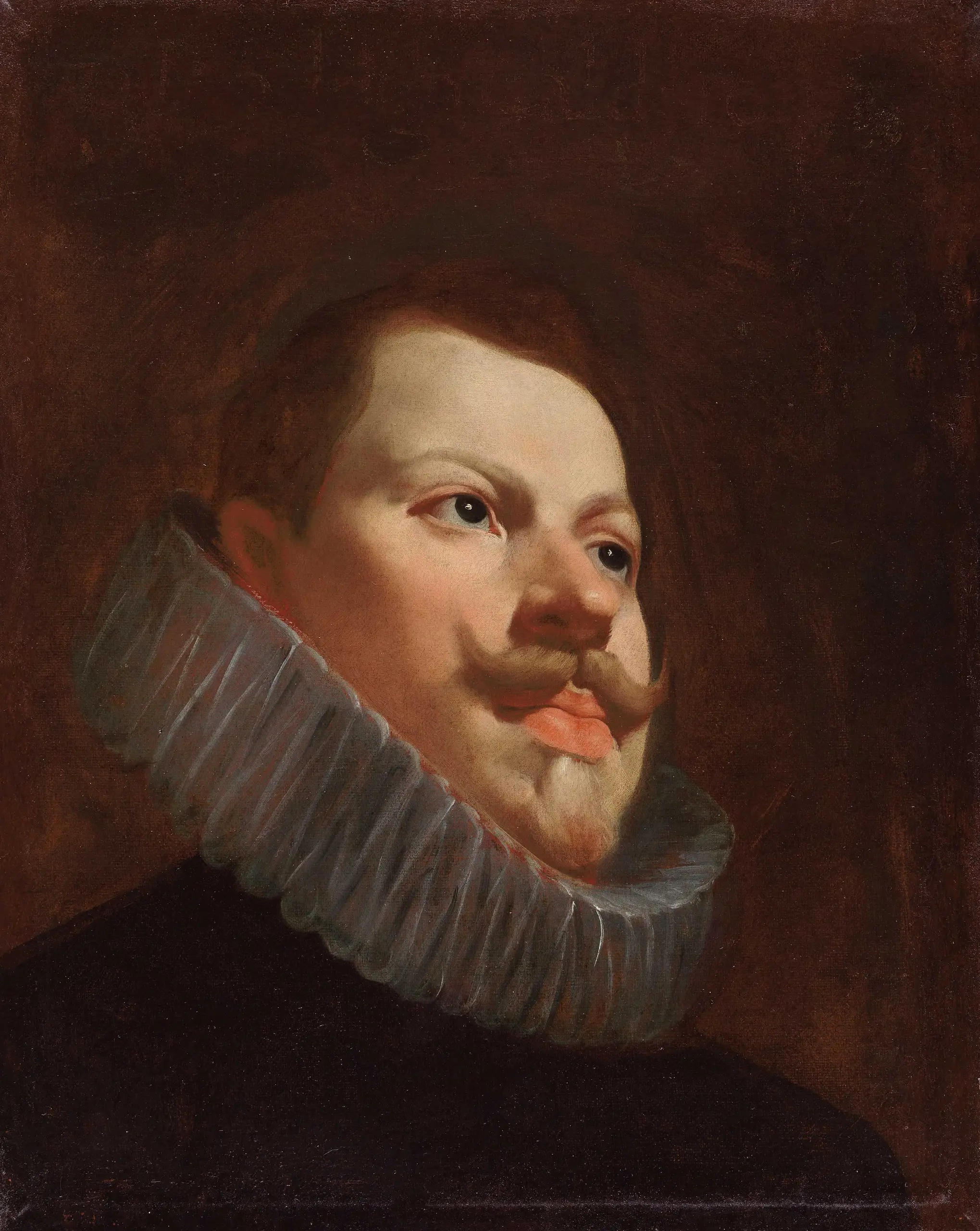
Philip IV of Spain
 Spain
SpainAlso known as: Felipe IV, The Planet King
Birthday
April 8, 1605
Birth Sign
Aries
Birthplace
Royal Palace of Valladolid
Age
Died at 60
About
Philip IV of Spain, known as the Planet King, was a monarch whose reign from 1621 to 1665 defined an era of both cultural brilliance and imperial strain. Born on April 8, 1605, in the Valladolid Royal Palace, he inherited a sprawling empire that stretched across continents. Philip is best remembered for his extraordinary support of the arts, most notably his patronage of Diego Velázquez, whose paintings captured the grandeur and melancholy of the Spanish court. Under his watch, the empire reached its greatest territorial extent, covering about 12.2 million square kilometers, but the seeds of decline were already sown. His inability to enact meaningful domestic and military reforms left the kingdom weakened, a challenge that would haunt his successors. When he died on September 17, 1665, at the age of 60, his son Charles II inherited a throne burdened by financial troubles and military setbacks. In Portugal, the Iberian Union collapsed in 1640, with John IV claiming the Portuguese crown. Philip's legacy is a study in contrasts: a patron of genius, yet a ruler whose empire began to falter under his watch. He held the title of King of Spain and Portugal until 1640, Holy Roman Emperor by right of his house, and Lord of the Netherlands. He was a recipient of the Order of the Golden Fleece, the highest chivalric order of the Habsburgs. While he did not win modern accolades, his legacy is enshrined in the preservation of the Spanish royal art collection, now housed largely in the Prado Museum in Madrid. He is frequently cited in historical academia as a pivotal figure in the history of the Baroque period and the decline of the Spanish Empire.
Early Life & Background
Felipe de Austria entered the world on April 8, 1605, within the stone walls of the Royal Palace of Valladolid. He was the second son of Philip III and Margaret of Austria, born into a family where the House of Habsburg practiced strict endogamy to preserve power. This practice resulted in the infamous Habsburg jaw, a deformity that would become a biological hallmark of his dynasty and eventually contribute to his own health struggles. His childhood unfolded in the shadow of his father's weak leadership, observing the slow erosion of Spain's global dominance as rival powers rose in Europe. The young prince received a rigorous education primarily from Jesuit tutors who instilled in him a deep Catholic faith and a heavy sense of royal duty. Despite this training, he reportedly lacked the sharp political acumen of his predecessors. Before ascending the throne, he spent his early years navigating the rigid protocols of the Spanish court, learning the intricacies of governance without ever truly testing his own mettle against external threats. He was also known for his love of hunting, which often took precedence over state business even before he became king. Additionally, he wrote several plays under the pseudonym "Felipe el Poeta," though few survive today. His pivotal moment arrived not through personal conquest or a rise from obscurity but through inheritance; upon the death of his father in 1621, he inherited an empire spanning over 12.2 million square kilometers. This massive territory came with severe financial strains and a militarily overstretched apparatus, setting the stage for a reign defined by the struggle to maintain a fading glory.
Career Growth
Philip IV ascended to the throne in 1621 at the age of 16, inheriting a vast but overstretched empire. His reign was marked by the ongoing Thirty Years' War (1618–1648), a brutal conflict that exposed the limits of Spanish military power and drained resources. Despite these challenges, Philip devoted himself to cultural patronage, assembling a court that attracted some of Europe's finest artists. Diego Velázquez, his court painter appointed in 1621, created masterpieces like Las Meninas and The Surrender of Breda, which remain enduring symbols of Spanish Golden Age art. Philip's support extended beyond painting to theater, literature, and music, fostering a vibrant cultural scene in Madrid. In 1635, he commissioned the construction of the Buen Retiro Palace, further cementing his artistic legacy. However, his governance was less successful. He struggled to implement reforms that could stabilize the economy and modernize the military, and his reliance on favorites like the Count-Duke of Olivares often led to political missteps. The Portuguese revolt in 1640 ended the Iberian Union, a significant blow to his prestige. By the time of his death, the Spanish Empire, though still the largest in the world, was showing clear signs of decay. Philip's reign thus stands as a paradox of artistic achievement and political decline, a period that would shape Spain's trajectory for generations. He signed the Treaty of the Pyrenees in 1659, ending the war with France, though the damage had already been done.
Career Timeline
Public Image & Style
Philip IV is remembered as a melancholic ruler, a man caught between the glory of the past and the decline of the future. Media portrayals in historical documentaries often focus on his physical appearance, highlighting the Habsburg jaw, and his struggle to maintain the empire's cohesion. His content's tone is one of grandeur mixed with tragedy, reflecting the contradictions of his era. The image of the "Planet King" suggests a figure who watched the stars of his empire fade while trying to maintain a facade of absolute power. Public perception is shaped by his famous lament regarding the burden of ruling an empire: "I have given my heart to the service of God and the state, but the state has forgotten me." Another notable sentiment expressed in his correspondence reflects his dedication to the arts: "Let us make Spain beautiful, even if we cannot make it strong." These quotes define his persona as a weary but dedicated monarch. His reliance on artistic propaganda, particularly the works of Velázquez, created a public persona of unshakeable majesty that stood in stark contrast to the crumbling economic and military reality of his kingdom.
Fame & Fandom (iFAMOUS Rankings)
Philip IV of Spain never inspired a modern fanbase. There are no organized clubs, no birthday billboards, and no digital campaigns to keep his memory alive in the way we see for contemporary icons. The admiration he receives comes from art historians and cultural scholars who study his reign as a pivotal moment in European history rather than from a community of devotees performing rituals or driving chart movements. His legacy rests on the tangible output of his court: the masterpieces commissioned by a monarch who understood that an empire's power could be projected through paint and canvas even as its borders shrank. While the public interaction was strictly hierarchical and ceremonial during his lifetime, the enduring fascination with Philip IV remains academic and aesthetic. He is remembered not for viral moments or crowd disruptions, but for transforming the Spanish court into a center of artistic achievement under the brushstrokes of Diego Velázquez. This distinction separates him from figures who command living, breathing fandoms; his audience is one of observation and analysis rather than active participation. iFANN has evaluated this historical figure within its Global Fame Engine to determine his standing among the world's most recognized individuals. Philip IV of Spain is currently EVALUATED_UNRANKED and does not hold a placement in the published rankings for the Global Top 1,000 or any Top-100 scope list. The system confirms he lacks a formal fandom name, reflecting the absence of a documented fanbase structure. His fame exists as a historical constant rather than a fluctuating metric driven by current consumption signals. Recent news items from 2023-2026 relate to exhibitions of his art, such as the display of Velázquez's portrait of him at the Frick Collection in 2022 and various academic publications analyzing his reign. No new biographical information has emerged, as his life and death are well-documented historical facts.
Interesting Facts and Legends
Philip IV inherited a sprawling empire covering roughly 12.2 million square kilometers at its peak, yet his rule coincided with the slow decline of Spanish global dominance. Historians often contrast his lavish spending at court with the financial ruin plaguing the state during the Thirty Years' War. A defining physical legend surrounding the monarch involves the prominent Habsburg jaw, a deformity caused by generations of royal inbreeding that became a biological hallmark of his dynasty. Modern scientific analysis of his remains and portraits confirms this mandibular prognathism was not merely a stylistic quirk but a genetic reality. His height is not definitively recorded in standard biographical sources, but portraits suggest a stature typical for the era, though his physical frailty increased in his later years. Despite political instability and military setbacks like the loss of Portugal in 1640, Philip maintained a forty-four-year reign where he turned the Spanish court into a beacon of Baroque culture. The story of his "spend, spend, spend" approach juxtaposed against imperial collapse continues to be a recurring theme in historical accounts. Interesting trivia includes his role as a playwright himself; he wrote several plays under the pseudonym "Felipe el Poeta," though few survive. The incident everyone references is the creation of *Las Meninas* by Velázquez, which is often interpreted as a complex meditation on the nature of art, reality, and the monarchy itself. The painting captures Philip and his wife in the background, subtly asserting their presence despite their absence from the foreground action. Another iconic moment is the surrender of Breda, painted by Velázquez to depict the Spanish victory over the Dutch, a moment of triumph that was more symbolic than real given the eventual outcome of the war. These stories are verified documented events, not folklore, and serve as the primary performance of his reign.
Notable Quotes
“I have given my heart to the service of God and the state, but the state has forgotten me.”
“Let us make Spain beautiful, even if we cannot make it strong.”
Family & Personal Life
Philip IV married twice, each union driven by the strategic needs of the Habsburg dynasty. His first marriage took place in 1615 when he was just ten years old and his bride, Elisabeth of France (Isabella of Bourbon), was eight. They had five children together: Maria Theresa, Margaret Theresa, Charles II, Ferdinand Thomas, and Mariana Teresa. Elisabeth died in 1644 from complications related to childbirth. Following her death, Philip married her niece, Mariana of Austria, in 1649. This second marriage produced two surviving children: Charles II, who succeeded him, and Margarita Teresa. The relationship with Mariana was politically crucial, as she served as regent for their son after Philip's death. There are no records of romantic relationships outside of these two official marriages, consistent with the strictures of 17th-century European royalty. As of the historical record, Philip IV is deceased, having died on September 17, 1665, at the age of 60. He had seven children total from his two marriages, but only two survived to adulthood.
Notable Connections
Relationships & Dating History
Philip IV's marital life was dictated entirely by the political necessities of the Habsburg dynasty. His first marriage occurred in 1615 when he was just ten years old and his bride, Elisabeth of France (also known as Isabella of Bourbon), was eight. This union was arranged to strengthen ties between the Spanish and French crowns. They had five children together: Maria Theresa, Margaret Theresa, Charles II, Ferdinand Thomas, and Mariana Teresa. Elisabeth died in 1644 from complications related to childbirth. Following her death, Philip married her niece, Mariana of Austria, in 1649. This second marriage produced two surviving children: Charles II, who succeeded him, and Margarita Teresa. The relationship with Mariana was politically crucial, as she served as regent for their son after Philip's death. There are no records of romantic relationships outside of these two official marriages, consistent with the strictures of 17th-century European royalty. As of the historical record, Philip IV is deceased, having died on September 17, 1665, at the age of 60. Associated people include his father Philip III, mother Margaret of Austria, his favorite the Count-Duke of Olivares, and his court painter Diego Velázquez.
- MarriedElisabeth of France1615 - 1644First wife; mother of five children including Charles II; died of childbirth complications.
- MarriedMariana of Austria1649 - 1665Second wife; niece of first wife; mother of Charles II and Margarita Teresa; acted as regent after Philip's death.
Death & Aftermath
Died
September 17, 1665 (aged 60)
Death Place
Royal Palace of El Pardo, Madrid
Cause of Death
Natural causes from organ failure exacerbated by Habsburg genetic defects
The Spanish court fell into a profound silence as news spread that Philip IV had passed, marking the end of an era. Tributes poured in from high-ranking officials and clergy, while traditional observances like religious services signaled a nation's grief for a monarch who had once commanded an empire. The atmosphere was one of reverence rather than shock, consistent with the deep-seated loyalty owed to the crown during the seventeenth century. Philip died on September 17, 1665, within the confines of the Cuarto bajo del Rey (the lower floor of the king's quarters) at the Royal Palace of El Pardo near Madrid, unable to govern after a long decline exacerbated by the genetic frailty of his lineage.
His final weeks were spent receiving the last rites of the Catholic Church, with his wife Mariana of Austria and chief minister Don Luis de Haro effectively managing the kingdom's affairs in his absence. Historians attribute his passing to natural causes stemming from the cumulative effects of Habsburg inbreeding, specifically the physical deterioration associated with mandibular prognathism and general organ failure. His funeral was a grand state-sponsored ceremony held shortly after his death, likely at the Royal Monastery of San Lorenzo de El Escorial, where he was buried in the Royal Pantheon alongside other members of the Habsburg dynasty.
Notable attendees included Queen Mariana and their children, who gathered for elaborate religious performances celebrating his reign as a patron of artists like Diego Velázquez. While his estate was managed by his widow acting as regent for their young son Charles II, his legacy now lives on through the preservation of vast art collections in the Prado Museum and the National Gallery, London, serving as a central reference point for discussions on European history and the impact of dynastic inbreeding. The public reaction was one of reverence rather than shock, consistent with the loyalty owed to the crown. His funeral was a grand state-sponsored ceremony held shortly after his death, likely at the Royal Monastery of San Lorenzo de El Escorial, where he was buried in the Royal Pantheon alongside other members of the Habsburg dynasty. Notable attendees included Queen Mariana and their children, who gathered for elaborate religious performances celebrating his reign as a patron of artists like Diego Velázquez. While his estate was managed by his widow acting as regent for their young son Charles II, his legacy now lives on through the preservation of vast art collections in the Prado Museum and the National Gallery, London, serving as a central reference point for discussions on European history and the impact of dynastic inbreeding.
Net Worth (Estate Value)
$0
iFANN Editorial Team estimate
As a 17th-century monarch, Philip IV did not accumulate personal wealth in the modern sense, nor did he leave behind a liquid estate divisible by today's standards. His reign was characterized by immense expenditure at court, juxtaposed against the financial ruin plaguing the state. The treasury was depleted by the costs of war and the lavish patronage of the arts, leaving his successor with a bankrupt nation. The wealth of the Spanish crown during his time was immense in terms of territorial control and gold imports from the Americas, but the actual liquid assets available to the monarch were often insufficient to meet state expenses. There is no net worth figure to calculate for Philip IV, as currency valuation and personal asset tracking did not function as they do today. The financial legacy of his reign is measured not in dollars but in the debt accumulated by the Spanish state and the preservation of the art collection that now resides in the Prado Museum. It is well-documented that his reign was characterized by "spend, spend, spend" behavior at court, contrasting his lavish spending with the financial ruin of the state. The legacy of his reign lives on through the vast art collections preserved in the Prado Museum and the National Gallery, London.
Awards & Accolades
View 3 records, honours and achievementsKnown For
Las Meninas
1656 · Subject of painting
The Surrender of Breda
1634 · Subject of painting
King of Spain
1621 · Monarch
Keywords
Sources
Quick Facts
- Profession
- monarch, ruler, politician
- Born
- April 8, 1605
- Birthplace
- Valladolid Royal Palace
- Died
- September 17, 1665
- Death Place
- Royal Palace of El Pardo
- Gender
- Male
- Spouse
- Elisabeth of France, Mariana of Austria
- Birth Sign
- Aries
Personal Details
- Full Name
- Felipe de Austria
- Spouse
- Elisabeth of France, Mariana of Austria
- Children
- Charles II, Margarita Teresa, Maria Theresa, Ferdinand Thomas, Mariana Teresa
- Education
- Jesuit tutors
Frequently Asked Questions
Who was Philip IV of Spain?
Why did Philip IV die?
What was Philip IV's biggest achievement?
Did Philip IV lose territory during his reign?
How many children did Philip IV have?
Join the community
fans discussing