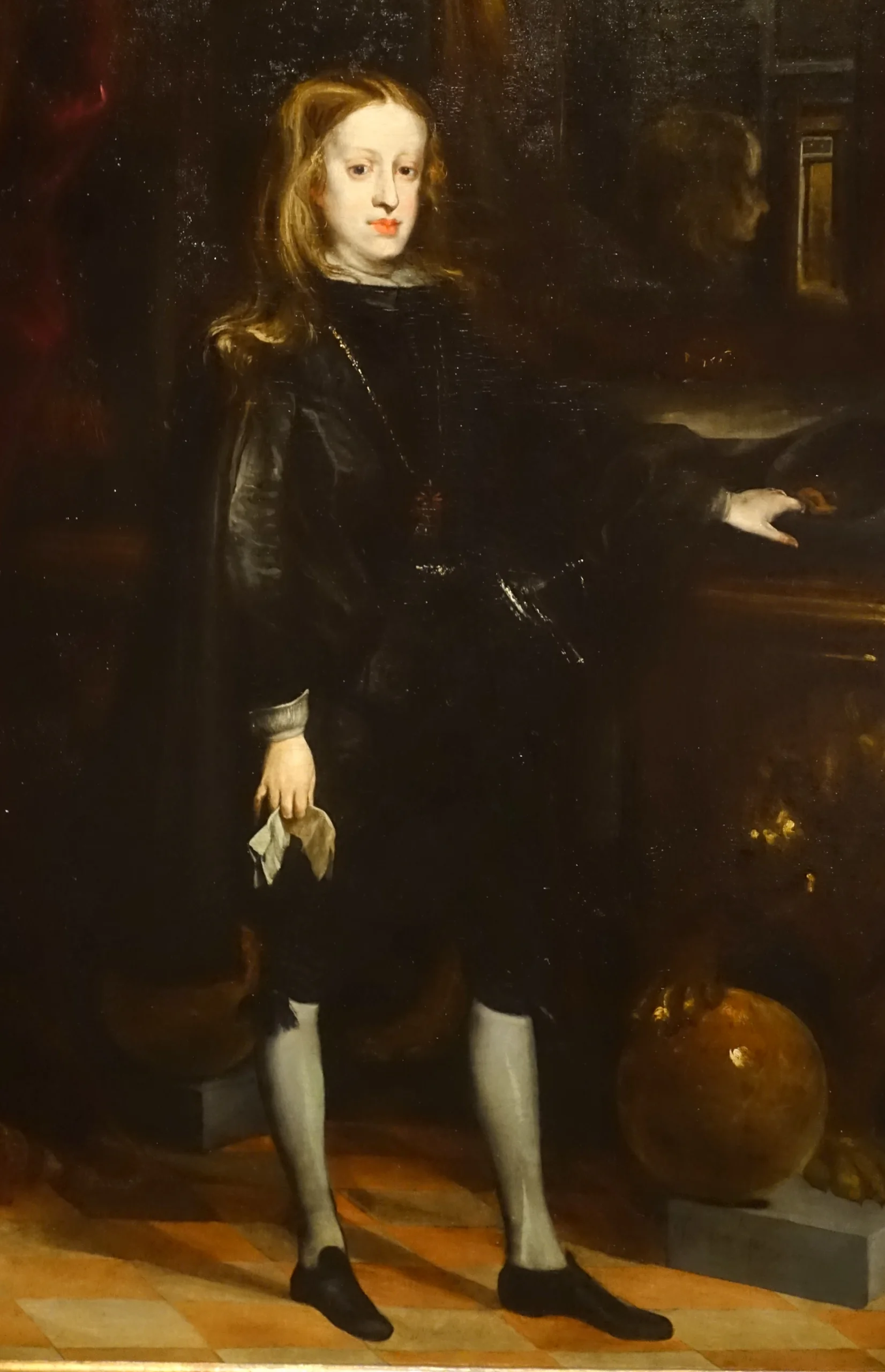
Charles II of Spain
 Spain
SpainBirthday
+1661-11-06
Birth Sign
Scorpio
Birthplace
Madrid
Age
Died at 38
About
Charles II of Spain, born in Madrid on November 6, 1661, was the last Habsburg ruler of Spain, reigning from 1665 until his death in 1700. His reign, marked by chronic illness and political intrigue, ended with his death without an heir, sparking the War of the Spanish Succession (1701–1714). Charles's health problems, the subject of much historical debate, made the succession question the central issue of European diplomacy for decades. One historian noted that "from the day of his birth, they were waiting for his death." The two main claimants were Charles of Austria and Philip of Anjou, the 16-year-old grandson of Louis XIV of France. Charles chose Philip as his successor just before dying in November 1700, but the prospect of a unified Spanish Empire under either candidate threatened the European balance of power, leading to a continent-wide conflict.
Fame & Fandom (iFAMOUS Rankings)
Charles II of Spain commands no organized fanbase, nor does he possess a formal fandom name, for the modern concepts of celebrity worship, social media campaigns, and fan rituals emerged centuries after his death in 1700. His legacy remains that of a tragic historical figure rather than a pop culture icon with an active following, lacking any recorded instances of crowds gathering in his honor or fan-funded projects dedicated to his memory. Despite this absence of contemporary adoration, his standing in global historical records remains significant according to the iFANN Global Fame Rankings. As of August 2026, he is the 91st most famous person in Spain, a position holding steady from the previous cycle. Furthermore, within the scope of national origin, he ranks as the 75th most famous person from Spain, maintaining his placement without fluctuation. These figures reflect a sustained recognition of his role as the final Habsburg ruler whose death precipitated a major European conflict. The rankings capture his enduring presence across media coverage, search trends, and consumption signals worldwide, ensuring that the story of the Bewitched King remains accessible to researchers and history enthusiasts alike. While he does not inspire the fervor seen among living celebrities, his specific place in the annals of Spanish history secures him a consistent spot in these authoritative lists.
Interesting Facts and Legends
Charles II was born on November 6, 1661, and died on November 1, 1700, at the age of 38, leaving no heir and ending the Spanish Habsburg dynasty. He earned the nickname "The Bewitched" (El Hechizado) during his lifetime to explain his severe health issues and inability to produce an offspring. Modern medical research attributes his condition to extreme inbreeding within the House of Habsburg, resulting in the distinctive "Habsburg jaw" and various physiological failures. A frequently cited legendary moment concerns the details of his autopsy, which revealed his heart was the size of a peppercorn and his lungs were corroded, serving as a grim illustration of the biological cost of dynastic intermarriage. In 1679, Charles undertook a journey to Mexico incognito to avoid the plague and political instability in Madrid, where he interacted with the viceroyalty before returning home. His death without an heir triggered the War of the Spanish Succession, a conflict that reshaped the map of Europe and stands as the central historical anchor for all discussions regarding his reign.
Death & Aftermath
Died
+1700-11-01 (aged 38)
Death Place
Madrid, Spain
Cause of Death
Natural causes from genetic defects and inbreeding
In the private chambers of the Royal Alcázar of Madrid, Charles II spent his final months in a state of profound debility, incapacitated by seizures and unable to consume solid food. By October 1700, the last Habsburg ruler had become bedridden, relying on liquid diets administered via tube or spoon while attended only by his confessor and physicians. He died on November 1, 1700, shortly after signing a will that named Philip, Duke of Anjou, as his successor, effectively ending the Spanish Habsburg line. The official cause was attributed to natural causes resulting from severe physical and mental deterioration linked to generations of consanguineous marriage within the House of Hapesburg. Modern medical analysis confirms he suffered from extreme pituitary dwarfism, hydrocephalus, and a severe mandibular prognathism that rendered him unable to chew or speak clearly, alongside likely epilepsy and infertility.
While accounts suggesting poisoning exist, mainstream historians widely consider them unconfirmed, attributing the death instead to the cumulative effects of genetic defects documented by court physicians during his decline. Public reaction in Spain and across Europe combined mourning with political anxiety, as the death of the so-called Bewitched King signaled an end to an era of stability and sparked fears of war. The event triggered immediate diplomatic maneuvering rather than public vigils, leading to the War of the Spanish Succession between the Bourbon claimant Philip V and the Austrian Archduke Charles. Funeral rites were conducted as a grand, state-sponsored affair attended by high nobility and clergy before the conflict fully erupted. Charles II was buried in the Royal Pantheon within the Basilica of the Monastery of El Escorial, the traditional resting place of Spanish Habsburgs.
His legacy has since shifted from dynastic tragedy to a cautionary tale in genetics, with modern studies frequently citing his condition as a prime example of the dangers of royal inbreeding. Upon his death, the entire Spanish Empire and its colonial holdings passed directly to Philip V, transferring the throne from the House of Habsburg to the House of Bourbon.
Awards & Accolades
Keywords
Quick Facts
- Profession
- ruler
- Born
- +1661-11-06
- Birthplace
- Madrid
- Died
- +1700-11-01
- Death Place
- Madrid
- Gender
- Male
- Spouse
- Marie Louise d'Orléans, Maria Anna of Neuburg
- Birth Sign
- Scorpio
Personal Details
- Spouse
- Marie Louise d'Orléans, Maria Anna of Neuburg
Join the community
fans discussing