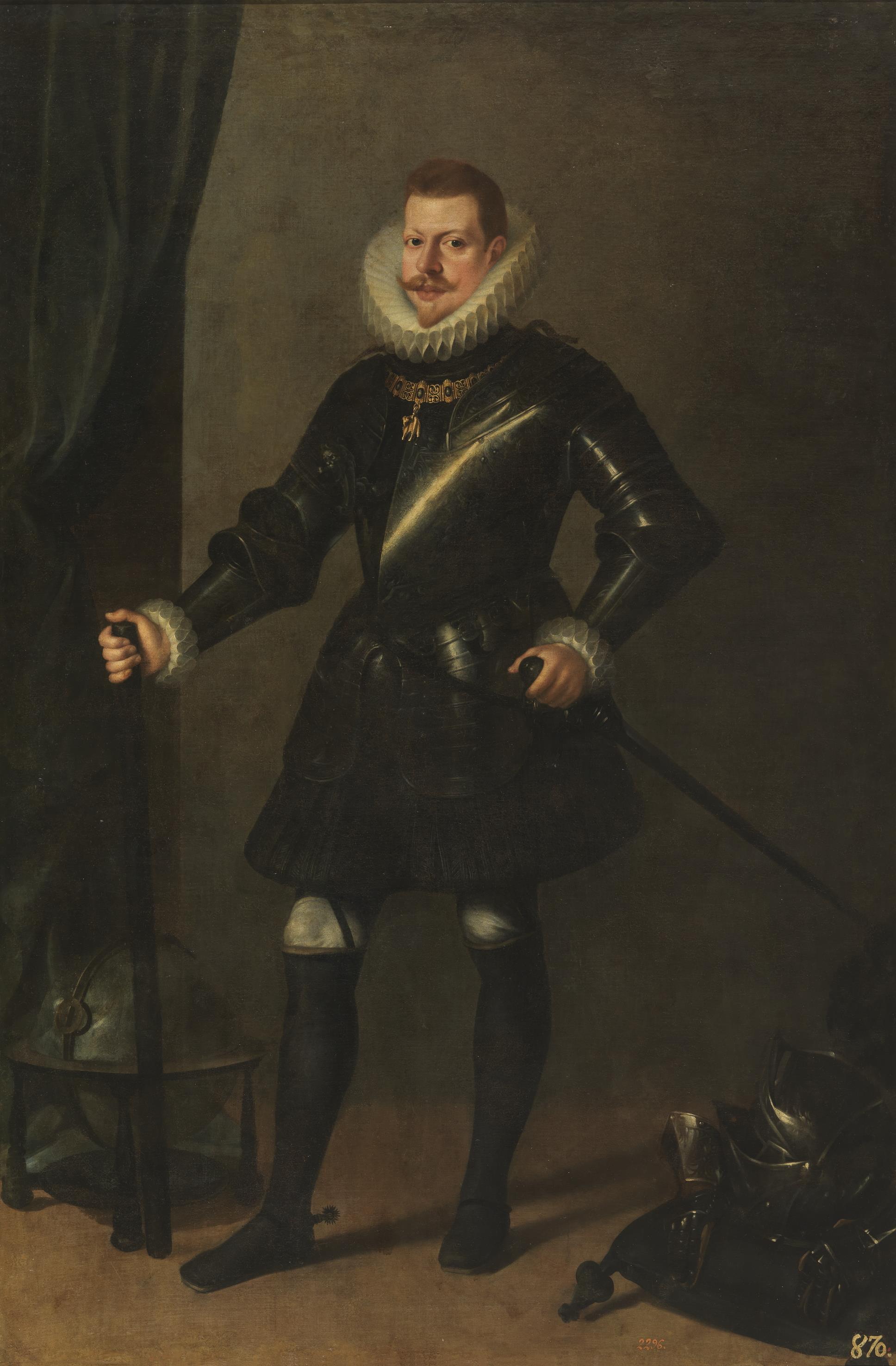
Philip III of Spain
 Spain
SpainBirthday
+1578-04-14
Birth Sign
Aries
Birthplace
Madrid
Age
Died at 42
About
Philip III of Spain, born in Madrid on April 14, 1578, was a Habsburg ruler who wore many crowns. As King of Spain and Portugal (where he was known as Philip II), he presided over the Iberian Union from 1598 until his death on March 31, 1621. His titles also included King of Naples and Sicily, Duke of Milan, and Lord of the Seventeen Provinces. His parents, Philip II and Anna of Austria, were uncle and niece as well as cousins, a reflection of the heavy inbreeding that marked his family line. Philip inherited the throne at just 20 years old and quickly delegated power to his chief minister, the Duke of Lerma. This reliance on a favorite drew criticism during his reign and after. But his era was not without achievements. He secured a temporary peace with the Dutch in 1609, a period some historians call the Pax Hispanica, and he entered the Thirty Years' War in 1618 with an initially successful campaign. His military strength was upheld by capable proconsuls like Ambrogio Spinola and the Duke of Osuna. Historians have often judged Philip harshly. C. V. Wedgwood called him an "undistinguished and insignificant man," while R. A. Stradling described him as a "miserable monarch." J. H. Elliott saw him as a "pallid, anonymous creature." In Spain, he was known as "Philip the Pious," reflecting his deep religious devotion, but his lack of focus contributed to the Spanish Empire's gradual decline. Economic troubles that began early in his reign are often traced as the starting point of that slide. Still, he ruled the Spanish Empire at its height, and his reign remains a pivotal chapter in Spanish history.
Fame & Fandom
Philip III of Spain commands a global attention profile defined by historical distance rather than modern adoration. The iFANN Global Fame Engine has evaluated this monarch, yet he currently holds no placement in the published rankings, including the Global Top 1,000 or any Top-100 scope list. This absence reflects a reality where his legacy exists within academic and numismatic circles rather than the active consciousness of a mass audience. Unlike contemporary figures whose fame fluctuates with daily headlines, Philip's recognition remains static, anchored in the specific eras of early 17th-century European history. Consequently, there is no documented fandom name for his supporters; the concept of a formal fanbase simply does not exist for a ruler who predates organized pop culture. While modern celebrity culture thrives on interactive rituals and viral moments, Philip's era offered only political loyalty or dissent. No crowds shut down streets in his honor, and no digital campaigns rally around his image. His reputation rests entirely on the historical narrative of his passivity and the economic shifts of the Spanish Empire, devoid of the charismatic performance that typically fuels a devoted following.
Interesting Facts and Legends
Philip III inherited the throne at age twenty but quickly delegated power to his chief minister, the Duke of Lerma, creating a reign often overshadowed by his father, Philip II. Historically known as "Philip the Pious," he was characterized by a withdrawal from active governance in favor of hunting and religious observances. A widely retold story from his court depicts him effectively ruling through a proxy while engaging in leisure activities, a dynamic that fueled narratives of laziness and allowed corruption to flourish within the administration. The most significant event marking his rule was the crowning ceremony in September 1598, which formally established his authority over both Spain and Portugal. Decades later, his legacy found new life in the numismatic world when a 1609 gold coin bearing his image sold for a record $3.49 million in November 2025, setting a European record for a modern gold coin. In February 2020, a portrait of the king was restored by Harvard Art Museums, renewing scholarly interest in his iconography without generating public frenzy.
Death & Aftermath
Died
+1621-03-31 (aged 42)
Death Place
Madrid, Spain
Cause of Death
Chronic health issues and gout
The passing of Philip III triggered a formal, somber silence across the Spanish court rather than spontaneous public grief. Tributes poured in from the Catholic Church and foreign dignitaries, focusing on his piety and the stability of the Habsburg dynasty as the new King Philip IV assumed the throne without legal contest. The royal court observed deep periods of mourning, while the church held masses for his soul, marking the end of an era defined by the influence of his chief minister, the Duke of Lerma. Philip died on March 31, 1621, at the Royal Palace of Madrid after spending his final days in private within the palace walls.
Contemporary accounts describe him as having been in declining health for some time, with his condition worsening significantly in the weeks leading up to his death. The historical consensus attributes his passing to natural causes, specifically chronic health issues including gout and complications from a long-standing illness. His funeral took place shortly after his death in a grand, state-sponsored event attended by the new monarch, high-ranking nobility, and clergy. The ceremony included elaborate religious rites and eulogies delivered by prominent church officials emphasizing his devotion to the Catholic faith. He was buried in the Royal Monastery of San Lorenzo de El Escorial, resting in the traditional Panteón de los Reyes alongside his ancestors.
All assets and titles passed directly to his son under standard succession laws. Posthumously, Philip III has remained the subject of numerous academic studies analyzing his reign and the power dynamics of his court. His legacy endures in art, such as a portrait restored by Harvard Art Museums in 2020, which depicts him holding a baton and resting his hand on a helmet.
Awards & Accolades
Keywords
Quick Facts
- Profession
- ruler
- Born
- +1578-04-14
- Birthplace
- Madrid
- Died
- +1621-03-31
- Death Place
- Madrid
- Gender
- Male
- Spouse
- Margaret of Austria, Queen of Spain
- Birth Sign
- Aries
Personal Details
- Spouse
- Margaret of Austria, Queen of Spain
Join the community
fans discussing