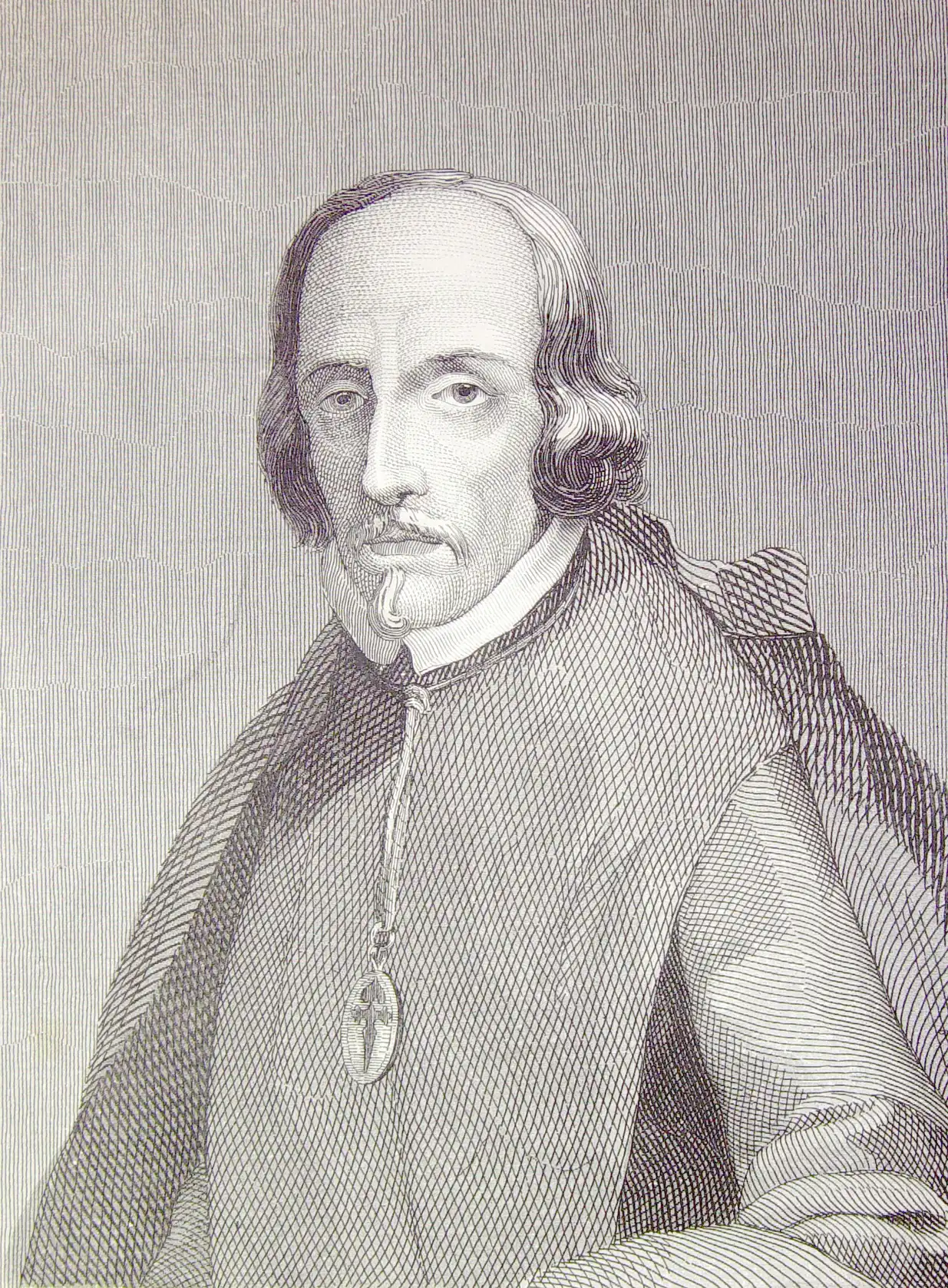
Pedro Calderón de la Barca
 Spain
Spainplaywright•poet•military personnel
Also known as: Pedro Calderón y Henao
Birthday
January 17, 1600
Birth Sign
Capricorn
Birthplace
Madrid, Spain
Age
Died at 81
About
Pedro Calderón de la Barca stands as the preeminent dramatist of the Spanish Golden Age and a towering figure in world literature. Born Pedro Calderón y Henao on January 17, 1600, in Madrid, he crafted profound philosophical verse dramas that explored themes of free will, honor, and the nature of reality. His career trajectory was unique among his peers, moving from military service and knighthood to the priesthood before his death in 1681. He is best known for his masterpiece La vida es sueño (Life Is a Dream), a work often referred to as "Spain's Hamlet" due to its similar exploration of madness, fate, and identity. This play remains central to the study of European theater and is frequently compared to Shakespeare's greatest works.
Calderón refined the comedia nueva form, shifting away from the chaotic plots of his predecessor Lope de Vega toward more structured, poetic, and philosophical narratives. His innovations foreshadowed metafiction and surrealism, influencing generations of European theater. Despite living centuries ago, his works continue to be produced in major venues worldwide, with recent productions scheduled for 2026, securing his place as one of the most significant literary figures in history. His reputation as a writer of profound metaphysical dramas has endured for over four centuries, cementing his status as the second most important playwright of the Spanish Golden Age after Lope de Vega.
Early Life & Background
Pedro Calderón y Henao was born into a wealthy and noble family in Madrid on January 17, 1600. His father, Diego Calderón, served as a secretary to King Philip IV, and his mother, María Henao, came from a prominent Castilian family. This privileged upbringing afforded him an excellent education at the Imperial College of Madrid (Colegio Imperial de los Jesuitas), where he studied humanities, rhetoric, and philosophy, laying the groundwork for his future literary career. Following his father's wishes, he later enrolled at the University of Alcalá de Henares to study law in the late 1610s, but his true passion lay in the arts and theater.
Before achieving fame as a playwright, Calderón's life took a dramatic turn when he left his legal studies to join the army. In 1625, he enlisted to fight in Italy against the French and Dutch. During his military service, he was wounded in battle, an event that interrupted his early literary output but provided him with firsthand experience of war and honor codes. These experiences would permeate his later works. While serving, he began writing plays, often performing them for fellow soldiers or local audiences. His first significant public success came in 1623 with a history play performed at the Royal Alcázar of Madrid, which caught the attention of the court and set the stage for his rise as the favorite dramatist of King Philip IV. This early success marked the beginning of his ascent to becoming Spain's leading playwright.
Career Growth
Calderón's ascent to become the favorite dramatist of King Philip IV marked the beginning of his golden era. His career milestones include the composition of La vida es sueño in 1635, widely considered his masterpiece and one of the greatest works of Spanish literature. In 1637, the King knighted him into the Order of Santiago, a prestigious military order, recognizing his contributions to Spanish culture and cementing his status as the successor to Lope de Vega as Spain's leading playwright. During the 1640s and 1650s, he entered a prolific period producing autos sacramentales, allegorical religious plays for the Corpus Christi festival. These were grand spectacles involving music, dance, and complex theology.
In 1651, he entered the priesthood, becoming a chaplain to the Royal Chapel of the Holy Sacrament. This marked a shift in his career focus toward religious themes, though he continued to write secular plays occasionally. He died in 1681 while still serving as a royal chaplain, leaving behind a legacy that defined the peak of Spanish drama. His impact on the industry was immense, refining the comedia nueva form and influencing generations of European theater. Recent adaptations continue to appear, including a 2024 production in St. Louis and scholarly articles analyzing his work from neuroscientific perspectives, proving his enduring relevance in the modern era.
Career Timeline
Public Image & Style
Calderón is portrayed as a solemn, intellectual, and deeply spiritual figure. His image is that of a man who transcended the earthly realm through his art and faith. Media portrayals emphasize his philosophical depth and his role as a moral guide through his plays. He is often compared to Shakespeare, particularly regarding the exploration of existential questions and the nature of reality. His reputation as a writer of profound metaphysical dramas has endured for over four centuries. Although he never appeared on modern magazine covers like TIME or Vogue, his image has featured on the covers of academic journals and cultural magazines focusing on theater history. For example, adaptations of his plays have been promoted in special issues of publications like The New York Times T Magazine, featuring actors like Antonio Banderas reading his poetry.
Fame & Fandom (iFAMOUS Rankings)
Calderón de la Barca commands a unique form of devotion that transcends the chaotic energy of modern celebrity culture. His audience is not a gathering of screaming fans or organized clubs, but rather a global community of scholars, theater practitioners, and students who treat his works with the reverence usually reserved for religious texts. There is no formal name for this collective; they are simply the keepers of the Spanish Golden Age, united by an appreciation for complex metaphysical drama rather than social media hashtags or fan rituals. While contemporary stars might rely on viral moments to sustain their fame, Calderón's legacy rests on the enduring power of plays like Life Is a Dream, which continue to be produced in major venues from London to California centuries after their debut.
This quiet but profound influence has secured his place in the historical consciousness of global entertainment. The iFANN Global Fame Rankings track this sustained attention across media coverage, search, and consumption signals worldwide, capturing how his work resonates in the modern era. His standing among literary giants remains exceptionally high, reflecting a consistent interest in his contributions to dramatic literature. He is currently the 29th most famous person in Dramas, a position that marks an upward shift from previous cycles. This ranking confirms that his relevance has not faded but has instead grown stronger as new generations discover the depth of his writing. Fan campaigns are typically academic or theatrical, focusing on reviving his plays in modern contexts rather than celebrity worship.
Interesting Facts and Legends
Pedro Calderón de la Barca served as a soldier before becoming a priest, enlisting in the army in 1625 to fight in Italy, an event that briefly interrupted his early literary career. He was the favorite dramatist of King Philip IV, who knighted him into the Order of Santiago in 1637, cementing his status as Spain's leading playwright following Lope de Vega. His masterpiece, La vida es sueño (Life Is a Dream), written around 1635, explores themes of free will and the nature of reality, remaining one of the most performed plays in the Spanish canon with recent notable productions at the Barbican in 2023 and Cal Shakes in 2015.
A layer of historical intrigue surrounds his final resting place, often cited as a mystery in biographical lore. In January 2021, news emerged regarding a hunt for his bones, involving a key and a casket found in Madrid, suggesting a long-standing effort to locate his exact burial site. While he did not experience the fainting crowds or street shut-downs typical of modern superstars, his knighthood and the creation of Life Is a Dream stand as the legendary moments that define his enduring mythos. These events are recorded as historical facts, yet they carry the weight of folklore for those who study the evolution of European theater. Additionally, his plays are often compared to Shakespeare's Hamlet, and he is frequently included in "Greatest Writers" lists alongside Cervantes.
Notable Quotes
“What is life? A frenzy. What is life? An illusion. A shadow, a fiction, and the greatest good is small; for all of life is a dream, and dreams are only dreams.”
“El honor es como el fuego, que quema sin quemar.”
Family & Personal Life
Calderón was born into a wealthy and noble family in Madrid. His father, Diego Calderón, served as a secretary to King Philip IV, and his mother, María Henao, came from a prominent Castilian family. This privileged upbringing afforded him an excellent education. There are no records of marriages, flings, or children in the biographical sources available. After his military service and early literary success, he dedicated his life to the Church. He entered the priesthood in 1651 and served as a chaplain until his death. Consequently, he remained celibate and unmarried during his final three decades. The concept of a current relationship status does not apply, as he has been deceased since 1681. Specific physical attributes such as height are not recorded in historical biographies from the 17th century.
Notable Connections
Lope de Vega, King Philip IV, Antonio Banderas
Relationships & Dating History
As a historical figure who lived in the 17th century, Pedro Calderón de la Barca did not have a dating history in the modern sense of public romantic relationships, engagements, or divorces. There are no records of marriages, flings, or children in the biographical sources available. After his military service and early literary success, he dedicated his life to the Church. He entered the priesthood in 1651 and served as a chaplain until his death. Consequently, he remained celibate and unmarried during his final three decades. The concept of a current relationship status does not apply, as he has been deceased since 1681. Associated people include his patron King Philip IV and his predecessor Lope de Vega, but no romantic partners are documented in historical records.
Death & Aftermath
Died
May 25, 1681 (aged 81)
Death Place
Madrid, Spain
Cause of Death
Natural causes (old age)
Pedro Calderón de la Barca died on May 25, 1681, in Madrid at the age of eighty-one. He passed away while still serving as a chaplain to the Royal Chapel of the Holy Sacrament, a role he had held since entering the priesthood in 1651. The exact medical cause of his death was never recorded in primary sources, though historical consensus attributes it to natural causes associated with old age given his long life and lack of documented illness prior to his passing. There are no detailed accounts of his final days or last public appearance.
His funeral was conducted with the solemnity befitting a royal chaplain and a national literary icon. He was buried in the Church of San Salvador, also known as San Ginés, in Madrid, the same church where he had served for many years. The burial was likely a private ceremony attended by fellow clergy, members of the Royal Court, and close associates, as public funerals of this nature in seventeenth-century Spain were often restricted to family and guilds unless specifically sanctioned by the monarch. Upon his death, he was immediately recognized as the successor to Lope de Vega as Spain's greatest playwright, cementing his legacy as one of the most distinguished poets and writers of the Spanish Golden Age.
Posthumously, Calderón has achieved enduring global recognition with numerous films, books, and academic studies dedicated to his life and work. Notable adaptations include The Night of Love (1927) and various modern stagings of his masterpiece Life Is a Dream, which continue to be performed globally. In 2021, a significant cultural effort involving radar scans and detective work sought to locate his physical remains after the original church was demolished and his grave site became unknown. This search highlights the ongoing dedication to preserving his memory, leading to his induction into various literary halls of fame and the establishment of scholarships and foundations dedicated to Spanish Golden Age literature. A production titled Sueño based on Life Is a Dream was scheduled for release in January 2026, indicating ongoing interest in his work.
Net Worth (Estate Value)
$0
iFANN Editorial Team estimate
Pedro Calderón de la Barca died in 1681, so he had no personal net worth in the modern currency sense. His estate value cannot be calculated in dollars. However, his intellectual property and legacy generate significant revenue today through production rights for specific modern translations, musical adaptations, and film versions. His plays are in the public domain in most jurisdictions, meaning there are no copyright royalties paid to heirs. Major revenue streams come from stage productions of Life Is a Dream and other plays, academic publications, and film adaptations such as The Night of Love in 1927. As a deceased historical figure, there is no active estate managed by a trustee. His works are maintained by academic institutions, theaters, and publishing houses. It is impossible to assign a specific dollar figure to his net worth, but his cultural capital is immeasurable, contributing billions annually to the global theater and literary industries through ticket sales, book sales, and educational licensing.
Awards & Accolades
View 7 records, honours and achievementsKnown For
Life Is a Dream
1635 · Playwright
The Mayor of Zalamea
1636 · Playwright
The Constant Prince
1637 · Playwright
Keywords
Sources
Quick Facts
- Profession
- playwright, poet, military personnel
- Born
- January 17, 1600
- Birthplace
- Madrid, Spain
- Died
- May 25, 1681
- Death Place
- Madrid, Spain
- Gender
- Male
- Birth Sign
- Capricorn
Personal Details
- Full Name
- Pedro Calderón y Henao
- Children
- Education
- Imperial College of Madrid; University of Alcalá de Henares
Frequently Asked Questions
Who was Pedro Calderón de la Barca?
When did Pedro Calderón de la Barca die?
Did Pedro Calderón de la Barca get married?
What is Pedro Calderón de la Barca's most famous play?
Where is Pedro Calderón de la Barca buried?
Join the community
fans discussing