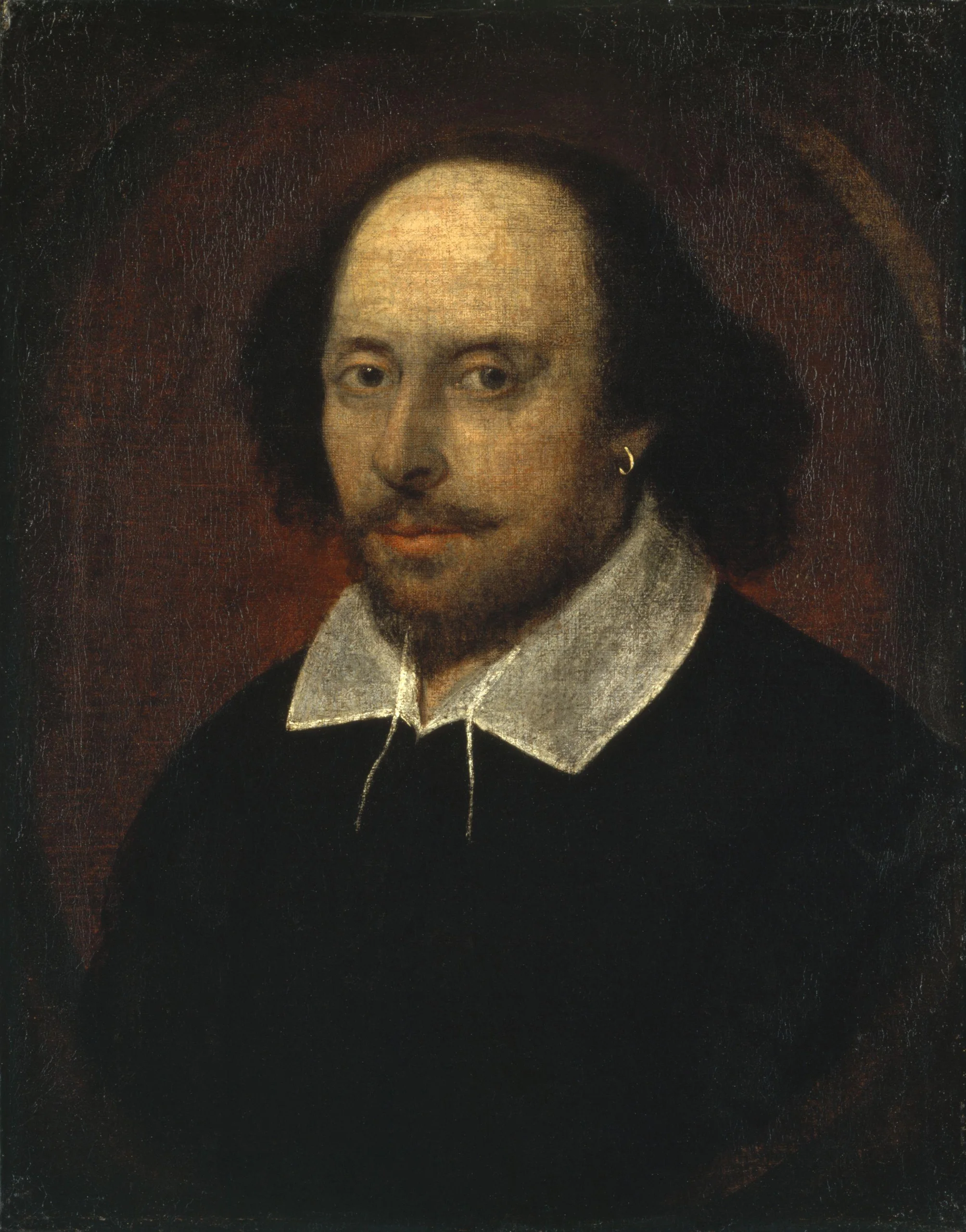
William Shakespeare
 United Kingdom
Also known as: The Bard, Bard of Avon, England's national poet
Birthday
April 23, 1564
Birth Sign
Taurus
Birthplace
Stratford-upon-Avon
Age
Died at 52
About
William Shakespeare was an English playwright, poet, and actor, widely regarded as the greatest writer in the English language and the world's greatest dramatist. He is often called England's national poet or the Bard. His works, including approximately 39 plays and 154 sonnets, have been translated into every major living language and are performed more often than those of any other playwright. Shakespeare's influence on literature and theater is immeasurable, with his words and phrases continuing to resonate in everyday speech. His legacy endures, celebrated as "not of an age, but for all time."
Early Life & Background
William Shakespeare was born on April 23, 1564, in Stratford-upon-Avon, a market town in Warwickshire. He was the third of eight children born to John Shakespeare, a respected glove-maker and alderman, and Mary Arden, who hailed from a prosperous local family. He grew up in Stratford-upon-Avon; however, three of his siblings tragically died in infancy, a common reality of the era. His early life was thus deeply rooted in this provincial setting, where he would receive his foundational education.
Shakespeare likely attended the King's New School in Stratford-upon-Avon, a free grammar school conveniently located a quarter-mile from his family home. Here, his studies would have immersed him in the foundations of classical learning, including Latin, rhetoric, and the works of prominent classical authors such as Ovid, Plautus, and Seneca. He concluded his formal schooling around the age of 14 or 15, and, like many of his contemporaries, did not pursue a university education. At the age of 18, he married Anne Hathaway, and together they had three children: Susanna, followed by twins Hamnet and Judith.
The period between 1585 and 1592 remains largely undocumented and is widely referred to as Shakespeare's "lost years," as no definitive records exist to detail his activities during this time. Speculation abounds regarding these years, suggesting he might have worked as a schoolmaster or perhaps joined a traveling theater troupe, honing skills that would later define his career. By the late 1580s, a pivotal shift occurred as he made the move to London, undoubtedly drawn by the burgeoning and dynamic theater scene of the capital. It was here, by the early 1590s, that William Shakespeare launched his career as an actor and writer for the Lord Chamberlain's Men, marking the beginning of his influential presence in English theater.
Career Growth
Shakespeare's first known plays, the three parts of Henry VI and Titus Andronicus, were performed in London around 1589-1592. In 1594 he became a shareholder and principal playwright for the Lord Chamberlain's Men, a position he held for the rest of his career. The company performed at the Theatre in Shoreditch until 1599, when they built the Globe Theatre on the south bank of the Thames. Shakespeare wrote his most famous comedies and histories in the 1590s, including A Midsummer Night's Dream (c. 1595), Romeo and Juliet (c. 1595), and Henry V (c. 1599). Between 1600 and 1608, he produced his great tragedies: Hamlet (c. 1600), Othello (c. 1603), King Lear (c. 1605), and Macbeth (c. 1606). In 1603, King James I became the company's patron, renaming them the King's Men. Shakespeare's final solo plays, including The Tempest (c. 1611), were tragicomedies. He retired to Stratford around 1613 and died three years later. The First Folio, published in 1623 by fellow actors John Heminges and Henry Condell, preserved 36 of his plays, 18 of which had never been printed before.
Career Timeline
Public Image & Style
Shakespeare's public persona is that of a transcendent literary genius, often depicted as a balding man with a receding hairline and a mustache, based on the Droeshout engraving from the First Folio and the Holy Trinity Church monument. Fans, sometimes called Bardolators, engage in rituals such as attending performances at the Globe Theatre or the Royal Shakespeare Company, visiting Stratford-upon-Avon, and participating in Shakespeare readings. Hundreds of Shakespeare festivals operate worldwide, including the Oregon Shakespeare Festival and the Stratford Festival in Canada. His works are studied in schools globally, and his phrases have entered everyday language. The Shakespeare Birthplace Trust and the Folger Shakespeare Library are major institutions dedicated to preserving his legacy.
Fame & Fandom (iFAMOUS Rankings)
William Shakespeare remains the 1st most famous person from United Kingdom, a title anchored by centuries of performance and study that refuse to fade. He stands as the 3rd most famous person in Books & Literature, dominating the global conversation on words and drama. The cultural footprint is so vast that he ranks as the 4th most famous person in Europe, while globally, he holds the position of the 27th most famous person in the world. These placements, confirmed by the iFANN Global Fame Rankings, reflect a steady hold on public attention. Within his home nation, he is the 6th most famous person in United Kingdom, proving that national identity and literary genius are inextricably linked.
Despite this immense reach, Shakespeare does not possess a formal fandom name or an organized fanbase in the modern sense. Because he died long before mass media or social networking existed, there is no group calling themselves "Shakespeareans" in a club context or "Bardolators" as a fan-club label. His audience consists entirely of academics, theater professionals, students, and general audiences who engage with his works through study and performance rather than collective rituals. There are no fan-funded projects, birthday billboards, or interactive campaigns initiated by a dedicated community. The reverence for him is institutional and scholarly, manifested in the enduring popularity of productions like The Winter's Tale and Hamlet at major venues, yet it lacks the organic structure of a contemporary celebrity following.
Interesting Facts and Legends
William Shakespeare left behind a legacy filled with mystery and linguistic innovation. His exact birthdate remains unconfirmed, though tradition places it on April 23 based on his baptism on April 26. He coined approximately 1,700 words, including bedroom, lonely, and gloomy. His works have been translated into Klingon, the fictional language from Star Trek. Speculation persists that his parents were secret Catholics during a time of religious persecution. His will famously bequeathed his wife Anne Hathaway his second-best bed, a detail that has fueled endless debate. The funerary monument at Holy Trinity Church bears a curse against anyone moving his bones. The Globe Theatre could hold up to 3,000 spectators, and his plays contain over 2,000 references to dreams. A central legend surrounds the "lost years" of his life between 1585 and 1592, where gaps in the record have spawned theories about his activities. Fans also retell the story of the Macbeth curse, where uttering the play's title inside a theater brings bad luck, leading actors to call it The Scottish Play. While not verified history, this theatrical folklore remains a staple of stage superstition.
A widely retold myth claims he was born and died on April 23, creating a perfect symmetry in his life, though records verify his baptism occurred on April 26. Another enduring story involves the Globe Theatre burning to the ground in 1613 during a performance of Henry VIII when a theatrical cannon misfired, igniting the thatched roof. This event became legendary, symbolizing the volatile nature of the theater world. A famous anecdote suggests that during early performances of Hamlet, the ghost effect was so realistic that audience members believed they were seeing a real spirit, though this is largely theatrical embellishment.
Notable Quotes
“To be, or not to be: that is the question”
“All the world's a stage, and all the men and women merely players”
“What's in a name? That which we call a rose by any other name would smell as sweet”
“The course of true love never did run smooth”
“To thine own self be true”
“All that glitters is not gold”
“If music be the food of love, play on”
Family & Personal Life
Shakespeare married Anne Hathaway on November 28, 1582, when he was 18 and she was 26. She was three months pregnant at the time. Their first child, Susanna, was born in May 1583; twins Hamnet and Judith followed in February 1585. Hamnet died at age 11 in 1596. Susanna married Dr. John Hall in 1607 and had one daughter, Elizabeth. Judith married Thomas Quiney in 1616 and had three sons, all of whom died young. No direct descendants of Shakespeare survive today. John Shakespeare, his father, held several municipal positions including bailiff (mayor). Mary Arden came from a wealthy landowning family. The couple had eight children, but three died in infancy; only Joan outlived William.
Notable Connections
Shakespeare collaborated with several playwrights, including Thomas Middleton on Timon of Athens and John Fletcher on The Two Noble Kinsmen and Henry VIII. His company's leading actor was Richard Burbage, who originated roles such as Hamlet, Othello, and King Lear. Fellow actors John Heminges and Henry Condell compiled the First Folio in 1623. Ben Jonson, a contemporary playwright and occasional rival, wrote the preface praising Shakespeare. King James I became the company's patron in 1603. Christopher Marlowe, who died in 1593, influenced Shakespeare's early work.
Relationships & Dating History
Shakespeare married Anne Hathaway on November 28, 1582, when he was 18 and she was 26. She was three months pregnant at the time. They had three children: Susanna (born 1583) and twins Hamnet and Judith (born 1585). The couple lived apart for much of their marriage while Shakespeare worked in London; they reunited when he retired to Stratford around 1613. Shakespeare died in 1616; Anne survived him, dying in 1623. There are no documented romantic relationships beyond his marriage. Historical records provide no credible evidence of affairs or other partners. As of 2026, Shakespeare is deceased, his marriage ended by his death.
- MarriedAnne Hathaway1582 - 1616Married on November 28, 1582; she was pregnant with their first child. Had three children together. Lived apart for much of the marriage while he worked in London.
Death & Aftermath
Died
April 23, 1616 (aged 52)
Death Place
Stratford-upon-Avon, Warwickshire, England
Cause of Death
Fever (unconfirmed tradition)
Public reaction to William Shakespeare's passing in 1616 remained immediate yet confined to literary and local circles. Tributes from his peers surfaced shortly after his death within the First Folio published in 1623 by fellow actors John Heminges and Henry Condell, who dedicated the collection to him with the enduring phrase "not of an age, but for all time." Ben Jonson contributed a famous poem to that volume, praising the playwright as "gentle Shakespeare" while comparing his work favorably to ancient Greek and Roman writers. Shakespeare died on April 23, 1616, in Stratford-upon-Avon, Warwickshire, at approximately fifty-two years old. The precise circumstances surrounding his final days remain unconfirmed by modern medical standards or contemporary legal documentation. A persistent tradition recorded decades later by John Ward, the rector of Holy Trinity Church, suggests he died of a fever contracted after a "merry meeting" with fellow playwrights Ben Jonson and Michael Drayton, though this account relies on second-hand oral tradition rather than direct evidence.
His funeral took place on April 25, 1616, two days after his death at Holy Trinity Church. The service was private, attended primarily by family, friends, and parishioners rather than a large public gathering. He was buried in the chancel where his grave remains today, marked by an inscription warning against moving his bones: "Good friend, for Jesus' sake forbear, / To dig the dust enclosed here.", hundreds of grants now bear his name globally to support the arts and humanities.
Net Worth (Estate Value)
$10 Billion
iFANN Editorial Team estimate
As a historical figure who died in 1616, Shakespeare's personal net worth is not applicable in the modern sense. However, the economic impact of his works is immense. The Shakespeare Birthplace Trust manages properties in Stratford-upon-Avon, including his birthplace and Anne Hathaway's Cottage, attracting millions of tourists annually. The Royal Shakespeare Company generates significant revenue from performances. The global Shakespeare industry, encompassing tourism, publishing, film adaptations, and merchandise, is estimated to be worth billions. Per iFANN's editorial analysis, the estate value associated with Shakespeare's legacy, including intellectual property rights held by various institutions, is estimated at around $10 Billion in 2026, derived from the continued commercial exploitation of his works and image, though no single entity collects personal royalties as his works are in the public domain.
Awards Won (2)
During Shakespeare's lifetime, formal awards as we know them did not exist. The highest honor he received was royal patronage: in 1603, his company, the Lord Chamberlain's Men, was renamed the King's Men under King James I, making them the official theatrical company of the monarch. After his death, Ben Jonson's preface to the First Folio (1623) hailed him as "not of an age, but for all time." The First Folio itself was a landmark tribute from his peers. Shakespeare is now universally regarded as the greatest writer in the English language, a recognition that transcends any formal award.
1603 · Patronage
All works performed by the company
1623 · Posthumous Recognition
Collected plays
Known For
Hamlet
1600 · Playwright
Romeo and Juliet
1595 · Playwright
Macbeth
1606 · Playwright
King Lear
1605 · Playwright
Othello
1603 · Playwright
A Midsummer Night's Dream
1595 · Playwright
The Tempest
1611 · Playwright
Henry V
1599 · Playwright
The Merchant of Venice
1596 · Playwright
Twelfth Night
1601 · Playwright
Keywords
Sources
Quick Facts
- Profession
- playwright, poet, stage actor
- Born
- April 23, 1564
- Birthplace
- Stratford-upon-Avon
- Died
- April 23, 1616
- Death Place
- Stratford-upon-Avon
- Gender
- Male
- Spouse
- Anne Hathaway
- Children
- Susanna, Hamnet, Judith
- Education
- King's New School
- Notable Works
- Hamlet, Romeo and Juliet, Macbeth
- Plays
- 37-39 plays
Personal Details
- Spouse
- Anne Hathaway
- Children
- Susanna Shakespeare, Hamnet Shakespeare, Judith Shakespeare
- Education
- King's New School, Stratford-upon-Avon
Frequently Asked Questions
How many plays did William Shakespeare write?
Did Shakespeare really write his own plays?
What was Shakespeare's relationship with Anne Hathaway like?
How many words did Shakespeare invent?
What is Shakespeare's most famous play?
Social Media
Similar People
Join the community
fans discussing