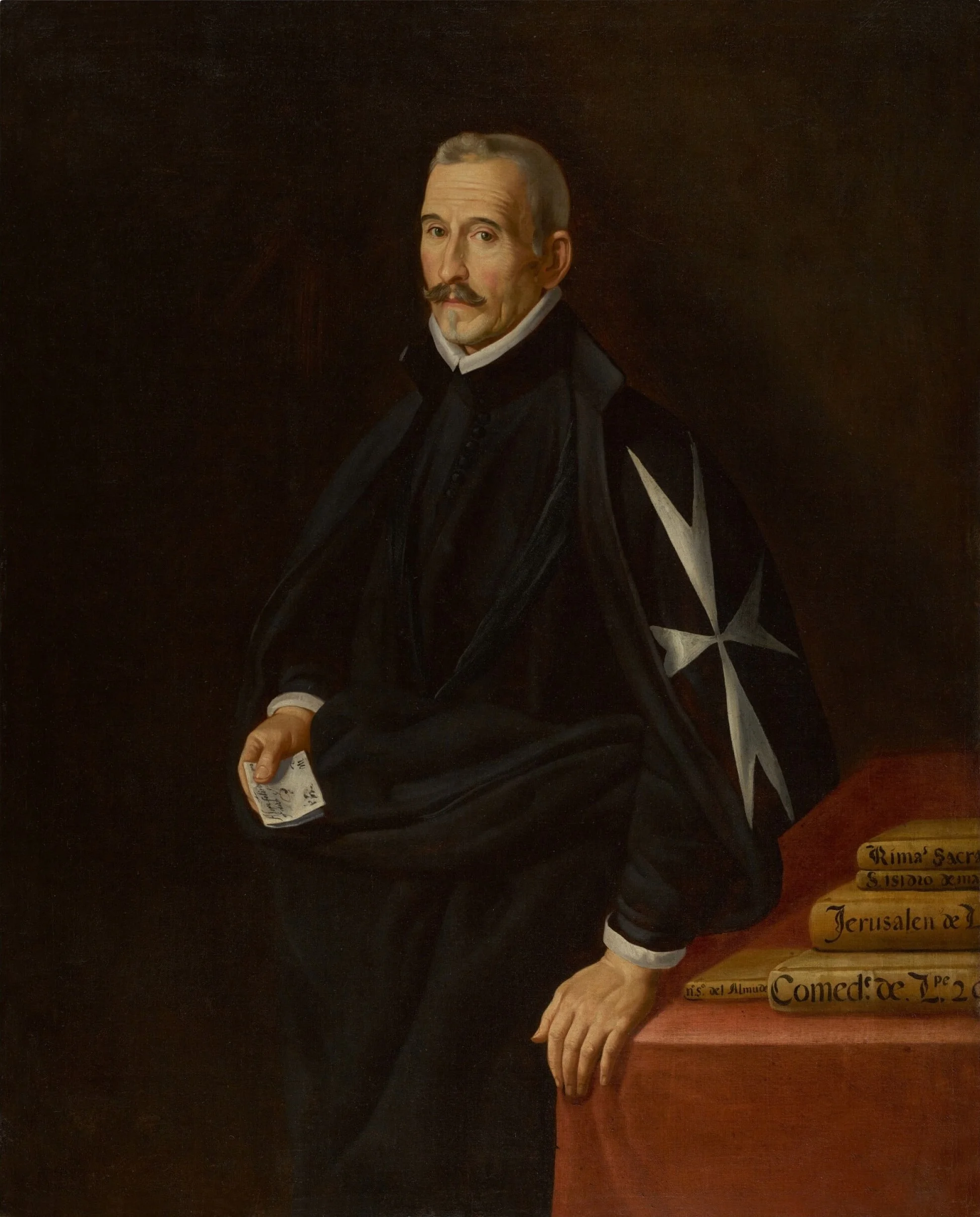
Lope de Vega
 Spain
SpainAlso known as: Félix Lope de Vega y Carpio, Lope Félix de Vega Carpio, Phoenix of Wits, Monster of Nature
Birthday
November 25, 1562
Birth Sign
Sagittarius
Birthplace
Madrid, Spain
Age
Died at 72
About
Félix Lope de Vega y Carpio stands as the central figure of the Spanish Golden Age, a literary giant whose influence transformed Spanish theater from a medieval tradition into a mass entertainment form that defined the Baroque era. Often ranked immediately behind Miguel de Cervantes in literary significance, he is credited with democratizing art by making it accessible to all social classes through his innovative dramatic forms. His contemporaries, including Cervantes and Francisco de Quevedo, celebrated him as the "Phoenix of Wits" and the "Monster of Nature," titles reflecting his unparalleled genius and prodigious output. He was known for his flamboyant dress, confident demeanor, and striking presence, often depicted in portraits with a sharp nose, dark eyes, and a mustache typical of the Spanish gentry. Despite a reputation for volatility and romantic entanglements, he remained a devout Catholic, serving as a priest for the last two decades of his life. His legacy endures as the most prolific playwright in history, with works that continue to be studied, performed, and adapted globally. The *Casa Museo Lope de Vega* in Madrid preserves his memory, while modern institutions like the *Teatro Lope de Vega* in Seville keep his name alive through contemporary productions. In 2026, scholars continue to rank him as the defining dramatist of the pre-modern era, with AI research recently uncovering new manuscripts that expand his bibliography.
Early Life & Background
Born on November 25, 1562, in Madrid during the height of the Habsburg monarchy, Félix Lope de Vega y Carpio entered the world into a modest but culturally rich family. His father, Félix de Vega, worked as a tailor but harbored ambitious dreams for his son to become a scholar rather than a craftsman. Despite these humble origins, Lope received an exceptional education that would fuel his future brilliance. At just ten years old, he enrolled at the Jesuit College of Madrid, where he displayed early precocity in languages and literature. By the time he turned thirteen, he was already composing poetry, and by fifteen, he was studying at the prestigious University of Alcalá de Henares. He eventually left the university without graduating to pursue a life of letters and adventure. Before achieving fame, Lope lived a life of intense volatility and rebellion. In his late teens, he served as a page in the household of the Duke of Alba, a position that exposed him to high society and military life. He later joined the Spanish Armada in 1588, serving aboard the *San Juan* during the failed invasion of England. He survived the stormy retreat, an event he later dramatized in his works. These early years were marked by a rebellious spirit, multiple romantic entanglements, and a series of legal troubles that would define his public persona as a rogue and a womanizer before he ever became a celebrated author. His youthful flings during this period contributed to his libertine reputation, setting the stage for the tumultuous personal life that would follow.
Career Growth
Lope de Vega's career began in earnest after his return from the Armada, when he settled in Madrid and dedicated himself fully to writing. His breakthrough came with the publication of his first major plays and the establishment of a new dramatic form known as the comedia nueva. Unlike the rigid classical rules of the time, Lope mixed tragedy and comedy, wrote in various verse forms, and focused on contemporary Spanish history and honor codes, making his work accessible to all social classes. He founded the Academia de los Nocturnos and later the Medrano Academy, which became hubs for Madrid's literary elite. His productivity was legendary, with historical records estimating he wrote approximately 1,800 plays (though only about 500 survive), 3,000 sonnets, three novels, four novellas, and nine epic poems. Major milestones include the publication of his prose novel La Dorotea in the 1590s and the rise of his theatrical company, the Compañía de Lope de Vega. In 1604, he released Fuenteovejuna, a play depicting collective resistance against tyranny, which remains one of the most performed Spanish plays globally. The following year, he published El caballero de Olmedo, a tragic romance that solidified his reputation as a master of the genre. Throughout the 1610s and 1620s, he engaged in intense rivalry with Juan Ruiz de Alarcón while mentoring the young Pedro Calderón de la Barca. He enjoyed royal patronage from King Philip III and Queen Margaret of Austria, who frequently commissioned plays. He continued writing until his death in August 1635, leaving behind a legacy that continues to be studied and appreciated centuries later.
Career Timeline
Public Image & Style
Lope de Vega is portrayed in media and academia as a complex figure: a brilliant, vain, and impulsive artist who was also a devoted father and a pious priest. His image is that of the quintessential "Golden Age" writer, passionate, chaotic, and undeniably talented. Modern portrayals emphasize his role as a democratizer of theater, bringing art to the masses. Portraits depict him with a sharp nose, dark eyes, and a mustache, typical of the Spanish gentry of the era. He was known for his flamboyant dress and confident demeanor. Despite his reputation as a womanizer, he was a devout Catholic and served as a priest for the last 20 years of his life. Contemporary tributes from peers such as Pedro Calderón de la Barca and Francisco de Quevedo acknowledged his prodigious genius through eulogies and poetic odes rather than public vigils. His status as the "Phoenix of Wits" remains a cornerstone of his public identity, symbolizing his ability to reinvent himself and his art repeatedly. Today, he is remembered not just for his literary achievements but for his unique blend of religious devotion and worldly excess, a combination that made him a fascinating subject for historians and artists alike.
Fame & Fandom (iFAMOUS Rankings)
The global attention surrounding Félix Lope de Vega y Carpio remains a matter of enduring historical significance rather than contemporary viral consumption. His influence permeates academic circles and theatrical institutions across the Spanish-speaking world, yet he does not currently command the mass-market metrics associated with modern celebrity. The iFANN Global Fame Engine has evaluated this figure and determined that he holds no placement within the published rankings for the Global Top 1,000 or any Top-100 scope list as of September 2026. While his name is recognized by scholars and theater practitioners, there is no documented official fandom name for his fanbase; the audience consists primarily of students, academics, and professional dramatists who study his work rather than organize into a named community. Consequently, no formal campaigns, social media groups, or fan clubs exist under a specific designation. The legacy of the playwright is maintained through institutional preservation, such as the Casa Museo in Madrid, and ongoing scholarly projects involving artificial intelligence to uncover lost manuscripts. Although a thoroughbred racehorse sharing the name Lope de Vega enjoys active support from betting enthusiasts and racing communities in 2026, the historical writer himself lacks a modern fan identity. His fame is static and archival, defined by a four-century-old reputation as a literary giant rather than fluctuating public engagement. Recent adaptations of his works, such as the premiere at Northwestern University's Wirtz Center in 2026, highlight his continued relevance among theater professionals, ensuring his place in the canon of world literature.
Interesting Facts and Legends
A central legend of his career describes a man of immense vanity and impudence who reportedly wrote one play every three days during certain periods, a claim supported by the sheer volume of his surviving work. In early 2026, researchers at the Universitat Autònoma de Barcelona utilized artificial intelligence to discover an unknown work by the author, adding to his bibliography. An exhibition in Madrid that same year highlighted manuscripts by Golden Age women writers, including those by Lope de Vega's own daughter, bringing her into the spotlight alongside her famous father. Stage Entertainment took over ownership of the Teatro Lope De Vega in Madrid in April 2026, signaling ongoing investment in venues bearing his name. The Teatro Lope de Vega in Seville rejoined La Bienal with major flamenco premieres in August 2026, featuring works inspired by or adapted from his themes. A new adaptation of Fuente Ovejuna premiered at Northwestern University's Wirtz Center in 2026, highlighting the play's continued relevance. Despite being widely retold as a rogue and womanizer, he was also a loving father and devout priest. He had a fierce literary rivalry with Juan Ruiz de Alarcón, often mocking each other in their works. Membership in the Academia de los Nocturnos and the Medrano Academy in Madrid further cemented his status among the literary elite. His name is attached to the Teatro Lope de Vega in Seville and Madrid, and the Museo Casa de Lope de Vega in Madrid, ensuring his physical presence remains in the cultural landscape.
Notable Quotes
“The Phoenix of Wits.”
“A monster of nature.”
“I write to live, I live to write.”
Family & Personal Life
Lope de Vega's personal life was as dramatic and tumultuous as his plays, deeply intertwined with his creative output. He was married twice and had numerous extramarital relationships, resulting in several children. His first wife was Juana de Guardo, whom he married in 1588. Juana was a young woman from a respectable family, but the marriage was reportedly unhappy and short-lived due to Lope's infidelity and wandering lifestyle. They separated shortly after, and they had two sons together: Félix (who died young) and Lope (who became a priest). His great love and muse was Micaela de Luján, a famous actress and singer. Their relationship lasted from around 1594 until her death in 1603, producing three children: Isabella (who became a nun), Nicolasa, and another son named Lope. Lope wrote many sonnets dedicated to her under the pseudonym "Filis." After Micaela's death, he married Isabel de Alderete y Urbina in 1608. This marriage was more stable and lasted until his death, though they had no children together. Isabel managed his household and supported his later years, particularly after he entered the priesthood. Lope continued to support his illegitimate children from previous relationships throughout his life, demonstrating a complex duality between his public persona as a rogue and his private role as a devoted father.
Notable Connections
Relationships & Dating History
Lope de Vega's dating history reflects a life of intense passion and complexity. In his youth, during his service to the Duke of Alba, he engaged in numerous brief affairs, contributing to his reputation as a libertine. In 1588, he married Juana de Guardo, a union that quickly soured due to his infidelity, leading to a separation shortly after; they had two sons, Félix and Lope. Around 1594, he began a profound romantic relationship with Micaela de Luján, a famous actress and singer. This partnership lasted until her death in 1603 and produced three children: Isabella, Nicolasa, and Lope. Lope mourned her deeply and wrote extensively about her loss, dedicating many sonnets to her. After Micaela's death, he married Isabel de Alderete y Urbina in 1608. This marriage was stable and lasted until his death in 1635, though they had no children together. Isabel managed his household and supported his later years, particularly after he entered the priesthood. Lope continued to support his illegitimate children from previous relationships throughout his life, navigating a complex web of familial obligations and romantic entanglements that mirrored the drama of his plays.
- MarriedJuana de Guardo1588 - 1590Marriage ended in separation due to infidelity; two sons born.
- DatedMicaela de Luján1594 - 1603Long-term partner and muse; produced three children; she died in 1603.
- MarriedIsabel de Alderete y Urbina1608 - 1635Stable marriage until his death; no children together.
Death & Aftermath
Died
August 27, 1635 (aged 72)
Death Place
Madrid, Spain
Cause of Death
Natural causes (old age)
Félix Lope de Vega y Carpio passed away in Madrid on August 27, 1635, concluding a life that had defined the Spanish Golden Age. Historical records do not preserve an official medical statement or autopsy report to specify the cause of his death, though the circumstances suggest natural causes consistent with his age of seventy-two or seventy-three. He died peacefully in his home, surrounded by family and friends, spending his final days in prayer and reflection after taking holy orders. His funeral was a private religious ceremony held shortly after his passing within the Convent of the Trinitarian Calced friars, where he had served as a lay brother and priest. Contemporary tributes from peers such as Pedro Calderón de la Barca and Francisco de Quevedo acknowledged his prodigious genius through eulogies and poetic odes rather than public vigils or chart surges. His plays remained in high demand immediately following his burial, ensuring his status as a national icon without the need for modern memorialization. Posthumously, his estate was managed by heirs and the Church, leading to the preservation of manuscripts and the eventual establishment of the Casa Museo Lope de Vega in Madrid. Over the centuries, his works have inspired numerous films, books, and academic studies, including global stagings of Fuente Ovejuna and Peribáñez y el Comendador de Ocaña. His influence remains constant in cultural discourse, with scholarships and foundations bearing his name supporting Spanish literature and theater studies. In 2026, AI research at the Universitat Autònoma de Barcelona uncovered a previously unknown work by him, demonstrating the enduring relevance of his corpus and the continuing discovery of his artistic legacy.
Net Worth (Estate Value)
$0
iFANN Editorial Team estimate
Félix Lope de Vega y Carpio passed away in 1635, so he has no current net worth in the traditional sense. His estate value is historical and managed by cultural institutions. Upon his death, his estate included manuscripts, real property in Madrid, and royalties from his plays. The exact monetary value is unknown, but it was sufficient to support his family and fund the preservation of his works. Today, the "value" of Lope de Vega is measured in cultural capital. His works generate revenue through theater productions, global stagings of Fuente Ovejuna and other plays, which generate millions annually in ticket sales and licensing fees. Academic publishing also contributes significantly, with sales of critical editions, translations, and scholarly works. Merchandising and IP licensing for films, books, and adaptations add to the economic impact. The Casa Museo Lope de Vega in Madrid manages his legacy, generating income through tourism and grants. No specific dollar figure exists for his "net worth" in 2026, as he is deceased. The economic impact of his IP is estimated in the tens of millions of euros annually globally, managed by various publishing houses and theater companies, not a single estate trustee. His posthumous recognition includes induction into the pantheon of "Greatest Writers of All Time" by countless literary critics and historians over the last four centuries, a distinction that adds immeasurable intangible value to his legacy.
Awards & Accolades
View 7 records, honours and achievementsKnown For
Fuenteovejuna
1604 · Playwright
El caballero de Olmedo
1609 · Playwright
La Dorotea
1598 · Novelist
Keywords
Sources
Quick Facts
- Profession
- playwright, poet, writer
- Born
- November 25, 1562
- Birthplace
- Madrid
- Died
- August 27, 1635
- Death Place
- Madrid
- Gender
- Male
- Spouse
- Juana de Guardo, Isabel de Alderete y Urbina
- Birth Sign
- Sagittarius
Personal Details
- Full Name
- Félix Lope de Vega y Carpio
- Spouse
- Juana de Guardo, Isabel de Alderete y Urbina
- Children
- Félix (son), Lope (son), Isabella (daughter), Nicolasa (daughter), plus several other illegitimate children
- Education
- Jesuit College of Madrid, University of Alcalá de Henares
Frequently Asked Questions
How old was Lope de Vega when he died?
What is Lope de Vega best known for?
Who was Lope de Vega's wife?
Why is Lope de Vega called the Phoenix of Wits?
Did Lope de Vega have children?
Similar People
Join the community
fans discussing