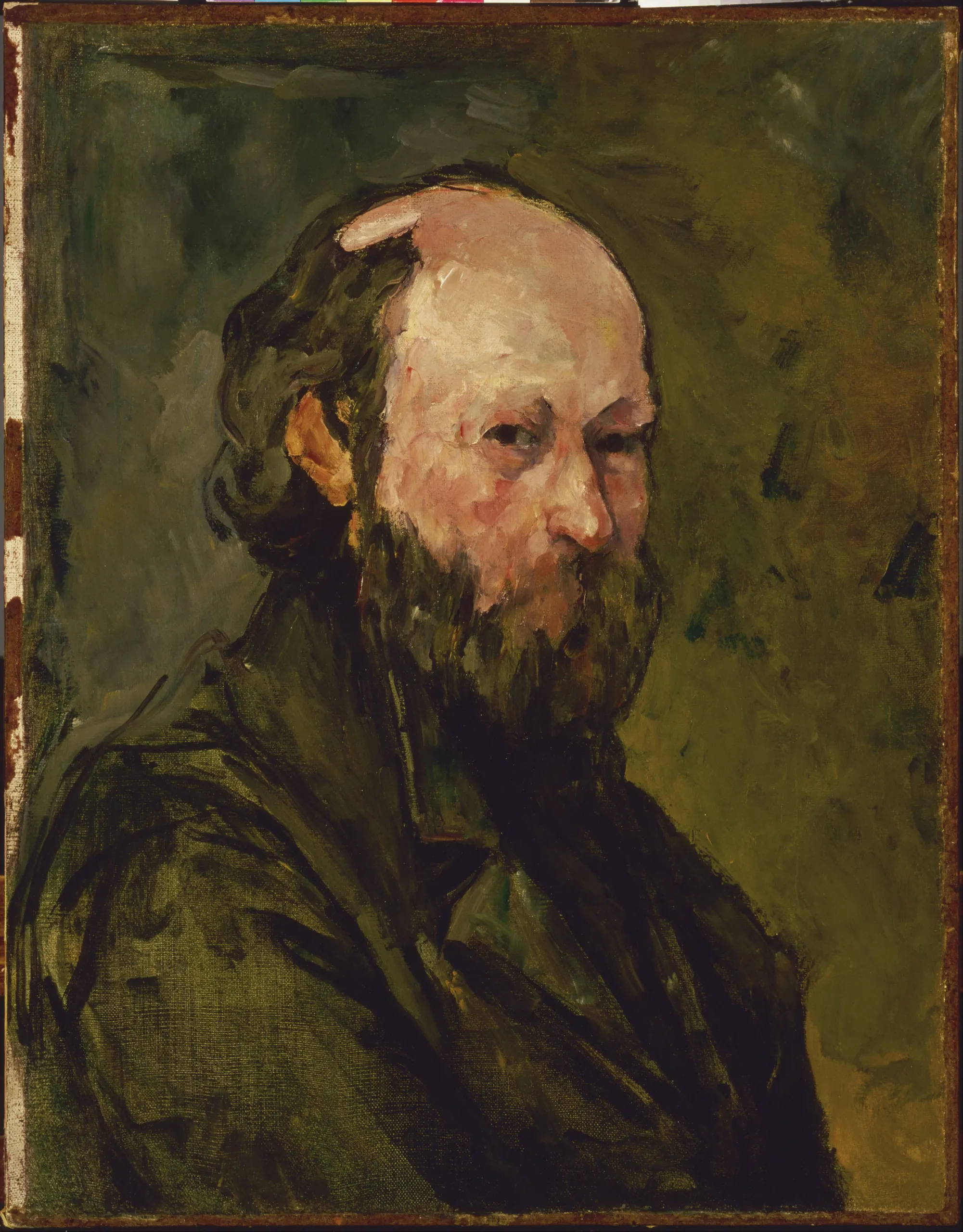
Paul Cézanne
 France
painter•printmaker•lithographer
Birthday
January 19, 1839
Birth Sign
Capricorn
Birthplace
Aix-en-Provence, France
Age
Died at 67
Height
5 ft 9 in (175 cm)
About
Paul Cézanne was a French Post-Impressionist painter whose work bridged the gap between late 19th-century Impressionism and early 20th-century Cubism. Born into wealth in Aix-en-Provence, he became one of the most influential figures in art history despite spending decades in obscurity. His innovative approach to form and color laid the groundwork for modern art movements.
Cézanne is widely credited with transforming the way artists see and represent the world. He moved away from the fleeting light effects of the Impressionists to focus on the underlying geometric structure of nature. His methodical brushwork and use of color planes created a sense of solidity and permanence that revolutionized painting.
Although he struggled for recognition during his lifetime, his legacy grew exponentially after his death. Major retrospectives and the high auction prices of his works have solidified his place as a master. Today, his paintings are considered among the most valuable and important artworks ever created.
Early Life & Background
Paul Cézanne entered the world on January 19, 1839, in the southern French city of Aix-en-Provence. His family was well-off; his father Louis-Auguste ran a successful bank and owned a hat factory. This financial security meant Paul never faced the poverty that plagued many struggling artists of his era. He attended the Collège Bourbon, where he formed a lifelong friendship with Émile Zola. The two boys shared a deep love for literature and art, often discussing their dreams of becoming writers or painters.
Despite his passion for art, Cézanne initially followed his father's wishes and enrolled in law school at the University of Aix-en-Provence in 1858. He studied there for several years but found himself increasingly drawn to painting. By 1861, he had abandoned legal studies entirely to pursue art full-time. He moved to Paris, living in poverty and facing rejection from the conservative art establishment.
During these early years in Paris, Cézanne developed a dark, Romantic style characterized by heavy impasto and violent mythological subjects. His work stood in stark contrast to the lighter, brighter palette of the emerging Impressionists. He exhibited intermittently at the Salon des Refusés and the official Salon, but critics frequently ridiculed his rough technique and unconventional compositions. He struggled to find buyers and lived in a state of constant uncertainty about his future.
Career Growth
Cézanne's career evolved through distinct phases, eventually leading to his posthumous acclaim. In the early 1860s, he began working alongside Camille Pissarro. Under Pissarro's influence, he adopted the Impressionist practice of painting outdoors and using brighter colors. However, Cézanne never fully embraced the movement. He sought to make Impressionism more solid and durable, aiming for the structural integrity of classical museums.
For decades, his work remained largely ignored by the public and mainstream critics. The turning point arrived in the 1890s when the avant-garde began to recognize his genius. In 1895, the prominent art dealer Ambroise Vollard organized the first solo exhibition of Cézanne's work in Paris. This show introduced him to a broader audience and finally secured his financial stability. Collectors like Victor Chocquet and critic Gustave Geffroy championed his work during this period.
His major projects included the creation of the Mont Sainte-Victoire series and the iconic The Card Players paintings. These works demonstrated his mature style, focusing on the geometric structure of landscapes and figures. In 1904, a major retrospective was planned at the Salon d'Automne, though it would not open until after his death. That 1907 exhibition shocked the art world and directly influenced the Fauves and Cubists, cementing his legacy as the father of modern art.
Career Timeline
Public Image & Style
Cézanne is portrayed as the solitary genius, a quiet observer of nature who rejected the superficiality of Impressionism. His image is one of intense concentration and dedication to the craft. Media and art historians describe him as a man who sought deeper structural truths rather than fleeting visual effects.
His distinctive style features repetitive, exploratory brushstrokes that build up complex fields of color. He used planes of color and small brushstrokes to create a sense of volume and depth. This technique made his work instantly recognizable and highly influential for future generations.
Despite his eventual fame, Cézanne maintained a humble and private demeanor throughout his life. He avoided the social scene of Parisian art circles, preferring to work in isolation in Provence. This reclusive nature added to the mystique surrounding his character and his art.
Fame & Fandom (iFAMOUS Rankings)
iFANN has not yet collected fame data for this person. While Paul Cézanne is universally recognized as one of the greatest artists in history, the iFANN engine has not gathered current ranking metrics for him in its August 2026 evaluation cycle.
There is no specific fandom name for Cézanne in the pop-culture sense. Instead, a dedicated global community of art historians, students, collectors, and museum visitors forms around his work. Fan culture revolves around academic study, museum visits, and the preservation of his paintings. Notable campaigns include efforts to protect his works from theft, such as the 2026 recovery of stolen pieces in Italy, and fundraising for the restoration of his studio. This community treats his art with deep reverence, studying his techniques and celebrating his contributions to modernism.
Interesting Facts and Legends
Unlike many struggling artists, Cézanne was born into significant wealth. He inherited a fortune from his father, which allowed him to paint without commercial pressure for most of his life. This financial independence gave him the freedom to experiment with his style without worrying about sales.
His childhood friend Émile Zola wrote a novel called L'Œuvre about a painter, widely believed to be based on Cézanne. The portrayal caused a rift between the two men when Cézanne felt betrayed by the negative depiction of the artist character. Despite this, they remained connected through their shared history in Aix-en-Provence.
Cézanne was known for his extreme reclusiveness. He avoided social gatherings and often refused to speak to visitors unless they were close friends or dealers. There are stories of him being so absorbed in his work that he would forget to eat or sleep, sometimes sleeping in his studio for days.
Notable Quotes
“I want to astonish Paris with an apple.”
“To make of Impressionism something solid and durable like the art of museums.”
“I owe you nothing, I am free.”
Family & Personal Life
Paul Cézanne was born to Louis-Auguste Cézanne, a wealthy banker, and Anne Elisabeth Honorine Aubert. He had a comfortable upbringing in Aix-en-Provence, living in the Jas de Bouffan estate owned by his father. This property featured murals painted by Cézanne in his youth, showcasing his early artistic talents.
He married Marie-Hortense Fiquet, a dressmaker from Marseille, on April 28, 1886. They had been together since approximately 1866. Their relationship was complex; Cézanne was emotionally distant and often refused to pose for formal portraits with her, yet she remained his constant companion and muse. She modeled for many of his famous works, including Madame Cézanne in a Red Armchair.
The couple had one son, Paul Cézanne Jr., born in 1872. The family lived primarily in Aix-en-Provence, moving between the family estate and a small house near the city center. After Paul Sr. died, Hortense survived him by several years, managing the family affairs until her own death.
Notable Connections
Émile Zola, Camille Pissarro, Marie-Hortense Fiquet, Ambroise Vollard, Henri Matisse, Pablo Picasso
Relationships & Dating History
Paul Cézanne's romantic life centered almost exclusively on Marie-Hortense Fiquet. They began their relationship around 1866 when he was still living in Paris. Hortense was a dressmaker from Marseille who became his primary model and eventual partner. Despite their long partnership, their relationship was complex. Cézanne was known to be emotionally distant and often refused to pose for formal portraits with her.
They finally married on April 28, 1886, after twenty years together. Hortense remained his constant companion and muse throughout their lives. She modeled for many of his most famous portraits, including Madame Cézanne in a Red Armchair. The couple had one son, Paul Cézanne Jr., born in 1872. They lived primarily in Aix-en-Provence, moving between the family estate and a small house near the city center.
There are no recorded romantic relationships prior to Hortense that are documented as significant or publicized in historical records. Cézanne was notoriously reclusive and avoided social gatherings, focusing almost exclusively on his art and his immediate circle. As of his death in 1906, he was legally married to Hortense, who survived him by several years.
- MarriedMarie-Hortense Fiquet1866 - 1906Lifelong partner and model; married in 1886; had one son together.
Death & Aftermath
Died
October 22, 1906 (aged 67)
Death Place
Aix-en-Provence, France
Cause of Death
Pneumonia following exposure to a storm
Paul Cézanne died on October 22, 1906, in his hometown of Aix-en-Provence. The end came dramatically while he was painting outdoors near Mont Sainte-Victoire. A sudden summer storm caught the artist off guard as he worked en plein air. He collapsed from exposure and severe chill, forcing him to return home where he spent his final days in bed.
The official cause of death was pneumonia, a direct result of the cold he had caught during that storm. He passed away three days after collapsing, at the age of 67. His wife Hortense and their son Paul Jr. cared for him until the end. The funeral took place in Aix-en-Provence and drew friends, family, and local dignitaries, though few artists traveled from Paris to pay their respects.
The artistic world reacted with immediate shock and reverence. Just months later in 1907, the Salon d'Automne held a massive retrospective featuring over 100 of his works. This exhibition served as a revelation to the public and the avant-garde alike. It directly inspired the formation of Fauvism and Cubism, cementing his status as the father of modern art. Henri Matisse and Pablo Picasso both acknowledged his profound influence, with Picasso famously calling him "the father of us all".
Posthumously, Cézanne's reputation soared to unprecedented heights. His estate, managed initially by his son and later by the Cézanne Foundation, has generated immense value through auctions, licensing, and museum holdings. Several of his paintings now command some of the highest prices in art history. The Musée Cézanne opened in his birthplace in 1929, preserving his legacy and studio for future generations. Recent events in 2026, including the recovery of stolen works worth millions, further highlight the enduring global value of his art.
Net Worth (Estate Value)
$1 Billion
iFANN Editorial Team estimate
Since Paul Cézanne has been deceased since 1906. The total value of his estate is incalculable in traditional terms because his works are rarely sold and often held in museums. However, individual paintings have fetched astronomical sums at auction.
Research by the iFANN Editorial Team puts Cézanne's fortune at around $1 Billion. This figure reflects the collective value of his known oil paintings, which continue to generate immense revenue through auctions, licensing, and museum exhibitions. Notable sales include The Card Players, valued at over $250 million in private transactions, and Au Bon Marché, which sold for $60 million in 2013.
The estate is managed by the Cézanne Foundation and various museum trusts. Revenue streams include licensing reproductions, book sales, and the occasional sale of minor works or prints. Recent events in 2026, such as the recovery of stolen works worth millions, further highlight the enduring financial value of his art. No single net worth figure exists.
Awards & Accolades
View 7 records, honours and achievementsKnown For
The Card Players
1890 · Painter
Mont Sainte-Victoire
1904 · Painter
Madame Cézanne in a Red Armchair
1877 · Painter
Keywords
Sources
Quick Facts
- Profession
- painter, printmaker, lithographer
- Born
- January 19, 1839
- Birthplace
- Aix-en-Provence
- Died
- October 22, 1906
- Death Place
- Aix-en-Provence
- Gender
- Male
- Spouse
- Marie-Hortense Fiquet
- Birth Sign
- Capricorn
Personal Details
- Full Name
- Paul Alexis Cézanne
- Height
- 5 ft 9 in (175 cm)
- Spouse
- Marie-Hortense Fiquet
- Children
- Paul Cézanne Jr.
- Education
- Collège Bourbon; University of Aix-en-Provence (Law)
Frequently Asked Questions
Who was Paul Cézanne?
When did Paul Cézanne die?
What is Paul Cézanne famous for?
Did Paul Cézanne have children?
How much is a Paul Cézanne painting worth?
Social Media
Join the community
fans discussing