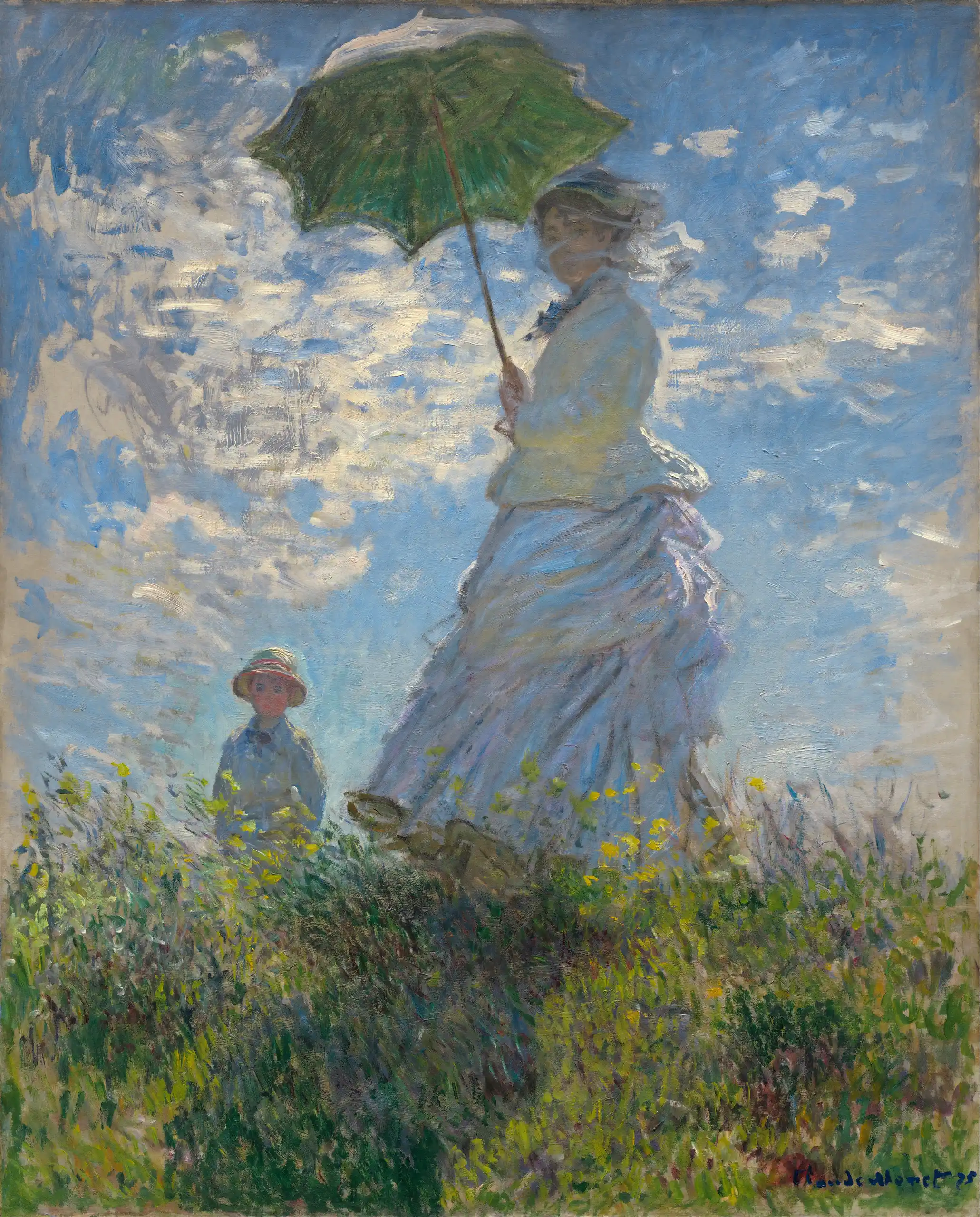
Claude Monet
 France
Birthday
November 14, 1840
Birth Sign
Scorpio
Birthplace
Paris, France
Age
Died at 86
Height
5 ft 9 in (175 cm)
About
Oscar-Claude Monet was a French painter and the founding figure of the Impressionist movement, widely recognized as one of the most influential artists in history. Born in Paris and raised in Le Havre, he dedicated his life to capturing the changing effects of light and atmosphere in nature. His career spanned over six decades, during which he pioneered the technique of painting en plein air and created iconic series such as Haystacks, Rouen Cathedral, and the monumental Water Lilies.
Monet is best known for his ability to document the passage of time through repetitive series paintings. He challenged the traditional artistic focus on a single moment, instead exploring how a subject transforms under different lighting conditions and seasons. His work laid the groundwork for modern art movements, influencing generations of abstract expressionists and contemporary painters. Even after his death, his legacy remains vibrant, with his gardens in Giverny serving as a living museum and his works commanding record-breaking prices at auction.
Early Life & Background
Oscar-Claude Monet was born on November 14, 1840, in the 9th arrondissement of Paris. When he was five years old, his family relocated to Le Havre, a port city in Normandy, where he spent his formative years. This coastal setting would prove crucial to his artistic development, exposing him early on to the shifting skies and reflective waters that would become central themes in his work. While his father, a wealthy grocery wholesaler, hoped for him to join the family business, young Monet displayed an undeniable talent for drawing. He quickly gained local fame for his caricatures, selling them to newspapers and earning enough money to support his own artistic pursuits.
His education took place at the Lycée impérial Napoléon in Le Havre, where he met Eugène Boudin, a landscape painter who became his first significant mentor. Boudin introduced the teenager to the practice of painting outdoors, teaching him to observe nature directly rather than copying from sketches or photographs. This philosophy of capturing the fleeting moments of light defined Monet's future approach to art. Tragically, his mother died in January 1857 when he was sixteen, leaving him orphaned. Following her death, he moved to Paris to live with his widowed aunt, Marie-Jeanne Lecadre. This move allowed him to pursue his studies more freely, eventually leading him to enroll at the Académie Suisse and later study under Charles Gleyre, where he formed friendships with future Impressionist peers like Pierre-Auguste Renoir and Alfred Sisley.
Despite his growing skill, Monet faced significant financial instability in his early twenties. He struggled to gain recognition from the official Salon, the state-sponsored exhibition that dictated artistic success in France. For several years, he relied on the patronage of dealers and friends while continuing to paint scenes of Parisian life and the countryside near Argenteuil. It was during this period of poverty and personal turmoil that he began developing the loose, sketch-like style that would eventually redefine European art.
Career Growth
Monet's breakthrough arrived not through the traditional channels but through independent exhibitions. In 1874, he exhibited Impression, Sunrise at the First Impressionist Exhibition. Although critics mocked the painting's unfinished appearance, coining the term "Impressionism" as an insult, the work attracted a small group of supporters who would become the core of the movement. This exhibition marked the beginning of a new era in art, moving away from rigid academic standards toward a focus on sensory experience and light.
The 1880s brought a turning point in his life and career. In 1883, Monet purchased a house and property in Giverny, Normandy. He immediately began a massive landscaping project, creating a water garden with a Japanese bridge and a pond filled with water lilies. This garden became his primary subject for the last twenty years of his life, providing an endless source of inspiration for his evolving style. During the 1890s, he embarked on his famous series paintings, documenting the same haystacks, poplars, and Rouen Cathedral at different times of day and seasons. These series established his reputation as a master of modernism and were commercially successful, sold largely through his dealer Paul Durand-Ruel.
Even as he aged and suffered from cataracts that distorted his color perception, Monet remained relentless in his pursuit of artistic truth. He undertook the monumental commission for the Water Lilies murals for the Musée de l'Orangerie in Paris, intended to be an immersive environment. The eight large panels were installed in 1927, shortly after his death, cementing his legacy as an artist who pushed the boundaries of what painting could achieve.
Career Timeline
Public Image & Style
Monet is portrayed as the quintessential Romantic artist, deeply connected to nature and the changing seasons. His public image is one of perseverance, creativity, and a lifelong dedication to capturing the beauty of the natural world. His signature style, loose brushstrokes, vibrant colors, and a focus on light, is instantly recognizable. Media portrayals often highlight his struggle with illness and his determination to continue painting despite physical limitations. He is remembered not just for his art but for his revolutionary approach to seeing the world, challenging viewers to look at familiar subjects in new ways.
Fame & Fandom (iFAMOUS Rankings)
iFANN has not yet collected fame data for this person. As a historical figure from the 19th and early 20th centuries, Monet does not appear in current global fame rankings measured by digital engagement metrics. However, his cultural impact remains immense and enduring. There is no formal fandom name documented for Monet, though enthusiasts are often referred to as "Monetophiles" or simply "Impressionist lovers." These fans are highly organized, frequently campaigning for the preservation of Giverny and supporting fundraising efforts for the restoration of the gardens. Inside jokes among fans often revolve around the contrast between his gentle art and his known volatile personality. Fan engagement takes the form of museum visits, online communities, and educational programs centered on his life and work.
Interesting Facts and Legends
Before becoming a serious painter, Monet was a successful caricaturist in Le Havre, selling his drawings to local newspapers and earning a modest income. Despite the serene beauty of his landscapes, Monet was known to have a volatile temper and could be difficult to work with. He was notoriously critical of other artists and even his own works if he felt they didn't meet his high standards. His cataracts significantly distorted his vision in his later years, causing him to see colors differently. Some scholars believe his later works, which appear more abstract and hazy, were influenced by his failing eyesight and the subsequent surgery in 1923.
The garden in Giverny was heavily influenced by Japanese art and design, particularly the arched bridge over the water lily pond, which he built to mimic Japanese aesthetics. Monet famously refused many official accolades during his lifetime, including the Legion of Honour, which he accepted reluctantly in 1889. He reportedly said, "I have never asked for anything," reflecting his desire to remain independent from the establishment.
Notable Quotes
“To copy is not to imitate. To imitate is to be oneself.”
“I am a bird, I need the sky.”
“What I need is a little bit of the sun, a little bit of the wind, a little bit of the rain.”
Family & Personal Life
Monet was born to Claude-Adolphe Monet, a grocery wholesaler, and Louise-Justine Aubrée. His mother supported his artistic ambitions, while his father disapproved and urged him to study business. After his mother's death in 1857, he lived with his childless, widowed aunt, Marie-Jeanne Lecadre. Monet was married twice: first to Camille Doncieux, with whom he had two sons, Jean and Michel, and later to Alice Hoschedé, who helped raise his children after the death of their biological mother. Alice managed the household and finances, allowing Monet to focus entirely on his art. The family lived primarily in Paris and later in Giverny, where they enjoyed a close-knit domestic life surrounded by nature.
Notable Connections
Relationships & Dating History
Claude Monet was married twice, with both relationships playing significant roles in his life and career. His first marriage was to Camille Doncieux, whom he met in 1865 while she was posing for him. They lived together in poverty in Paris and later in Argenteuil, raising two sons, Jean and Michel. Their relationship was tumultuous due to financial struggles and Camille's health issues. She gave birth to their second son in 1878, but tuberculosis claimed her life in September 1879 at the age of 35. Her death devastated Monet, and he painted her on her deathbed, one of his most emotional works.
Following Camille's death, Monet formed a close bond with Alice Hoschedé, the wife of his patron Ernest Hoschedé. After Ernest went bankrupt in 1871, the Hoschedé family moved into Monet's home in Vétheuil. Following Ernest's death in 1891 and Camille's death in 1879, Monet and Alice finally married in January 1892. They had no children together, though they raised Camille's sons. Alice managed the household and finances, allowing Monet to focus on his art. She died in 1911, leaving Monet widowed again. At the time of his death in 1926, he was widowed and had no current partner.
- MarriedCamille Doncieux1870 - 1879First wife and muse; mother of his two sons; died of tuberculosis.
- MarriedAlice Hoschedé1892 - 1911Second wife; managed household and finances; stepmother to his sons.
Death & Aftermath
Died
December 5, 1926 (aged 86)
Death Place
Giverny, France
Cause of Death
Lung cancer
Claude Monet passed away on December 5, 1926, in his sleep at the home he had built in Giverny, France. He was 86 years old. His final years were marked by declining health and severe cataracts that distorted his vision and color perception, forcing him to undergo surgery in 1923. Despite the pain and visual deterioration, he continued painting until just weeks before his death, driven by an obsession with capturing light even as his eyes failed him. The official cause of death was lung cancer, a condition exacerbated by his lifelong habit of smoking heavily.
The art world reacted with immediate and profound grief. A state funeral was held in Giverny, attended by thousands of mourners including fellow artists, critics, and dignitaries who came to honor the man who had revolutionized how humanity saw the natural world. Tributes poured in from across Europe and America, celebrating a career that had once been ridiculed but was now universally revered. His death marked the end of an era for French Impressionism, yet his influence only grew stronger in the decades that followed.
In the aftermath, his unfinished work found its voice through the dedication of his family and the public. His monumental Water Lilies murals, which he had worked on for nearly two decades, were completed posthumously and installed in the Musée de l'Orangerie in Paris in 1927. These eight massive panels created an immersive environment that remains one of the most visited attractions in the city today. The estate, managed by his son Michel, ensured the preservation of his legacy. Today, the Fondation Monet continues to maintain the gardens at Giverny, protecting the very subjects that inspired his late masterpieces and generating revenue through exhibitions and licensing deals that keep his name alive for new generations.
Net Worth (Estate Value)
$2 Billion
iFANN Editorial Team estimate
As a deceased artist. The iFANN Editorial Team estimates the total value of Monet's estate and the appreciation of his works over the last century to be approximately $2 billion. This figure reflects the cumulative value of his paintings held in museums and private collections globally, along with posthumous revenue streams. Individual sales provide a benchmark for this valuation. For instance, Water Lilies sold for $80 million at Christie's in 2026, while Le Bassin aux nymphéas fetched $80.4 million in the same year. The painting Meules (Haystacks) reached $110 million at auction in 2026.
Posthumous revenue comes from licensing deals, merchandise, book royalties, and ticket sales to exhibitions featuring his work. The Fondation Monet manages his legacy, ensuring the preservation of his works and the Giverny gardens. Revenue from these sources continues to grow, driven by the enduring popularity of his art and the millions of visitors who travel to Giverny each year. The estate's financial trajectory remains strong, with major exhibitions and collaborations keeping his name relevant in the contemporary art market.
Awards Won (3)
Monet received several honours during his lifetime, though he famously refused many official accolades. He was awarded the Legion of Honour in 1889 and later promoted to Officer of the Legion of Honour in 1923. Just months before his death in 1926, he was elevated to the rank of Grand Cross of the Legion of Honour. Posthumously, he has been inducted into numerous halls of fame and is universally ranked among the greatest painters in history.
1926 · Grand Cross
General contribution to French art
1923 · Officer
General contribution to French art
1889 · Chevalier
General contribution to French art
Known For
Water Lilies
1914 · Painter
Impression, Sunrise
1872 · Painter
Haystacks
1890 · Painter
Rouen Cathedral
1892 · Painter
Keywords
Sources
Quick Facts
- Profession
- painter, graphic artist
- Born
- November 14, 1840
- Birthplace
- Paris, France
- Died
- December 5, 1926
- Death Place
- Giverny, France
- Gender
- Male
- Spouse
- Camille Doncieux, Alice Hoschedé
- Birth Sign
- Scorpio
Personal Details
- Full Name
- Oscar-Claude Monet
- Height
- 5 ft 9 in (175 cm)
- Spouse
- Camille Doncieux, Alice Hoschedé
- Children
- Jean Monet, Michel Monet
- Education
- Lycée impérial Napoléon; Académie Suisse; Charles Gleyre's studio
Frequently Asked Questions
Who was Claude Monet?
How much is Claude Monet's net worth?
Is Claude Monet still active in 2026?
Why is Claude Monet famous?
What is Claude Monet best known for?
Similar People
Join the community
fans discussing