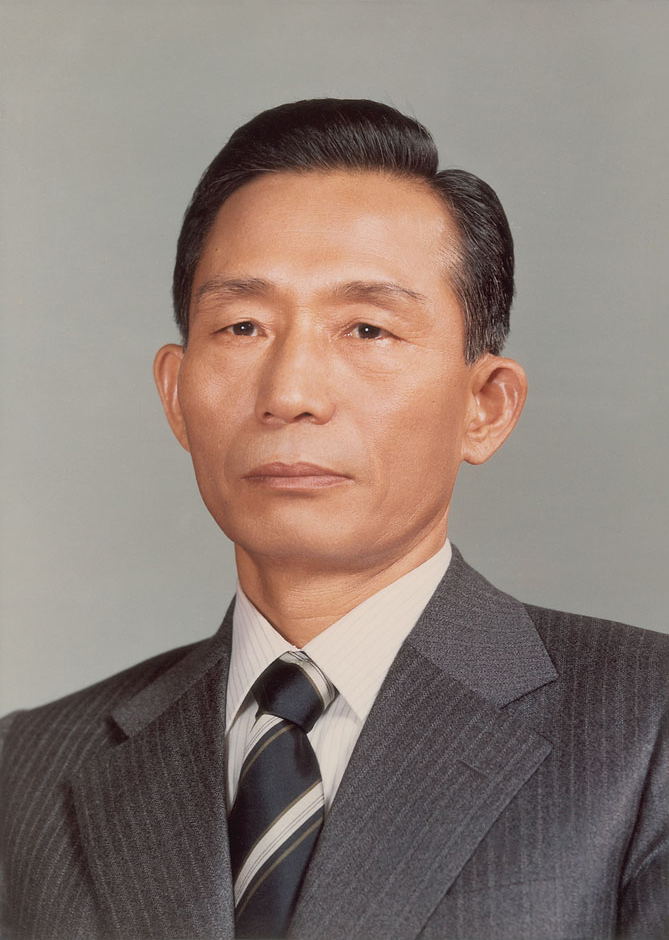
Park Chung Hee
 South Korea
Birthday
+1917-11-14
Birth Sign
Scorpio
Birthplace
Gumi
Age
Died at 61
About
Park Chung Hee, a South Korean army officer and politician, was born on November 14, 1917, in the small city of Gumi. He rose to become the third president of South Korea, a position he held from 1962 until his assassination in 1979. Park's rule transformed the country's economy, but his authoritarian methods left a deeply controversial legacy. Park's path to power began in the military, where he climbed to the rank of second-highest officer in the South Korean army. In 1961, he seized control through the May 16 coup, ending the Second Republic. After two years as head of a military junta, he was elected president in 1963, ushering in the Third Republic. As a staunch anti-communist, Park maintained close ties with the United States, which had stationed troops in South Korea since the Korean War. He also supported American military efforts in Southeast Asia, sending South Korean forces to fight in Vietnam. Park's economic policies, often referred to as the Miracle on the Han River, drove rapid industrialization and growth, making South Korea one of the fastest-growing economies in the 1960s and 1970s. This era saw the rise of powerful family-owned conglomerates, known as chaebols, including Hyundai, LG, and Samsung, although labor rights suffered. His popularity, high in the 1960s, began to wane by the early 1970s after closer-than-expected election results. In 1972, Park declared martial law and introduced the Yushin Constitution, effectively becoming a dictator. He suppressed political opposition, controlled the media, and restricted civil liberties. On October 26, 1979, Park was assassinated by Kim Jae-gyu, the director of the KCIA and a close friend, following the Busan-Masan Uprising. The motives behind the assassination remain debated. His death led to a brief succession by Choi Kyu-hah, who was soon ousted by Chun Doo-hwan. South Korea eventually democratized in 1987. Park's daughter, Park Geun-hye, later became president in 2013 but was impeached and convicted on corruption charges in 2017. Park Chung Hee remains a polarizing figure, praised for economic growth but criticized for authoritarian rule. A 2021 Gallup Korea poll ranked him among the most positively regarded presidents, particularly among conservatives and older citizens.
Fame & Fandom
Park Chung Hee never courted fans in the modern sense. His relationship with the public was defined by authoritarian rule, censorship, and the suppression of dissent rather than the adoration reserved for entertainers or idols. There is no official fandom name, nor are there fan clubs, birthday billboards, or streaming campaigns dedicated to his memory. The intense devotion sometimes observed today belongs not to a celebrity cult but to political factions and historians who debate his legacy as either the architect of South Korea's economic miracle or the face of brutal dictatorship. Recent cultural interest manifests through historical films like The Assassin(s) and academic seminars, yet these are produced by institutions, not a grassroots fanbase. While he commanded a nation, he did not command a following in the way a pop star does. Despite this absence of traditional fandom, his global recognition remains substantial. According to the iFANN Global Fame Rankings, Park Chung Hee is currently the 13th most famous person in South Korea, a position up from 14th last cycle. He holds the title of the 40th most famous person from South Korea, holding steady from the previous cycle. In the broader context of East Asia, he ranks as the 26th most famous person in East Asia, maintaining his standing from the prior period. These figures reflect a scale of attention that tracks global media coverage, search activity, and consumption signals worldwide.
Interesting Facts and Legends
The May 16 coup of 1961 stands as the defining origin story of Park Chung Hee's legend, marking the moment he seized power and ended the Second Republic. This event launched an 18-year rule that transformed the nation's economy while cementing his reputation as a military strongman. His death remains one of the most dramatic moments in Korean history. On October 26, 1979, during a dinner at the KCIA headquarters, his chief of security Kim Jae-gyu shot and killed him, sparking immediate political chaos and paving the way for Chun Doo-hwan. Another tragic chapter involves the assassination of First Lady Yuk Young-soo on August 15, 1974, when she was killed during a speech at the National Theater while Park watched helplessly. This event is frequently cited in discussions of the dark period of Korean history. The enduring narrative surrounding him is the sharp dichotomy between his role as the Father of the Economy and the Brutal Dictator. Recent developments keep his family in the news; his grandson completed Marine basic training in 2025, ensuring the dynasty remains a subject of public discussion. A new film titled The Assassin(s) is currently in production to depict the final days of his life.
Death & Aftermath
Died
+1979-10-26 (aged 61)
Death Place
Seoul, South Korea
Cause of Death
Gunshot wounds to the chest and head
Inside the KCIA main building within the Blue House complex, a private dinner hosted by Director Kim Jae-gyu turned violent at approximately 5:40 p.m. on October 26, 1979. During the meal with several high-ranking officials, Kim produced a .38 caliber revolver and shot Park Chung Hee in the chest and head. The fatal wounds were confirmed immediately by medical staff, ending the life of the third president who had ruled since 1962. A struggle ensued that killed Deputy Chief Han Chan-woo and wounded Prime Minister Choi Kyu-hah, while an attempt to shoot Park's wife Yuk Young-soo resulted in her death days later from her injuries.
The official narrative established by the military government labeled the act an insurrection rather than a personal dispute. Kim Jae-gyu faced a military tribunal and was executed by hanging on May 24, 1980, after the Supreme Court upheld the death sentence for treason and murder. Disputed accounts regarding broader conspiratorial backing have persisted without legal resolution, leaving the event as a state security incident handled entirely by the intelligence apparatus. Public reaction fractured immediately along political lines, with conservative groups mourning the leader while progressive students protested his authoritarian legacy.
The tension contributed to the Gwangju Uprising later that year. Tributes remained muted initially due to the shock, though narratives emphasizing economic development emerged under later administrations. Park received full state honors during a funeral on October 28, 1979, drawing hundreds of thousands of mourners to Seoul before burial at the National Cemetery. His estate passed to his family, and foundations focusing on economic development and national defense were later created in his name.
Awards & Accolades
Keywords
Quick Facts
- Profession
- politician, army officer
- Born
- +1917-11-14
- Birthplace
- Gumi
- Died
- +1979-10-26
- Death Place
- Jongno District
- Gender
- Male
- Spouse
- Kim Ho Nam, Yuk Young-soo
- Birth Sign
- Scorpio
Personal Details
- Spouse
- Kim Ho Nam, Yuk Young-soo
Join the community
fans discussing