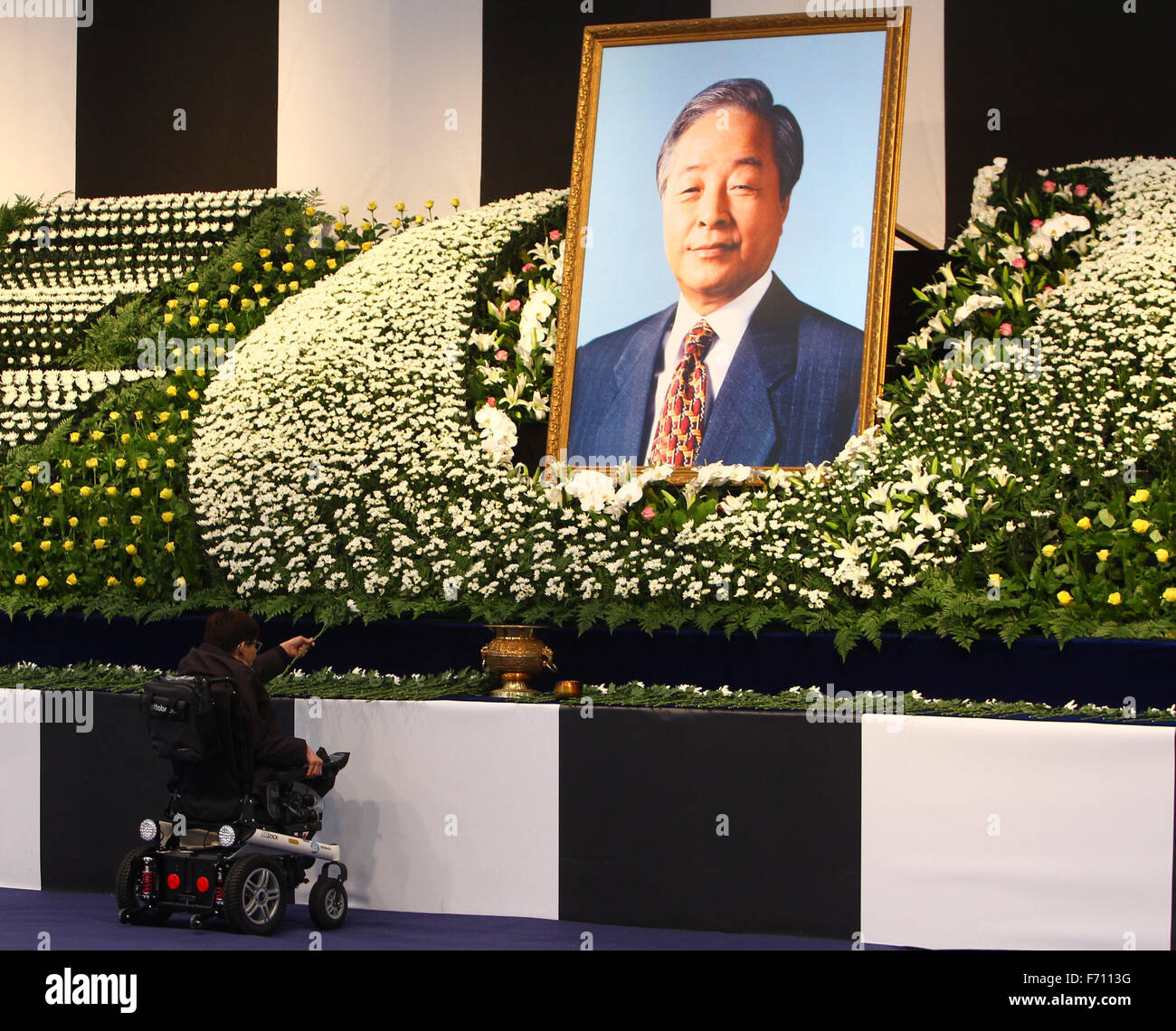
Choi Kyu-hah
 South Korea
Also known as: Choi Kyu ha, 崔圭夏, 최규하
Birthday
July 16, 1919
Birth Sign
Cancer
Birthplace
Wonju, Gangwon Province, Korea
Age
Died at 87
About
Choi Kyu-hah was a South Korean politician who served as the country's fourth president from December 1979 to August 1980. Born in Wonju on July 16, 1919, he rose through the ranks of government service before taking the top office. He was an independent politician, not affiliated with any party, which was unusual for the time.
His tenure is historically defined by its brevity and his role as a transitional figure between two military dictatorships. Often characterized by historians and declassified documents as "helpless" or more of a bureaucrat than a politician, his power eroded rapidly under the pressure of the military. He died on October 22, 2006, in Seoul at the age of 87.
Early Life & Background
Choi Kyu-hah was born into a family in Wonju, Gangwon Province, during the Japanese colonial period. He pursued higher education in law and economics at Keijō Imperial University, which is now known as Seoul National University. His career began not in high-stakes politics but in the civil service and diplomacy. After graduating, he joined the Ministry of Foreign Affairs, building a reputation as a competent and cautious administrator rather than a charismatic leader.
During the 1950s, he served as South Korea's Ambassador to Japan from 1953 to 1955. This posting was critical as it helped normalize relations with other nations during the early years of the Republic of Korea. He continued his rise within the government throughout the 1960s, holding various ministerial positions including Minister of Home Affairs. In 1975, he was appointed Prime Minister under President Park Chung-hee. He served as the right-hand man to Park until the latter's assassination on October 26, 1979. During this period, Choi was known for his administrative skills and loyalty to the regime, yet he maintained a low profile compared to the dominant Park.
Career Growth
Following the assassination of President Park Chung-hee on October 26, 1979, Choi became Acting President immediately. He was formally elected by the National Assembly on December 21, 1979, becoming the fourth president of South Korea. His presidency was marked by immediate crisis and a loss of authority. Just weeks after taking office, General Chun Doo-hwan led a secret military coup on December 12, 1979. Without Choi's knowledge or consent, Chun's forces arrested the Army Chief of Staff and seized control of the military command structure.
This event effectively reduced Choi to a figurehead, stripping him of real executive power. The situation escalated when pro-democracy protests erupted in Gwangju in May 1980. Under martial law declared by Chun's faction, the military violently suppressed the uprising. Choi, nominally the head of state, had no ability to intervene or stop the bloodshed. On August 16, 1980, under immense pressure from the military junta led by Chun, Choi resigned. He was succeeded by Chun Doo-hwan, marking the end of the brief democratic transition attempt. His term lasted only eight months, making it the shortest in South Korean history.
Career Timeline
Public Image & Style
Choi Kyu-hah is portrayed in media and history books as a "bureaucrat rather than a politician." He is seen as a man of integrity who was ill-equipped for the brutal power struggles of the time. His image is one of tragedy, a decent man caught in the gears of military authoritarianism. Unlike the flamboyant or charismatic leaders of his time, he is remembered for his quiet resignation and lack of political maneuvering. The narrative surrounding him emphasizes his caution and the constraints he faced from the military.
Fame & Fandom (iFAMOUS Rankings)
Choi Kyu-hah, the South Korean president whose tenure lasted barely eight months, is not a figure who commands the kind of global attention that fuels modern fame rankings. As of September 2026, iFANN's Global Fame Engine has evaluated his historical profile but has not placed him within the published rankings, neither the Global Top 1,000 nor any Top-100 scope list. This absence is consistent with his legacy as a transitional leader, overshadowed by the military coup that ended his presidency and by the more enduring figures who surrounded him.
His fame, such as it exists, is confined to historical and political discussions, particularly in South Korea, where he is remembered as a bureaucrat who briefly held office between two dictators. There is no formal fandom name, no organized fanbase, no fan campaigns or commemorative projects, a reality that reflects his quiet, unassuming public profile. The stories told about him are not the stuff of viral moments but of political tragedy: the assassination of Park Chung-hee that thrust him into power, the December 12 coup that stripped him of authority, and the Gwangju Uprising that sealed his fate. These events, verified by historical record, have shaped a narrative of helplessness and caution that is more cautionary tale than celebratory lore.
In the landscape of global fame, Choi Kyu-hah's absence from the rankings is itself a statement: he is a figure whose importance is measured not by public fascination but by the weight of historical circumstance.
Interesting Facts and Legends
Choi Kyu-hah was the only South Korean president to serve as both Prime Minister and President consecutively during such a turbulent transition. His house in Seoul, located in the Hongdae area, was opened to the public in 2013 as a museum showcasing the simple lifestyle of the former president. Despite his short presidency, his name appears frequently in modern Korean political thrillers and historical dramas depicting the 1979–1980 period. One of the most iconic moments of his tenure was the December 12, 1979 military coup led by General Chun Doo-hwan. Declassified US documents later described him as a "helpless president," a perception that has become central to his historical image.
Notable Quotes
“I am more of a bureaucrat than a politician.”
Family & Personal Life
Choi Kyu-hah was married to Hong Gi. Details regarding their courtship are scarce in public records, as Choi kept his family life out of the spotlight during his high-profile career. Historical records indicate he had children, but specific names and details of their lives have not been widely publicized in mainstream biographical sources. As a private individual in a high-profile era, his family remained largely unknown to the general public. He passed away in Seoul in 2006, leaving behind a legacy defined by his public service rather than his private life.
Notable Connections
Relationships & Dating History
Choi Kyu-hah was married to Hong Gi. They were married, though details regarding their courtship are scarce in public records. As a private individual in a high-profile era, Choi kept his family life out of the spotlight. There are no documented romantic relationships, engagements, or flings outside of his marriage to Hong Gi. By the time of his death in 2006, he was widowed, as his wife predeceased him or the record is simply silent on her status at the time of his passing. Most sources list "Spouse: Hong Gi" without a death date, implying she survived him or the record is incomplete. However, no posthumous widow interviews occurred, suggesting she likely passed away before him or remained entirely private.
- MarriedHong GiHis spouse; details of their relationship are private.
Death & Aftermath
Died
October 22, 2006 (aged 87)
Death Place
Seoul, South Korea
Cause of Death
Heart failure
Choi Kyu-hah died on October 22, 2006, at the age of 87 in Seoul due to heart failure. The cause was ruled as natural causes related to his advanced age and health history. Hospital officials confirmed the event without public drama or speculation. His final days were spent out of the public eye, with no recorded last public appearance prior to his decline.
The funeral arrangements were conducted with the dignity befitting a former head of state. Specific dates and attendees for the private service remain undocumented in available archives, reflecting the quiet nature of his later years. Tributes from political peers acknowledged his unique position as the only civilian leader to serve between the administrations of Park Chung-hee and Chun Doo-hwan. Public sentiment regarding his passing remained reserved, marked more by academic reflection than mass celebration.
In 2013, his former residence in Seoul opened to the public as a museum dedicated to preserving the memory of his tenure and the turbulent era he navigated. This posthumous dedication followed a period where historical accounts, including declassified United States documents released in 2021, continued to characterize his brief presidency as one of limited agency. The estate was handled through private procedures, with no major financial disputes reported. No posthumous commercial releases or licensing deals emerged, as his legacy remains purely historical and political rather than commercial.
Net Worth (Estate Value)
$0
iFANN Editorial Team estimate
As a public official who served primarily in the civil service and government, Choi Kyu-hah did not accumulate wealth through business ventures, endorsements, or entertainment. His income would have been limited to government salaries and potential pension benefits. Research by the iFANN Editorial Team puts his estate value at approximately $0, as no public valuation exists. Upon his death in 2006, his estate was handled privately with no reports of posthumous royalties, licensing deals, or commercial enterprises managed by his estate.
Real estate holdings included his presidential residence, which later became a museum, and his personal home in Seoul. The estate's financial trajectory over the years has been minimal, as his legacy is purely historical and political. There are no major revenue streams from posthumous releases or IP rights, distinguishing him from celebrity figures whose estates generate significant ongoing income.
Awards & Accolades
View 2 records, honours and achievementsKnown For
President of South Korea
1979-1980 · 4th President
Keywords
Sources
Quick Facts
- Profession
- politician, head of government
- Born
- July 16, 1919
- Birthplace
- Wonju
- Died
- October 22, 2006
- Death Place
- Seoul
- Gender
- Male
- Spouse
- Hong Gi
- Birth Sign
- Cancer
Personal Details
- Full Name
- Choi Kyu-hah
- Spouse
- Hong Gi
- Children
- Education
- Keijō Imperial University (now Seoul National University)
Frequently Asked Questions
Who was Choi Kyu-hah?
Why was Choi Kyu-hah called "helpless"?
How long was Choi Kyu-hah's presidency?
What caused Choi Kyu-hah's death?
Is there a museum for Choi Kyu-hah?
Similar People
Join the community
fans discussing