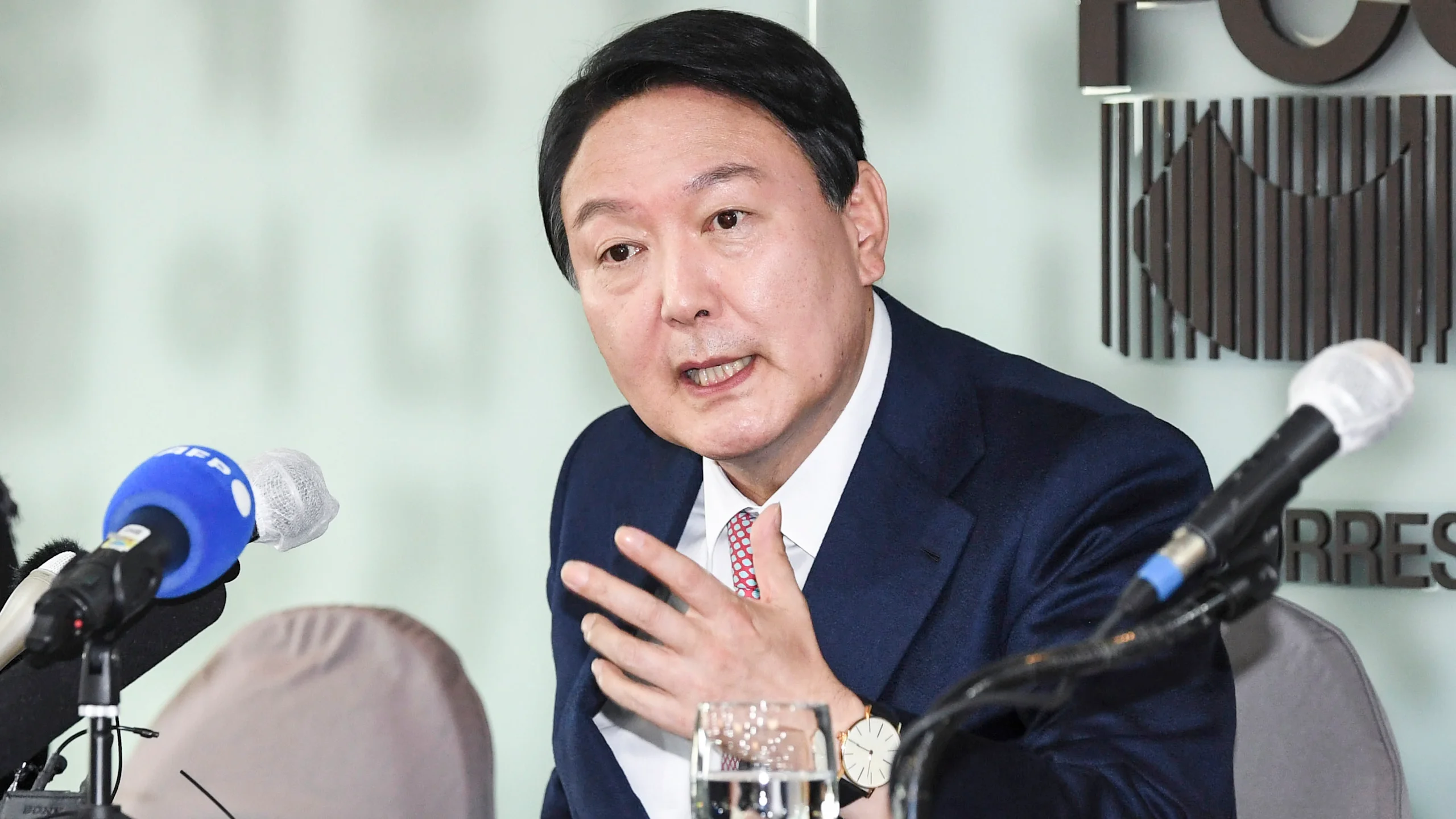
Chun Doo-hwan
 South Korea
Also known as: Jeon Du-hwan, Doo-hwan Chun, Butcher of Gwangju
Birthday
January 18, 1931
Birth Sign
Capricorn
Birthplace
Hapcheon County, South Gyeongsang Province, Korea
Age
Died at 90
Height
5 ft 7 in (170 cm)
About
Chun Doo-hwan was a South Korean army general and politician who served as the fifth president of South Korea from 1980 to 1988. He took power through a military coup in December 1979, following the assassination of President Park Chung-hee, and governed under a constitution that granted him sweeping authority. His administration presided over a period of rapid export-led growth, including South Korea's first trade surplus in 1986 and the 1988 Seoul Olympics, but it is remembered chiefly for the violent suppression of the Gwangju Uprising in May 1980 and for the imprisonment and torture of political opponents.
He left office in 1988 after mass protests forced democratic reforms, and in 1996 he was convicted of treason, insurrection and corruption. A death sentence was commuted to life imprisonment, and he was pardoned in December 1997. He never expressed remorse for the Gwangju crackdown. He died on November 23, 2021, at his home in Seoul, at age 90.
Early Life & Background
Chun Doo-hwan was born on January 18, 1931, in a farming village in Hapcheon County, South Gyeongsang Province, during the Japanese colonial period. He was the second son of a farmer and a homemaker, and the family relocated to Seoul while he was still young so that he could attend middle school there. The Korean War, which began when he was 19, left a lasting impression on him; he later said the disorder of those years convinced him that military discipline was the only reliable path to national stability.
He entered the Korea Military Academy in 1949 and graduated in 1955 as part of the ninth class. At the academy he was a solid student and a capable athlete, and he became a founding member of Hanahoe, a secret fraternal society of officers from the Gyeongsang region who shared a conservative, anti-communist outlook. Hanahoe would function as the nucleus of his political network for the next three decades.
After commissioning, Chun served in infantry units and took part in counter-insurgency operations against communist guerrillas in the south. He attended the Infantry School and later moved into the Special Forces Command, where he built a reputation as an efficient, hard-edged staff officer. He was promoted to brigadier general in 1972 and appointed chief of staff of the 1st Field Army. In 1976 he was promoted to major general and named director of the Defense Security Command, the military's internal intelligence arm. In that post he oversaw the surveillance, arrest and interrogation of dissidents, work that brought him into direct contact with the political machinery he would soon seize.
Career Growth
The turning point came on December 12, 1979, when Chun ordered the arrest of General Jeong Seung-hwa, chairman of the Joint Chiefs of Staff, and moved troops into Seoul to secure the military command. The action, later tried as a mutiny, gave him effective control of the armed forces six weeks after Park Chung-hee's assassination. On May 17, 1980, he expanded martial law nationwide, shut the National Assembly and arrested opposition figures including Kim Dae-jung. Days later he deployed special forces into Gwangju, where a student-led protest had grown into a citywide uprising; the crackdown killed hundreds of civilians.
In August 1980 the National Conference for Unification, a body under his control, elected him president. A new constitution in 1981 formalized the Fifth Republic and gave him the power to appoint and dismiss the legislature at will. His economic program pushed heavy industry and exports, and the country recorded its first trade surplus in 1986. The 1986 Asian Games and the 1988 Seoul Olympics, both awarded under his government, raised South Korea's international profile.
Mass protests in June 1987 forced him to accept direct presidential elections. His ally Roh Tae-woo won the December 1987 vote and succeeded him in February 1988. In 1995 prosecutors arrested Chun on charges of mutiny, sedition and accepting hundreds of millions of dollars in bribes. The following year a court sentenced him to death and fined him 220.5 billion won. The sentence was commuted to life in prison in 1997, and President Kim Young-sam pardoned him that December.
Career Timeline
Public Image & Style
Chun Doo-hwan is regarded in South Korea as a villain, and his public image is inseparable from the Gwangju Uprising and his refusal to apologize for it. He is not a celebrity in any conventional sense; he has no admirers, no merchandise, no sympathetic biopic. His name functions as a political epithet. In 2026, when a lawmaker was described as a "female Chun Doo-hwan" during a party dispute, the phrase was understood instantly as an accusation of authoritarianism, and it prompted a defamation complaint.
His physical presentation reinforced the image: during his presidency he appeared almost exclusively in military uniform, and in his later years he wore plain dark suits and thick-rimmed glasses, a look that actors have since copied when portraying him. The Netflix film The Generals, announced in April 2026, cast Ha Jung-woo as Chun; he shaved his head and wore sunglasses for the part, playing the dictator as a tyrant rather than a hero.
Fame & Fandom
By the September 2026 rankings, Chun Doo-hwan is the 21st most famous person in South Korea, the 84th most famous person from South Korea, and the 52nd most famous person in East Asia. Those placements have held steady across the last cycle, which is a notable fact in itself for a man who has been dead for nearly five years. The iFANN Global Fame Rankings track attention across media coverage, search behavior and consumption worldwide, and Chun's standing reflects a durable historical fixation rather than any affection.
There is no fandom. No name exists for his supporters because there are none. The people who read about him, watch documentaries about him, or share clips of the Gwangju crackdown do so to reckon with what happened, not to celebrate it. The closest thing to a fan project is the work of his own grandson: Jeon Woo-won's webtoon about the family's role in the dictatorship drew 67.8 million views in 2026, and the audience came for reckoning, not nostalgia. His name circulates in Korean political argument as a shorthand for authoritarianism, and in history classrooms as a case study. That is the shape of his fame: permanent, and entirely negative.
Interesting Facts and Legends
His birth name was Jeon Du-hwan; he adopted the spelling Chun Doo-hwan after entering the military, in line with the romanization conventions of the period. He was a founding member of Hanahoe, the secret officer society that supplied much of his inner circle. His 1997 pardon was granted by President Kim Young-sam on the advice of President-elect Kim Dae-jung, whom Chun's government had once sentenced to death. Chun was an accomplished calligrapher, and a stone bearing his brushwork disappeared from an arts center in August 2026, an erasure that drew more attention than the stone itself ever had.
The Gwangju Uprising of May 1980 remains the event most associated with him, and the phrase "Butcher of Gwangju" follows his name in nearly every obituary and textbook entry. The December 12, 1979 coup is still taught in Korean civics classes as the textbook case of military intervention in civilian politics. His grandson Jeon Woo-won, who has publicly broken with the family, published a webtoon about the dictatorship's toll that drew 67.8 million views in 2026.
Notable Quotes
“I am not a criminal. I am a patriot who saved the country.”
“The Gwangju incident was a communist uprising.”
“I will not apologize for what I did.”
Family & Personal Life
Chun married Lee Soon-ja in 1959, and the couple remained together until his death in 2021. They had four children: two sons, Jeon Ho-chul and Jeon Won-chul, and two daughters. The household was a military one, run with the same formality Chun applied to his command, and the family largely stayed out of public view during his presidency.
His grandson Jeon Woo-won, son of Jeon Ho-chul, has become the family's most visible public figure in recent years, though not in the way the family might have wished. Woo-won has spoken openly about the trauma of the family name and, in 2026, published an AI-generated webtoon about the dictatorship's legacy. Reports that August described him working part-time loading delivery packages at a logistics center, saying he was grateful simply to have a job.
Notable Connections
Park Chung-hee, the predecessor whose 1979 assassination opened Chun's path to power; Roh Tae-woo, his military ally and presidential successor; Kim Jae-gyu, the KCIA director who killed Park and was executed under Chun; Kim Dae-jung, the dissident his government sentenced to death and who later advised on his pardon; and his grandson Jeon Woo-won, whose 2026 webtoon brought the family's history back into public debate.
Relationships & Dating History
Chun Doo-hwan's personal life was conducted within the strict social conventions of mid-century Korea, and there is no public record of courtship or dating in the modern celebrity sense. His marriage was arranged and formalized in the manner typical of his generation and class.
He married Lee Soon-ja in 1959, when he was a young army officer and she was the daughter of a military family. The match was a conventional one for the period, and the couple stayed together for 62 years. They had four children: two sons, Jeon Ho-chul and Jeon Won-chul, and two daughters. No separation, divorce, or extramarital relationship was ever publicly documented, and no pre-marital relationships were reported in the Korean press.
Lee Soon-ja survived him and was married to him at the time of his death on November 23, 2021, making him, technically, a married man at death rather than a widower. She has remained out of public view since the funeral, and no subsequent relationships have been reported for either party. As of 2026, Chun Doo-hwan is deceased, and his widow has made no public statements about her status.
- MarriedLee Soon-ja1959 - 2021Married for 62 years until his death; the couple had four children, and she survived him.
Death & Aftermath
Died
November 23, 2021 (aged 90)
Death Place
Seoul, South Korea
Cause of Death
Acute cardiac arrest, complicated by myeloma and Alzheimer's disease
Chun Doo-hwan died at his residence in Yeonhui-dong, Seoul, on November 23, 2021, at the age of 90. Emergency responders pronounced him dead after an acute cardiac arrest; he had spent his final years contending with myeloma, a blood cancer, and Alzheimer's disease, which had progressively removed him from public life. His last significant public appearance had come years earlier, during the legal battles over his memoirs and his unpaid fine, when he appeared frail and largely silent before reporters.
The cause was reported by his family and attending physicians as cardiac arrest arising from his underlying conditions. No criminal investigation or inquest followed, as his death was attributed to natural causes. The public response was notably restrained. There were no state tributes. Media coverage in South Korea and abroad led with the Gwangju Uprising and the phrase "Butcher of Gwangju," and the prevailing tone was one of closure rather than grief. President Moon Jae-in sent no official condolence delegation, and no senior sitting officials attended the funeral.
A private service was held on November 26, 2021, attended by family and a small circle of former aides. He was buried at a site in Gyeonggi Province rather than a national cemetery, a decision that avoided the controversy that would have followed an official interment. In the years afterward, attention shifted to his descendants. His grandson Jeon Woo-won published an AI-generated webtoon in 2026 recounting the family's role in the dictatorship, which drew 67.8 million views. In August 2026 the government stripped military decorations from 76 individuals tied to the 1979 coup and the Gwangju crackdown. A court order that same year required the family to pay damages over distortions of Gwangju history, and by late 2026 Jeon Woo-won was working part-time at a logistics center.
Net Worth (Estate Value)
$90 Million
iFANN Editorial Team estimate
Chun Doo-hwan's finances were never simple, and the estate he left behind is smaller and more contested than the numbers thrown around during his trial. At the height of his power his income came from his presidential salary, a general's pension and a network of real estate holdings in Seoul and Gyeonggi Province. The 1996 corruption conviction centered on roughly 220.5 billion won in bribes and embezzled funds, and the court fined him that full amount. He paid only a fraction of it. As of 2026, the iFANN Editorial Team's analysis of his estate, property records and the outstanding judgment points to a total of about $90 Million.
The estate's main assets are the family home in Yeonhui-dong and several parcels of land outside Seoul, most of which have been tied up in litigation for years. The 1997 pardon erased his prison term but not the fine, and prosecutors have spent decades trying to collect. In February 2026 the Supreme Court ordered his family to pay damages related to distortions of Gwangju Uprising history, adding to the family's liabilities rather than its assets. The financial picture for his descendants is not a comfortable one. His grandson Jeon Woo-won was reported in August 2026 to be working part-time loading delivery packages at a logistics center, a detail that says more about the family's current finances than any balance sheet could.
Awards Won (3)
Chun Doo-hwan received the standard slate of state decorations during his presidency, including the Order of Merit for National Foundation, the Supreme Order of the Great Seal of the Nation and the National Flag Decoration. Most of these were effectively nullified after his 1996 conviction, and in August 2026 the South Korean government stripped military decorations from 76 individuals linked to his coup and the Gwangju crackdown.
1980 · State decoration
Role in the 1979 coup and subsequent stabilization
1981 · State decoration
Presidency of the Fifth Republic
Known For
Fifth President of South Korea
1980 · President
December 12 Coup
1979 · Military leader
Gwangju Uprising crackdown
1980 · President
1988 Seoul Olympics
1988 · Head of state
Keywords
Sources
Quick Facts
- Profession
- Politician, Army General
- Born
- January 18, 1931
- Birthplace
- Hapcheon County, South Gyeongsang Province
- Died
- November 23, 2021
- Death Place
- Seoul, South Korea
- Gender
- Male
- Spouse
- Lee Soon-ja
- Birth Sign
- Capricorn
- Presidency
- 1980-1988
- Height
- 5 ft 7 in (170 cm)
Personal Details
- Full Name
- Jeon Du-hwan
- Height
- 5 ft 7 in (170 cm)
- Spouse
- Lee Soon-ja
- Children
- 4 (two sons, two daughters)
- Education
- Korea Military Academy (graduated 1955)
Frequently Asked Questions
Who was Chun Doo-hwan?
How did Chun Doo-hwan die?
What was Chun Doo-hwan's net worth?
Was Chun Doo-hwan ever punished for the Gwangju Uprising?
Why is Chun Doo-hwan still so famous in 2026?
Similar People
Join the community
fans discussing