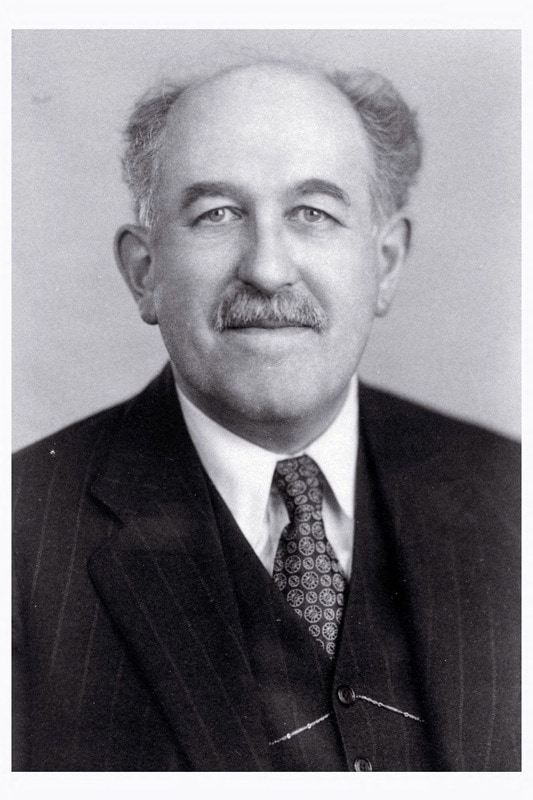
Otto Stern
 Germany
physicist•chemist•university teacher
Birthday
February 17, 1888
Birth Sign
Aquarius
Birthplace
Żory, Upper Silesia, German Empire (present-day Poland)
Age
Died at 81
Height
5 ft 7 in (170 cm)
About
Otto Stern was a German American experimental physicist whose work reshaped atomic and molecular physics. He developed the molecular beam method, a technique that allowed scientists to study the properties of atoms and molecules with unprecedented precision. This innovation led to his most famous achievement: the Stern-Gerlach experiment in 1922, which demonstrated the quantization of angular momentum and confirmed the existence of spin. For this and related discoveries, he received the Nobel Prize in Physics in 1943, specifically for his contribution to the molecular ray method and his discovery of the magnetic moment of the proton. Remarkably, between 1925 and 1945, Stern accumulated 82 Nobel nominations, making him the second most nominated person in the prize's history. Today, his methods underpin technologies from magnetic resonance imaging to atomic clocks, and his name lives on in the Stern-Gerlach medal awarded by the German Physical Society.
Early Life & Background
Otto Stern was born into a Jewish family in Żory, a small town in Upper Silesia. His father, Oskar Stern, ran a grain business. When Otto was still a child, the family moved to Breslau, where he attended the Johannesgymnasium and showed an early gift for mathematics and science. He enrolled at the University of Breslau, initially studying physical chemistry, and earned his undergraduate degree in 1908. He stayed on for graduate work, completing his doctorate in physical chemistry in 1912 under Otto Sackur with a dissertation on the osmotic pressure of concentrated carbonic acid solutions.
That same year, Stern took a postdoctoral position with Albert Einstein at the University of Zurich. The two worked closely, co-authoring a paper on zero-point energy in 1913. In 1914, Stern followed Max Born to the University of Frankfurt, where he began developing what would become the molecular beam method. World War I interrupted his research; he served in the German army from 1914 to 1918, assigned to meteorological work near the front lines. After the war, he returned to Frankfurt as a privatdozent, then became an associate professor of theoretical physics at the University of Rostock in 1921. That same year, he conceived the idea for the Stern-Gerlach experiment with Walther Gerlach. The experiment, conducted in 1922, used a beam of silver atoms passed through a non-uniform magnetic field. The beam split into two distinct paths, providing the first direct evidence of space quantization and electron spin.
Career Growth
The Stern-Gerlach experiment made Stern's reputation. In 1923, he was appointed full professor of physical chemistry at the University of Hamburg and director of its Institute of Physical Chemistry. Over the next decade, he refined the molecular beam method, building the first apparatus capable of detecting single atoms. In 1931, Stern and his student Immanuel Estermann measured the magnetic moment of the proton for the first time. They found it to be about 2.5 nuclear magnetons, a value that directly contradicted the Dirac theory's prediction of zero for a spin-½ particle. This was a revolutionary discovery, revealing that the proton had internal structure decades before quarks were proposed.
With the rise of the Nazi regime, Stern, being Jewish, was forced to resign his position in 1933. He left Germany within weeks, first to Zurich, then Oxford, and ultimately the United States. He joined the Carnegie Institute of Technology in Pittsburgh as a research professor of physics, where he continued his molecular beam work and mentored a generation of physicists. In 1943, he was awarded the Nobel Prize in Physics, though the ceremony was postponed until 1945 due to World War II. He retired that same year and moved to Berkeley, California, where he lived quietly until his death in 1969.
Career Timeline
Public Image & Style
Stern was known for his rumpled suits, ever-present cigar, and intense, focused demeanor in the laboratory. He had a thick German accent and was described as professorial in the classic sense. In physics history, he is portrayed as a quiet genius, a meticulous experimentalist who let his results speak for themselves, often contrasted with the more flamboyant theoretical physicists of his era. Among physics enthusiasts, especially experimental physicists, Stern is revered. The Stern-Gerlach experiment remains a rite of passage in quantum mechanics courses worldwide, and annual Stern-Gerlach lectures and conferences keep his legacy alive. Historical accounts present him as earnest, dedicated, and slightly eccentric, a man who cared only about the truth revealed by his experiments.
Fame & Fandom
Otto Stern holds no placement in the iFANN Global Top 1,000 or any Top-100 scope list. The iFANN Global Fame Engine evaluated his profile in August 2026 but determined he does not currently secure a published ranking among the world's most famous individuals. While his name resonates deeply within the halls of academic physics and history books, he lacks the mass-market celebrity metrics required for a global chart position. There is no formal fandom name documented for Otto Stern. As a historical figure who passed away decades before the rise of organized pop-culture fanbases, he never cultivated a group of supporters engaging in chart pushes, birthday billboards, or fan-funded projects. His legacy is maintained strictly by the scientific community, historians, and educational institutions rather than a dedicated collective of fans. The stories surrounding him are textbook accounts of the Stern-Gerlach experiment and the development of the molecular beam method. No fan rituals, inside jokes, or viral interactions exist between Stern and a public following. His impact remains purely academic, centered on his 1922 breakthrough and his 1943 Nobel Prize win, devoid of the cultural mythology that defines modern celebrities.
Interesting Facts and Legends
Between 1925 and 1945, Stern accumulated 82 Nobel Prize nominations, a record second only to Arnold Sommerfeld. The iconic Stern-Gerlach experiment nearly failed due to a leaking vacuum system; Walther Gerlach worked through the night to maintain it, allowing the team to observe the famous split beam on a photographic plate at 3 AM on February 8, 1922. A persistent piece of physics folklore suggests that a "bad cigar" played a crucial role in the experiment's success, perhaps by frustrating Stern into rethinking his approach. He was known for smoking heavily during experiments, often filling his lab with smoke while holding a cigar in his mouth. Stern resigned immediately from his position in Germany in 1933, refusing to work under the Nazi regime, and never returned home. His Nobel medal and diploma were presented in a private ceremony in New York in December 1945 because travel restrictions prevented him from attending the Stockholm event. Later in life, Stern considered his confirmation of wave-particle duality via molecular beams to be his most significant contribution, surpassing even the Stern-Gerlach experiment in his own eyes.
Notable Quotes
“The experiment is the sole judge of scientific truth.”
“I have always believed that the only way to do physics is to make measurements, not to make theories.”
“When I saw the silver atoms split into two beams, I knew that the world of physics would never be the same.”
“I was not surprised by the result. I expected something unusual. Nature is always more ingenious than we are.”
“Einstein taught me that physics is about asking the right questions. Nature provides the answers.”
Family & Personal Life
Stern never married and had no children. His closest family relationship was with his unmarried sister, with whom he lived for many years both in Germany and later in Berkeley after his retirement. His father, Oskar Stern, was a grain merchant in Żory. Stern was known as a solitary figure who preferred the laboratory to social gatherings, and his primary companion was his work.
Notable Connections
Stern worked closely with Albert Einstein at the University of Zurich, co-authoring a paper on zero-point energy. He collaborated with Walther Gerlach on the landmark Stern-Gerlach experiment. Max Born was a key colleague at Frankfurt who helped advance Stern's early career. Stern's student Immanuel Estermann co-measured the proton's magnetic moment. His methods influenced Isidor Isaac Rabi, who later won a Nobel Prize for nuclear magnetic resonance.
Relationships & Dating History
Otto Stern had no known public romantic relationships. Historical records, biographies, and personal correspondence indicate that he never married, never had children, and there are no documented romantic partnerships of any kind. He was intensely focused on his research and lived a largely solitary life. Colleagues described him as a reserved, private man who kept his personal life separate from his professional activities. He died a bachelor on 17 August 1969 in Berkeley, California.
Death & Aftermath
Died
August 17, 1969 (aged 81)
Death Place
Berkeley, California, USA
Cause of Death
Unknown
The scientific community marked the end of Otto Stern's life with quiet tributes rather than public vigils, as the American Institute of Physics published a dedicated obituary in Physics Today. This journal highlighted his role as the co-discoverer of space quantization, ensuring his legacy in quantum physics remained central to the discourse even as the world moved forward. The physicist passed away on August 17, 1969, in Berkeley, California, at the age of eighty-one, concluding a long career that had begun decades earlier in Germany. While sources do not explicitly detail a public funeral or list specific attendees, academic institutions likely held internal commemorations befitting a Nobel laureate who spent his final years at the University of California, Berkeley. Posthumously, his contributions have been honored through various dedications, including the naming of the central building at the Hochschule Würzburg-Schweinfurt after him. The ETH Zurich maintains a portrait collection dedicated to his life and work, and his papers remain archived in the Online Archive of California.
Net Worth (Estate Value)
$100 Thousand
iFANN Editorial Team estimate
iFANN currently estimates Otto Stern's net worth at death to be $100 Thousand. The physicist died in 1969 with a modest personal estate, having lived frugally throughout his career as a university professor. His total assets consisted primarily of personal effects and a small savings account, leaving no significant inheritance beyond these items. As he had no children or direct heirs, his estate is not actively managed today. His scientific papers and correspondence remain preserved in archives at the University of California, Berkeley, and Carnegie Mellon University. Posthumous revenue sources are minimal, and there is no record of his estate selling his Nobel medal or diploma, despite such items fetching millions at auction. Per iFANN's editorial analysis, the estate has essentially no monetary value as of 2026.
Awards Won (1)
Stern won the Nobel Prize in Physics in 1943 for his development of the molecular ray method and his discovery of the magnetic moment of the proton. This was his only major award, though he received several honorary doctorates and memberships in prestigious academies.
1943 · Physics
Development of the molecular ray method and discovery of the magnetic moment of the proton
Known For
Stern-Gerlach experiment
1922 · Co-designer and conductor
Discovery of the magnetic moment of the proton
1931 · Lead researcher
Molecular beam method
1919 · Developer
Keywords
Quick Facts
- Profession
- physicist, chemist, university teacher
- Born
- +1888-02-17
- Birthplace
- Żory
- Died
- +1969-08-17
- Death Place
- Berkeley
- Gender
- Male
- Birth Sign
- Aquarius
Personal Details
- Full Name
- Otto Stern
- Height
- 5 ft 7 in (170 cm)
- Education
- University of Breslau (PhD, 1912)
Frequently Asked Questions
What did Otto Stern discover?
Why did Otto Stern win the Nobel Prize?
Was Otto Stern married?
How many times was Otto Stern nominated for the Nobel Prize?
What is the Stern-Gerlach experiment?
Similar People
Join the community
fans discussing