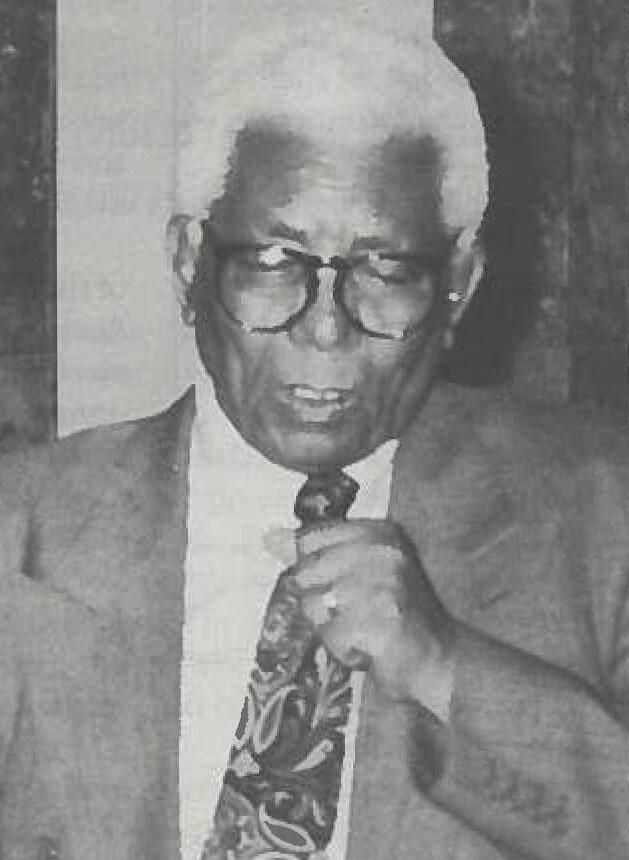
Walter Sisulu
 South Africa
Birthday
+1912-05-18
Birth Sign
Taurus
Birthplace
Transkei
Age
Died at 90
About
Walter Sisulu, born May 18, 1912, in the Transkei region of South Africa, was a central figure in the nation's struggle against apartheid. A dedicated politician and activist, he devoted his life to dismantling the oppressive system of racial segregation. Sisulu's journey with the African National Congress (ANC) began early, and he became a driving force within the organization. His commitment led him to serve as ANC Secretary-General from 1949 to 1954, a period of significant organizational growth and strategic planning. He later held the position of ANC Deputy President from 1991 to 1994, witnessing firsthand the dawn of a new, democratic South Africa. His activism was not without immense personal cost; Sisulu spent over 25 years imprisoned on Robben Island, a testament to his unwavering resolve in the face of brutal state repression. This extended incarceration stemmed from his role as Accused No.2 in the infamous Rivonia Trial, a pivotal moment in the anti-apartheid movement. Sisulu forged powerful alliances throughout his political career, most notably with Oliver Tambo and Nelson Mandela. Together, this formidable trio played a crucial role in shaping the strategies and actions of the anti-apartheid movement. They were instrumental in organizing the 1952 Defiance Campaign, a nationwide act of civil disobedience that galvanized popular opposition to apartheid laws. Furthermore, Sisulu was a co-founder of the ANC Youth League, an organization that injected new energy and radicalism into the Congress, and he was a key figure in the establishment of Umkhonto we Sizwe, the armed wing of the ANC. His political convictions also led him to serve on the Central Committee of the South African Communist Party, reflecting the broad spectrum of alliances formed in the fight for liberation. His enduring impact is recognized through his instrumental role in shaping the political landscape of South Africa. Sisulu passed away on May 5, 2003, at the age of 90, leaving behind a legacy of courage, resilience, and profound dedication to justice and equality. The fight for which he sacrificed so much ultimately led to the dismantling of apartheid and the establishment of a democratic South Africa.
Fame & Fandom
Walter Sisulu's legacy is not sustained by the frenetic energy of a modern fanbase but through the solemn, institutional reverence of a nation. Unlike pop icons whose supporters gather for concerts or stream content on command, Sisulu's admirers engage through state-sanctioned lectures and academic discourse. The primary vessel for this devotion is the Walter Sisulu Memorial Lecture, an annual event where political leaders and scholars reflect on leadership ethics rather than celebrity culture. This absence of a formal fandom name reflects the gravity of his role; he was a statesman whose influence permeated the African National Congress and the very fabric of South Africa's democracy. His 'fanbase' consists of citizens honoring a public trust, keeping his vision alive through universities like Walter Sisulu University, which continues to evolve as a hub for research into his strategic foresight. There are no billboards, subway ads, or viral hashtags chasing his memory. Instead, the narrative remains anchored in verified history: the mentorship of Nelson Mandela, the co-founding of the Youth League, and nearly three decades of imprisonment on Robben Island. These stories function as folklore for the politically engaged, retold not for entertainment but as moral compasses for current generations. In August 2026, iFANN's Global Fame Engine evaluated his standing globally. Walter Sisulu is currently unranked in the published Global Top 1,000 lists. He does not hold a placement in any Top-100 scope list. While his fame is immense within South Africa, his global ranking remains outside the current published metrics.
Interesting Facts and Legends
Born in the Transkei region in 1912, Walter Sisulu served as ANC Secretary-General from 1949 to 1954 during a critical period of organizational expansion. He later became Deputy President from 1991 until his death in 2003. A defining legend of his life involves his role as the 'King Maker' who mentored Nelson Mandela, introducing him to the ANC and supporting his rise to leadership. Together with Oliver Tambo, Sisulu co-founded the African National Congress Youth League, a move that revitalized the organization and shifted its strategy toward mass mobilization essential for dismantling apartheid. His sacrifice is central to his enduring story; he spent nearly thirty years in prison, including time on Robben Island alongside Mandela. Even after his release, his influence persisted, with leaders invoking his example to remind politicians that office is a public trust. Today, his legacy is institutionalized through Walter Sisulu University, which launched new 'University of the Future' models to continue his vision of self-sufficiency and ethical leadership.
Death & Aftermath
Died
+2003-05-05 (aged 90)
Death Place
Orlando West, Soweto, South Africa
Cause of Death
Natural causes related to old age
In the quiet of his home in Orlando West, Soweto, Walter Sisulu spent his final days surrounded by family and medical attendants as age finally claimed the man who had dedicated ninety years to the struggle against apartheid. On May 5, 2003, he passed away naturally from conditions associated with old age, ending a life of service without sudden violence or legal dispute. President Thabo Mbeki immediately declared a seven-day period of national mourning, while tributes poured in from global leaders including Nelson Mandela, who called Sisulu his mentor and father. Thousands gathered for a massive state funeral at FNB Stadium in Johannesburg on May 11, marking the first time such a venue hosted a non-head-of-state ceremony.
Dignitaries from around the world joined the mourners before Sisulu was laid to rest in the Heilbron Cemetery in Orlando West alongside his wife, Albertina. The nation honored him through lasting dedications that included the renaming of the Walter Sisulu University of Technology and the posthumous awarding of the Order of Baobab in 2004. A documentary titled Walter Sisulu: The Man Who Made the Difference and numerous books detailed his legacy, while the Walter Sisulu Foundation continued its work in youth development and education. His estate was managed quietly by his family without public dispute, ensuring his memory remained focused on the democracy he helped build.
Awards & Accolades
Keywords
Quick Facts
- Profession
- politician
- Born
- +1912-05-18
- Birthplace
- Transkei
- Died
- +2003-05-05
- Death Place
- Johannesburg
- Gender
- Male
- Spouse
- Albertina Nontsikelelo Sisulu
- Birth Sign
- Taurus
Personal Details
- Spouse
- Albertina Nontsikelelo Sisulu
Join the community
fans discussing