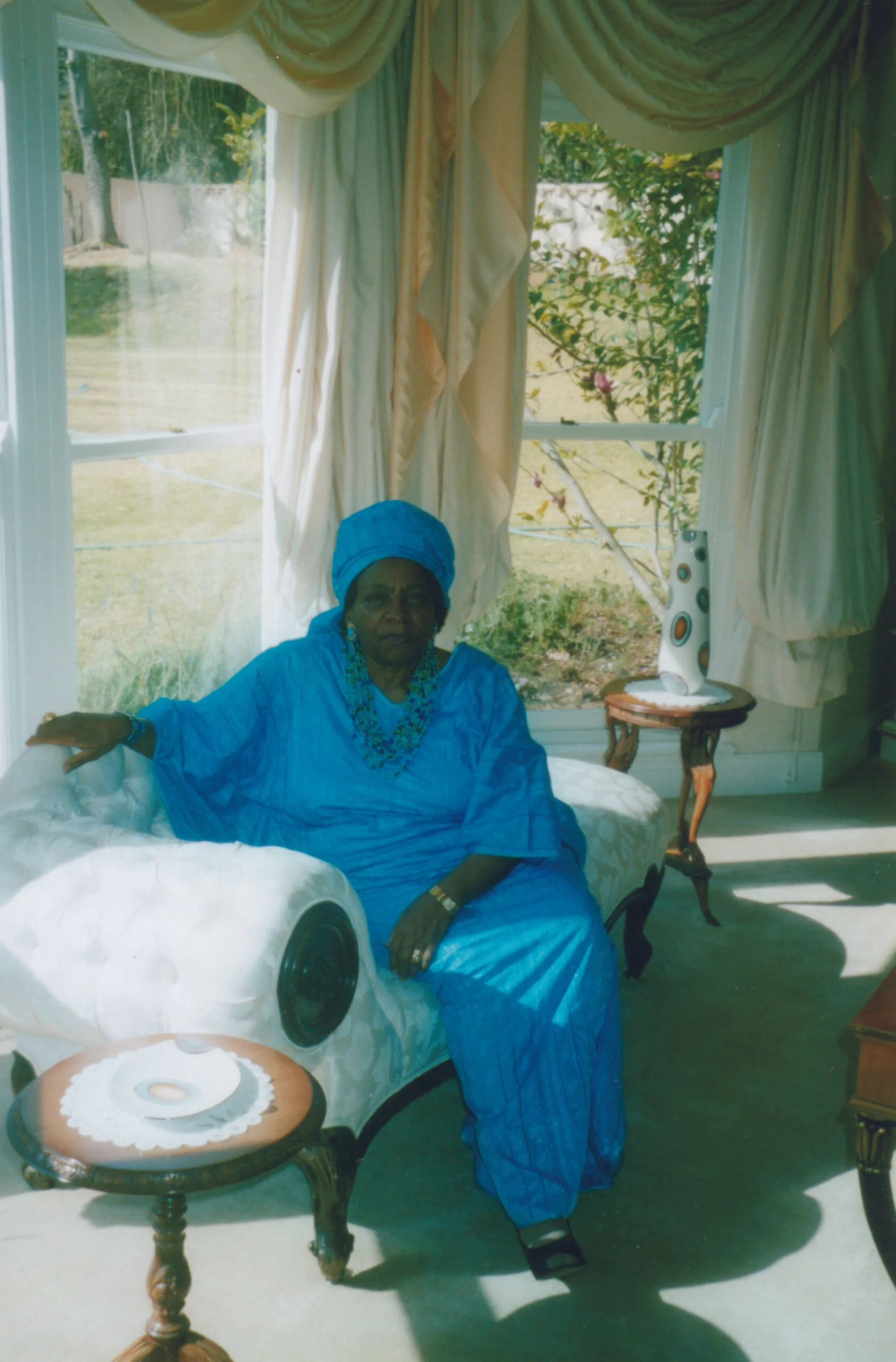
Adelaide Tambo
 South Africa
politician•anti-apartheid activist
Also known as: Ma Tambo, Adelaide Frances Tambo
Birthday
July 18, 1929
Birth Sign
Cancer
Birthplace
Vereeniging, South Africa
Age
Died at 77
About
Adelaide Frances Tambo (née Tshukudu) was a South African anti-apartheid activist and politician. Born on 18 July 1929 in Vereeniging, she devoted her life to the struggle for equality, becoming one of the most respected figures in the African National Congress (ANC). Known affectionately as "Ma Tambo," she was a symbol of resilience and the politics of care within the liberation movement.
Her activism spanned more than five decades, from her early involvement in the ANC to her leadership in the Women's March and her years of exile. After returning to South Africa in 1990, she served as a member of parliament and continued to advocate for women's rights. Her partnership with her husband, Oliver Tambo, who led the ANC from 1967 to 1991, was both personal and political, and her legacy is preserved through the Oliver & Adelaide Tambo Foundation.
Early Life & Background
Adelaide Tshukudu grew up in Vereeniging, a town south of Johannesburg, during a time when racial segregation was deeply entrenched. Her political awakening came early: at fifteen, she tried to join the African National Congress after watching police beat her grandfather. That moment shaped her lifelong commitment to justice.
She was educated locally and became involved in community organizing as a young woman. In 1956, she participated in the historic Women's March to the Union Buildings in Pretoria, protesting against the pass laws. This act of defiance marked her as a dedicated activist, and she soon became a founding member of the Afro-Asian Solidarity Movement and the Pan-African movement.
Her activism made her a target of the apartheid regime, and she was forced into exile in the early 1960s. From abroad, she continued to support the liberation movement, working alongside her husband Oliver Tambo, who was then the ANC's president. Her early life was a testament to the power of personal conviction in the face of systemic oppression.
Career Growth
Adelaide Tambo's career was defined by her activism and political work. After her return to South Africa in 1990, she appeared on stage at the Dance Mandela Concert at Brixton Academy in London, a moment that symbolized the end of exile. She then served as a member of parliament, where she focused on women's rights and social justice.
Her contributions were recognized through numerous institutions named in her honour, including the Adelaide Tambo School in Soweto and the Adelaide Tambo School of Nursing Science at Tshwane University of Technology. In 2020, the Oliver and Adelaide Tambo Hospital in the Eastern Cape was renamed to commemorate the couple's legacy.
Throughout her post-1990 career, she remained a vocal advocate for gender equality and continued to inspire a new generation of activists. Her work with the ANC and her role as a parliamentarian solidified her place in South Africa's democratic transition.
Career Timeline
Public Image & Style
Adelaide Tambo was widely perceived as a pillar of the anti-apartheid movement, known for her quiet strength and unwavering dedication. The media often highlighted her role in the "politics of care," emphasizing her ability to nurture and support fellow activists while maintaining her own political agency.
Her public image was that of a dignified matriarch, and she was respected across political lines. The Tambo Foundation's tribute describes her as "an extraordinary woman who was equally committed to the struggle," a sentiment echoed by many who knew her. Her legacy is one of resilience, compassion, and a relentless pursuit of justice.
Fame & Fandom (iFAMOUS Rankings)
Adelaide Tambo is currently evaluated by the iFANN Global Fame Engine, but she does not hold a placement in the published rankings (Global Top 1,000 or a Top-100 scope list). Her enduring prominence stems not from commercial metrics but from her status as a national icon and anti-apartheid leader whose legacy commands reverence across South Africa. Unlike modern celebrities who rely on organized fan clubs or chart performance, Tambo possesses no formal fandom name; her admirers are citizens, political supporters, and members of liberation movements rather than fans in the pop culture sense. The structure surrounding her memory is institutional, anchored by the Oliver and Adelaide Tambo Foundation and state-sponsored commemorations led by high-ranking officials. Annual wreath-laying ceremonies serve as the primary ritual for this community, replacing the concert tours or merchandise drops typical of entertainment figures. Educational institutions bearing her name ensure her influence persists through generations of students rather than fleeting digital trends. While she appeared on stage at the Dance Mandela Concert in 1990, marking a significant cultural moment, this event functioned as a political celebration rather than a fan engagement opportunity. Her relationship with the public was defined by a politics of care and professional dedication as a nurse, creating a bond based on service and shared struggle. There are no viral campaigns or social media subgroups dedicated to her; instead, her story is preserved through historical archives, school curricula, and official government narratives. The absence of a named fanbase reflects the seriousness of her life's work, where admiration is expressed through civic duty and remembrance rather than leisure consumption.
Interesting Facts and Legends
Adelaide Tambo was known affectionately as "Ma Tambo," a title reflecting her nurturing role within the liberation movement. She maintained a close bond with Winnie Mandela throughout the years of struggle. At the Dance Mandela Concert in 1990, she shared the stage with international artists, marking a celebratory return to public life. Her political awakening at fifteen, triggered by witnessing police violence against her grandfather, is a story often cited by historians. She was interviewed for the PBS Frontline documentary series "The Long Walk of Nelson Mandela," offering rare personal insights. A foundational element of her biography involves the beating of her grandfather by police when she was ten, an event that sparked her consciousness and led her to attempt joining the ANC at age fifteen. For approximately thirty years, she lived in political exile before returning to South Africa, a period marked by her work as a courier during her high school years. Her dual identity as a nurse and a revolutionary leader established the concept of the "politics of care" as a defining characteristic of her leadership style. Today, her legacy is kept alive through annual state-sponsored wreath-laying ceremonies attended by high-ranking officials, including President Cyril Ramaphosa. Institutions such as the Adelaide Tambo School and the Adelaide Tambo School of Nursing Science at Tshwane University of Technology serve as permanent monuments to her endurance, ensuring her memory is preserved through educational initiatives rather than fleeting celebrity trends.
Family & Personal Life
Adelaide was married to Oliver Tambo, the ANC president from 1967 to 1991. Their partnership was both personal and political, with Adelaide supporting Oliver's leadership while maintaining her own activism. The couple had three children, though details of their family life were largely kept private during the years of exile.
After Oliver's death in 1993, Adelaide continued to honour his memory through their joint legacy. The couple is commemorated together through institutions like the Oliver and Adelaide Tambo Hospital and the annual wreath-laying ceremony in Wattville, which celebrates their shared commitment to freedom.
Notable Connections
Adelaide Tambo was closely associated with her husband, Oliver Tambo, who was Nelson Mandela's law partner and ANC president. She was also a longtime friend of Winnie Mandela, and her life intersected with many key figures of the anti-apartheid movement. Her legacy is carried on by the Oliver & Adelaide Tambo Foundation, which supports education and community development.
Relationships & Dating History
Adelaide Tambo's only documented relationship was her marriage to Oliver Tambo, whom she wed in the 1950s. Their partnership was rooted in shared political convictions, and they supported each other through decades of exile and struggle. Oliver served as ANC president from 1967 to 1991, and Adelaide was his constant companion and ally.
The couple remained married until Oliver's death in 1993. Adelaide was widowed at the time of her own passing in 2007. Their relationship was one of mutual respect and dedication, and they are remembered together through numerous commemorations.
- MarriedOliver Tambo1956 - 1993Married for over three decades, their partnership was both personal and political, lasting until Oliver's death.
Death & Aftermath
Died
January 31, 2007 (aged 77)
Death Place
Johannesburg, Gauteng, South Africa
Cause of Death
Apparent heart attack
Inaugurating a renewed era of ethical leadership, the Nelson Mandela Foundation and the City of Ekurhuleni have since held wreath-laying ceremonies to honour the legacy of Adelaide Tambo, while the Oliver and Adelaide Tambo Hospital in the Eastern Cape was renamed in their joint commemoration during 2020. These tributes followed the passing of the anti-apartheid activist on January 31, 2007, at her home in Johannesburg, where she collapsed late in the evening and succumbed shortly thereafter. At seventy-seven years of age, she had spent the final years of her life returning from three decades of exile to serve as national treasurer of the ANC Women's League until her final days.
Official accounts attribute the cause of death to an apparent heart attack, a conclusion drawn from family statements and immediate responses without evidence of foul play or external trauma. While specific details regarding the funeral service or burial site remain unrecorded in available documentation, the public reaction focused on obituaries and institutional acknowledgments of her role as a stateswoman and freedom fighter. Her estate is managed through the Oliver & Adelaide Tambo Foundation, which continues to support educational initiatives such as the Adelaide Tambo School of Nursing Science at Tshwane University of Technology.
Net Worth (Estate Value)
$1 Million
iFANN Editorial Team estimate
Adelaide Tambo's net worth is difficult to estimate, as her life was devoted to activism rather than personal wealth. At the time of her death in 2007, she had no significant personal fortune. However, her legacy is managed through the Oliver & Adelaide Tambo Foundation, which continues to receive funding and donations for its educational initiatives. Per iFANN's editorial analysis, the foundation's assets are estimated at around $1 Million as of 2026, reflecting ongoing contributions from supporters and partners like Absa. The foundation's work in naming schools and supporting community projects ensures that Adelaide's memory is preserved, though her financial legacy is modest compared to her moral one.
Awards & Accolades
View 3 records, honours and achievementsKnown For
Women's March to the Union Buildings
1956 · Participant
Member of Parliament
1994 · Parliamentarian
Anti-apartheid activism
1950s-2007 · Activist
Keywords
Sources
Quick Facts
- Profession
- politician, anti-apartheid activist
- Born
- July 18, 1929
- Birthplace
- Vereeniging, South Africa
- Died
- January 31, 2007
- Death Place
- Johannesburg, South Africa
- Gender
- Female
- Spouse
- Oliver Tambo
- Birth Sign
- Cancer
- Known as
- Ma Tambo
Personal Details
- Full Name
- Adelaide Frances Tshukudu
- Spouse
- Oliver Tambo
Frequently Asked Questions
What did Adelaide Tambo do?
Who was Adelaide Tambo's husband?
When did Adelaide Tambo die?
How old was Adelaide Tambo when she died?
Where was Adelaide Tambo born?
Similar People
Join the community
fans discussing