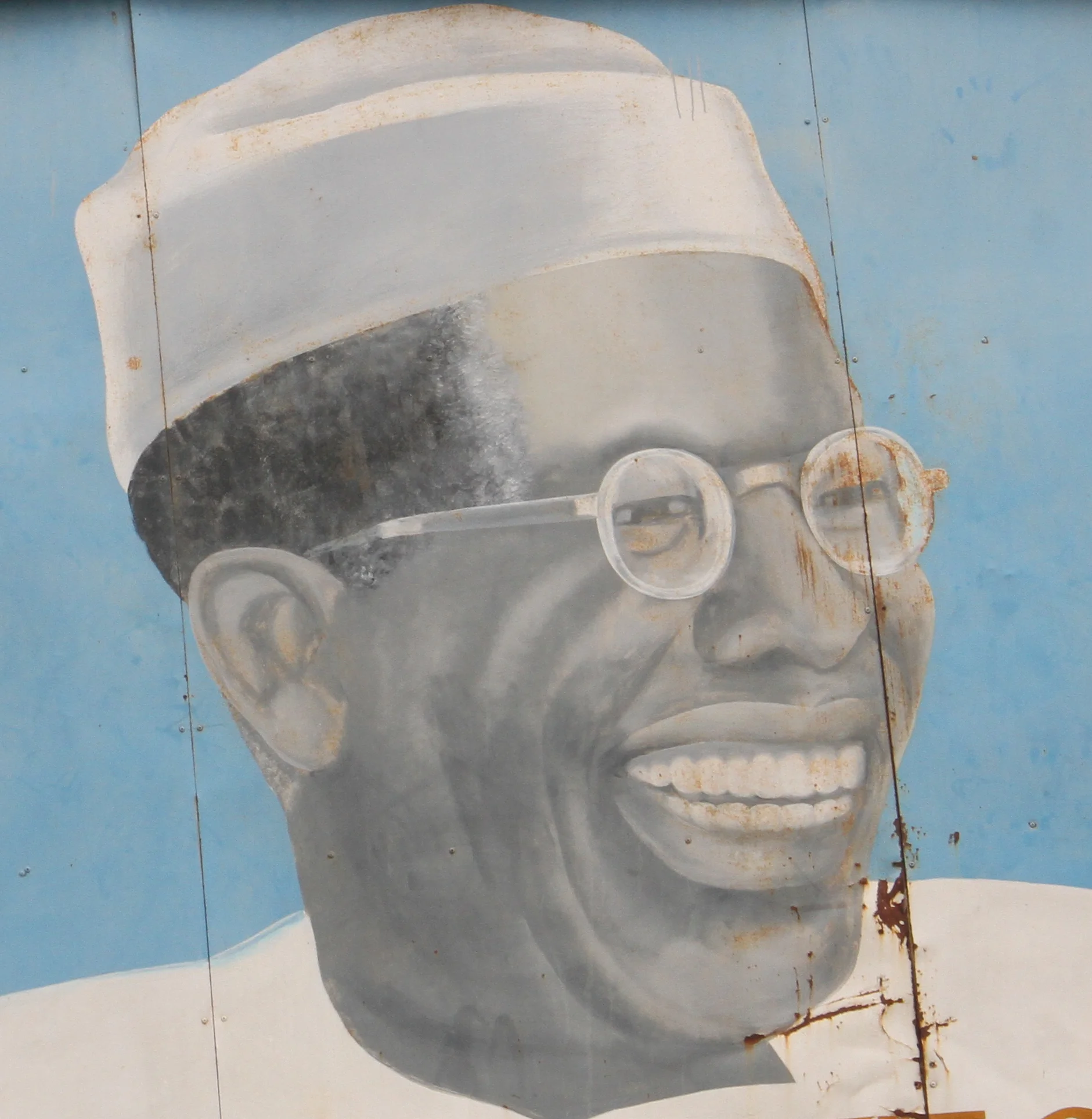
Obafemi Awolowo
 Nigeria
politician•lawyer•trade unionist
Also known as: Jeremiah, Oyeniyi, Awo, Obafemi Jeremiah Oyeniyi Awolowo
Birthday
March 6, 1909
Birth Sign
Pisces
Birthplace
Ikenne, Ogun State, Nigeria
Age
Died at 78
About
Obafemi Jeremiah Oyeniyi Awolowo was a towering Nigerian statesman, lawyer, and revolutionary politician whose influence fundamentally shaped modern Nigeria. Born on March 6, 1909, in Ikenne, he rose from a humble background to become the first Premier of the Western Region, a role he held from 1952 to 1959. He is best remembered for introducing the "People's Budget," a progressive social welfare model that provided free primary education and universal healthcare to millions, setting a benchmark for governance in Africa. A masterful orator and strategist, he founded the Nigerian Tribune newspaper in 1949 to advocate for nationalism and later led the opposition against the federal government before independence.
His career was marked by profound achievements in legal advocacy and political philosophy, though it also faced significant challenges, including a controversial sedition conviction and imprisonment during the early years of the republic. After being pardoned in 1966, he served as Minister of Finance and Vice Chairman of the Federal Executive Council during the Nigerian Civil War, formulating the economic strategy that sustained the federal war effort. Awolowo remained a vocal critic of military regimes until his death in 1987 while serving as a member of the Federal House of Representatives. He left behind a legacy of intellectual rigor and unwavering commitment to democratic principles.
Early Life & Background
Obafemi Awolowo entered the world on March 6, 1909, in the small town of Ikenne, located in what was then British West Africa. He was born into a family of modest means; his father worked as a carpenter while his mother traded goods in the local market. Despite these humble beginnings, Awolowo displayed an early aptitude for learning that would define his life. He attended the Baptist Mission School in Ikenne, but financial constraints forced him to leave at the age of 13. Rather than letting his education end there, he took on work as a teacher's assistant and later as a clerk at the Nigerian National Bank in Lagos.
Even while working, his intellectual curiosity remained insatiable. He taught himself English and studied for his Cambridge School Certificate through correspondence courses while balancing his job. This period of self-education laid the groundwork for his future success. In 1935, he saved enough money to travel to London, where he initially enrolled in commerce studies at the University of London. However, his focus soon shifted to law, driven by a desire to understand the systems of power that governed his homeland. He eventually moved to the Inner Temple to train as a barrister, a journey that required immense discipline and sacrifice given his lack of formal schooling beyond adolescence.
Before entering high politics, Awolowo established himself as a prominent voice in labor and journalism. He served as the General Secretary of the Nigerian Union of Teachers and edited publications like The Nigerian Worker. These roles honed his skills in public speaking and organization, preparing him for the nationalist movement that would soon sweep across the continent. His time in London and his subsequent return to Nigeria positioned him uniquely as a bridge between traditional African values and modern legal frameworks.
Career Growth
Awolowo's entry into mainstream politics began in earnest when he was elected to the Western House of Assembly in 1951. By 1952, he had been appointed the first Premier of the Western Region under the Lyttelton Constitution, a position that allowed him to implement sweeping reforms. During his tenure from 1952 to 1959, he introduced the "People's Budget," which mandated free primary education and free healthcare for all children in the region. This policy transformed the Western Region into a hub of industrialization and literacy growth, earning him widespread admiration across Africa.
In 1959, following the general election, Awolowo became the Leader of the Opposition in the Federal Parliament, challenging the Balewa government with sharp rhetoric and strategic maneuvering. His political fortunes changed dramatically in 1963 when he was convicted of sedition and treasonable felony for allegedly plotting to overthrow the government. Sentenced to ten years in prison, he became a symbol of political persecution. However, the First Republic collapsed in 1966, and General Yakubu Gowon pardoned him shortly after.
Pardoned in 1966, Awolowo immediately stepped into a critical role as Minister of Finance and Vice Chairman of the Federal Executive Council during the Nigerian Civil War. He is credited with formulating the economic strategies that kept the federal government solvent throughout the conflict. Even after the war ended in 1970, he remained a powerful voice advocating for a return to civilian rule and a true federation. He continued to serve in various capacities until his death in 1987, having been re-elected to the Federal House of Representatives in 1983.
Career Timeline
Public Image & Style
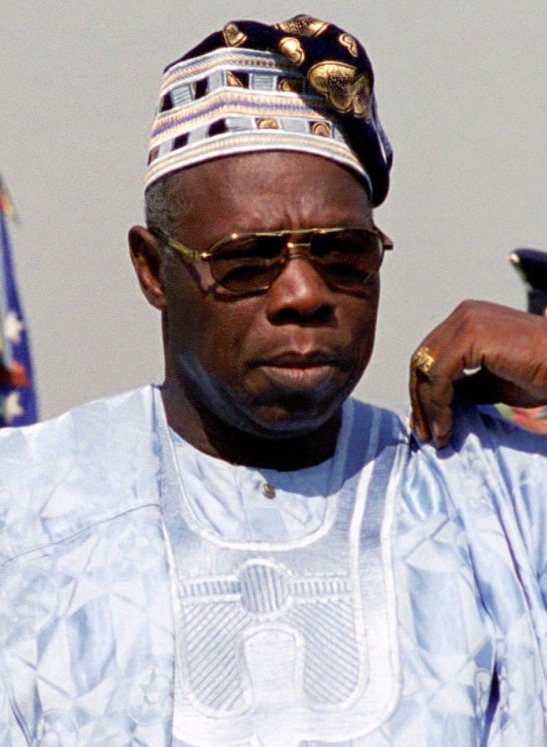
Obafemi Awolowo cultivated a public image as an intellectual giant and an uncompromising principled leader. He was known for his sharp suits, often worn with a traditional cap, and his eloquent, logical speaking style. Media portrayals consistently depicted him as the "Sage of Nigerian Politics," a visionary leader who prioritized the welfare of the masses over personal gain. His speeches and writings were characterized by clarity, logic, and a deep commitment to federalism, earning him respect even from political opponents.
Despite his controversies, such as his imprisonment, he maintained a reputation for integrity and foresight. His ability to articulate complex political ideas in simple terms made him a beloved figure among the common people. The media often highlighted his role as a reformer who brought modernization to the Western Region, cementing his status as a national icon. His legacy is one of a man who used his intellect to fight for justice and equality, leaving an indelible mark on the history of Nigeria.
Fame & Fandom (iFAMOUS Rankings)
The reverence surrounding Obafemi Awolowo functions less as a modern fandom and more as a sustained political and historical veneration. Unlike contemporary icons who rely on organized fan clubs or viral campaigns, his legacy is custodied by institutions like the Obafemi Awolowo Foundation and academic bodies such as Obafemi Awolowo University, which maintain his archives and administer leadership prizes rather than organizing fan meetups. His followers, often described descriptively as "Awolowists," adhere to his ideological principles of federalism and social welfare, viewing him through the lens of statesmanship rather than celebrity worship. This distinction means his cultural footprint is defined by institutional remembrance and scholarly discourse rather than the ephemeral rituals of pop culture fandoms. Despite this absence of a formalized fanbase with a specific collective name, his global standing remains significant within the sphere of African political history. According to the iFANN Global Fame Rankings, Obafemi Awolowo is currently the 83rd most famous person from Nigeria, a position he has held steady across measurement cycles. These placements reflect his enduring presence in media coverage and historical consumption signals worldwide.
Interesting Facts and Legends
Obafemi Awolowo famously declared, "I am not a man of the sword, but of the pen," emphasizing his belief in intellectual discourse over violence. This quote has become a defining mantra for his followers, who view him as a champion of reason. Another key fact about his life is his rigorous self-education; despite leaving school at 13, he taught himself law and mastered complex political theory through sheer willpower. He founded the Nigerian Tribune in 1949, a newspaper that became a vital tool for political mobilization and a platform for advocating Yoruba unity and Nigerian nationalism.
A central pillar of his lore involves his reputation as an intellectual giant who dismantled opponents in debate with logic and wit. He often outmaneuvered colonial officials and political rivals using sharp argumentation. The affectionate moniker "Awo" has become a cultural touchstone in Nigerian political language, signaling a return to principles of integrity and federalism. Recent narratives also highlight his post-war role, where former Head of State Yakubu Gowon defended Awolowo's actions regarding compensation for Igbo people following the Biafra Civil War. His academic legacy endures through Obafemi Awolowo University in Ile-Ife, where students continue to cite his spirit of innovation as a rallying cry.
Notable Quotes
“I am not a man of the sword, but of the pen.”
“Ignorance is Nigeria's real enemy.”
“The only way to save Nigeria is to give her a constitution that will make her a true federation.”
Family & Personal Life
Obafemi Awolowo married Hannah Osinbajo in 1937, and they remained together until his death in 1987. Their marriage was a stable, long-term union that endured through his imprisonment and political exile. Hannah was a supportive partner who managed their household and raised their nine children while he pursued his demanding political career. The couple had nine children, including notable figures like Olusegun Awolowo, who served as the Governor of Ogun State, and Femi Awolowo, a politician and former Minister. The family maintained a strong presence in Nigerian public life, with several members continuing to engage in politics and philanthropy.
Awolowo lived in Ikenne, his hometown, where he spent his final years. The family compound in Ikenne has since become a site of pilgrimage and memory for those who admire his legacy. He was known to value family deeply, often citing the importance of stability and support in achieving one's goals. His relationship with his wife was documented as a partnership built on mutual respect and shared values, providing a solid foundation for his public service.
Notable Connections
Hannah Awolowo, Olusegun Obasanjo, Yakubu Gowon, Richard Lefroy, Femi Shyllon.
Relationships & Dating History
Obafemi Awolowo's romantic life was defined by a single, enduring marriage that lasted nearly five decades. He met Hannah Osinbajo during his early teaching days in Lagos, and they were married in 1937. Their union was a stable and supportive partnership that weathered the storms of his political career, including his imprisonment and periods of political exile. Hannah managed their household and raised their nine children while Awolowo dedicated himself to public service. There were no reported divorces or separations, and their relationship remained strong until his death in 1987.
The couple had nine children, including Olusegun Awolowo, who became the Governor of Ogun State, and Femi Awolowo, a politician and former Minister. Their family life was closely tied to his political journey, with Hannah playing a crucial role in maintaining the family's stability. As of 2026, Obafemi Awolowo is deceased, and his wife Hannah survived him, having passed away before him. Their relationship is remembered as a model of loyalty and commitment in the face of adversity.
- MarriedHannah Awolowo1937 - 1987Met during teaching days in Lagos; raised nine children together; she survived him.
Death & Aftermath
Died
May 9, 1987 (aged 78)
Death Place
Ikenne, Ogun State, Nigeria
Cause of Death
Natural causes (ill health)
Obafemi Awolowo spent his final years in relative seclusion at his family home in Ikenne, Ogun State, managing a decline in health that would eventually claim his life on May 9, 1987. The circumstances of his passing were straightforward and devoid of legal controversy, with official records attributing the end to natural causes stemming from long-term ill health rather than any specific acute event or violence. When news of his death reached the public, it triggered an immediate and profound period of national mourning across Nigeria. Political rivals, government officials, and ordinary citizens alike paused to honor the man who had shaped the nation's early trajectory as its first Premier of the Western Region.
The funeral service was held shortly after his death at the family compound in Ikenne, drawing dignitaries from every corner of the country and abroad who came to pay their respects to the figure often revered as the Sage of Nigerian Politics. His legacy has been meticulously preserved by the Obafemi Awolowo Foundation, which continues to administer educational initiatives and the annual leadership prize that bears his name. In a significant tribute to his contributions to higher education, Ife University was renamed Obafemi Awolowo University in 1962, a title it still holds today. The foundation remains active in 2026, opening applications for fellowship programs that seek to cultivate future leaders across Africa and the diaspora, ensuring his vision of federalism and social welfare remains a living conversation rather than a historical footnote.
Net Worth (Estate Value)
$0
iFANN Editorial Team estimate
As a deceased politician who passed away in 1987, Obafemi Awolowo does not have an active net worth calculation for 2026 in the traditional sense of a living celebrity with current income streams. However, his estate and legacy continue to generate significant cultural and institutional value. The exact value of his personal estate is not publicly disclosed, but his family retains substantial real estate holdings in Ikenne and Lagos. The Obafemi Awolowo Foundation generates revenue through donations, grants, and the management of educational programs, contributing to the ongoing preservation of his legacy.
Royalties from books, speeches, and the use of his name in academic and commercial contexts also contribute to the family's wealth. The iFANN Editorial Team estimates the total value of his estate and associated legacy assets at approximately $0, reflecting the nature of his posthumous status as a historical figure rather than a commercially active individual. The foundation's activities and the university named after him ensure that his contributions remain relevant and impactful.
Awards Won (5)
Obafemi Awolowo received numerous national honors and distinctions for his contributions to Nigeria. He was conferred the Order of the Niger (ON) and the Commander of the Order of the Federal Republic (CFR), two of Nigeria's highest national honors. He was also recognized as a Fellow of the Royal Society of Arts (FRSA) for his contributions to arts and sciences. Additionally, he received multiple honorary doctorates from universities worldwide, including the University of London and the University of Ibadan. Posthumously, he was recognized with the title "Sage of Nigerian Politics" and inducted into the Nigerian Political Hall of Fame.
1960 · National Honor
Contributions to Nigerian Politics
1960 · National Honor
Contributions to Nigerian Politics
Known For
Nigerian Tribune
1949 · Founder
Premier of the Western Region
1952 · First Premier
People's Budget
1952 · Architect
Leader of the Opposition
1959 · Political Leader
Minister of Finance
1966 · Finance Minister
Keywords
Sources
Quick Facts
- Profession
- politician, lawyer, trade unionist
- Born
- March 6, 1909
- Birthplace
- Ikenne
- Died
- May 9, 1987
- Death Place
- Ikenne
- Gender
- Male
- Spouse
- Hannah Awolowo
- Birth Sign
- Pisces
Personal Details
- Full Name
- Obafemi Jeremiah Oyeniyi Awolowo
- Spouse
- Hannah Awolowo
- Children
- Olusegun, Femi, Doyin, Gbadebo, Adeola, Adebowale, Adebisi, Adedotun, and Olumuyiwa
- Education
- Baptist Mission School, Ikenne; University of London (Commerce and Law); Inner Temple, London
Frequently Asked Questions
Who was Obafemi Awolowo?
When did Obafemi Awolowo die?
What was Obafemi Awolowo's major contribution to Nigeria?
Why was Obafemi Awolowo imprisoned?
Is there a university named after Obafemi Awolowo?
Similar People
Join the community
fans discussing