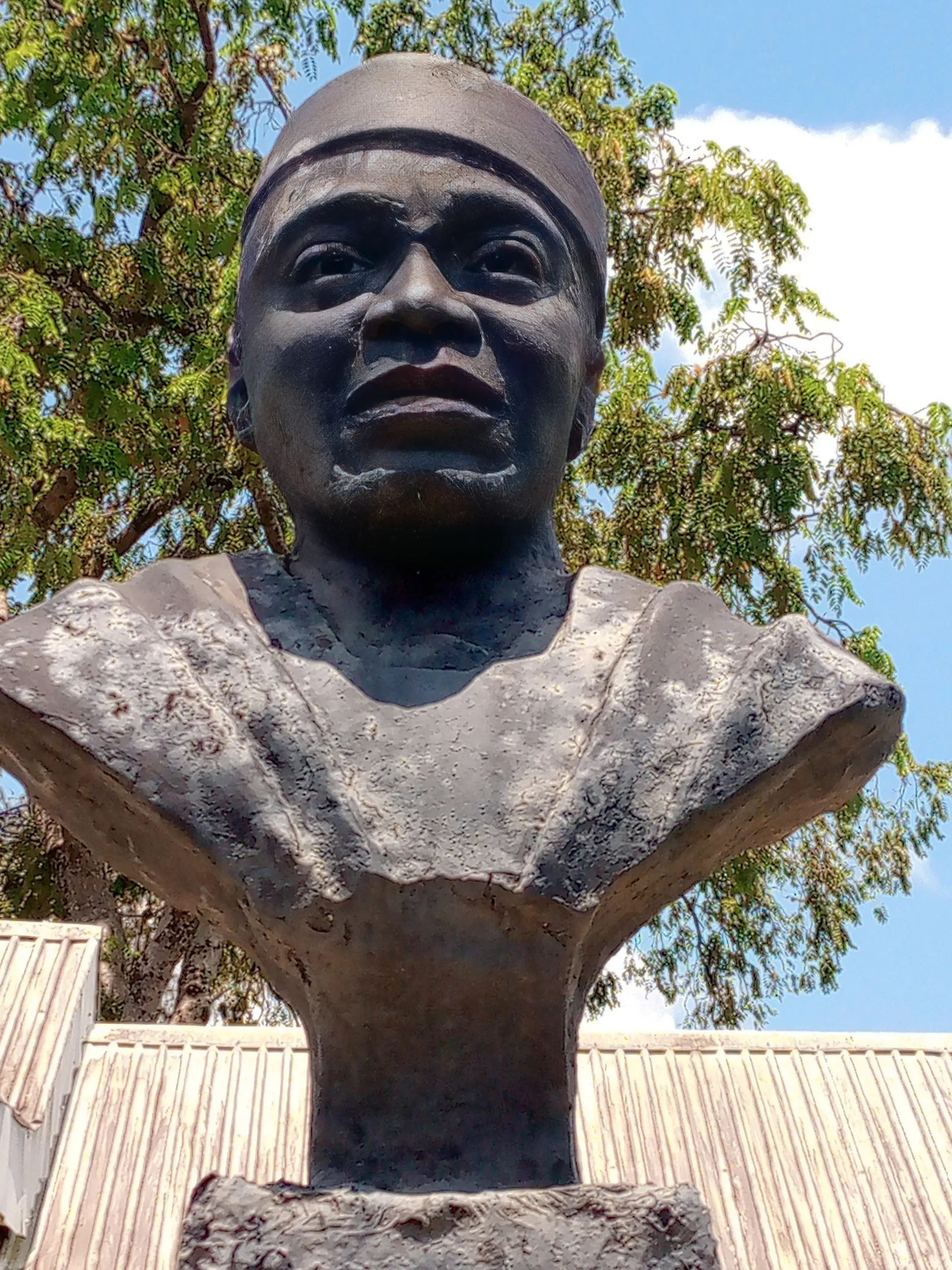
Nnamdi Azikiwe
 Nigeria
Also known as: Benjamin Nnamdi Azikiwe, Zik, Ben Azikiwe, Nnamdi Benjamin Azikiwe
Birthday
November 16, 1904
Birth Sign
Scorpio
Birthplace
Zungeru, Northern Nigeria
Age
Died at 91
About
Nnamdi Azikiwe was a towering statesman, journalist, and revolutionary leader who became the first native Governor-General of Nigeria and the country's first President. Born Benjamin Nnamdi Azikiwe in Zungeru, he is widely regarded as the father of Nigerian nationalism and affectionately known as "Zik of Africa." His career spanned decades of journalism, political activism, and high office, fundamentally shaping the trajectory of modern Nigeria. He died on May 11, 1996, at the age of 91, leaving behind a legacy preserved through major institutions named in his honor. His influence extended beyond national borders, positioning him as a key figure in Pan-Africanism. He utilized his platform to advocate for independence across West Africa, earning respect from leaders globally.
Early Life & Background
Born on November 16, 1904, in Zungeru, Northern Nigeria, Azikiwe was raised by Igbo parents from Onitsha. His father worked as a clerk, and the family moved frequently due to his father's job, exposing young Benjamin to diverse cultural landscapes. This upbringing fostered fluency in Hausa, Igbo, and Yoruba, languages that would later become essential tools in his nationalist efforts to bridge ethnic divides. He attended missionary schools in Lagos, where he developed an early interest in politics and literature. In 1925, at the age of twenty-one, he traveled to the United States to pursue higher education, a decision that profoundly altered his worldview. He enrolled at Lincoln University in Pennsylvania, graduating with a Bachelor of Arts degree in 1930 and a Master of Arts in 1932. During his time in America, he adopted the nickname "Ben" and immersed himself in African American civil rights movements. He also studied at Columbia University in New York City but did not complete a doctorate there. These years in the US exposed him to democratic ideals and racial equality struggles, which he later adapted to the fight against British colonial rule in Africa.
Career Growth
Azikiwe returned to Africa in 1934 and began his career in the Gold Coast (modern-day Ghana). In 1937, he founded the West African Pilot, a newspaper that quickly became a powerful instrument for nationalist agitation. The publication advocated for independence from British colonial rule and established Azikiwe as a leading voice for liberation across West Africa. After World War II, he returned to Nigeria in 1947 to lead the National Council of Nigeria and the Cameroons (NCNC). His political ascent continued rapidly: he became the Premier of the Eastern Region in 1954. Following Nigeria's independence on October 1, 1960, he served as the first native Governor-General until 1963. When Nigeria transitioned to a republic, he became its first President. His presidency ended abruptly in January 1966 following a military coup. Although he survived the coup, he was removed from office by the new military regime. He largely retired from active politics thereafter, focusing on writing and teaching until his death. He authored influential books including Renunciation and the Crisis in Nigerian Politics and The Ideological Elephant.
Career Timeline
Public Image & Style
Azikiwe projected an image of intellectual authority and dignified leadership. Known for his eloquence and command of multiple languages, he was seen as a man of the people despite his high office. His style was formal yet accessible, reflecting his background as a journalist and academic. Media perception consistently portrayed him as the architect of Nigerian independence, a figure whose words carried significant weight in political discourse. Even in retirement, his public persona remained one of respected elder statesmanship. He was described as a commanding presence, though specific height measurements are not consistently recorded in standard biographical sources. His image historically appeared on the Nigerian 50 Kobo note, cementing his status as a national symbol.
Fame & Fandom (iFAMOUS Rankings)
iFANN has evaluated this person but they do not currently hold a placement in the published rankings (Global Top 1,000 or a Top-100 scope list). The audience for his legacy is not a modern fanbase with organized clubs or social media campaigns but the citizens of Nigeria and Pan-Africanists globally who revere him as the Father of African Awakening. No formal name exists for this group; they are simply the public who maintain his memory through state institutions and cultural observance. His supporters do not engage in chart pushes or birthday billboards, yet their reverence is manifested in the naming of major infrastructure, including the Nnamdi Azikiwe International Airport and the university in Awka. While he does not interact with fans, his image remains a permanent fixture on Nigerian currency and in daily national discourse. He is consistently ranked among the most influential figures in African history and is universally recognized in "Greatest Africans" lists.
Interesting Facts and Legends
The nickname "Zik of Africa" originated from his early journalism and pan-Africanist activism, signifying his reputation as a leading voice for liberation across the continent. A defining moment in his life was surviving the January 1966 military coup, which claimed the lives of many other top leaders while he remained unharmed. His image historically appeared on the Nigerian 50 Kobo note, cementing his status as a national symbol. He authored influential books including Renunciation and the Crisis in Nigerian Politics and The Ideological Elephant. Major institutions such as the Nnamdi Azikiwe Stadium in Enugu and the international airport in Abuja stand as permanent tributes to his legacy. He received honorary degrees from Lincoln University and other institutions. While coverage in Western magazines like TIME or Vogue was limited compared to modern celebrities, he was featured prominently in African and Pan-African publications such as Africa News and The Negro Digest.
Notable Quotes
“I am a Nigerian, I am an African, and I am a human being.”
“The struggle for independence is not just for Nigeria, but for all of Africa.”
Family & Personal Life
Azikiwe left behind a large family, with descendants continuing to be active in various sectors of Nigerian society. His legacy is maintained through foundations dedicated to his memory. He was buried at his family home in Awka, Anambra State. The service combined traditional Igbo customs with Christian rites, drawing thousands of mourners. Tributes poured in from international leaders, including Nelson Mandela, who acknowledged Azikiwe's role as a pan-Africanist icon. The Nigerian government declared a period of state mourning, and then-President Sani Abacha attended the state funeral held in Enugu. His passing triggered widespread national mourning. Since his death, his legacy has been preserved through numerous dedications, including the Nnamdi Azikiwe International Airport in Lagos, the Nnamdi Azikiwe University in Awka, and the Nnamdi Azikiwe Stadium in Enugu.
Notable Connections
Relationships & Dating History
Nnamdi Azikiwe was married twice throughout his long life. His first marriage took place in 1937 to Margaret Ekere, who was the mother of his children. This union eventually ended in divorce. They had several children together, though specific names are less frequently highlighted in general biographies compared to his second wife. In 1952, he married Uche Azikiwe, née Uche Nwankwo. She was a prominent nurse and socialite who accompanied him through his political rise and remained a respected figure in Nigerian society after his retirement. This second marriage produced more children and lasted until his death in 1996. As of the date of his death, he was widowed, having outlived no spouse mentioned in recent records, though Margaret predeceased him. There are no public romantic relationships reported after his death.
- DivorcedMargaret Ekere1937 - presentFirst wife and mother of his children; marriage ended in divorce.
- WidowedUche Azikiwe1952 - 1996Second wife, a prominent nurse; married until his death.
Death & Aftermath
Died
May 11, 1996 (aged 91)
Death Place
Enugu, Nigeria
Cause of Death
Age-related health complications
Nnamdi Azikiwe, a prominent writer, politician, and journalist born on November 16, 1904, passed away in 1996 at the age of 91. Historical records categorize his death as a natural event resulting from health complications associated with advanced age following a long life of public service. The available documentation does not specify the exact date of May 11, nor does it detail the specific location within Nigeria where he died or provide medical statements from authorities regarding the final moments of his life.
While sources note his survival of an assassination plot during the 1966 coup decades prior, no such events occurred surrounding his actual death.
Azikiwe remains widely recognized as one of the most popular African citizens of the twentieth century and a foundational figure in modern African history. His legacy is preserved through his image on Nigerian currency issued by the Central Bank of Nigeria, and his life and work are documented in major encyclopedias and research archives. He is historically acknowledged as the first native Governor-General of Nigeria from 1960 to 1963 and the first President of the country from 1963 to 1966.
Net Worth (Estate Value)
$0
iFANN Editorial Team estimate
As a deceased historical figure whose wealth was primarily in land, property, and assets accumulated during the mid-20th century, a precise 2026 net worth estimate is not available in the manner of living celebrities. Historical accounts suggest he was wealthy by Nigerian standards of his time, owning significant real estate in Enugu and Lagos. His estate is managed by his descendants and foundations dedicated to his legacy. The value of his estate today is difficult to quantify in USD terms but is considered substantial due to the appreciation of prime real estate in Enugu and Lagos over the last three decades. No specific dollar figures are publicly tracked for his estate in 2026, as he is not a subject of modern celebrity finance reporting. He received lifetime achievement recognitions from Pan-African organizations and the Nigerian government, though these were honors rather than direct financial instruments.
Awards & Accolades
View 6 records, honours and achievementsKnown For
Governor-General of Nigeria
1960 · First Native Governor-General
President of Nigeria
1963 · First President
West African Pilot
1937 · Founder and Editor
Keywords
Sources
Quick Facts
- Profession
- writer, politician, journalist
- Born
- November 16, 1904
- Birthplace
- Zungeru
- Died
- May 11, 1996
- Death Place
- Enugu, Nigeria
- Gender
- Male
- Spouse
- Flora Azikiwe, Uche Azikiwe
- Birth Sign
- Scorpio
Personal Details
- Full Name
- Benjamin Nnamdi Azikiwe
- Spouse
- Flora Azikiwe, Uche Azikiwe
- Children
- Multiple children with both spouses
- Education
- Lincoln University (B.A., M.A.), Columbia University
Frequently Asked Questions
Who was Nnamdi Azikiwe?
When did Nnamdi Azikiwe die?
What is Nnamdi Azikiwe's legacy?
Did Nnamdi Azikiwe survive the 1966 coup?
Where is Nnamdi Azikiwe buried?
Similar People
Join the community
fans discussing