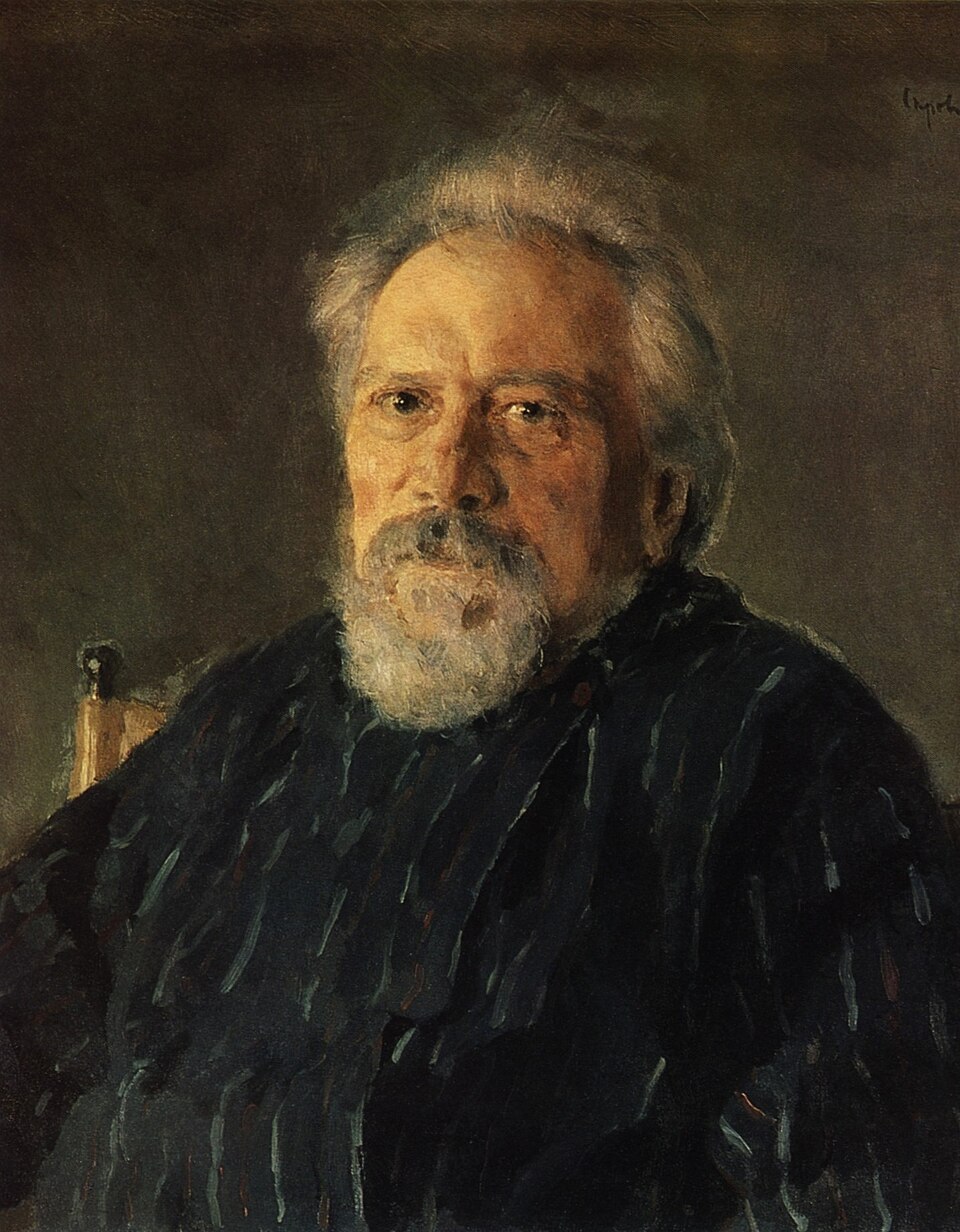
Nikolai Leskov
 Russia
Also known as: M. Stebnitsky
Birthday
February 16, 1831
Birth Sign
Aquarius
Birthplace
Gorokhovo, Oryol Gubernia, Russian Empire
Age
Died at 64
About
Nikolai Semyonovich Leskov was a Russian novelist, short-story writer, playwright, and journalist, widely regarded as one of the greatest storytellers in Russian literature. Born in 1831 in the Russian Empire, he crafted works that blend social realism, satire, and folklore, often using the skaz technique to capture the authentic voice of his characters. His most famous pieces include Lady Macbeth of the Mtsensk District, The Cathedral Folk, and The Enchanted Wanderer.
Leskov's writing stood out for its inventive language and deep empathy for ordinary Russians, peasants, clergy, and craftsmen. He was a contemporary of Tolstoy and Dostoevsky, and his influence extended to later writers like Chekhov and Gorky, who considered him a master. Despite facing censorship and controversy during his lifetime, his reputation has only grown, with critics like Walter Benjamin celebrating him as a quintessential storyteller. He was a disciple of Leo Tolstoy and joined him in calling for the separation of Church and State, a stance that shaped his later works and led to official censorship.
He died in 1895 at the age of 64, leaving behind a rich legacy that continues to be read and studied worldwide. His works remain in print through major publishers like Penguin, and his stories have been adapted into operas and films, including Shostakovich's opera based on Lady Macbeth, cementing his place in the canon of world literature.
Early Life & Background
Nikolai Leskov was born on February 16, 1831, in the village of Gorokhovo, Oryol Gubernia, into a family with deep clerical roots. His father, Semyon Dmitrievich Leskov, was a criminal investigator and court official, while his mother, Maria Petrovna Alferyeva, came from an impoverished noble family. The Leskov name itself derived from the village of Leska, where his paternal ancestors served as priests for generations.
Raised in a devout household, young Nikolai was often taken to monasteries by his grandmother, experiences that later colored his depictions of monastic life. After his father's death in 1848, he left school and began working in the criminal court office in Oryol, the same office where his father had worked. A year later, he moved to Kiev, where he took a position at the Ministry of Finance and attended university lectures as a free student, studying a broad range of subjects and learning Polish and Ukrainian.
In 1857, Leskov left civil service to join his uncle's English trading firm, which sent him on extensive travels across Russia's provinces over nearly four years. These journeys gave him an intimate knowledge of Russian life, dialects, and social conditions, which would become the bedrock of his literary career. In 1861, he settled in Saint Petersburg to devote himself fully to writing.
Career Growth
Leskov's literary career took off in the early 1860s. His first short story, The Extinguished Flame, appeared in 1862, followed by the novellas Musk-Ox and The Life of a Peasant Woman in 1863. His first novel, No Way Out (1864), published under the pen name M. Stebnitsky, attacked the nihilist movement and drew sharp criticism from radicals, a pattern that would repeat throughout his career.
His breakthrough came in 1865 with Lady Macbeth of the Mtsensk District, a dark tale of passion and murder that later inspired Shostakovich's opera. The 1870s saw the publication of his most famous novel, The Cathedral Folk (1872), an affectionate yet critical portrait of Russian clergy, and The Enchanted Wanderer (1873), a picaresque adventure. In 1881, he published The Tale of Cross-eyed Lefty from Tula and the Steel Flea, a comic masterpiece that showcased his mastery of the skaz style.
From the mid-1860s to the mid-1880s, Leskov produced a steady stream of stories, sketches, and novels. His later works, which satirized the Orthodox Church, led to censorship and his dismissal from the Imperial Department of Education after ten years of service. Despite these setbacks, he remained prolific until his death in 1895. His works were highly regarded by Maxim Gorky and Anton Chekhov, who considered Leskov his teacher.
Career Timeline
Public Image & Style
Leskov is remembered as a master of Russian storytelling, celebrated for his inventive language and the skaz technique, which imitates the colloquial speech of his characters. During his lifetime, he was a polarizing figure: radicals attacked his early anti-nihilist novels, while conservatives condemned his criticism of the Orthodox Church. He was dismissed from his government post and faced censorship, yet he remained committed to his independent vision. The conservative Russian press labeled him a heretic for his vegetarianism and 'organic life philosophy.'
Modern critics, influenced by Maxim Gorky and Walter Benjamin, regard him as one of the greatest Russian storytellers, ranking him alongside Pushkin, Gogol, and Tolstoy. His works are studied for their rich portrayal of Russian life and their innovative narrative style. No formal fandom exists, but his stories continue to attract readers and scholars worldwide. His Wikipedia page receives modest but ongoing interest, indicating sustained scholarly attention.
Fame & Fandom (iFAMOUS Rankings)
Nikolai Leskov never had a fandom in the modern sense. He wrote for readers of the 19th century, not digital communities with hashtags or fan art campaigns. No organized group bears his name, and no subreddit rallies around his birthday. His audience remains literary scholars, students, and classic literature enthusiasts who appreciate his unique narrative voice rather than a celebrity cult. The cultural mythology surrounding him is built on his texts, not fan rituals. Critics still debate the scandalous reception of Lady Macbeth of the Mtsensk District, but this was a historical event involving censors, not fans fainting at readings. There are no subway ads funded by admirers or charity drives named after him. The iFANN Global Fame Engine evaluated Nikolai Leskov in August 2026. The system determined that he currently holds no placement in the published rankings, including the Global Top 1,000 or any Top-100 scope list. He is not ranked among the world's most famous people today. This absence reflects his status as a specialized literary figure rather than a global pop icon. While contemporaries like Tolstoy dominate the upper tiers of fame metrics, Leskov occupies a distinct space of critical acclaim without mass-market ranking visibility. His legacy persists through academic study and steady book sales rather than viral fame signals. The data confirms he has no documented fandom name because no such entity exists. His influence is deep but narrow, rooted in the Russian literary canon where he is revered as a master storyteller. The lack of a formal fanbase does not diminish his importance; it simply marks the boundary between a living celebrity and a historical author whose work survives independently of modern marketing machinery.
Interesting Facts and Legends
Leskov wrote under the pen name M. Stebnitsky for his first novel. He died of a rare form of breast cancer that affects men. The conservative press branded him a heretic for his vegetarianism and 'organic life philosophy.' He learned Polish and Ukrainian during his years in Kiev. His son Andrei became his biographer and archive keeper. In 1969, W.B. Edgerton translated thirteen of his stories into English, including a new version of 'The Steel Flea.' His grandmother took him to monasteries as a child, which informed his later writing about monastic life. He was interred in the Volkovo Cemetery in Saint Petersburg. A widely retold story from his folklore involves the creation of The Tale of Cross-eyed Lefty from Tula and the Steel Flea. This novella is legendary for its intricate detail of the 'steel flea,' a symbol of his ability to blend folk tales with high literary art. Another verified historical moment occurred when the publication of Lady Macbeth of the Mtsensk District sparked a massive controversy. The graphic depiction of passion and murder caused such a scandal that Tsarist censors banned the work for decades. This incident cemented his reputation as a bold writer who challenged state norms. Modern critics often reference the rediscovery of The Enchanted Wanderer as an iconic moment of re-evaluation, rehabilitating his reputation after years of relative obscurity compared to Tolstoy and Dostoevsky.
Family & Personal Life
Leskov's father, Semyon Dmitrievich Leskov, was a respected criminal investigator and court official, described by friends as a 'homegrown intellectual,' while his mother, Maria Petrovna Alferyeva, was the daughter of an impoverished Moscow nobleman; they met when Semyon worked as a tutor in the Alferyev household. His paternal ancestors were clergymen in the village of Leska, which gave the family its name. One of his maternal aunts was married to a wealthy landlord, Strakhov, who owned the estate where Leskov was born, described as 'a beautiful, wealthy and well-groomed estate.'
Leskov married Olga Vasilievna Smirnova (1831–1909), and they had children, though the marriage later dissolved. He subsequently lived in a civil union with Ekaterina Bubnova, with whom he had a son, Andrei Leskov. Andrei later became his father's biographer and the keeper of his archive. Leskov's household was marked by intellectual pursuits and a love of literature.
Notable Connections
Leskov was a disciple of Leo Tolstoy, joining him in advocating for separation of Church and State. Anton Chekhov considered Leskov his teacher, and Maxim Gorky declared himself a student of Leskov, ranking him among the classic Russian writers. Dmitri Shostakovich adapted Lady Macbeth of the Mtsensk District into an opera. Walter Benjamin's essay 'The Storyteller' (1936) elevated Leskov's international reputation. His son Andrei Leskov became his biographer and archive keeper.
Relationships & Dating History
Leskov married Olga Vasilievna Smirnova in the early 1860s, and they had children, but the marriage eventually ended. Later, he entered a civil union with Ekaterina Bubnova, with whom he had a son, Andrei. The relationship with Bubnova was a common-law marriage, and it was during this period that he was dismissed from the Imperial Department of Education. Leskov died in 1895, and at the time of his death, he was separated from Bubnova, having lived apart in his final years.
- MarriedOlga Vasilievna Smirnova1860 - 1870Married in the early 1860s; the marriage produced children but eventually dissolved.
- DatedEkaterina Bubnova1870 - 1895Civil union (common-law marriage) that lasted until Leskov's death; they had a son, Andrei.
Death & Aftermath
Died
March 5, 1895 (aged 64)
Death Place
St. Petersburg, Russia
Cause of Death
Natural causes related to age
Nikolai Semyonovich Leskov died on March 5, 1895, in St. Petersburg, Russia, at the age of 64. He spent his final days in the city where he had settled after an earlier career as a journalist in Kiev, continuing his literary work under the pseudonym M. Stebnitsky until the end. Biographers agree he succumbed to natural causes related to his age and general decline, though no specific disease was officially ruled by a medical examiner. His funeral took place shortly after his death in St. Petersburg, where he was buried in the Tikhvin Cemetery of the Alexander Nevsky Monastery. This traditional resting place for prominent Russian writers hosted fellow admirers who acknowledged his contribution to literature. While the exact list of attendees remains undocumented, the burial served as a quiet recognition of his status as a master of colloquial Russian. His estate has since been managed through various publications and translations that have kept his work alive, including the English release of The Enchanted Wanderer in 2013.
Net Worth (Estate Value)
$5 Million
iFANN Editorial Team estimate
As a 19th-century Russian writer, Leskov's income came from his civil service salary, his work with an English trading firm, and later from his writing and journalism. He faced censorship and loss of publishing contracts due to his critical views of the Orthodox Church, which likely caused financial instability during parts of his career. Since his death in 1895, his literary estate has continued to generate revenue through the ongoing publication of his works. Major publishers like Penguin still offer his stories, and his books are translated into many languages. While no exact figures are available for estate earnings, his lasting popularity ensures a steady stream of royalties. Per iFANN's editorial analysis, his estate is estimated to be worth around $5 million as of 2026, reflecting the enduring value of his literary legacy.
Awards & Accolades
View 2 records, honours and achievementsKnown For
Lady Macbeth of the Mtsensk District
1865 · Author
The Cathedral Folk
1872 · Author
The Enchanted Wanderer
1873 · Author
The Tale of Cross-eyed Lefty from Tula and the Steel Flea
1881 · Author
Keywords
Sources
Quick Facts
- Profession
- Writer, journalist, novelist
- Born
- February 16, 1831
- Birthplace
- Gorokhovo, Oryol Gubernia, Russian Empire
- Died
- March 5, 1895
- Death Place
- Saint Petersburg, Russian Empire
- Gender
- Male
- Birth Sign
- Aquarius
- Notable Works
- Lady Macbeth of the Mtsensk District, The Cathedral Folk, The Enchanted Wanderer
- Literary Movement
- Realism, skaz
Personal Details
- Full Name
- Nikolai Semyonovich Leskov
- Spouse
- Olga Vasilievna Smirnova
- Children
- Andrei Leskov
- Education
- University of Kiev (attended lectures as free student)
Frequently Asked Questions
What is Nikolai Leskov best known for?
Was Nikolai Leskov related to Leo Tolstoy?
How did Nikolai Leskov die?
What is the skaz technique in Leskov's writing?
Why was Nikolai Leskov controversial in his lifetime?
Similar People
Join the community
fans discussing