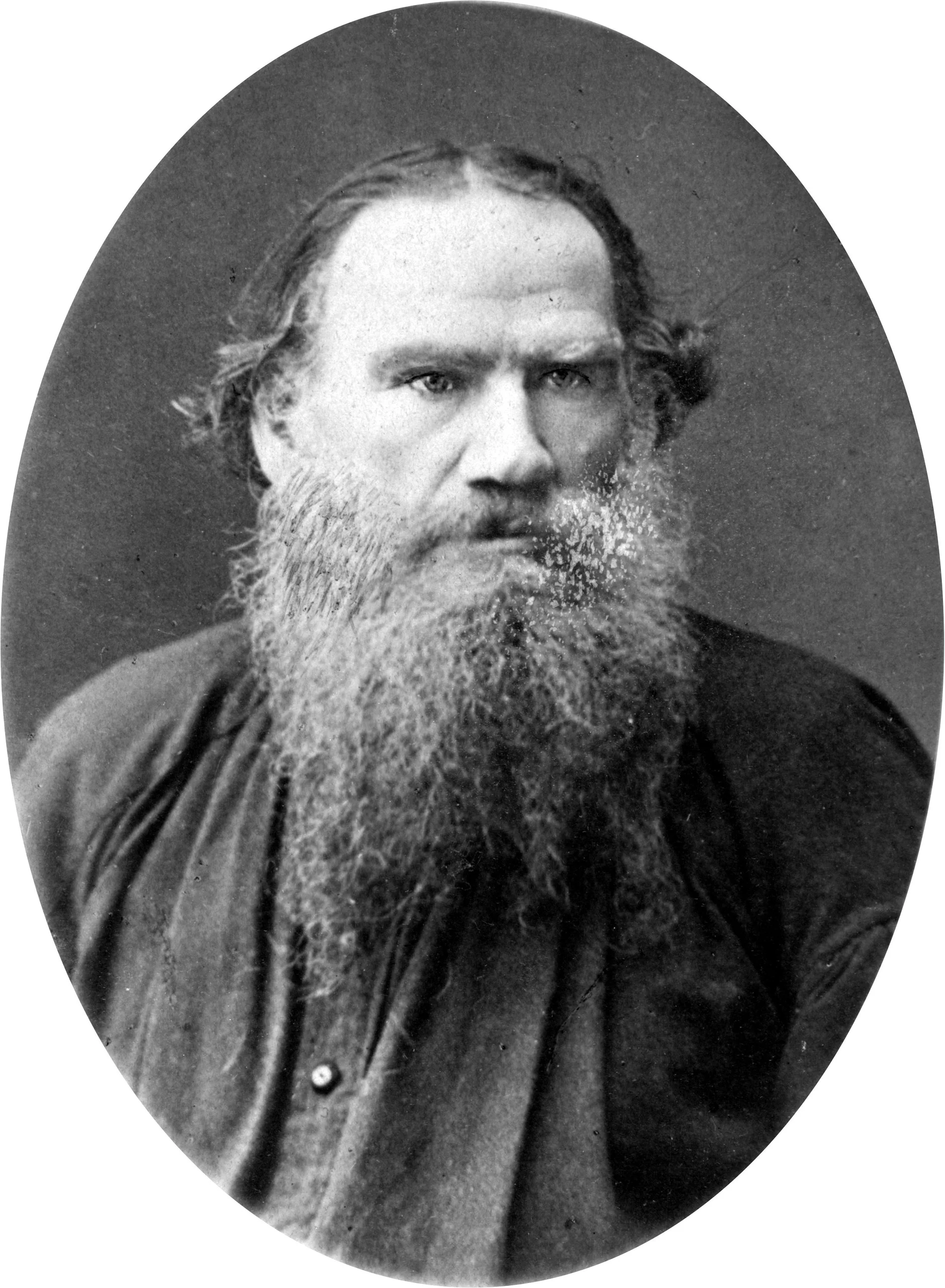
Leo Tolstoy
Also known as: Count Lev Nikolayevich Tolstoy, Lev Nikolaevich Tolstoy, Leo Nikolaevich Tolstoy
Birthday
September 9, 1828
Birth Sign
Sagittarius
Birthplace
Yasnaya Polyana, near Tula, Russian Empire
Age
Died at 82
Height
6 ft 2 in (188 cm)
About
Count Lev Nikolayevich Tolstoy was a Russian novelist, playwright, and moral philosopher widely regarded as one of the greatest authors in world literature. Born into an aristocratic family at his parents' estate, Yasnaya Polyana, he became famous for monumental novels that define the realist tradition. His works explore the impact of historical events on individual lives and delve into deep moral questions about existence, faith, and society. War and Peace and Anna Karenina stand as his most enduring achievements, blending fiction with historical analysis to create narratives of immense scope and psychological depth.
Tolstoy underwent a profound spiritual crisis in the 1870s that transformed his worldview and writing style. He adopted a literal interpretation of Jesus' teachings, particularly the Sermon on the Mount, which led him to embrace Christian anarchism and pacifism. This shift resulted in influential non-fiction works like Confession and The Kingdom of God Is Within You, where he argued for nonviolent resistance. His ideas traveled far beyond Russia, influencing figures like Mahatma Gandhi, Martin Luther King Jr., and Ludwig Wittgenstein.
Despite receiving Nobel Prize nominations for Literature every year from 1902 to 1906 and for the Peace Prize in 1901, 1902, and 1909, he never won the award, a fact that remains a subject of debate among scholars today. Tolstoy died at the age of 82 on November 20, 1910, leaving behind a body of work that continues to shape literature and ethical thought.
Early Life & Background
Born Count Lev Nikolayevich Tolstoy on September 9, 1828, at the family estate of Yasnaya Polyana near Tula, he was the fifth of six children in a noble Russian family. His father, Count Nikolai Ilyich Tolstoy, died when Leo was nine years old, and his mother, Princess Mariya Volkonskaya, passed away just two years later. These early losses left him to be raised by distant relatives before he returned to Yasnaya Polyana under the guardianship of his aunt. The estate would become the setting for much of his childhood memories and later his literary imagination.
Tolstoy attended the University of Kazan from 1844 to 1847, studying Oriental languages and law. However, he eventually dropped out without a degree due to a lack of interest in academic rigor and the strict environment. His early twenties were spent living a dissolute life of gambling, drinking, and socializing in Moscow and St. Petersburg. He later described this period with shame in his semi-autobiographical trilogy: Childhood (1852), Boyhood (1854), and Youth (1856). These works drew heavily on his own experiences and marked his literary debut, establishing his reputation for psychological realism.
In 1851, he joined the army and served in the Crimean War, where his experiences were chronicled in Sevastopol Sketches (1855–1856). This series further cemented his status as a serious writer and provided the foundation for his later masterpieces. Before achieving fame, Tolstoy had already begun to question the social structures around him and sought a deeper meaning in life through his writing and personal experiences.
Career Growth
Tolstoy's career success peaked with the publication of two monumental novels that define the realist tradition: War and Peace (1865–1869) and Anna Karenina (1875–1877). War and Peace, often cited as the finest novel ever written, blends fiction with historical analysis, exploring the impact of the Napoleonic Wars on Russian society. Anna Karenina delves into themes of adultery, family, and societal hypocrisy, showcasing Tolstoy's mastery of character development and narrative structure.
Following these masterpieces, he produced other significant works such as The Death of Ivan Ilyich (1886), Resurrection (1899), and numerous short stories like Alyosha the Pot (1911) and After the Ball (1911). His later years were marked by a shift toward moral and philosophical writing, influenced by his spiritual crisis in the 1870s. He wrote influential non-fiction works such as Confession (1879–1882) and The Kingdom of God Is Within You (1894), advocating for nonviolent resistance and Georgist economic principles.
Despite being nominated annually for the Nobel Prize in Literature from 1902 to 1906 and for the Peace Prize in 1901, 1902, and 1909, he never received the award, a fact that remains a subject of scholarly debate. His influence on modern melodrama and his advocacy for nonviolent resistance remain central to his cultural mythology.
Career Timeline
Public Image & Style
Tolstoy's public image is that of a moral visionary and a literary giant. His content, both fictional and philosophical, is known for its depth, moral complexity, and exploration of human nature. He interacted with fans primarily through his writings, as social media did not exist in his time. His followers, often referred to as "Tolstoians," organized around his ideas of nonviolence and simplicity, forming communities dedicated to his teachings.
His signature style was characterized by long hair, a full beard, and simple clothing in his later years, reflecting his rejection of aristocratic luxury. Critics and authors alike recognized his genius during his lifetime and after. Virginia Woolf described him as the greatest novelist ever, while Gary Saul Morson called War and Peace the finest novel in existence.
Fame & Fandom (iFAMOUS Rankings)
iFANN has not yet collected fame data for this person. As of September 2026, there is no published ranking available in the iFANN Global Fame Rankings system.
The fanbase surrounding Leo Tolstoy does not have a formal name or organized structure in the modern sense. Instead, his readers and admirers are often grouped by their engagement with his specific works or philosophical ideas. Fans of War and Peace and Anna Karenina form a global community that discusses the nuances of his storytelling and moral philosophy. Many readers engage in annual reading challenges, particularly during the winter months when War and Peace is often read in its entirety. The legacy of Tolstoy extends beyond literature into movements for peace and nonviolence, attracting individuals who study his life and teachings as part of broader social justice efforts.
Interesting Facts and Legends
One of the most legendary incidents in literary history involves Tolstoy's harsh critique of William Shakespeare, whom he called an "insignificant, inartistic writer" in his essay On Shakespeare (1906). This controversial stance sparked debates that continue to this day among scholars and fans of both authors. Another iconic moment was his dramatic departure from Yasnaya Polyana in 1910, which became a symbol of his commitment to his ideals of simplicity and renunciation of wealth.
Tolstoy's influence on modern melodrama is evident in how he shaped the genre by focusing on the inner lives of characters rather than external plot devices. His advocacy for nonviolent resistance inspired figures like Mahatma Gandhi and Martin Luther King Jr., who studied his works closely. The opening line of Anna Karenina, "All happy families are alike; each unhappy family is unhappy in its own way," is frequently cited as one of the best opening lines in book history.
Tolstoy also championed Georgism, an economic philosophy by Henry George, weaving these concepts into his final major novel, Resurrection. His physical presence was commanding, standing approximately 6 feet 2 inches tall with long hair and a full beard in his later years, reflecting his rejection of aristocratic luxury.
Notable Quotes
“Wrong does not cease to be wrong because the majority share in it.”
“When you love someone, you love the person as they are, and not as you want them to be.”
“All happy families are alike; each unhappy family is unhappy in its own way.”
“The two most powerful warriors are patience and time.”
“If you look for perfection, you'll never be content.”
Family & Personal Life
Leo Tolstoy married Sophia Andreyevna Behrs in 1862, and they remained together until his death nearly 50 years later. The couple had 13 children, though only eight survived infancy. Sophia managed the household, transcribed Tolstoy's manuscripts (including the first three volumes of War and Peace), and handled financial affairs. Their relationship became increasingly strained over his growing asceticism and refusal to control his copyrights, leading to conflicts over the ownership of his works.
Tolstoy's parents were Count Nikolai Ilyich Tolstoy and Princess Mariya Volkonskaya. He had five siblings, though details about them are less documented. The estate of Yasnaya Polyana served as the center of his family life and later became a museum dedicated to his legacy. His wife Sophia played a crucial role in managing his literary legacy and ensuring the preservation of his works.
Notable Connections
Tolstoy collaborated with numerous contemporaries, including Maxim Gorky, who paid tribute to him after his death. His wife Sophia played a crucial role in managing his literary legacy. His ideas influenced many prominent figures, including Mahatma Gandhi, Martin Luther King Jr., and Ludwig Wittgenstein. He also corresponded with Leo XIII and other religious leaders of his time.
Relationships & Dating History
Leo Tolstoy married Sophia Andreyevna Behrs in 1862, and they remained together until his death nearly 50 years later. The couple had 13 children, though only eight survived infancy. Sophia managed the household, transcribed Tolstoy's manuscripts (including the first three volumes of War and Peace), and handled financial affairs. Their relationship became increasingly strained over his growing asceticism and refusal to control his copyrights, leading to conflicts over the ownership of his works.
There is no record of any other romantic relationships or marriages; Sophia was his sole spouse. Their marriage ended with Tolstoy's death, not divorce or separation. Despite the tensions in their later years, Sophia remained devoted to preserving his legacy and ensuring the continuation of his family line.
- MarriedSophia Andreyevna Behrs1862 - 1910Married until his death; had 13 children, 8 survived infancy.
Death & Aftermath
Died
November 20, 1910 (aged 82)
Death Place
Astapovo railway station, Ryazan Governorate, Russian Empire
Cause of Death
Pneumonia
Leo Tolstoy left his family estate at Yasnaya Polyana on November 4, 1910, in a dramatic departure intended to escape domestic life and live as a simple monk. He boarded a train with his youngest daughter Alexandra but fell ill shortly after arriving at the Astapovo railway station in the Ryazan Governorate. Doctors attended to him in the station master's home for two days before he died on November 20, 1910, at the age of 82. The official finding recorded pneumonia as the cause of death based on medical observation rather than an autopsy.
News of his passing sparked immediate and profound public reaction across Russia and abroad. Crowds gathered spontaneously outside stations and government buildings while tributes poured in from peers like Maxim Gorky and political figures who acknowledged his status as a national icon despite theological differences with the Russian Orthodox Church. Book sales of his collected works saw an immediate global spike as moments of silence were observed in literary salons and public squares.
The funeral took place on November 11, 1910, at Yasnaya Polyana near Tula. It drew a massive unofficial procession where thousands of peasants, workers, and intellectuals walked miles to pay their respects. The service adhered to Tolstoy's anti-clerical beliefs and consisted of readings from his writings and hymns chosen by his followers. He was buried in a simple grave in the forest marked only by a wooden cross consistent with his philosophy of simplicity. Posthumously, his estate was converted into a museum and state reserve in 1921 under Soviet decree while copyright royalties remain distributed according to complex agreements involving his descendants and the Russian state.
Net Worth (Estate Value)
$0
iFANN Editorial Team estimate
Leo Tolstoy passed away over a century ago, so traditional net worth figures do not apply to him in the modern sense. However, his estate continues to generate revenue through book sales, licensing deals, and merchandise. The exact value of his estate today is not publicly disclosed, but it is estimated to be substantial due to the enduring popularity of his works. The estate is managed by the Leo Tolstoy Museum Foundation and the Russian state, with revenues supporting cultural preservation and educational initiatives.
Copyright royalties from his works remain a significant source of income for his descendants and the state. The estate's financial trajectory has been steady, with continued demand for his books and adaptations of his stories contributing to ongoing revenue streams. While specific figures are not available, the legacy of his literary contributions ensures that his works remain profitable and culturally relevant.
Awards & Accolades
View 10 records, honours and achievementsKnown For
War and Peace
1869 · Author
Anna Karenina
1877 · Author
The Death of Ivan Ilyich
1886 · Author
Resurrection
1899 · Author
Sevastopol Sketches
1856 · Author
Keywords
Sources
Quick Facts
- Profession
- writer, playwright, philosopher
- Born
- September 9, 1828
- Birthplace
- Yasnaya Polyana
- Died
- November 20, 1910
- Death Place
- Astapovo railway station
- Gender
- Male
- Spouse
- Sophia Tolstaya
- Birth Sign
- Sagittarius
Personal Details
- Full Name
- Count Lev Nikolayevich Tolstoy
- Height
- 6 ft 2 in (188 cm)
- Spouse
- Sophia Andreyevna Behrs
- Children
- Maria Lvovna · Alexander Lvovich · Ilya Lvovich · Tatiana Lvovna · Dmitry Lvovich · Sofia Lvovna · Michael Lvovich · Alexandra Lvovna
- Education
- University of Kazan (1844–1847)
Frequently Asked Questions
What is Leo Tolstoy's most famous work?
How did Leo Tolstoy die?
Was Leo Tolstoy ever awarded a Nobel Prize?
Who was Leo Tolstoy's wife?
What was Leo Tolstoy's philosophy?
Similar People
Join the community
fans discussing