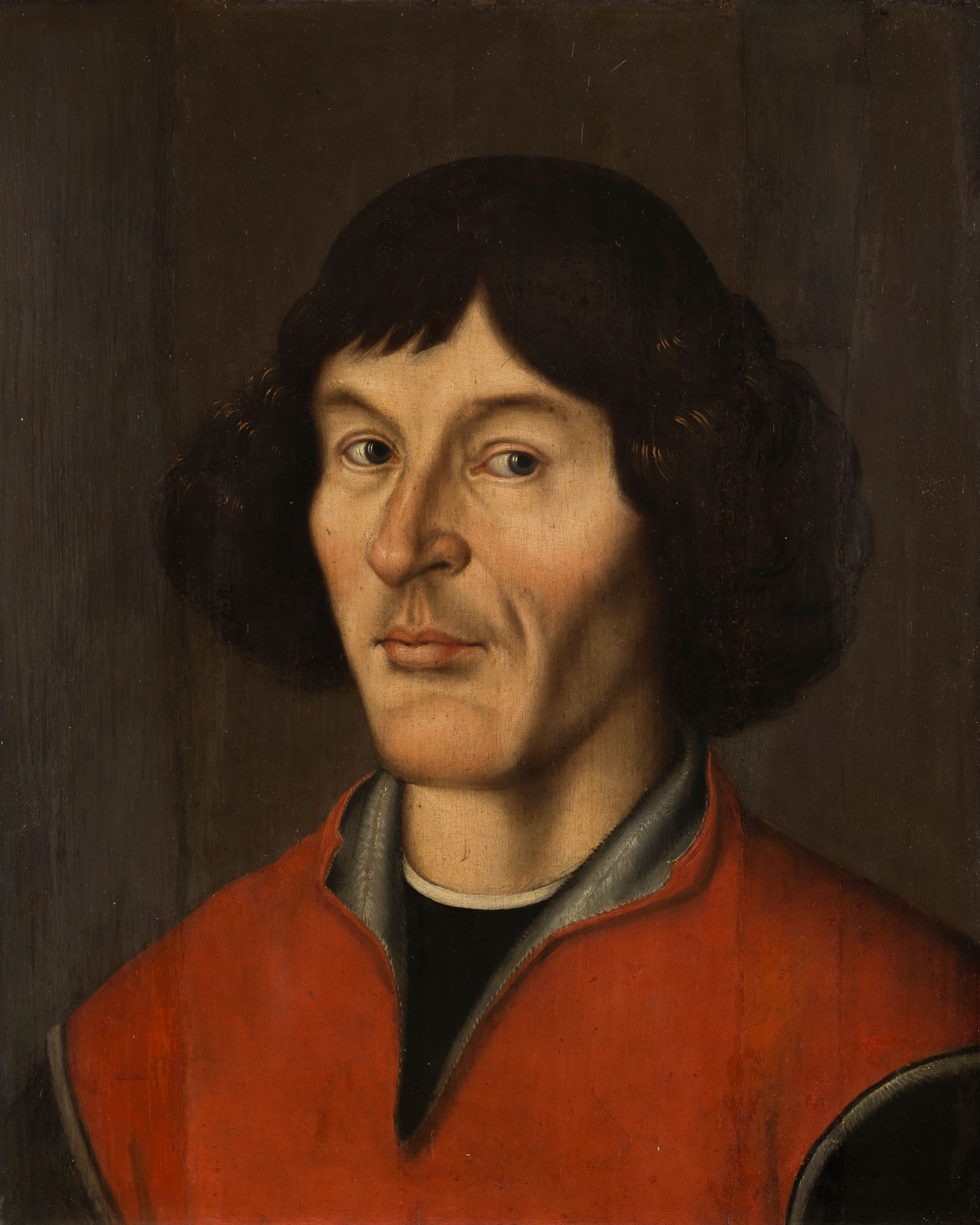
Nicolaus Copernicus
 Germany
Birthday
+1473-02-19
Birth Sign
Sagittarius
Birthplace
Toruń
Age
Died at 70
About
Born in Toruń on February 19, 1473, Nicolaus Copernicus was a true Renaissance man. His work as a jurist and economist might surprise people, but it was his deep thinking about the cosmos that truly changed the world. He spent his life exploring mathematics and astronomy, eventually developing a theory that would fundamentally alter humanity's understanding of its place in the universe. This intellectual journey culminated in a scientific idea that echoed centuries later. Copernicus's most significant contribution came from his meticulous observations and calculations. He proposed a heliocentric model of the solar system, challenging the long-held geocentric view that Earth was the center of everything. This radical idea, that the planets revolved around the Sun, was detailed in his monumental work, De revolutionibus orbium coelestium, or On the Revolutions of the Celestial Spheres. He managed to see the first printed copies of this book shortly before his death on May 24, 1543. The publication of this book is often seen as the spark that ignited the Copernican Revolution, a pivotal moment in the history of science. Beyond astronomy, Copernicus was a man of many talents. He held a doctorate in canon law and was also skilled as a physician, scholar of the classics, translator, governor, and diplomat. His economic insights were also noteworthy. By 1517, he had developed a quantity theory of money, an important concept in economics, and a few years later, in 1519, he formulated an economic principle that would later be known as Gresham's law. His intellectual curiosity knew no bounds, touching upon many fields during his 70 years.
Fame & Fandom
The global attention surrounding Nicolaus Copernicus spans centuries, maintaining a steady presence in historical and scientific discourse that transcends the ephemeral nature of modern celebrity. This enduring resonance is quantified by his standing in the iFANN Global Fame Rankings, which track influence across media coverage, search activity, and consumption signals worldwide. As of August 2026, he holds the position of the 30th most famous person in Germany, a placement holding steady from the previous cycle. His influence extends into specialized sectors as well, where he is ranked the 19th most famous person in Tech, also maintaining his standing without fluctuation. These metrics reflect a legacy that has evolved from academic curiosity to a cornerstone of global intellectual history. Despite this widespread recognition, no formal fandom name exists for the astronomer. The collective group dedicated to his memory consists entirely of historians, scientists, students, and enthusiasts who engage with his work through institutional channels rather than organized fan clubs or campaigns. While modern tributes such as the limited-edition Nicolaus Copernicus Collection by Bentley demonstrate corporate reverence, they do not constitute a fanbase with rituals or a specific moniker. The audience remains defined by their scholarly pursuit of his contributions rather than any organized cultural movement.
Interesting Facts and Legends
Historical records confirm that Nicolaus Copernicus was born in Toruń on February 19, 1473, and died on May 24, 1543. He served as a jurist and economist before dedicating his life to astronomy. A widely retold story suggests he received the first printed copy of his book De revolutionibus orbium coelestium on the very day he passed away, though some historians debate whether his declining health allowed him to hold the volume. Another persistent narrative claimed he hid his heliocentric theory out of fear of Catholic persecution; recent scholarship has debunked this, noting he was sponsored by high-ranking church officials and faced little immediate opposition. In November 2025, archaeologists discovered a 500-year-old compass in a hidden chamber in Frombork, Poland, potentially belonging to the astronomer and adding tangible evidence to his physical legacy. Additionally, retrospective commentary often cites his economic writings on currency devaluation as an early warning regarding monetary stability, linking his 16th-century theories to modern central banking concepts.
Death & Aftermath
Died
+1543-05-24 (aged 70)
Death Place
Frombork, Warmia, Poland
Cause of Death
Reported stroke or cerebral hemorrhage
The immediate public reaction to the passing of Nicolaus Copernicus remained subdued and largely confined to the academic and religious circles of Warmia. His heliocentric theory was met with skepticism rather than celebration by contemporaries, and tributes from peers were expressed primarily through private letters and ecclesiastical correspondence rather than grand gatherings. The astronomer passed away on May 24, 1543, within his room at the cathedral chapter house in Frombork, where he had served as a canon for decades. Historical accounts derived from family statements and later biographies by Johannes Dantiscus and Georg Joachim Rheticus suggest he suffered a severe stroke or cerebral hemorrhage shortly before his death, possibly preceded by a long period of declining health involving headaches and cognitive decline, though the specific nature of his final illness remains a matter of historical inference rather than documented medical fact.
Copernicus was buried in the crypt beneath the altar of St. Bartholomew in the Cathedral of Frombork, an interment likely conducted as a private affair attended by fellow canons and local clergy. While the exact location of his grave was lost for centuries until archaeological efforts identified remains believed to be his in 2008, his estate was handled by the Warmian chapter which retained control of his personal effects and papers. Posthumously, his work became foundational to the Scientific Revolution, earning him the title Father of Modern Astronomy and securing his legacy through the naming of Copernicus University in Toruń, the European Space Agency's Copernicus program, and numerous statues and memorials across Poland and globally.
Awards & Accolades
Keywords
Quick Facts
- Profession
- astronomer, jurist, economist
- Born
- +1473-02-19
- Birthplace
- Toruń
- Died
- +1543-05-24
- Death Place
- Frombork
- Gender
- Male
- Birth Sign
- Sagittarius
Join the community
fans discussing