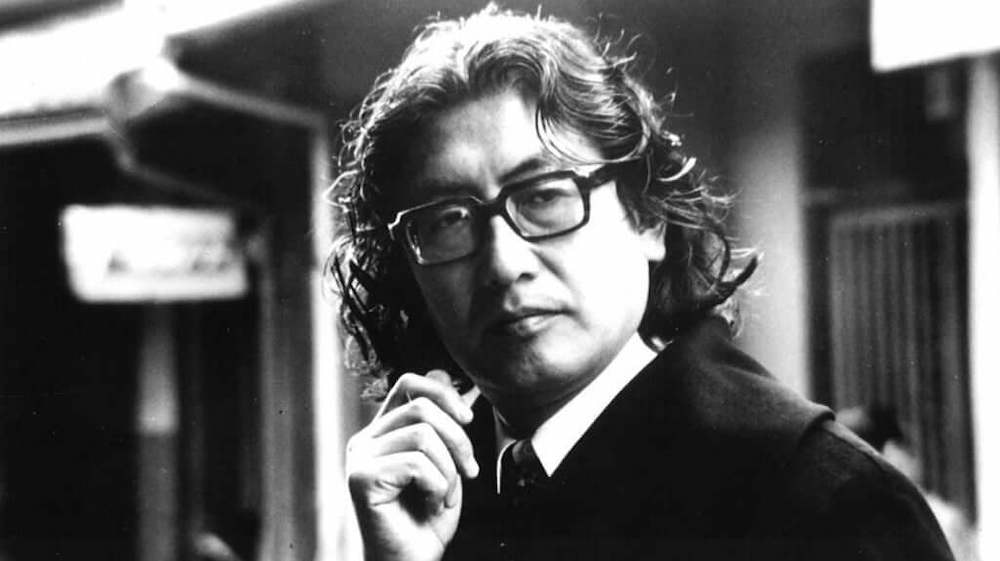
Nagisa Ōshima
 Japan
Japanfilm director•screenwriter•producer
Birthday
March 31, 1932
Birth Sign
Aries
Birthplace
Kyoto, Japan
Age
Died at 80
About
Nagisa Ōshima was a Japanese filmmaker, screenwriter, and producer who directed 23 feature films between 1959 and 1999. He is best known as a central figure in the Japanese New Wave, a movement that challenged traditional cinema with bold, politically charged storytelling. Ōshima's work often explored taboo subjects, youth rebellion, sexuality, capital punishment, and social discrimination, with an unflinching eye. His most famous films include In the Realm of the Senses (1976), an explicit erotic drama based on a true crime story, and Merry Christmas, Mr. Lawrence (1983), a war drama starring David Bowie. He won the Grand Prix at Cannes for Empire of Passion (1978) and remains a towering influence on world cinema. Today, his films are studied for their artistic risk and cultural impact, and retrospectives of his work continue to draw audiences.
Early Life & Background
Nagisa Ōshima was born in Kyoto in 1932, the son of a government official. His father died when Ōshima was young, and he was raised by his mother in a strict household. He attended the elite University of Tokyo, graduating in 1954 with a degree in French literature. His academic background in literature and philosophy shaped his intellectual approach to cinema. After university, he joined Shochiku Studios in 1954 as an assistant director, working under directors like Yoshitaro Nomura. During this period, he absorbed the studio system's craft while growing restless with its conservative norms. He wrote scripts and directed short films, but his first feature, A Town of Love and Hope (1959), was a low-budget project that signaled his break from tradition. That film's focus on class disparity and youthful disillusionment set the stage for his explosive entry into the Japanese New Wave.
Career Growth
Ōshima's breakthrough came in 1960 with Cruel Story of Youth, a raw portrait of teenage rebellion and sexuality that became a landmark of the Japanese New Wave. He followed it with The Sun's Burial (1960), a dark tale set in Osaka's slums. These films established his reputation for provocation. In 1968, Death By Hanging, a surreal critique of capital punishment and anti-Korean racism, premiered at Cannes, bringing him international attention. His most controversial work, In the Realm of the Senses (1976), was an explicit depiction of obsessive love that faced censorship battles worldwide. It became a cause célèbre for artistic freedom. Ōshima won the Cannes Grand Prix for Empire of Passion (1978), a ghost story rooted in guilt and desire. In 1983, he directed Merry Christmas, Mr. Lawrence, an English-language film starring Ryuichi Sakamoto and David Bowie, which achieved global success. His final film, Taboo (1999), was a samurai drama exploring homoerotic tension. Throughout his career, Ōshima consistently pushed boundaries, earning both acclaim and notoriety.
Career Timeline
Public Image & Style
Ōshima was widely regarded as the enfant terrible of Japanese cinema. Critics and audiences saw him as a radical who used film as a weapon against social hypocrisy. His public persona was that of an intellectual provocateur, articulate, confrontational, and unafraid of scandal. Media coverage often focused on the censorship battles around In the Realm of the Senses, framing him as a champion of free expression. Among cinephiles, he is admired for his formal daring and his willingness to tackle taboo subjects with seriousness and artistry. There is no official fandom name, but his work has a devoted following in arthouse and academic circles. His style, mixing documentary realism with surrealism, and using long takes and static shots, influenced directors like Quentin Tarantino and Park Chan-wook.
Fame & Fandom (iFAMOUS Rankings)
Nagisa Ōshima never cultivated a traditional fanbase with a formal name, organized rituals, or dedicated campaigns. His legacy rests entirely within the sphere of film scholars, critics, and cinephiles who engage with his radical work through academic discourse rather than mass-market worship. Unlike modern pop icons whose followers fund billboards or chart pushes, Ōshima's audience treated his films as provocative political statements and artistic challenges to the Japanese establishment. He famously declared a hatred for the status quo of Japanese cinema, a stance that alienated casual viewers while cementing his reputation among those seeking intellectual confrontation. The iFANN Global Fame Engine evaluated this figure in August 2026 and determined that he does not currently hold a placement in the published rankings, including the Global Top 1,000 or any scope-specific top-100 lists. This absence of a numeric rank reflects his status as a historical avant-garde filmmaker rather than a contemporary celebrity with active global consumption signals. While his films like In the Realm of the Senses generated significant media coverage and censorship battles during their release, these events did not translate into sustained fandom metrics required for current ranking inclusion. The lack of a documented fandom name further distinguishes his cultural footprint from figures who maintain active communities today. His influence persists through retrospectives and the enduring study of his filmography, but he remains outside the dynamic, ranked ecosystem of living celebrities monitored by iFANN. The evaluation confirms that while his name carries weight in film history, it does not currently generate the volume of public interest necessary to secure a position on the global fame charts.
Interesting Facts and Legends
Ōshima's film In the Realm of the Senses was based on the 1936 Sada Abe incident, a real murder case in Japan. The film was seized by customs in several countries and banned outright in Japan until a heavily censored version was allowed. He was a vocal critic of the Japanese emperor system and left-wing politics, which influenced many of his films. Ōshima once said he wanted to make films that were "like a bomb thrown into the audience." He directed only one English-language film, Merry Christmas, Mr. Lawrence, which featured a score by Ryuichi Sakamoto that became iconic. Despite his reputation for difficult subject matter, Ōshima was known personally as a gentle and soft-spoken man. He survived a stroke in 1995 but continued working until his final film in 1999. A central legend in film history surrounds his role in dismantling the conservative Japanese film industry, where he consistently exposed the contradictions of postwar society. His 1978 victory at the Festival de Cannes for Best Director solidified his international reputation and validated his radical approach on the world stage. Several of his films became legendary for their disruptive nature upon release, effectively acting as incidents that sparked national debate. Cruel Story of Youth is frequently cited as a defining work of the Blank Generation and a catalyst for youth rebellion. The definitive end to his life story occurred on January 15, 2013, marking him as a historical figure whose legends are now part of film history.
Notable Quotes
“I am not interested in making films about the past. I am interested in making films about the present.”
“The world is a strange place, and cinema is a strange art. I try to reflect that strangeness.”
“A film should be like a bomb thrown into the audience.”
Family & Personal Life
Ōshima married actress Akiko Koyama, who appeared in several of his films including Death By Hanging and Boy. The couple had two children, a son and a daughter. Ōshima was known to be a private family man, keeping his home life separate from his public persona. He lived in Fujisawa, Kanagawa Prefecture, until his death in 2013. His wife Akiko survived him, and his children have largely stayed out of the public eye.
Notable Connections
Ōshima frequently collaborated with actor Tatsuya Fuji, who starred in In the Realm of the Senses and Empire of Passion. Composer Ryuichi Sakamoto scored Merry Christmas, Mr. Lawrence and also acted in it. Ōshima's wife, Akiko Koyama, appeared in several of his films. He was a contemporary and rival of Shōhei Imamura, another Japanese New Wave director.
Relationships & Dating History
Nagisa Ōshima was married to actress Akiko Koyama. The couple met during the production of his early films and married in the early 1960s. They had two children together and remained married until Ōshima's death in 2013. No other public relationships have been documented. Koyama appeared in several of his films, including Death By Hanging and Boy. Their partnership was both personal and professional, with Koyama supporting his career while maintaining her own acting work.
- MarriedAkiko Koyama1960 - 2013Met during Ōshima's early film career; she acted in several of his films. They had two children together.
Death & Aftermath
Died
January 15, 2013 (aged 80)
Death Place
Unknown
Cause of Death
Unknown
Nagisa Ōshima, the pioneering Japanese film director and a central figure of the Japanese New Wave, died on January 15, 2013. He was 80 years old at the time of his passing,. Consequently, there is no available information in these sources regarding a hospital statement, family announcement specifying the cause, coroner's ruling, autopsy findings, or an inquest to establish the manner of death. Furthermore, reports do not specify his last public appearance or events leading up to his death, leaving the nature of his final days unconfirmed in the provided text. In terms of public reaction, the search results indicate that Ōshima was widely recognized as one of Japan's most important filmmakers, often cited as the most significant after Akira Kurosawa.
He was celebrated for tackling taboos and politically charged subjects with stylistic flair and was a recipient of the Best Director Award at the Festival de Cannes in 1978. Tributes from institutions are implied by the continued screenings of his work, such as a series of eight films presented by Anthology Film Archives in July following his death, and retrospective programming by the Harvard Film Archive. However, the provided text does not list specific fan vigils, chart surges, moments of silence, memorial murals, or detailed statements from peers and officials immediately following his death.
Information concerning the funeral or memorial service, including its date, location, whether it was public or private, notable attendees, performances, and burial or cremation details, is absent from the provided search results. Posthumously, Ōshima's legacy continues through the preservation and re-screening of his filmography, including collections by The Criterion Collection and ongoing academic and archival interest,. The handling of his estate remains unreported in the provided text.
Net Worth (Estate Value)
$10 Million
iFANN Editorial Team estimate
Per iFANN's editorial analysis, the estate of Nagisa Ōshima is valued at an estimated $10 Million as of 2026. His wealth accumulated primarily through his extensive film career, encompassing directing fees, screenwriting credits, and production earnings. Merry Christmas, Mr. Lawrence stood as his most commercially successful project, grossing over $10 million worldwide. Royalties derived from home video releases and streaming of his films, particularly In the Realm of the Senses, continue to generate income for his heirs. The estate is managed by his family, and occasional retrospectives and re-releases contribute to its overall value. Ōshima also earned revenue from teaching and writing, though these sources remained minor compared to his film revenues.
Awards Won (4)
Ōshima won the Grand Prix at the Cannes Film Festival for Empire of Passion in 1978. He also received three Best Director awards from Japanese film organizations, the Blue Ribbon Awards, Kinema Junpo Awards, and Mainichi Film Concours, all for the same film. His work was frequently nominated at Cannes and other festivals, but these four wins represent his major competitive awards.
1978 · Best Film
Empire of Passion
1979 · Best Director
Empire of Passion
Known For
In the Realm of the Senses
1976 · Director, Screenwriter
Merry Christmas, Mr. Lawrence
1983 · Director, Screenwriter
Cruel Story of Youth
1960 · Director, Screenwriter
Death By Hanging
1968 · Director, Screenwriter
Empire of Passion
1978 · Director, Screenwriter
Keywords
Quick Facts
- Profession
- film director, screenwriter, producer
- Born
- March 31, 1932
- Birthplace
- Kyoto, Japan
- Died
- January 15, 2013
- Death Place
- Fujisawa, Japan
- Gender
- Male
- Spouse
- Akiko Koyama
- Birth Sign
- Aries
- Education
- University of Tokyo
Personal Details
- Full Name
- Nagisa Ōshima
- Spouse
- Akiko Koyama
- Education
- University of Tokyo (French literature)
Filmography
23
Total
23
Film
0
TV
Frequently Asked Questions
How old was Nagisa Ōshima when he died?
What is Nagisa Ōshima's most famous film?
What awards did Nagisa Ōshima win?
Who was Nagisa Ōshima married to?
Is Nagisa Ōshima still alive?
Join the community
fans discussing