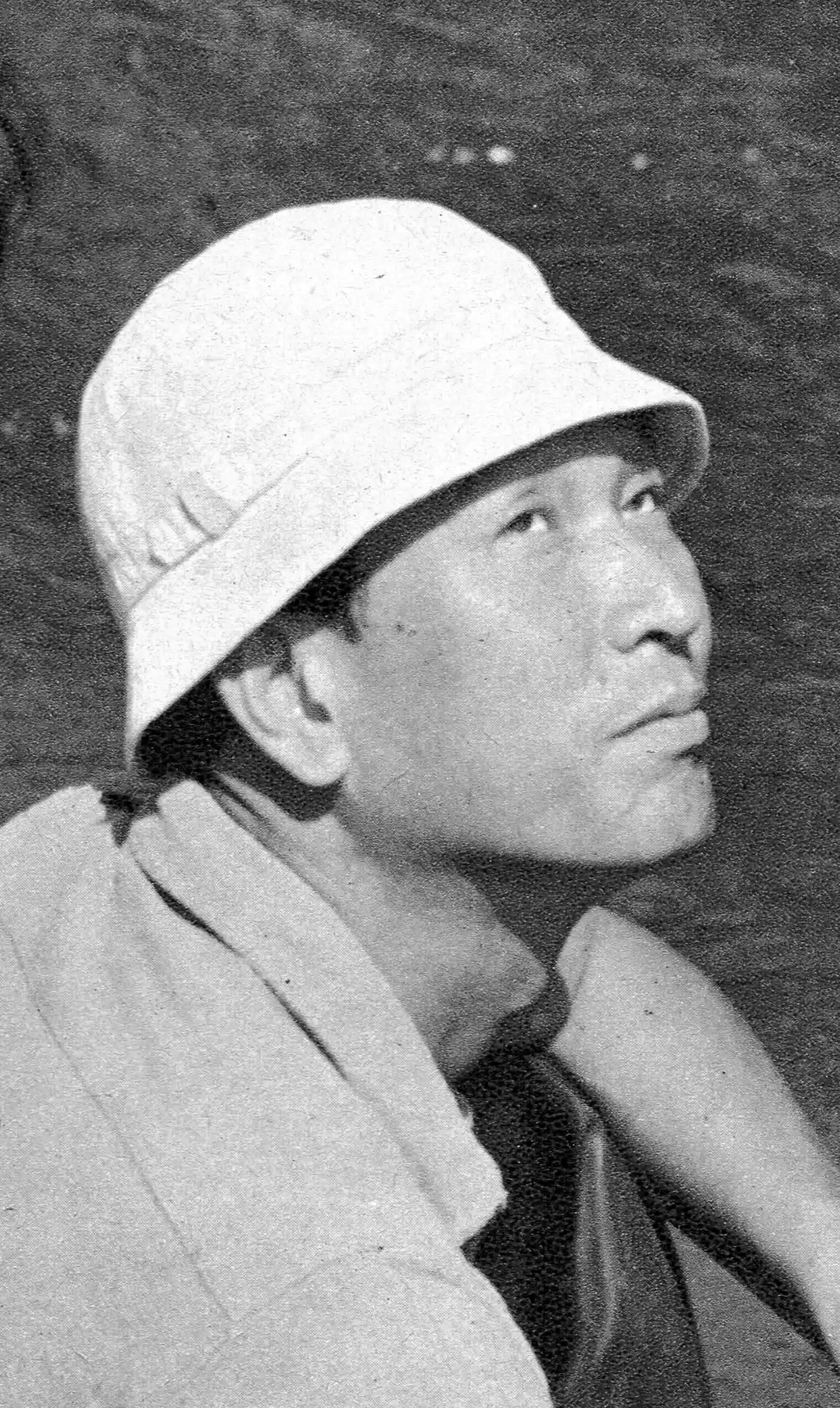
Akira Kurosawa
 Japan
Japanfilm director•screenwriter•producer
Birthday
March 23, 1910
Birth Sign
Aries
Birthplace
Ōi, Tokyo, Japan
Age
Died at 88
Height
5 ft 11 in (180 cm)
About
Akira Kurosawa was a Japanese film director, screenwriter, and producer who reshaped world cinema with his bold visual style and deep humanism. Over six decades, he directed 30 feature films, often serving as his own editor and producer, collaborating closely with cinematographers to achieve strikingly composed frames. His work bridged Eastern and Western storytelling, drawing from Shakespeare, American westerns, and Japanese Noh theater to create timeless epics.
Kurosawa's films are celebrated for their dynamic camera movement, meticulous staging, and moral complexity. He is best known for masterpieces like Seven Samurai, Rashomon, Ikiru, and Ran. Rashomon won the Golden Lion at Venice in 1951, introducing Japanese cinema to global audiences. Seven Samurai redefined action filmmaking and influenced countless directors. His work continues to be studied and revered, with a dedicated fanbase that spans generations.
Kurosawa received an Academy Honorary Award in 1990 for lifetime achievement, and his film Dersu Uzala won the Oscar for Best Foreign Language Film in 1976. He is often called "The Emperor of Cinema" for his authoritative style and enduring influence on filmmakers like George Lucas, Francis Ford Coppola, and Steven Spielberg.
Early Life & Background
Kurosawa was the youngest of eight children born to Isamu Kurosawa, a former army officer turned physical education teacher, and Shima Kurosawa, a homemaker. The family had samurai ancestry and lived in Ōi, a Tokyo suburb. His father was strict but encouraged exposure to both traditional Japanese arts and Western cinema. His older brother, Heigo, worked as a silent film narrator and introduced young Akira to movies and literature. Heigo's suicide in 1933, when Akira was 23, was a devastating blow that pushed him toward a more stable career path.
Kurosawa attended a progressive elementary school influenced by the Taisho democracy movement, where he was exposed to Western art and literature. He graduated from Keika Middle School in 1927 and then studied painting at the Doshusha School of Western Painting in Tokyo. But he struggled to make a living as a painter, supporting himself with odd jobs. His passion for visual arts, literature, and film grew. He was particularly influenced by Fyodor Dostoevsky, Leo Tolstoy, and the silent films of John Ford.
In 1936, Kurosawa answered a newspaper ad for an assistant director position at PCL (Photo Chemical Laboratories), the studio that later became Toho. He was hired and worked under director Kajiro Yamamoto, learning all aspects of filmmaking from scriptwriting to editing. He wrote screenplays on the side; his script for The Legend of the Great Buddha (1938) impressed Yamamoto. He also wrote the screenplay for The Horse (1941), which was well-received. By 1943, he was ready to direct his first feature, Sanshiro Sugata, a martial arts drama that launched his career.
Career Growth
Kurosawa's directorial debut was Sanshiro Sugata (1943), but his first major critical success came with Drunken Angel (1948), which introduced actor Toshiro Mifune. The two would collaborate on 16 films over the next two decades. The international breakthrough arrived with Rashomon (1950), which won the Golden Lion at the Venice Film Festival and opened Western markets to Japanese cinema. Kurosawa followed with a string of masterpieces: Ikiru (1952), a meditation on mortality that won the Silver Bear at Berlin; Seven Samurai (1954), an epic that became a global box office hit and influenced action filmmaking worldwide; Throne of Blood (1957), a samurai adaptation of Shakespeare's Macbeth; Yojimbo (1961), which inspired Sergio Leone's A Fistful of Dollars; and High and Low (1963), a taut crime thriller.
The 1970s were a difficult period. His first color film, Dodes'ka-den (1970), was a commercial failure, and Kurosawa attempted suicide in 1971. He recovered and made Dersu Uzala (1975), a Soviet-Japanese co-production that won the Academy Award for Best Foreign Language Film. His later years saw a resurgence with Kagemusha (1980), which won the Palme d'Or at Cannes, and Ran (1985), a Shakespearean epic that earned him an Academy Award nomination for Best Director. He continued working into the 1990s, directing Dreams (1990), Rhapsody in August (1991), and his final film, Madadayo (1993).
Career Timeline
Public Image & Style
Kurosawa is often called "The Emperor of Cinema" for his authoritative style and immense influence. His signature aesthetic includes dynamic camera movement, meticulous composition, and the use of weather, rain, wind, snow, for dramatic effect. His films explore themes of honor, mortality, and social justice, blending Japanese tradition with Western storytelling. Fans, sometimes called "Kurosawa-ites," are active on platforms like Reddit (r/kurosawa) and Criterion forums. Annual screenings of Seven Samurai on its release date (April 26) are common, and film festivals often host Kurosawa marathons. The estate's social media accounts post archival photos, restoration updates, and quotes, maintaining his legacy for new generations.
Fame & Fandom (iFAMOUS Rankings)
Akira Kurosawa remains a towering figure in global cinema, his influence stretching far beyond the borders of Japan. In August 2026, the iFANN Global Fame Rankings place him as the 30th most famous person in Japan, a standing he has held steady through multiple cycles. His reach extends across the continent, where he is ranked as the 5th most famous person from Japan and the 18th most famous person in East Asia. These placements reflect a legacy built on decades of masterful storytelling that continues to resonate with new generations. The rankings track global attention across media coverage, search trends, and consumption patterns worldwide, confirming his enduring relevance despite his passing. Unlike modern pop icons who cultivate specific fan groups with branded names, Kurosawa's audience operates as a dispersed network of cinephiles, scholars, and film enthusiasts. There is no formal organization or unified title for his followers; instead, reverence flows through academic circles, preservation societies like The Criterion Collection, and international film festivals. Fans often gather to screen his work at midnight showings or discuss his moral complexities in online forums, but these interactions remain organic rather than orchestrated campaigns. His reclusive nature during his lifetime meant he never engaged directly with crowds, preferring to let his films speak. Today, his grave in Kamakura serves as a quiet pilgrimage site for those seeking to connect with the man behind the camera, while contemporary directors continue to cite his techniques as foundational to their own craft.
Interesting Facts and Legends
Kurosawa was an avid painter who storyboarded many of his films in watercolor, particularly Ran and Kagemusha. He attempted suicide on December 22, 1971, following the commercial failure of Dodes'ka-den and financial struggles. A devoted fan of American Westerns, he modeled Seven Samurai after John Ford's Stagecoach. Though he directed only one film in English, Tora! Tora! Tora!, creative differences led to his firing from the project. A heavy smoker who drank whiskey regularly, he maintained a disciplined work schedule while demanding multiple takes for perfection. His favorite film was Ikiru, which he considered his most personal work.
Cultural lore surrounds his status as the first Japanese director to achieve international recognition after Rashomon won the Grand Prix at the Venice Film Festival. This moment introduced Japanese cinema to the West and cemented his global reputation. Stories also celebrate Seven Samurai as the best action movie of all time, inspiring classics like The Magnificent Seven. Fans still retell tales of his innate understanding of movement, blending ancient traditions with a distinctly modern twist across six decades of filmmaking.
Notable Quotes
“To be an artist means never to avert one's eyes.”
“The worst thing about being a director is that you have to be a leader. I'm not a leader.”
“Man is a genius when he is dreaming.”
“In a mad world, only the mad are sane.”
“I like to make films that are entertaining and have something to say.”
“The human heart is the same everywhere.”
Family & Personal Life
Kurosawa married actress Yōko Yaguchi in 1945. They met on the set of The Most Beautiful (1944), which she starred in and he directed. The marriage lasted until her death from a stroke on February 1, 1985. They had three children: son Hisao (born 1945), who became a film producer and managed his father's estate until his own death in 2022; daughter Kazuko (born 1947); and daughter Teruyo (born 1955), who worked as a costume designer. Kurosawa's parents, Isamu and Shima, raised him in a culturally rich household, and his older brother Heigo was a major influence before his suicide. Kurosawa remained widowed after Yaguchi's death and never remarried.
Notable Connections
Kurosawa is closely associated with actor Toshiro Mifune, who starred in 16 of his films, including Seven Samurai, Yojimbo, and Rashomon. He also frequently collaborated with screenwriter Shinobu Hashimoto, composer Fumio Hayasaka, and cinematographer Kazuo Miyagawa. Western directors like George Lucas, Francis Ford Coppola, and Steven Spielberg have cited him as a major influence. Lucas's Star Wars drew from The Hidden Fortress, and Coppola helped produce Kagemusha.
Relationships & Dating History
Kurosawa married actress Yōko Yaguchi in 1945. They met on the set of The Most Beautiful (1944), which she starred in and he directed. The marriage lasted until her death from a stroke on February 1, 1985. They had three children together: Hisao, Kazuko, and Teruyo. The relationship was reportedly stable and supportive, with Yaguchi managing household affairs while Kurosawa worked. There are no credible reports of affairs or other romantic relationships. Kurosawa remained widowed after Yaguchi's death and never remarried. As of 2026, he is deceased.
- MarriedYōko Yaguchi1945 - 1985Married until her death; they had three children.
Death & Aftermath
Died
September 6, 1998 (aged 88)
Death Place
Tokyo, Japan
Cause of Death
Cerebral hemorrhage
The family of Akira Kurosawa confirmed his passing at St. Luke's International Hospital in Tokyo on September 6, 1998, following a cerebral hemorrhage that struck earlier that day while he rested at home. Tributes poured in immediately from global institutions, with the Academy of Motion Picture Arts and Sciences observing a moment of silence during its annual gala and the Japanese government issuing an official statement honoring his contributions to cinema. Fans gathered in Tokyo, Los Angeles, and London for vigils, while sales of titles like Seven Samurai and Rashomon surged as theaters worldwide organized memorial screenings. A private funeral ceremony took place four days later at Tama Cemetery in Fuchu, attended by close family and select colleagues including Martin Scorsese and Francis Ford Coppola, who sent condolences but could not travel. He was cremated and interred there, adhering to his wish for a quiet farewell. Posthumous efforts to preserve his legacy continue through the Akira Kurosawa Foundation, which supports emerging filmmakers.
Net Worth (Estate Value)
$6 Million
iFANN Editorial Team estimate
Per iFANN's editorial analysis, Akira Kurosawa's estate is valued at $6 Million as of 2026. The bulk of this wealth originates from ongoing royalties and licensing fees generated by his extensive filmography. His works are frequently re-released in high-definition restorations by the Criterion Collection, creating steady revenue streams from home video and streaming platforms. The estate also profits from licensing stories for remakes, including The Magnificent Seven based on Seven Samurai and A Fistful of Dollars based on Yojimbo. Limited-edition merchandise, poster sales, and documentary projects contribute additional income. Kurosawa owned a residence in Setagaya, Tokyo, which remains part of the estate assets. Since his death in 1998, the estate has earned an estimated $2–3 million from posthumous releases and deals, with the total value growing as new generations discover his work.
Awards Won (50)
Kurosawa won an Academy Honorary Award in 1990 for lifetime achievement, and his film Dersu Uzala won the Oscar for Best Foreign Language Film in 1976. He received the Golden Lion at Venice for Rashomon (1951), the Silver Lion for Seven Samurai (1954), the Palme d'Or at Cannes for Kagemusha (1980), and the BAFTA for Best Direction for Ran (1986). He also won multiple Japanese Academy Awards and the Praemium Imperiale.
1976 · Best Foreign Language Film
Dersu Uzala
1986 · Best Direction
Ran
Known For
Seven Samurai
1954 · Director, Writer, Editor
Rashomon
1950 · Director, Writer
Ikiru
1952 · Director, Writer
Ran
1985 · Director, Writer, Editor
Yojimbo
1961 · Director, Writer
Throne of Blood
1957 · Director, Writer
Keywords
Quick Facts
- Profession
- film director, screenwriter, producer
- Born
- +1910-03-23
- Birthplace
- Ōi, Tokyo, Japan
- Died
- +1998-09-06
- Death Place
- Seijō, Tokyo, Japan
- Gender
- Male
- Spouse
- Yōko Yaguchi
- Birth Sign
- Aries
Personal Details
- Full Name
- Akira Kurosawa
- Height
- 5 ft 11 in (180 cm)
- Spouse
- Yōko Yaguchi
- Children
- Hisao Kurosawa, Kazuko Kurosawa, Teruyo Kurosawa
- Education
- Keika Middle School; Doshusha School of Western Painting
Filmography
30
Total
30
Film
0
TV
Frequently Asked Questions
How old was Akira Kurosawa when he died?
What is Akira Kurosawa's net worth in 2026?
What is Akira Kurosawa best known for?
Did Akira Kurosawa win an Oscar?
Who was Akira Kurosawa married to?
Join the community
fans discussing