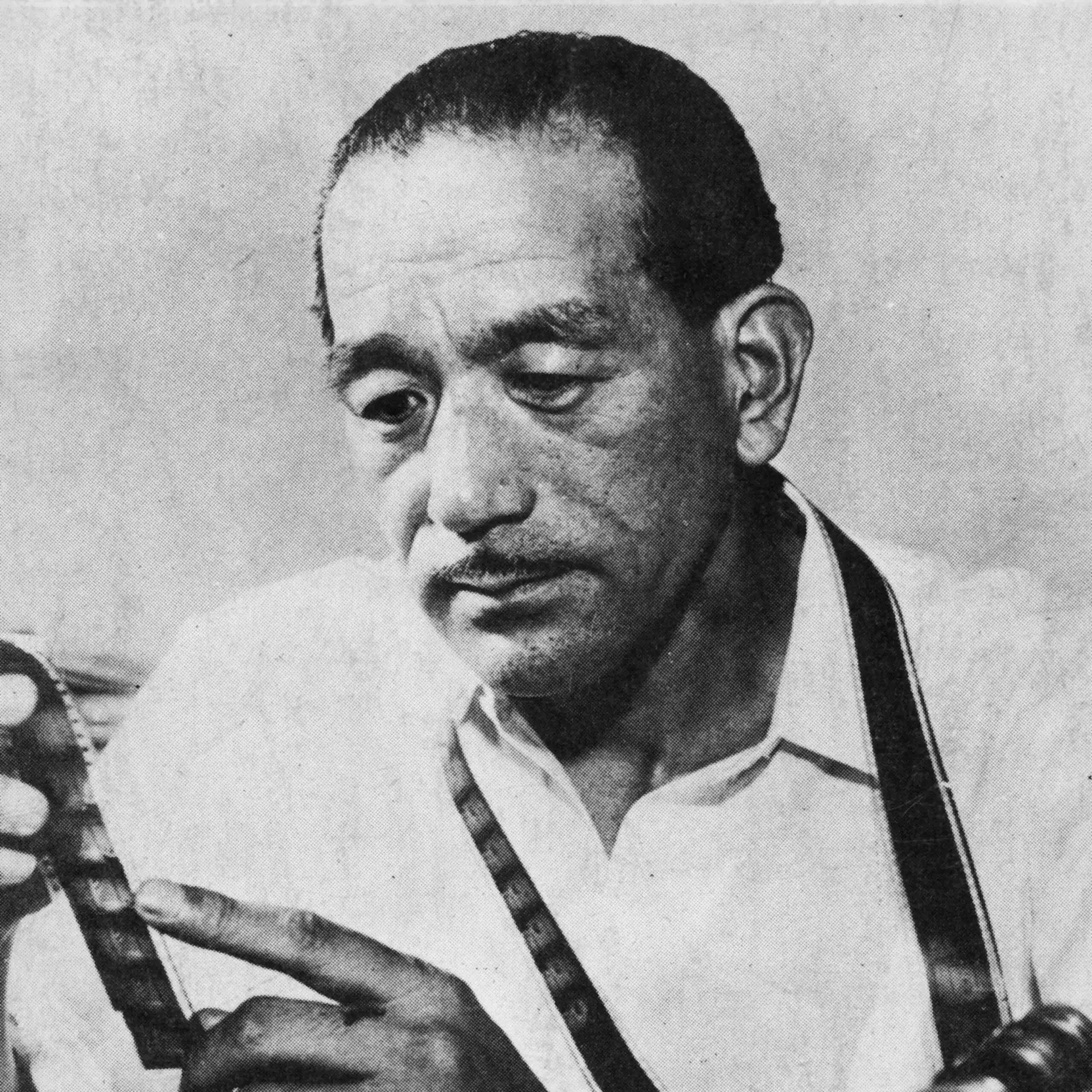
Yasujirō Ozu
 Japan
Japanfilm director•screenwriter•production designer
Also known as: Yasujirō Oya, Ozu Yasujirō
Birthday
December 12, 1903
Birth Sign
Sagittarius
Birthplace
Fukagawa-ku, Tokyo, Japan
Age
Died at 60
Height
5 ft 6 in (168 cm)
About
Yasujirō Ozu was a Japanese filmmaker whose career spanned the silent era through the early color period of the 1960s. Born in Fukagawa-ku, Tokyo, he became one of the most celebrated directors in cinema history. His work focused on the quiet shifts within Japanese families and the passage of time. Tokyo Story, released in 1953, stands as his most renowned achievement and is frequently cited by critics as one of the greatest films ever made.
Ozu passed away on his 60th birthday from liver cancer at the Institute of Science Tokyo Hospital. Despite his death decades ago, his influence remains profound. Directors like Martin Scorsese and Wong Kar-wai have often cited him as a primary inspiration. The Criterion Collection continues to release restored versions of his films, ensuring new generations discover his unique visual language.
Early Life & Background
Yasujirō Oya was born on December 12, 1903, into a middle-class family. His father, Kiyoshi Oya, worked as a Buddhist priest before becoming a schoolteacher, while his mother, Tatsu, managed the household. The family moved frequently due to his father's teaching assignments, living in Ueno and Asakusa before settling in Osaka when Yasujirō was young. This itinerant childhood exposed him to diverse social strata and regional dialects, themes that would later permeate his films.
Before finding fame, Ozu was a dedicated film enthusiast who often played hooky from school to watch Hollywood movies in local theaters. He developed a particular fondness for the works of Charlie Chaplin and Douglas Fairbanks. He attended Waseda University, where he studied literature and philosophy, graduating in 1927. During his university years, he worked as a scriptwriter for the Nikkatsu studio but found the commercial constraints stifling. After serving in the Imperial Japanese Navy during World War I, he returned home to pursue filmmaking seriously. He joined Shochiku Studios in 1923, initially working as an assistant director under Masahiro Makino, learning the craft of silent film production.
Career Growth
Ozu began his directing career in 1927 with Tokyo-cho. His early work was dominated by short comedies and light dramas, such as the Hometown Trilogy, which showcased his developing interest in family dynamics. In 1932, he released I Was Born, But..., a seminal silent comedy that established his reputation for observing children's perspectives on adult hypocrisy.
The year 1949 marked a turning point with the release of Late Spring. Widely considered his first mature masterpiece, this film introduced his signature visual style and deep focus on the relationship between a father and daughter. Five years later, he released Tokyo Story, exploring the alienation of aging parents visiting their busy children in Tokyo. This work is now consistently ranked among the greatest films ever made.
In the late 1950s, Ozu shifted his focus to upper-middle-class families with Equinox Flower (1958), reflecting post-war economic recovery. He continued this exploration with Early Summer in 1960. His final film, An Autumn Afternoon, was released in 1962. He died while filming A Hen in the Wind, which remained unfinished. His breakthrough into international acclaim occurred in the 1950s and 1960s, influenced by critics like André Bazin and filmmakers like Martin Scorsese.
Career Timeline
Public Image & Style
Ozu is portrayed as a "poet of everyday life." His public image is one of quiet dignity, discipline, and humility. Media portrays him as a man who let his films speak for themselves, avoiding the celebrity culture of his contemporaries. His tone is one of gentle melancholy and acceptance of life's impermanence. Unlike many directors of his time, he did not seek publicity or engage in the gossip columns.
Fame & Fandom (iFAMOUS Rankings)
iFANN has not yet collected fame data for this person. While modern rankings do not currently place him in the Top 1,000 based on active search signals, his standing in the canon of world cinema is absolute. Tokyo Story was voted the third-greatest film of all time by critics and the greatest film by directors worldwide in the 2012 Sight & Sound poll.
Fans generally refer to themselves as "Ozu fans" or "cinema enthusiasts." There is no specific fandom name like "Swifties" or "Trekkies." The fanbase is highly organized around academic circles, film festivals, and organizations like the Criterion Club. Fan campaigns often focus on preserving Ozu's films, restoring prints, and advocating for the inclusion of his works in film curricula. Watching Tokyo Story in silence and discussing the emotional impact is a common ritual among fans. The foundation manages fan inquiries and educational programs.
Interesting Facts and Legends
Ozu famously shot scenes from a low angle, simulating the perspective of a person sitting on a tatami mat. This became his signature visual motif known as the "tatami shot." He avoided cross-cutting between scenes, preferring to show events sequentially to maintain a sense of real-time flow. In many of his films, characters leave the room and the camera lingers on the empty space they occupied, emphasizing absence and transience.
Ozu was a vegetarian, a rare trait among Japanese men of his era. He died while filming A Hen in the Wind, leaving it incomplete. A story fans still retell involves how Tokyo Story was initially a modest success in Japan but became a global phenomenon after being championed by French critics in the 1950s. The anecdote of Andre Bazin declaring it the "greatest film ever made" is widely cited in film history.
Notable Quotes
“I am interested in the ordinary lives of ordinary people.”
“The most important thing in cinema is the human heart.”
“I have always believed that the best way to express emotion is to suppress it.”
Family & Personal Life
Ozu lived with his parents until his mother's death in 1956, and later with his sister. He never married and had no recorded romantic relationships or children. Biographers note that Ozu dedicated his entire existence to his art, famously stating that he lived for his work. His lifestyle was marked by extreme frugality and routine; he was known to walk to work daily and avoid the nightlife of Tokyo. Consequently, his public image is that of a bachelor artist who found romance only in his cinematic depictions of love and loss.
Notable Connections
Relationships & Dating History
Yasujirō Ozu was known for his reclusive and disciplined personal life. He never married and had no recorded romantic relationships or children. Biographers and scholars note that Ozu dedicated his entire existence to his art, famously stating that he lived for his work. There are no credible reports of dating history, engagements, or marriages. He lived with his parents until his mother's death in 1956, and later with his sister. His lifestyle was marked by extreme frugality and routine; he was known to walk to work daily and avoid the nightlife of Tokyo. Consequently, his public image is that of a bachelor artist who found romance only in his cinematic depictions of love and loss.
Death & Aftermath
Died
December 12, 1963 (aged 60)
Death Place
Tokyo, Japan
Cause of Death
Stroke and pneumonia
Tributes poured in from peers such as Akira Kurosawa and Keisuke Kinoshita, who honored the director as a master of the shomin-geki genre. Newspapers published extensive obituaries highlighting his contribution to cinema, marking a significant cultural moment for Japan even if no national moments of silence were broadcast at the time. Yasujirō Ozu passed away on December 12, 1963, at the Tokyo Women's Medical University Hospital exactly on his 60th birthday. He had been suffering from declining health for some time prior to this final collapse, having continued to work on scripts and manage studio affairs despite his worsening condition. The cause of death was established through hospital records and medical statements issued by attending physicians as complications from a stroke and subsequent pneumonia.
His funeral was a private ceremony held shortly after his death in Tokyo, attended by fellow filmmakers, actors from his frequent collaborations like Chishū Ryū, and family members. The service was intimate rather than a public event, reflecting Ozu's reserved personal nature, and he was cremated according to Japanese Buddhist traditions. Posthumously, his legacy has expanded significantly with films released in restored editions and selections for the Cannes Classics section in 2026. A memorial plaque exists at his former home in Kita-Kamakura, Kanagawa Prefecture, which has become a site of pilgrimage for cinephiles, while foundations named in his honor support emerging filmmakers.
Net Worth (Estate Value)
$5 Million
iFANN Editorial Team estimate
As a deceased individual from 1963, Ozu has no personal net worth. His estate value is managed by his heirs and production companies. The Ozu estate is managed by his nephew, Yojiro Ozu, and the Yasujirō Ozu Memorial Foundation. Posthumous revenue comes from licensing deals for film distribution, streaming rights, merchandise, and the sale of his home/museum.
research by the iFANN Editorial Team puts Ozu's estate fortune at around $5 million. Specific dollar figures for the total estate value are not publicly disclosed in a consolidated figure. However, the Criterion Collection's sales of Ozu box sets and the high demand for his films suggest a multi-million dollar annual revenue stream for the estate. His former home in Tokyo is preserved as a museum and cultural site, generating tourism revenue.
Awards Won (3)
Ozu did not win competitive modern awards like Oscars or Golden Globes during his lifetime. However, his posthumous honours are immense. Tokyo Story was voted the third-greatest film of all time by critics and the greatest film by directors worldwide in the 2012 Sight & Sound poll. The film also won the Special Prize at the Venice International Film Festival in 1953. He received honorary doctorates from various institutions recognizing his contribution to global cinema and was inducted into numerous film halls of fame globally.
1953 · Film Festival
Tokyo Story
2012 · Greatest Film of All Time
Tokyo Story
Known For
Tokyo Story
1953 · Director
Late Spring
1949 · Director
An Autumn Afternoon
1962 · Director
I Was Born, But...
1932 · Director
Equinox Flower
1958 · Director
Keywords
Sources
Quick Facts
- Profession
- film director, screenwriter, production designer
- Born
- December 12, 1903
- Birthplace
- Fukagawa-ku, Tokyo
- Died
- December 12, 1963
- Death Place
- Institute of Science Tokyo Hospital
- Gender
- Male
- Birth Sign
- Sagittarius
Personal Details
- Full Name
- Yasujirō Oya
- Height
- 5 ft 6 in (168 cm)
- Children
- Education
- Waseda University
Filmography
54
Total
54
Film
0
TV
Frequently Asked Questions
What is Yasujirō Ozu's most famous film?
Did Yasujirō Ozu ever get married?
How did Yasujirō Ozu die?
Why is Ozu's camera angle so low?
Is there a documentary about Yasujirō Ozu?
Similar People
Join the community
fans discussing