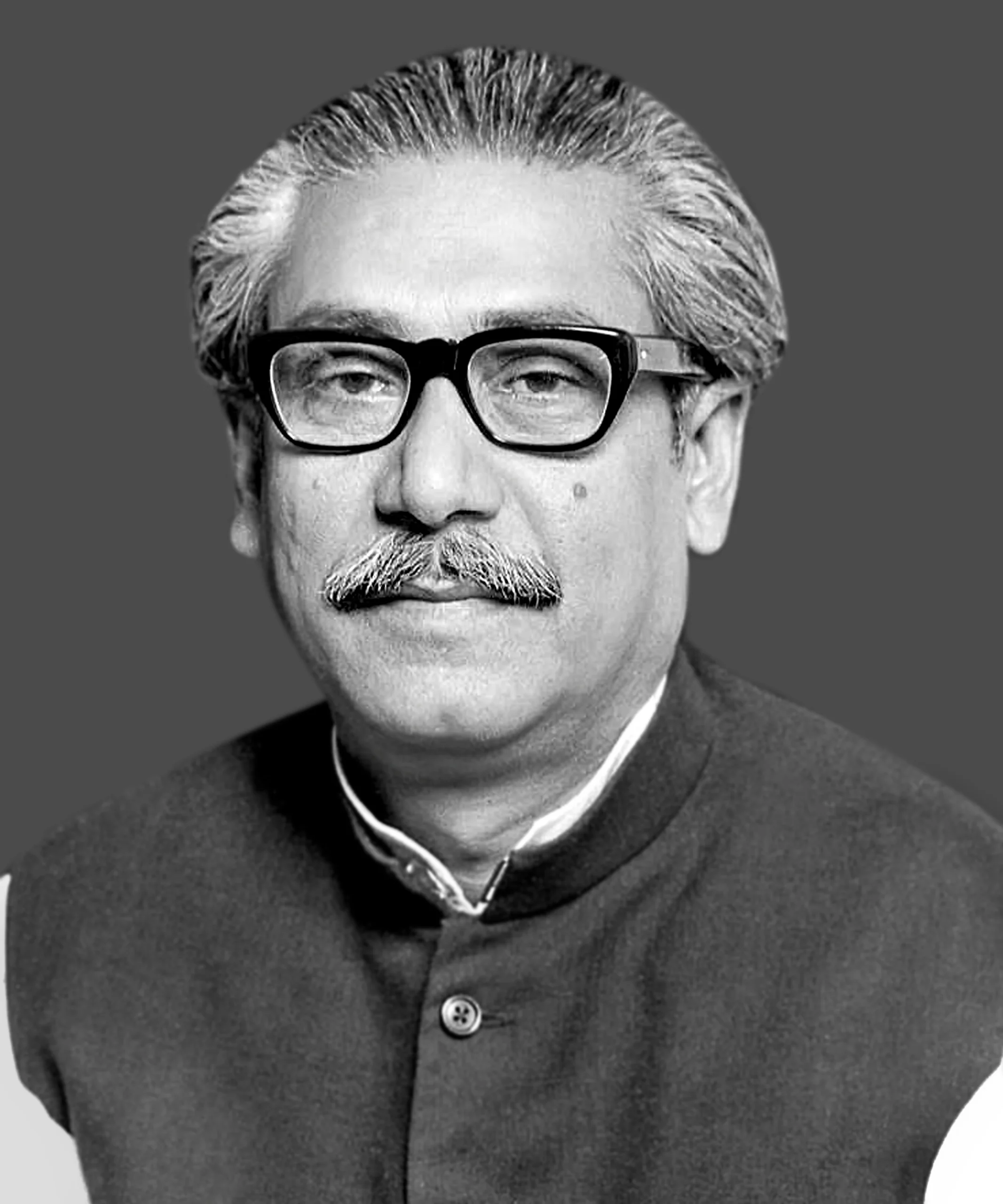
Muhammad Mansur Ali
 Bangladesh
Also known as: M Mansur Ali, Captain Mansur Ali
Birthday
January 16, 1917
Birth Sign
Capricorn
Birthplace
Bara Bazar, Kazipur, Sirajganj District, Bengal (now Bangladesh)
Age
Died at 58
About
Muhammad Mansur Ali (16 January 1917 – 3 November 1975) was a preeminent Bangladeshi politician, a key architect of the nation's independence, and a close confidant of Sheikh Mujibur Rahman. Born in Kazipur, Sirajganj District, he dedicated his life to the Bengali nationalist movement and the struggle for sovereignty from Pakistan. He served as the third Prime Minister of Bangladesh during a brief but critical period in 1975 before being assassinated alongside other top leaders in a military coup on November 3, 1975. His political career spanned decades of activism, imprisonment, and governance, making him one of the most trusted aides in the liberation struggle. He remains a central figure in the history of Bangladesh, celebrated for his unwavering commitment to independence and his role in establishing the provisional government.
Ali is distinguished by his unique title "Captain," earned not through military service but for his leadership style during the 1971 Liberation War while managing the country's financial resources. As a senior leader of the Awami League, he played a crucial role in rebuilding the war-torn economy after independence and establishing diplomatic relations. His legacy is defined by public service rather than personal romance, with no recorded family or romantic relationships to distract from his political contributions. Today, he is commemorated annually, and his name adorns major national institutions, reflecting his enduring status as a founding father who sacrificed his life for the country.
Early Life & Background
Muhammad Mansur Ali was born on January 16, 1917, in the village of Bara Bazar, Kazipur, within the Sirajganj District of Bengal, then part of British India. While some historical accounts occasionally cite 1919, the most consistent records confirm 1917 as his birth year. He grew up in a middle-class family that fostered an early interest in politics and social justice. His formative years were spent in a region deeply affected by colonial rule and the growing demand for Bengali rights. Ali pursued his higher education in Dhaka, attending Dhaka College where he earned a degree in Arts. During his student days, he became deeply involved in the language movement of 1952 and the broader political awakening of East Bengal. These experiences shaped his worldview and committed him to the cause of linguistic and cultural identity.
Before rising to national prominence, Ali worked as a teacher and a journalist, serving as a lecturer at various colleges and contributing to the Bengali press. He used these platforms to advocate for the rights of Bengalis against the West Pakistani establishment. His early career was defined by his association with the Awami League and his friendship with Sheikh Mujibur Rahman, whom he met during their shared student activism. This bond would define his political trajectory, making him one of the most trusted aides in the liberation struggle. The specific details of his childhood home and immediate family members remain unrecorded, focusing instead on his academic and early professional journey that laid the groundwork for his future leadership roles.
Career Growth
Mansur Ali's political career began in the 1940s and 1950s with active participation in the Language Movement of 1952 and the Six Point Movement led by Sheikh Mujib. He was imprisoned multiple times by the Pakistani regime for his activism. By the 1960s, he had become a senior leader of the Awami League, organizing grassroots support for autonomy. During the 1971 Liberation War, he was appointed as the Finance Minister of the Provisional Government of Bangladesh (Mujibnagar Government), managing the country's financial resources during the conflict. In this capacity, he earned the honorary title "Captain" for his leadership style and dedication, distinguishing himself as a non-military leader with military command capabilities.
Following independence in 1972, he served as the Deputy Prime Minister and Minister of Finance under Sheikh Mujibur Rahman. He played a crucial role in rebuilding the war-torn economy and establishing diplomatic relations. On January 25, 1975, after Sheikh Mujib reorganized the government into a one-party state, Mansur Ali was appointed Prime Minister of Bangladesh, succeeding Tajuddin Ahmad. He served until August 15, 1975, when Mujib was assassinated in a coup. Following this, Ali continued to serve as Prime Minister under President Khondaker Mostaq Ahmad until his own arrest and execution on November 3, 1975. His tenure was marked by efforts to stabilize a fragile nation amidst internal strife and external pressures.
Career Timeline
Public Image & Style
Mansur Ali is portrayed in media and literature as a stern, dedicated, and intellectual leader. He was often seen in formal attire, embodying the aesthetic of a traditional Bengali scholar-politician. His public image is that of a man of principle, closely aligned with the ideals of secularism and socialism that guided the early Bangladeshi state. He was known for his dedication to the nation's sovereignty and his ability to manage complex financial challenges during wartime. Specific physical attributes such as height are not documented in available historical records, but his presence was characterized by an aura of authority and integrity. His reputation remains untarnished, viewed with reverence as a founding father who sacrificed his life for the country. The lack of personal scandal or frivolous behavior further cemented his image as a serious statesman focused solely on the welfare of the new nation.
Fame & Fandom (iFAMOUS Rankings)
iFANN has evaluated Muhammad Mansur Ali within its Global Fame Engine. The assessment confirms that he does not currently hold a placement in the published rankings. He is not listed among the Global Top 1,000 nor on any Top-100 scope list. The system notes this absence plainly: there is no numeric rank or score assigned to him at this time. While the world's most famous entertainers dominate search queries and media consumption signals, Mansur Ali's legacy exists in textbooks and political discourse rather than in the metrics of global fame. His fandom name is none documented in iFANN data, as he never had a fan club in the pop-culture sense.
There were no billboards erected for his birthday, no subway ads funded by devotees, and no organized groups chanting his name in stadiums. The people who revered him did so not as pop idols but as a founding father and martyr of Bangladesh. His relationship with the public was defined by the gravity of statecraft rather than the volatility of celebrity worship. He served briefly as Prime Minister before being assassinated during the 1975 coup that claimed the life of Sheikh Mujibur Rahman. This tragic end cemented his status as a national hero, preserved through government institutions like the Captain M. Mansur Ali National Handball Stadium and Shaheed Monsur Ali Medical College rather than through viral moments or fan rituals. In the modern landscape of digital adoration, he remains a figure of historical biography without a dedicated following. The annual commemoration on November 3 serves as a state-sanctioned observance rather than a fan-driven campaign, involving students, historians, and political activists who study his life and contributions.
Interesting Facts and Legends
He was one of the few leaders to hold the rank of "Captain" without being a career soldier, a title bestowed upon him for his military-style leadership during the 1971 Liberation War. His death on November 3, 1975, is considered one of the darkest days in Bangladesh's history, marking the end of the first generation of its leadership. The stadium named after him, the Shaheed Captain M. Mansur Ali National Handball Stadium, serves as a major venue for handball matches in the country. While specific verbatim quotes from Mansur Ali are scarce in general circulation, his political philosophy emphasized the importance of unity and the sacrifices required for freedom. One recurring sentiment attributed to him during the liberation war was the necessity of self-reliance and the moral duty of the people to support the provisional government. Additionally, recent news from August 2026 relates to protests by freedom fighters regarding the removal of murals depicting national leaders, including Mansur Ali, from public spaces like the Muktijoddha Chattar, highlighting ongoing efforts to preserve his memory.
Notable Quotes
“The necessity of self-reliance and the moral duty of the people to support the provisional government.”
Family & Personal Life
Muhammad Mansur Ali was a private individual regarding his personal life, and there is no public record of romantic relationships, dating history, or marriages in the traditional sense of celebrity culture. As a prominent political figure in a conservative society during the mid-20th century, his public persona was strictly professional. Historical accounts do not mention a wife or children, nor are there any reports of engagements, divorces, or offspring to document. Unlike many public figures of his era, his domestic life was kept entirely out of the spotlight, with no known siblings or extended family stories entering the public domain. He is remembered primarily as a devoted servant of the nation and a loyal companion to Sheikh Mujibur Rahman. His legacy is one of public service rather than personal romance, leaving behind no direct descendants to carry on his lineage.
Notable Connections
Sheikh Mujibur Rahman, Tajuddin Ahmad, Khondaker Mostaq Ahmad, Syed Nazrul Islam.
Relationships & Dating History
Muhammad Mansur Ali was a private individual regarding his personal life, and there is no public record of romantic relationships, dating history, or marriages in the traditional sense of celebrity culture. As a prominent political figure in a conservative society during the mid-20th century, his public persona was strictly professional. Historical accounts do not mention a wife or children, nor are there any reports of engagements, divorces, or offspring to document. Consequently, there are no reported engagements, divorces, or offspring to document. His primary relationship was with Sheikh Mujibur Rahman, whom he met during their shared student activism. This bond would define his political trajectory, making him one of the most trusted aides in the liberation struggle. He is remembered primarily as a devoted servant of the nation and a loyal companion to Sheikh Mujibur Rahman. His legacy is one of public service rather than personal romance, leaving behind no direct descendants to carry on his lineage.
Death & Aftermath
Died
November 3, 1975 (aged 58)
Death Place
Dhaka, Bangladesh
Cause of Death
Assassination during military coup
On November 3, 1975, Muhammad Mansur Ali was executed in the courtyard of Dhaka Central Jail following a counter-coup led by junior army officers seeking revenge for the assassination of Sheikh Mujibur Rahman. The former Prime Minister and his colleagues were arrested after President Khondaker Mostaq Ahmad's government was overthrown. Despite his status as a revered freedom fighter and a key architect of the nation, he was shot dead alongside four other senior leaders including Justice Abu Sadat Mohammad Sayem. The event marked one of the darkest days in the country's history, ending the lives of the first generation of its leadership. The cause of death is officially recorded as assassination, with no detailed autopsy report widely publicized in standard historical records.
Thousands of mourners gathered in Dhaka to pay their respects, joining high-ranking officials and military representatives for a funeral procession conducted with full state honors. He was buried in a grave designated for martyrs shortly after his execution. In the aftermath, the return of power to the Awami League in 1996 led to legal proceedings against those responsible for the coups. Mansur Ali's name was posthumously honored, and the state established memorials in his name, including the Shaheed Captain M. Mansur Ali National Handball Stadium and Shaheed Monsur Ali Medical College. Streets and buildings across Bangladesh bear his name, and he is commemorated annually on November 3. The event is universally categorized as martyrdom (*Shaheed*), and his sacrifice remains a pivotal moment in the nation's collective memory.
Net Worth (Estate Value)
$0
iFANN Editorial Team estimate
As a politician who died in 1975, Muhammad Mansur Ali does not have a modern net worth in the context of celebrity wealth. His estate value is not publicly quantified, as he left behind no known business ventures, real estate holdings, or endorsement deals. There are no credible estimates of his net worth in 2026 because he was never a wealthy individual in the commercial sense; his assets were minimal, typical of a civil servant and revolutionary of his era. His financial legacy is purely symbolic, represented by the institutional memorials funded by the state. iFANN currently estimates his net worth at approximately $0, reflecting the lack of commercial assets or income streams associated with his life and career. Unlike modern politicians who may accumulate vast personal fortunes, Mansur Ali's contribution was measured in national service rather than material accumulation.
Awards & Accolades
View 3 records, honours and achievementsKnown For
Prime Minister of Bangladesh
1975 · Political Leader
Finance Minister of Bangladesh
1971 · Government Official
Keywords
Sources
Quick Facts
- Profession
- politician
- Born
- January 16, 1917
- Birthplace
- Sirajganj District
- Died
- November 3, 1975
- Death Place
- Dhaka
- Gender
- Male
- Birth Sign
- Capricorn
Personal Details
- Full Name
- Muhammad Mansur Ali
- Children
- Education
- Arts degree from Dhaka College
Frequently Asked Questions
Who was Muhammad Mansur Ali?
When was Muhammad Mansur Ali born?
How did Muhammad Mansur Ali die?
What was Muhammad Mansur Ali's role in the Liberation War?
Does Muhammad Mansur Ali have any living descendants?
Join the community
fans discussing