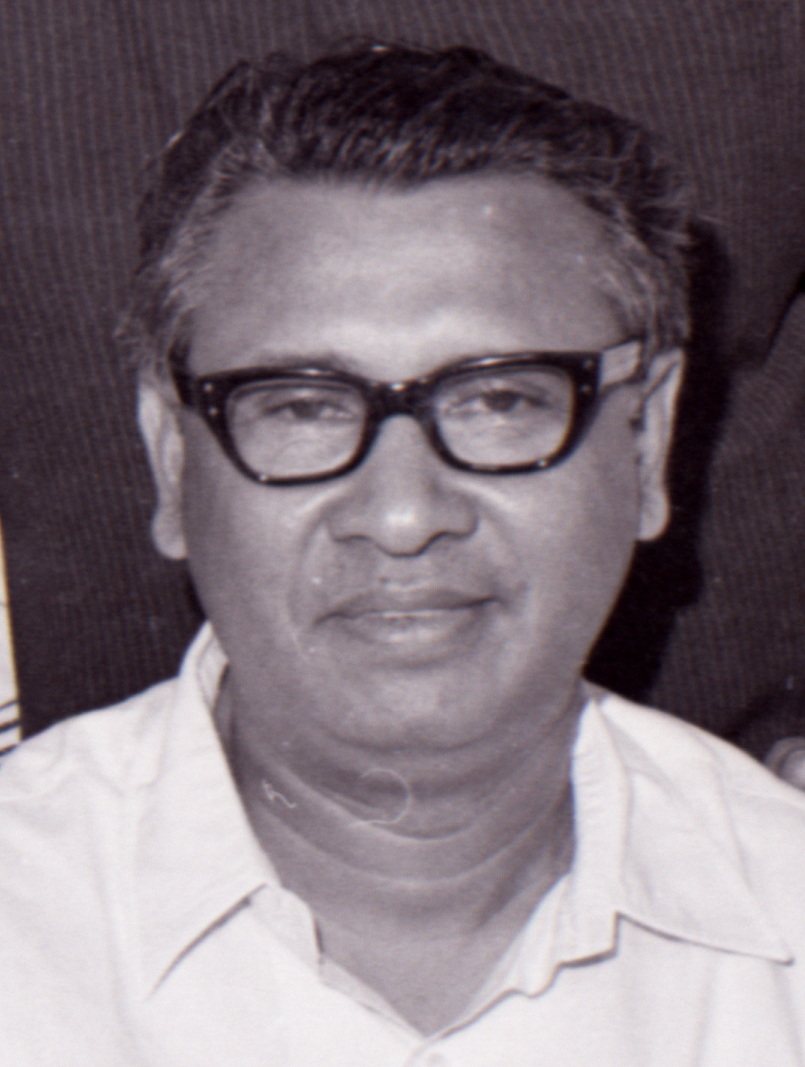
Tajuddin Ahmad
 Bangladesh
Birthday
+1925-07-23
Birth Sign
Sagittarius
Birthplace
Kapasia Upazila
Age
Died at 50
About
Born in Kapasia Upazila on July 23, 1925, Tajuddin Ahmad emerged as a key political figure in Bangladesh's tumultuous journey to nationhood. He served as the prime minister of the first government of Bangladesh during the 1971 Liberation War, playing an essential role in the country's founding. Ahmad's political career began in British India as a youth worker for the Muslim League. He aligned with the pro-democracy faction that diverged from the party's mainstream after India's partition. His involvement in the 1952 Language Movement and his subsequent joining of the Awami Muslim League in 1953 marked his commitment to a secular political future. Elected to the East Pakistan Provincial Assembly in 1954, he became a close associate of Sheikh Mujibur Rahman, helping to reshape the Awami League into a secular force during the late 1960s. As General Secretary from 1966, he navigated the party through turbulent times, often facing imprisonment. He was instrumental in drafting the initial six-point demand, a pivotal document leading to Bangladesh's independence. Ahmad also spearheaded the Awami League's campaign for the 1970 Pakistani general election, which saw the party achieve a significant majority. He later coordinated the non-cooperation movement in March 1971, following President Yahya Khan's refusal to transfer power. After the Pakistani army's crackdown on March 25, 1971, Ahmad escaped to India. In the absence of Sheikh Mujib, he established and led the Provisional Government of Bangladesh from exile. In independent Bangladesh, Ahmad served as Minister of Finance and Planning from 1972 to 1974, contributing to the drafting of the nation's constitution. He resigned from the cabinet in 1974. Tragically, following the assassination of Sheikh Mujib in 1975, Tajuddin Ahmad was arrested and killed on November 3, 1975, alongside three other senior Awami League leaders while in prison.
Fame & Fandom
Tajuddin Ahmad commands a reverence that transcends the conventional metrics of celebrity, rooted instead in the collective memory of a nation rather than a dedicated fanbase. Unlike pop culture icons who enjoy organized fandoms with specific names or rituals, his supporters are defined by citizenship and political alignment, identifying primarily as citizens of Bangladesh or adherents to secular Bengali nationalism. His legacy is sustained through state-sponsored commemorations and historical scholarship, such as the national observances marking his birth centenary in 2025 and subsequent discussions on his secular ideology in 2026, rather than fan-funded campaigns or viral social media trends. This unique form of public engagement places him within a distinct category of global recognition where historical significance supersedes entertainment popularity. Despite this distinction, his standing in the broader landscape of human achievement remains substantial. According to the iFANN Global Fame Rankings, he is recognized as the 24th most famous person from Bangladesh, a position he has maintained steadily from the previous cycle. This ranking reflects a broad assessment of global attention, acknowledging his enduring presence in historical discourse. The placement underscores his status not merely as a regional figure but as a globally recognized architect of modern nationhood. While he lacks the formalized following seen in music or film industries, his influence persists through the continued study of his role in the 1971 Liberation War and the ongoing narrative of his martyrdom. The absence of a specific fandom name does not diminish his impact; rather, it highlights how his memory is preserved by the very populace he helped establish, making every citizen a participant in his legacy.
Interesting Facts and Legends
Born in Kapasia Upazila, Tajuddin Ahmad served as the Prime Minister of the first government of Bangladesh during the 1971 Liberation War while simultaneously holding the portfolio of Finance Minister. He declared independence in the absence of Sheikh Mujibur Rahman, effectively forming the provisional government in exile. A defining chapter of his life occurred on November 3, 1975, when he was arrested and killed inside Dhaka Central Jail alongside other leaders, an event often cited as a symbol of political betrayal. Scholars and historians frequently highlight his unwavering commitment to secularism, noting his insistence on the separation of state and religion as a core tenet of his political philosophy. For decades, he was overshadowed in popular consciousness by Sheikh Mujibur Rahman, leading to a narrative that cast him as an 'unsung hero' whose contributions were only fully appreciated in later years. Recent publications, including the 2026 release of *Letters to and by Tajuddin Ahmad*, have provided new primary sources that bridge the gap between the leader and the modern generation. In 2025, the government agency Rajuk moved to restore the name of 'Tajuddin Park' after it had been erased, demonstrating institutional efforts to preserve his memory against erasure.
Death & Aftermath
Died
+1975-11-03 (aged 50)
Death Place
Dhaka, Bangladesh
Cause of Death
Reported execution by beating and bayoneting
The assassination of the first Prime Minister of Bangladesh sparked profound grief and outrage among the populace and surviving freedom fighters, though public gatherings were immediately restricted under martial law. On November 3, 1975, Tajuddin Ahmad was executed inside the Dhaka Secretariat alongside Acting President Syed Nazrul Islam and A.H.M. Qamaruzzaman by soldiers involved in a coordinated military coup led by Major General Khaled Mosharraf. The legal aftermath remained suppressed for decades, with formal trials only initiated much later through the International Crimes Tribunal established in 2010, yet many direct perpetrators either died in custody or escaped justice due to political complexities and lack of evidence. No public funeral was held following the killings; his body was reportedly buried in a secret location before being exhumed and reburied in a designated martyrs' graveyard to allow for proper state commemoration. Annual tributes are now institutionalized on Shaheed Day, featuring wreath-laying ceremonies at the Shaheed Tajuddin Ahmad Smriti Park in Gulshan, Dhaka, while posthumous honors include the publication of his diaries.
Awards & Accolades
Keywords
Quick Facts
- Profession
- politician, head of government
- Born
- +1925-07-23
- Birthplace
- Kapasia Upazila
- Died
- +1975-11-03
- Death Place
- Dhaka
- Gender
- Male
- Spouse
- Syeda Zohra Tajuddin
- Birth Sign
- Sagittarius
Personal Details
- Spouse
- Syeda Zohra Tajuddin
Join the community
fans discussing