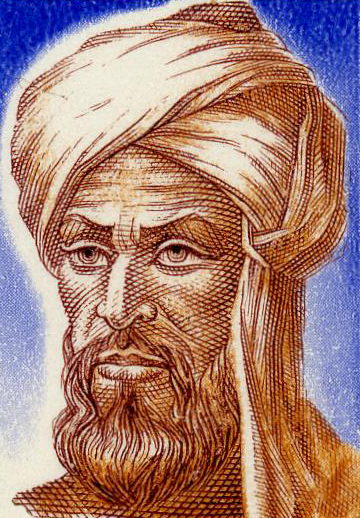
Muḥammad ibn Musa al-Khwarizmi
mathematician•astronomer•geographer
Also known as: Al-Khwarizmi, Algoritmi, al-Khwarizmi
Birthday
780
Birth Sign
Capricorn
Birthplace
Khwarazm (modern-day Khiva, Uzbekistan)
Age
Died at 70
About
Muḥammad ibn Mūsā al-Khwārizmī, known simply as al-Khwarizmi, was a Persian mathematician, astronomer, and geographer who flourished during the Islamic Golden Age. He is widely recognized as the father of algebra and the originator of the concept of algorithms, two pillars of modern mathematics and computer science. His systematic approach to solving equations and his introduction of Hindu-Arabic numerals to the Western world transformed how people calculate and think about numbers. The word "algebra" itself comes from the Arabic "al-jabr" in the title of his most famous work, Al-Kitāb al-Mukhtaṣar fī Ḥisāb al-Jabr wa al-Muqābala (The Compendious Book on Calculation by Completion and Balancing), written around 820 CE, which laid the groundwork for algebra as an independent discipline. He spent most of his career at the House of Wisdom in Baghdad, the intellectual hub of the Abbasid Caliphate, under the patronage of Caliph al-Ma'mun. His work on arithmetic introduced the decimal positional number system to Europe, while his revision of Ptolemy's Geography improved the accuracy of world maps. His astronomical tables, the Zīj al-Sindhind, were used for centuries by astronomers in both the Islamic world and Europe. Today, his name lives on in the words "algorithm" and "algorism," a testament to his enduring legacy in mathematics and computing. He is ranked #26 in Michael H. Hart's "The 100 Most Influential People in History" (1978), the highest-ranking mathematician on the list, and is consistently listed among the top mathematicians of all time.
Early Life & Background
Al-Khwarizmi was born around 780 CE in the region of Khwarazm, a fertile oasis along the Amu Darya River in what is now Uzbekistan. The area had a rich tradition of scholarship, and his epithet "al-Khwarizmi" indicates his birthplace. He likely received his early education in Khwarazm, studying mathematics, astronomy, and geography from local scholars. As a young man, al-Khwarizmi traveled to Baghdad, the capital of the Abbasid Caliphate and a magnet for intellectuals from across the known world. There, he joined the House of Wisdom, a prestigious academy and library founded by Caliph al-Ma'mun. The House of Wisdom was the center of the Translation Movement, where Greek, Sanskrit, and Persian scientific works were translated into Arabic. Al-Khwarizmi worked alongside prominent scholars such as the Banu Musa brothers and the translator Hunayn ibn Ishaq, absorbing the mathematical and astronomical knowledge of earlier civilizations. Before his breakthrough, al-Khwarizmi had already demonstrated exceptional mathematical ability. His early interests included Indian mathematics, particularly the decimal system, and Greek geometry, which would form the foundation of his later innovations. His appointment to the House of Wisdom around 820 CE marked the turning point in his career, giving him the resources and intellectual environment to produce his groundbreaking works. He was a contemporary of Charlemagne, who ruled from 768 to 814 CE.
Career Growth
Al-Khwarizmi's career breakthrough came between 813 and 833 CE when he completed Al-Jabr, the first systematic treatise on solving linear and quadratic equations. The book introduced the methods of "al-jabr" (restoration, or moving subtracted terms to the other side of an equation) and "al-muqabala" (balancing, or canceling like terms). He provided geometric proofs for his algebraic solutions, using diagrams of squares and rectangles. This work became the standard textbook on algebra in European universities from the 12th to the 16th century. Around 825 CE, he wrote Kitāb al-Ḥisāb al-Hindī (Book of Indian Calculation), which explained the Hindu-Arabic numeral system and the decimal positional system. Latin translations of this book, beginning with the phrase "Dixit Algorithmi" (Thus spoke al-Khwarizmi), introduced the word "algorithm" to Western languages. His work on arithmetic was instrumental in replacing Roman numerals with the more efficient decimal system. In geography, al-Khwarizmi revised Ptolemy's Geography around 830 CE, correcting the coordinates of over 2,400 cities and producing a more accurate world map, especially for the Indian Ocean and Central Asia. He also published the Zīj al-Sindhind, a set of astronomical tables that became the standard reference for Islamic and European astronomers for over 500 years. His contributions to trigonometry included accurate sine and cosine tables. He also wrote treatises on the astrolabe, sundial, and calendar systems, including the Jewish calendar. He influenced Fibonacci's Liber Abaci (1202), which directly cites his work on Indian numerals.
Career Timeline
Public Image & Style
Al-Khwarizmi is consistently portrayed as the "Father of Algebra" and a pioneering figure of the Islamic Golden Age. Modern depictions typically show him in medieval Islamic scholarly attire — a turban and robe, often holding a compass or astrolabe, with mathematical diagrams in the background. He is celebrated as a bridge between ancient Greek and Indian knowledge and modern European science. Among mathematics enthusiasts and computer scientists, he is revered as the originator of the algorithm concept. Educational accounts on social media frequently use his name in posts about algebra, algorithms, and the history of mathematics. The hashtag #AlKhwarizmi appears in thousands of posts annually, particularly on Pi Day (March 14) and during Mathematics Awareness Month. He has been featured on magazine covers, including TIME Magazine (March 29, 1999) as one of the "Most Influential People of the Millennium," and in National Geographic History (March/April 2017) with a cover story titled "The Father of Algebra." A statue of al-Khwarizmi stands in Khiva, Uzbekistan, and another in Tehran, Iran. Several countries have issued postage stamps featuring his portrait. The al-Khwarizmi crater on the Moon and a crater on Mars bear his name. The Al-Khwarizmi International Award is an annual Iranian award for outstanding research in mathematics and computer science.
Fame & Fandom
Muḥammad ibn Musa al-Khwarizmi commands a reverence that transcends the ephemeral nature of modern celebrity, sustaining a global community of scholars, students, and enthusiasts who revere his contributions as foundational to human civilization. While he lacks a contemporary fanbase characterized by organized clubs or social media campaigns, his legacy is institutionalized through academic curricula and scientific nomenclature worldwide. He is universally honored as the Father of Algebra and the originator of the concept of algorithms, with his name etymologically embedded in the very language of computer science. Recent cultural initiatives have further cemented his status as a national hero in Uzbekistan and Iran, where artists and media outlets continue to celebrate his role in shaping modern mathematics. This intellectual mythology has generated enduring tributes, including artistic depictions and educational programs adopted by nations globally. Despite this profound influence, Muḥammad ibn Musa al-Khwarizmi is currently evaluated by iFANN's Global Fame Engine but does not hold a placement in the published rankings. As of August 2026, iFANN confirms that he does not hold a placement in the Global Top 1,000 or any Top-100 scope list.
Interesting Facts and Legends
The word algorithm derives from the Latinization of his name, Algoritmi, marking a linguistic journey from Baghdad to Silicon Valley. He never employed the equals sign, which remained absent until 1557, preferring to express equations in full prose without mathematical symbols. His seminal work on algebra contained no notation whatsoever, relying entirely on descriptive text to explain reduction and balancing. To solve quadratic equations, he utilized geometric proofs involving squares and rectangles rather than abstract formulas. His astronomical tables, known as Zīj al-Sindhind, remained functional references in 14th-century Europe long after their creation. No contemporary portrait exists; all visual representations are modern artistic reconstructions dating from the 20th century onward. His algebra textbook served as the standard curriculum for European universities for four centuries. He authored one of the earliest Arabic treatises detailing the construction of the astrolabe. His calendrical writings included comprehensive explanations of the Hebrew calendar. A persistent legend suggests that the spirit of his logical framework was adopted by modern tech hubs, framing him as the unseen architect of artificial intelligence.
Notable Quotes
“That fondness for science, that affability and condescension which God shows to the learned, that promptitude with which he protects and supports them in the elucidation of obscurities and in the removal of difficulties, has encouraged me to compose a short work on calculating by al-jabr and al-muqabala.”
“When I considered what people generally want in calculating, I found that it is always a number.”
“I have composed this book on calculation by al-jabr and al-muqabala, which contains the most important and useful parts of arithmetic, such as men constantly require in cases of inheritance, legacies, partition, lawsuits, and trade.”
Family & Personal Life
No records survive about al-Khwarizmi's parents, siblings, spouse, or children. His father's name was Musa, as indicated by the patronymic "ibn Musa" (son of Musa) in his full name. Some historians suggest his family may have been Zoroastrian priests who later converted to Islam, though this is uncertain. Al-Khwarizmi had no known descendants or documented household. His only known familial relationship is the professional one with his patron, Caliph al-Ma'mun, who supported his work at the House of Wisdom.
Notable Connections
Al-Khwarizmi worked under the patronage of Caliph al-Ma'mun (786–833 CE), who appointed him to the House of Wisdom. He collaborated with the Banu Musa brothers, three Persian scholars who were also active in mathematics and astronomy. His works were later translated into Latin by Robert of Chester in 1145 and by Adelard of Bath. The Italian mathematician Fibonacci cited al-Khwarizmi's work on Indian numerals in his Liber Abaci (1202), helping spread the decimal system through Europe.
Relationships & Dating History
No verifiable information exists about al-Khwarizmi's romantic relationships, marriages, or children. Historical records from the 9th-century Abbasid period are extremely sparse regarding the personal lives of scholars. The only documented relationship is his professional association with his patron, Caliph al-Ma'mun, and his colleagues at the House of Wisdom. There are no surviving accounts of spouses, partners, or descendants. As of 2026, al-Khwarizmi is deceased, and no romantic relationships are recorded in any credible historical source.
Death & Aftermath
Died
850 (aged 70)
Death Place
Unknown
Cause of Death
Unknown
Muḥammad ibn Mūsā al-Khwārizmī died approximately in the year 850 CE. There are no confirmed facts regarding his exact date of death, specific place of death, age at death, cause of death, or the circumstances of his final days. Historical sources consistently cite his death only as occurring "c. 850" (circa 850), without providing a month, day, or specific location within the city where he worked at the House of Wisdom. Consequently, there is no official medical ruling or investigation into his passing; any account suggesting a detailed cause of death or legal aftermath is entirely absent from the historical record.
The concept of a modern criminal or civil inquest was foreign to the era, and no legal documents concerning his demise have been preserved. Tributes from peers during his lifetime focused on his scholarly contributions rather than his death, with his works being translated and studied extensively in the Islamic Golden Age and later in Europe. In terms of funeral or memorial details, the time, location, and nature of his burial remain unrecorded in surviving historical texts. Posthumously, however, Al-Khwarizmi has received immense recognition. He is widely honored through the naming of mathematical concepts such as "algebra" (from his book Al-Jabr ) and "algorithm" (derived from the Latinization of his name).
Modern tributes include a 2023 art exhibition featuring seven artists paying homage to him, annual celebrations of his birthday in Iran, and ongoing academic discussions regarding his legacy in the digital age. Various institutions and scholars continue to produce books, articles, and documentaries celebrating his life and work, but these are commemorative efforts created centuries after his death rather than immediate posthumous releases or awards established by his family.
Net Worth (Estate Value)
Not applicable
iFANN Editorial Team estimate
Muḥammad ibn Mūsā al-Khwārizmī passed away over eleven centuries ago, and no documentation of his personal estate or liquid assets has survived the intervening millennium. During his lifetime in Baghdad, he existed within a system of caliphal patronage where scholars received salaries from the Abbasid court to work at the House of Wisdom rather than accumulating private wealth through commercial enterprise. The iFANN Editorial Team's research traces the economic value generated by his legacy not to any surviving fortune, but to the enduring utility of his intellectual output. His foundational texts on algebra and arithmetic underpin a global textbook industry that generates billions annually, while the software sector built upon the concept of algorithms. No physical estate remains to manage his holdings; his contributions belong entirely to the collective heritage of human knowledge. As of 2026, a new English translation of Al-Jabr was published by Princeton University Press, and the Al-Khwarizmi Algorithmic Thinking curriculum was adopted by 15 countries for K-12 mathematics education.
Awards & Accolades
View 18 records, honours and achievementsKnown For
Al-Jabr
c. 820 · Author
Kitāb al-Ḥisāb al-Hindī
c. 825 · Author
Zīj al-Sindhind
c. 830 · Author
Revision of Ptolemy's Geography
c. 830 · Author
Keywords
Quick Facts
- Profession
- mathematician, astronomer, geographer
- Born
- c. 780
- Birthplace
- Khwarazm (modern-day Khiva, Uzbekistan)
- Died
- c. 850
- Death Place
- Baghdad
- Gender
- Male
Personal Details
- Full Name
- Abū ʿAbd Allāh Muḥammad ibn Mūsā al-Khwārizmī
- Education
- House of Wisdom, Baghdad
Frequently Asked Questions
Who was al-Khwarizmi?
What is al-Khwarizmi's net worth in 2026?
What is al-Khwarizmi best known for?
When did al-Khwarizmi live?
Why is al-Khwarizmi important to computer science?
Join the community
fans discussing