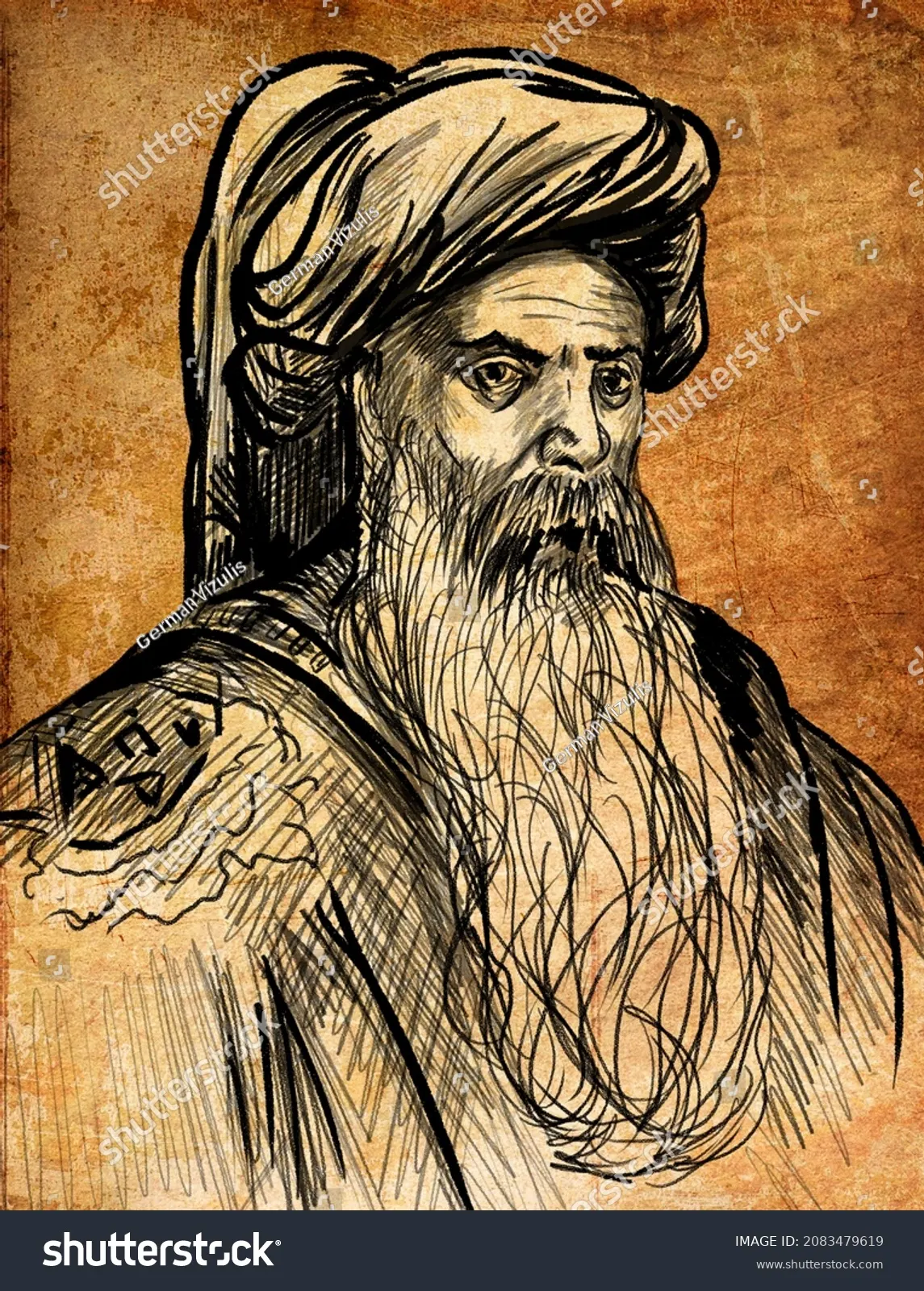
Mu'awiya I
Also known as: Muawiyah I, Muawiya ibn Abi Sufyan
Birthday
603-01-01
Birth Sign
Capricorn
Birthplace
Mecca
Age
Died at 77
About
Mu'awiya I, born around 603 in Mecca, was a politician, writer, and poet who founded the Umayyad Caliphate and served as its first caliph from 661 until his death in April 680. Unlike the four Rashidun caliphs before him, who were close companions of the Prophet Muhammad, Mu'awiya converted to Islam only after Muhammad captured Mecca in 630. Before that, he and his father Abu Sufyan had opposed their distant Qurayshite kinsman. After converting, Mu'awiya became one of Muhammad's scribes, writing down revelations.
Today, Mu'awiya is remembered as a masterful statesman who transformed the caliphate from a consultative system into a dynastic empire. His reign saw the first Islamic coinage bearing a ruler's name, the expansion of the caliphate into North Africa and Central Asia, and the establishment of Damascus as a political and cultural capital. Historians debate his legacy intensely, some praise his administrative genius and strategic patience, while others criticize his decision to nominate his son Yazid, which broke with tradition and sparked future conflict. For fans of early Islamic history, Mu'awiya remains a figure of immense complexity: a late convert who outmaneuvered the Prophet's own family, a poet who wrote verses that still survive, and a caliph who laid the foundations for a dynasty that would rule for nearly a century.
Early Life & Background
Mu'awiya was born into the Banu Abd Shams clan of the Quraysh tribe in Mecca, the same tribe as the Prophet Muhammad. His father, Abu Sufyan, was one of the most powerful merchants in the city and a leading opponent of Islam before the conquest of Mecca. Growing up, Mu'awiya would have witnessed the early struggles between the Quraysh and the Muslims, and he likely participated in the battles against Muhammad's forces. He did not convert until 630 CE, when Muhammad's army marched on Mecca and the city surrendered without a fight. After his conversion, Muhammad recognized Mu'awiya's literacy and appointed him as one of the scribes who recorded the Quranic revelations as they were received. This position gave Mu'awiya intimate knowledge of the Islamic community's inner workings, even though he had been a latecomer to the faith. Following Muhammad's death in 632, Mu'awiya joined the military campaigns in Syria under Caliph Abu Bakr, serving as a deputy commander. Syria was a frontier province bordering the Byzantine Empire, and Mu'awiya learned the arts of war and diplomacy there.
Career Growth
Mu'awiya's big break came when Caliph Uthman ibn Affan, his relative, appointed him governor of Syria in the 640s. Over the next two decades, Mu'awiya transformed Syria into a formidable power base. He built a strong army, organized the first Muslim navy, and launched raids against Byzantine-controlled islands like Cyprus and Rhodes. He also forged a political marriage with Maisun bint Bahdal, linking himself to the powerful Banu Kalb tribe that dominated the Syrian steppe. When Uthman was assassinated in 656, Mu'awiya refused to recognize Ali as caliph, demanding justice for Uthman's murder. This led to the First Fitna, a civil war that culminated in the Battle of Siffin in 657. The battle ended in a stalemate, and arbitration failed to resolve the conflict. After Ali was assassinated in 661, Mu'awiya convinced Ali's son Hasan to abdicate in exchange for a generous pension, and Mu'awiya entered Kufa as caliph. As caliph, he moved the capital to Damascus, established bureaucratic departments (diwans), and minted silver dirhams with his name, the first Islamic coins to bear a ruler's title. He also expanded the caliphate westward, conquering Ifriqiya (modern Tunisia) and establishing the city of Kairouan, and eastward into Khorasan and Central Asia. In a controversial move, he nominated his son Yazid as his successor, setting the precedent for hereditary succession that would define the Umayyad dynasty.
Career Timeline
Public Image & Style
Mu'awiya's public persona is that of a shrewd, patient, and calculating leader, a master of realpolitik. He cultivated an image of moderation and justice, often presenting himself as the avenger of Uthman and the restorer of order after the civil war. He dressed simply, wore a plain turban, and avoided the ostentation of Byzantine emperors, yet he surrounded himself with learned advisors and poets. In Sunni tradition, he is respected as a Companion of the Prophet and a caliph, though his decision to appoint Yazid is criticized. Shia tradition views him as a usurper who opposed Ali and Hasan, and his name is often invoked negatively. Among historians, he is seen as the founder of the first Islamic dynasty and a pragmatist who prioritized stability over ideology. His legacy remains deeply contested, but his image as a clever statesman endures.
Fame & Fandom (iFAMOUS Rankings)
Mu'awiya I remains a figure of profound historical weight without a current placement in the iFANN Global Top 1,000 rankings. The iFANN Global Fame Engine has evaluated this person, but they do not currently hold a placement in the published rankings (Global Top 1,000 or a Top-100 scope list). While modern metrics of celebrity fame often elude figures from the seventh century, Mu'awiya's resonance persists through the lens of enduring political and religious legacy rather than contemporary pop culture consumption. His status is defined by the foundational shift he enacted in Islamic governance, transforming the caliphate into a dynastic empire, a transformation that continues to generate intense scholarly and sectarian discourse over fourteen centuries later. There is no formal or unofficial fandom name for Mu'awiya I; the audience engaging with his memory consists of distinct religious communities holding opposing theological views rather than a unified fanbase. Unlike modern icons who enjoy organized campaigns or birthday tributes, engagement with Mu'awiya manifests as deep-seated historical interpretation and occasional geopolitical friction. This dynamic was starkly illustrated by the 2025 Saudi-produced television series titled Muawiya, which sparked immediate and severe backlash across sectarian lines. The production, reported to have cost $100 million, was intended to reframe his image but instead became a focal point for controversy, leading to bans in Iraq and prompting calls from prominent clerics to withdraw the show. Such events highlight how Mu'awiya serves as a potent symbol in modern Sunni-Shia discourse, where historical narratives are actively contested and reshaped by state-sponsored media. The absence of a digital following does not diminish his influence; rather, it underscores the unique nature of his fame, which exists within the realm of sacred history and political mythology rather than the ephemeral cycles of viral attention.
Interesting Facts and Legends
Mu'awiya was renowned for his sharp wit and patience, famously stating, 'I use my mind, not my sword, to achieve my goals.' He possessed a remarkable ability to recall entire conversations verbatim, a trait attributed to a photographic memory. Despite converting to Islam only after the capture of Mecca in 630, he rose to become one of Muhammad's scribes and later the first Umayyad caliph. He maintained peaceful relations with the Byzantine Empire through annual tribute payments, allowing him to focus on internal consolidation. As an innovator in administration, he was the first caliph to utilize a personal seal on official documents. A widely retold narrative concerns the Battle of Siffin, where his demand for justice regarding the assassination of Caliph Uthman led to conflict with Ali ibn Abi Talib, creating a lasting theological divide between Sunni and Shia traditions. In modern times, the release of the high-budget television series Muawiya in 2025 transformed his legacy into a subject of intense contemporary controversy. The series, produced by MBC, faced immediate geopolitical backlash, resulting in its ban in Iraq and accusations of using historical figures for political maneuvering. This event demonstrated how Mu'awiya remains a polarizing symbol, with some viewing him as a statesman and others as a divisive figure whose history is manipulated for modern agendas.
Notable Quotes
“I use my mind, not my sword, to achieve my goals.”
“Patience is the key to victory.”
“Do not let your anger control you, for anger is a bad advisor.”
“A wise man does not reveal his secrets.”
Family & Personal Life
Mu'awiya was born to Abu Sufyan ibn Harb, a prominent Quraysh leader, and Hind bint Utba, a woman known for her fierce opposition to Muhammad before converting. He had several siblings, including a brother named Yazid (not to be confused with his son). Mu'awiya married Qurayba al-Sugra bint Abi Umayya, but his most significant marriage was to Maisun bint Bahdal, a Christian woman from the Banu Kalb tribe. This alliance secured the loyalty of the Kalb, a key tribe in Syria. Maisun gave birth to his son and successor, Yazid I. Mu'awiya also had other wives and concubines, but details are scarce. His household in Damascus was known for its sophistication, blending Arab tribal traditions with Byzantine administrative culture.
Notable Connections
Mu'awiya's life intersected with many key figures of early Islam. He served as a scribe for Prophet Muhammad, fought alongside Abu Bakr in Syria, and was appointed governor by Uthman ibn Affan, his relative. His rivalry with Ali ibn Abi Talib defined the First Fitna, and he later negotiated the abdication of Hasan ibn Ali. His son Yazid I succeeded him as caliph. He also allied with the Banu Kalb tribe through marriage.
Relationships & Dating History
Mu'awiya's first known wife was Qurayba al-Sugra bint Abi Umayya, but little is recorded about their marriage. His most politically significant marriage was to Maisun bint Bahdal, a Christian woman from the Banu Kalb tribe, which he wed around the 640s. Maisun gave birth to his son Yazid, who would become his successor. Mu'awiya also married other women, including a Byzantine princess named according to some sources, but details are sparse. After Maisun's death, he did not remarry. As of his death in 680, he was widowed.
- MarriedQurayba al-Sugra bint Abi Umayya630 - presentFirst wife, details of marriage are not well documented.
- MarriedMaisun bint Bahdal640 - presentPolitical marriage to a Christian woman from the Banu Kalb tribe; mother of Yazid I.
Death & Aftermath
Died
680-04-01 (aged 77)
Death Place
Damascus, Syria
Cause of Death
Reported natural causes attributed to illness
The death of Mu'awiya I in April 680 triggered a complex division that would deepen over centuries, with immediate allegiance sworn to his son Yazid by supporters while opponents viewed the event as the culmination of a usurpation. Historical accounts from chroniclers such as al-Tabari and Ibn Kathir describe the final days of the first Umayyad caliph as a period of feverish illness during which he continued to manage state affairs before succumbing peacefully in his bed. He passed away on April 1, 680, in Damascus at the age of approximately seventy-five to eighty-three, with no record of foul play or violent circumstance interrupting his end.
The transition of power was managed through political designation rather than legal investigation, as the governance of the era did not employ forensic mechanisms like autopsies or coroner rulings to determine the cause of passing. Following his death, Mu'awiya was interred in the Bab al-Saghir Cemetery in Damascus according to customary Islamic rites for a caliph, though specific details of the funeral procession remain lost to history.
Awards & Accolades
View 3 records, honours and achievementsKnown For
Founding the Umayyad Caliphate
661 · Founder and first caliph
Battle of Siffin
657 · Leader of the Syrian faction
First Islamic naval campaigns
649 · Commander
Administrative reforms
660 · Caliph
Conquest of Ifriqiya
670 · Caliph
Keywords
Quick Facts
- Profession
- politician, writer, poet
- Born
- 603
- Birthplace
- Mecca
- Died
- 680
- Death Place
- Damascus
- Gender
- Male
- Spouse
- Qurayba al-Sugra bint Abi Umayya, Maisun bint Bahdal
- Birth Sign
- Capricorn
Personal Details
- Spouse
- Qurayba al-Sugra bint Abi Umayya, Maisun bint Bahdal
- Children
- Yazid I
Frequently Asked Questions
Who was Mu'awiya I?
When and where was Mu'awiya I born?
What was Mu'awiya I's role before becoming caliph?
Why is Mu'awiya I controversial in Islamic history?
When did Mu'awiya I die and where is he buried?

Join the community
fans discussing