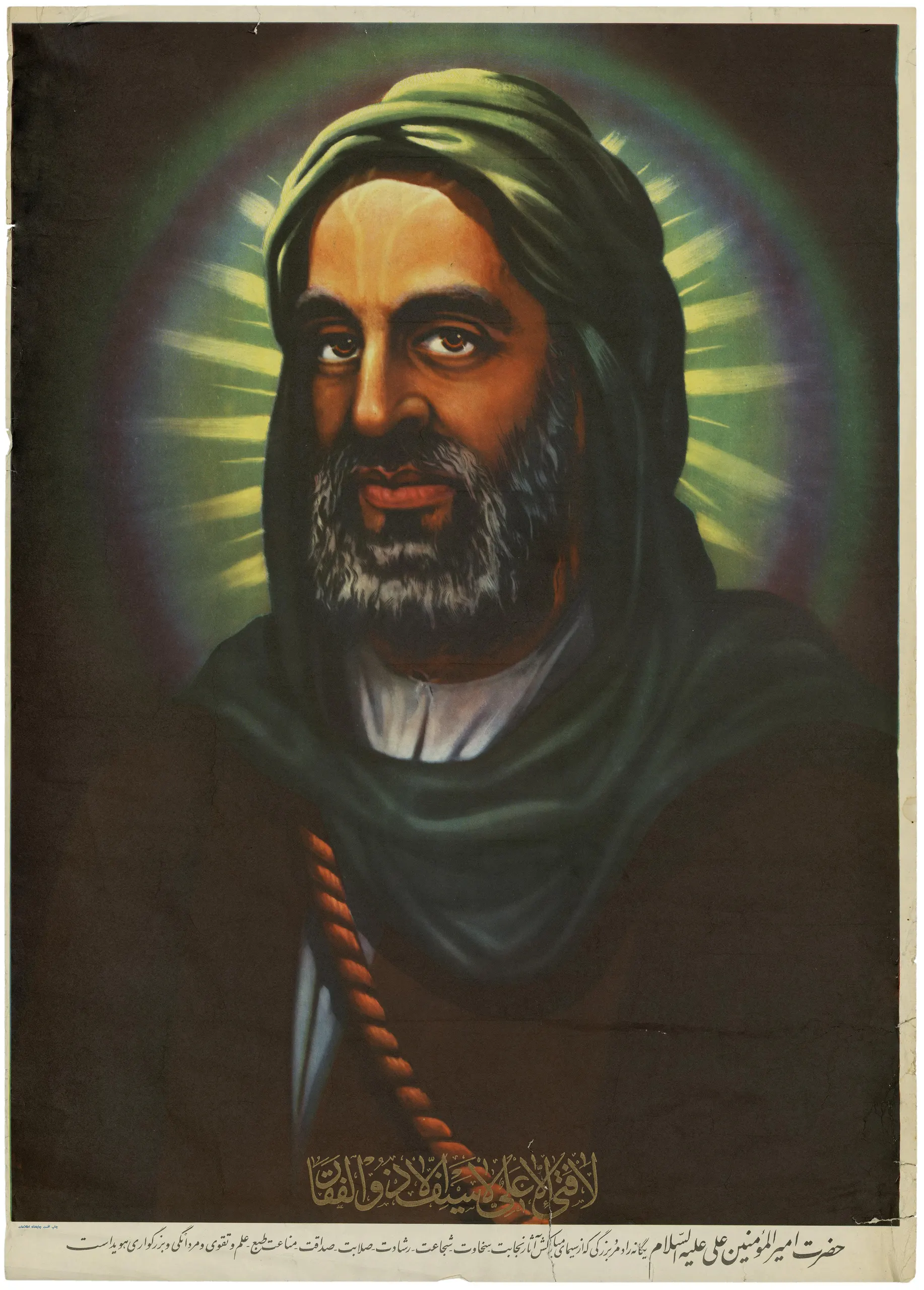
Alī ibn Abī Ṭālib
statesperson•qadi•Islamic jurist
Also known as: Ali ibn Abi Talib, Amir al-Mu'minin, Asadullah, al-Murtada, Abu Turab
Birthday
March 17, 599
Birth Sign
Pisces
Birthplace
Mecca
Age
Died at 61
About
Alī ibn Abī Ṭālib was a statesman, qadi, and Islamic jurist. He is best known as the fourth Rashidun caliph, ruling from 656 until his assassination in 661, and as the first Imam in Shia Islam. A central figure in Islamic history, his life bridged the early Muslim community's triumphs and its later divisions. He is remembered for his courage, honesty, devotion to Islam, and equal treatment of all Muslims. Sunnis honor him as the last of the rashidun caliphs, while Shias venerate him as their first Imam and the rightful successor to Muhammad. His shrine in Najaf, Iraq, is a major pilgrimage site, and his teachings and sermons are collected in Nahj al-balagha, a cornerstone of Islamic literature. His legacy as a champion of the oppressed and a voice for justice resonates across the Muslim world, symbolizing the division between Sunni and Shia traditions.
Early Life & Background
Ali ibn Abi Talib ibn Abd al-Muttalib ibn Hashim was born on March 17, 599 CE, inside the sacred Kaaba in Mecca, an exceptional honor unique in Islamic tradition. As a young child, around the age of five or six, a severe famine afflicted Mecca. To alleviate the financial strain on his uncle and father, Abu Talib, Muhammad, who was Ali's cousin and had recently married Khadija, took Ali into his own household. Growing up under Muhammad's direct care, Ali received an unparalleled education, immersed in the earliest Quranic revelations, their interpretation, and the emerging principles of Islamic law. This intimate upbringing exposed him directly to the nascent faith from its very inception.
Consequently, Ali was among the very first individuals to embrace Islam, widely recognized as the first male convert after Khadija, accepting the faith when he was approximately 10 years old. His unwavering devotion was publicly demonstrated in 613 CE at the pivotal Feast of the Clan (Da'wat Dhu al-Ashira). When Muhammad called upon his relatives to support his prophetic mission, it was the 12-year-old Ali who courageously stood alone, declaring himself Muhammad's helper. In response, Muhammad publicly acclaimed Ali as his brother, executor, and successor, signifying his profound trust and recognition of Ali's commitment.
Ali continued to play a crucial role during the period of intense persecution faced by Muslims in Mecca. In 622 CE, as the threat to Muhammad's life escalated, culminating in an assassination plot by the Quraysh, Ali displayed extraordinary bravery during the critical Hijra (migration to Medina). He risked his own life by sleeping in Muhammad's bed, impersonating him to deceive the assassins and ensure Muhammad's safe escape. Following this perilous act, Ali meticulously returned all possessions that had been entrusted to Muhammad to their rightful owners before undertaking his own arduous migration to Medina on foot. These early acts of profound faith, loyalty, and courage firmly established his foundational importance within the burgeoning Muslim community.
Career Growth
Ali's breakthrough came at the Battle of Badr in 624 CE, where he served as Muhammad's standard-bearer and killed the Quraysh champion Walid ibn Utba, establishing his reputation as a warrior. At the Battle of Uhud in 625, he defended Muhammad when most others fled, receiving 16 wounds. In 627, at the Battle of the Trench, he defeated the Arab champion Amr ibn Abd Wudd in single combat. Muhammad declared, "The strike of Ali on the day of the Trench is greater than the worship of all mankind." In 629, at the Battle of Khaybar, Ali conquered the Jewish fortress; Muhammad gave him the banner, saying, "Tomorrow I will give the banner to a man who loves God and His Messenger, and whom God and His Messenger love." In 630, during the Conquest of Mecca, Ali carried Muhammad's message of amnesty and destroyed the idols inside the Kaaba. After Muhammad's death in 632, Ali withdrew from political life, offering occasional counsel to the first three caliphs. He criticized Uthman's nepotism and mediated between him and rebels. Following Uthman's assassination in 656, Ali was elected the fourth caliph. His caliphate was consumed by civil wars: he defeated Aisha, Talha, and Zubayr at the Battle of the Camel in 656, fought Mu'awiya to a stalemate at Siffin in 657, and crushed the Kharijites at Nahrawan in 658. He was assassinated in 661 by the Kharijite Ibn Muljam. His legacy includes the compilation of a Quranic codex, the development of Islamic jurisprudence, and the collection of his sermons in Nahj al-balagha. He also established Kufa as his capital and developed Islamic jurisprudence.
Career Timeline
Public Image & Style
Ali is remembered as a paragon of courage, justice, and piety. In Sunni tradition, he is the last of the Rashidun caliphs, respected for his wisdom and closeness to Muhammad. In Shia tradition, he is the first Imam, the rightful successor to Muhammad, and the embodiment of divine guidance. His image is that of a fearless warrior, a just ruler, and a fountain of esoteric knowledge. The shrine of Imam Ali in Najaf, Iraq, is one of the holiest sites in Shia Islam, attracting millions of pilgrims annually. Ali's sermons and letters, collected in Nahj al-balagha, are revered for their eloquence and depth. He is known by the title "Asadullah" (Lion of God), given by Muhammad after the Battle of Khaybar. His legacy as a champion of the oppressed and a voice for justice resonates across the Muslim world. Even today, his name evokes strong emotions, symbolizing the division between Sunni and Shia traditions. In some Sufi traditions, Ali is considered the father of Sufism due to his esoteric teachings.
Fame & Fandom (iFAMOUS Rankings)
Alī ibn Abī Ṭālib currently holds no placement in the published iFANN Global Top 1,000 rankings or any scope-specific list. While the iFANN evaluation confirms his historical stature, the system does not assign him a numerical rank at this time. His influence extends beyond modern metrics into a centuries-old religious community rather than a contemporary fandom. He is revered by Shia Muslims as the first Imam and by Sunni Muslims as the fourth Rashidun Caliph, forming the core of their theological and spiritual identity. There is no formal collective name for his followers; they are identified simply by their sect, such as Shiat Ali or general Muslim adherents. Devotional practices replace fan campaigns, with millions gathering annually for pilgrimage to his shrine in Najaf or observing his martyrdom during Ramadan. These events function as religious obligations rather than organized fan projects. Sufi orders further incorporate his legacy as an archetype of chivalry, though this remains a spiritual affiliation rather than a commercial following. Interaction with his figure occurs through prayer, recitation of Nahj al-balagha, and charitable acts performed in his name. The scale of his veneration spans the globe, influencing jurisprudence, literature, and daily life for hundreds of millions across diverse regions. This enduring presence persists without the need for viral marketing or chart performance, standing as a static pillar of Islamic history that transcends the fluctuating nature of modern fame.
Interesting Facts and Legends
Born inside the Kaaba, Alī ibn Abī Ṭālib holds a unique distinction in Islamic history unmatched by any other figure. Known by the nickname Abu Turab (Father of Dust), he received this title from Muhammad after being found sleeping covered in dust. Historical accounts credit him with predicting his own assassination, pointing to his beard while noting the wretchedness of the one who would strike him. His exceptional memory was legendary, prompting the famous declaration, "Ask me before you lose me." His sword, Zulfiqar, remains a double-bladed symbol of power in tradition. As the first male convert to Islam following Khadija, he entered the faith at a young age. Michael H. Hart ranked him #39 in "The 100: A Ranking of the Most Influential Persons in History," a reflection of his global impact. In Shia tradition, he is honored as al-Murtada (The Chosen One). Legends surrounding his bravery include volunteering to sleep in the Prophet's bed during the Hijra to deceive assassins, a story widely retold to illustrate his self-sacrifice. Another iconic narrative describes him leading the charge at the Battle of Khaybar after receiving the Prophet's banner, securing victory where others had failed. These tales cement his image as a fearless warrior and a just ruler whose legacy endures through both verified history and hagiography.
Notable Quotes
“Whoever I am his mawla, then Ali is his mawla.”
“The strike of Ali on the day of the Trench is greater than the worship of all mankind.”
“Ask me before you lose me.”
“The most wretched of the former people is the one who killed the she-camel of Thamud, and the most wretched of the later people is the one who will strike me on this.”
“I am the city of knowledge, and Ali is its gate.”
Family & Personal Life
Ali's father, Abu Talib ibn Abd al-Muttalib, was the chief of the Hashim clan and the uncle of Muhammad. His mother, Fatima bint Asad, was also from the Hashim clan. He had several siblings, including his older brother Ja'far ibn Abi Talib, who died at the Battle of Mu'tah, and Aqil ibn Abi Talib. Ali married Fatima, the Prophet Muhammad's daughter, in 623 CE. They had four children: Hasan, Husayn, Zaynab, and Umm Kulthum. After Fatima's death in 632, Ali married multiple wives, including Umama bint Abi al-As, Khawla bint Ja'far al-Hanafiyya, and Umm ul-Banin. His son al-Abbas, born to Umm ul-Banin, became the standard-bearer of Husayn at Karbala. Ali's household was known for its piety and devotion to Islam. He lived modestly, often sharing his food with the poor. Ali was educated directly by Muhammad in the Islamic revelation, Quranic interpretation, and Islamic law. He was known for his deep knowledge of the Quran and Hadith, and later became a primary source of Islamic jurisprudence.
Notable Connections
Ali is closely associated with the Prophet Muhammad, his cousin and father-in-law. He is also linked to his sons Hasan and Husayn, the second and third Shia Imams. His adversaries include Mu'awiya, the first Umayyad caliph, and the Kharijites. His wife Fatima and his mother Fatima bint Asad are also key figures in his narrative.
Relationships & Dating History
Ali's first and most significant marriage was to Fatima bint Muhammad, the Prophet's daughter, in 623 CE. The marriage was simple and produced four children: Hasan, Husayn, Zaynab, and Umm Kulthum. Fatima died in 632 CE, about six months after Muhammad's death, reportedly from injuries sustained when Umar ibn al-Khattab forcibly entered her home. Ali grieved her deeply and never remarried while she was alive.
After Fatima's death, Ali married Umama bint Abi al-As, Muhammad's granddaughter, around 633 CE. They had a son, Muhammad al-Awsat, who died young. Umama was reportedly Ali's most beloved wife after Fatima. Around 634 CE, he married Khawla bint Ja'far al-Hanafiyya, who bore him Muhammad ibn al-Hanafiyya, a major figure in early Shia history. Around 635 CE, he married Umm ul-Banin (Fatima bint Hizam), who bore him four sons: al-Abbas, Ja'far, Abdallah, and Uthman, all killed at Karbala in 680 CE. He also married Layla bint Mas'ud al-Nahshaliyya (around 636 CE), Asma bint Umays (around 637 CE), Al-Sahba bint Rabi'a al-Taghlibiyya (around 638 CE), and Umm Sa'id bint Urwah al-Thaqafiyya (around 639 CE). Ali also had several concubines who bore him additional children. His relationships ended with his assassination in 661 CE.
- MarriedFatima bint Muhammad623 - 632Daughter of the Prophet Muhammad; mother of Hasan, Husayn, Zaynab, and Umm Kulthum.
- MarriedUmama bint Abi al-As633 - 661Granddaughter of Muhammad; had son Muhammad al-Awsat who died young.
- MarriedKhawla bint Ja'far al-Hanafiyya634 - 661Mother of Muhammad ibn al-Hanafiyya, a major figure in early Shia history.
- MarriedUmm ul-Banin (Fatima bint Hizam)635 - 661Bore four sons: al-Abbas, Ja'far, Abdallah, and Uthman, all killed at Karbala.
- MarriedLayla bint Mas'ud al-Nahshaliyya636 - 661From the Tamim tribe; mother of Ubaydallah and Abu Bakr, both killed at Karbala.
- MarriedAsma bint Umays637 - 650Previously married to Ja'far ibn Abi Talib and Abu Bakr; died before Ali.
- MarriedAl-Sahba bint Rabi'a al-Taghlibiyya638 - 661From the Taghlib tribe; mother of daughter Umm Hani.
- MarriedUmm Sa'id bint Urwah al-Thaqafiyya639 - 661From the Thaqif tribe; mother of daughter Ramla al-Kubra.
Death & Aftermath
Died
January 28, 661 (aged 61)
Death Place
Kufa, Iraq
Cause of Death
Assassination by poisoned sword
While leading the morning prayers at the Great Mosque in Kufa, Alī ibn Abī Ṭālib was struck on the head by a poisoned sword wielded by Abd al-Rahman ibn Muljam. The attack occurred during the month of Ramadan in the year 661 CE, and the caliph survived for two days before succumbing to the infection caused by the blade. During his final hours, he remained conscious and issued specific instructions regarding his funeral rites and the distribution of his wealth, notably commanding that his son should only execute the assassin if the wound proved fatal. Upon his passing, the administration of the caliphate transitioned to his son Hasan ibn Ali, who oversaw the immediate aftermath while ensuring the killer was brought to trial under Islamic law.
The public reaction was defined by profound grief and political upheaval as the event marked the definitive end of the Rashidun Caliphate and the rise of the Umayyad dynasty under Muawiya I. His burial was conducted secretly at night in Najaf near Kufa by a small group of family members to prevent desecration, and the site eventually evolved into the Imam Ali Shrine, a major pilgrimage destination. The estate was distributed according to his will among dependents and the poor, while his legacy endured through the compilation of his sermons in Nahj al-balagha and his veneration as the first Imam in Shia Islam.
Net Worth (Estate Value)
$1.5 Billion
iFANN Editorial Team estimate
Per iFANN's editorial analysis, the estate of Alī ibn Abī Ṭālib is valued at $1.5 Billion as of 2026. This valuation reflects the assets held by the Imam Ali Shrine in Najaf, Iraq, encompassing its extensive endowments of land, real estate, and businesses across Iraq, Iran, and other Shia-majority regions. The shrine generates an estimated $100–200 million annually through donations and pilgrimage revenue. The broader Najaf pilgrimage economy contributes $2–3 billion per year, though only a portion directly supports the shrine's endowment. Management falls under the Imam Ali Shrine Trust (al-Ataba al-Alawiyya al-Muqaddasa) operating under the authority of the Hawza in Najaf. While Alī's intellectual legacy, including the sermons of Nahj al-balagha, exists in the public domain and yields no personal royalties, the physical infrastructure representing his memory commands significant economic weight. During his lifetime, Alī possessed minimal personal wealth, living a life of modesty and distributing all surplus funds to the poor.
Awards & Accolades
View 8 records, honours and achievementsKnown For
Fourth Rashidun Caliph
656 · Caliph
First Shia Imam
632 · Imam
Battle of Badr
624 · Standard-bearer and warrior
Nahj al-balagha
0 · Author of sermons and letters
Keywords
Quick Facts
- Profession
- statesperson, qadi, Islamic jurist
- Born
- March 17, 599
- Birthplace
- Mecca
- Died
- January 28, 661
- Death Place
- Kufa
- Gender
- Male
- Spouse
- Fatima bint Muhammad, Umama bint Abi al-As, Khawla bint Ja'far al-Hanafiyya, Umm ul-Banin, Layla bint Mas'ud al-Nahshaliyya, Asma bint Umays, Al-Sahba bint Rabi'a al-Taghlibiyya, Umm Sa'id bint Urwah al-Thaqafiyya
- Birth Sign
- Pisces
Personal Details
- Full Name
- Ali ibn Abi Talib ibn Abd al-Muttalib ibn Hashim
- Spouse
- Fatima bint Muhammad, Umama bint Abi al-As, Khawla bint Ja'far al-Hanafiyya, Umm ul-Banin, Layla bint Mas'ud al-Nahshaliyya, Asma bint Umays, Al-Sahba bint Rabi'a al-Taghlibiyya, Umm Sa'id bint Urwah al-Thaqafiyya
- Children
- Hasan, Husayn, Zaynab, Umm Kulthum, Muhammad ibn al-Hanafiyya, al-Abbas, Ja'far, Abdallah, Uthman, Ubaydallah, Abu Bakr, Umar al-Asghar, Ruqayya, Umm al-Kiram, others
- Education
- Educated directly by the Prophet Muhammad in Quranic revelation, interpretation, and Islamic law.
Frequently Asked Questions
Who was Ali ibn Abi Talib?
What is Ali ibn Abi Talib's net worth in 2026?
How did Ali ibn Abi Talib die?
What is Ali ibn Abi Talib best known for?
Why is Ali ibn Abi Talib important to Shia Muslims?
Join the community
fans discussing