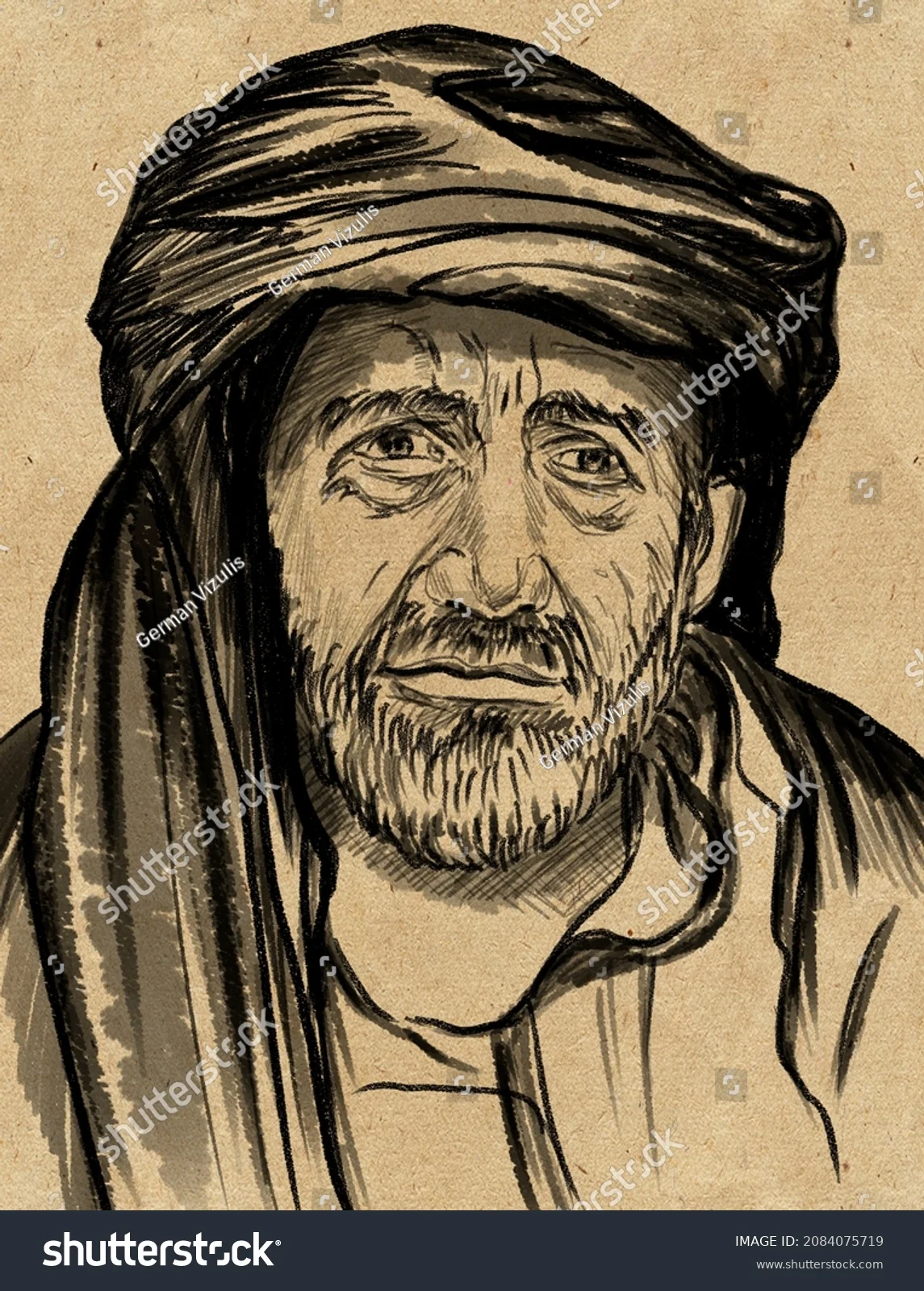
Abu Bakr
Also known as: Al-Siddiq, Abu Bakr al-Siddiq
Birthday
+0573-10-27
Birth Sign
Sagittarius
Birthplace
Mecca
Age
Died at 60
About
Abu Bakr, born Abdullah ibn Abi Quhafa in Mecca around 573, was a merchant, poet, and politician who became the closest companion and father-in-law of the Islamic prophet Muhammad. As the first caliph of the Rashidun Caliphate, he ruled from 632 until his death in 634. Muhammad gave him the honorific title al-Siddiq, meaning the Veracious, a name still revered by Sunni Muslims. He was among the earliest converts to Islam and is often called the first Muslim missionary, as many early companions embraced the faith through his efforts. Abu Bakr accompanied Muhammad on the migration to Medina, served as a bodyguard, led prayers in Muhammad's absence, and participated in all major campaigns. In 631, he became the first amir al-hajj, overseeing the annual pilgrimage.
After Muhammad's death in 632, Abu Bakr was elected caliph at Saqifa, though his succession faced opposition from rebellious tribal leaders. He swiftly crushed these uprisings in the Ridda Wars, consolidating Muslim rule across the Arabian Peninsula. His reign also saw the initial military campaigns against the Sasanian and Byzantine empires, setting the stage for the vast Muslim conquests of Persia and the Levant that followed. Beyond politics, Abu Bakr is credited with compiling the Quran into a single codex, preserving the revelations. He died of illness in August 634, the only Rashidun caliph to die naturally, after a reign of just over two years. He is buried alongside Muhammad in the Green Dome at Al-Masjid al-Nabawi in Medina.
Though brief, Abu Bakr's caliphate was transformative. He launched invasions that toppled two of the era's mightiest empires and unified a fractious peninsula under Islam. His decisive victory over Arab rebel forces remains a pivotal moment in Islamic history. Sunni tradition honors him as the first Rashidun caliph and the greatest person after the prophets, while Twelver Shia tradition views him as a usurper who opposed the ahl al-bayt. His legacy endures as the architect of an empire that reshaped the world.
Early Life & Background
Abu Bakr grew up in the Banu Taym clan of the Quraysh tribe in Mecca. His father, Abu Quhafa, was a respected elder, and his mother, Salma bint Sakhar, was known for her piety. As a young man, he engaged in trade, a common profession for Quraysh merchants, and became known for his integrity and eloquence. He composed poetry, a skill admired in pre-Islamic Arabian society. Around 610, when Muhammad began receiving revelations, Abu Bakr was among the first to accept the new faith, converting without hesitation. His conversion was significant because he was a well-respected merchant, and his influence helped persuade others to embrace Islam. He used his wealth to free enslaved Muslims, including Bilal ibn Rabah, a former slave who later became the first muezzin. Abu Bakr's early commitment to Islam earned him the title al-Siddiq after he confirmed Muhammad's account of the Night Journey, a story that caused many to doubt.
Career Growth
After Muhammad's death in June 632, Abu Bakr was chosen as caliph at the Saqifa gathering, despite opposition from the Ansar and later from those who supported Ali. He immediately faced a crisis: many Arab tribes refused to pay zakat (alms tax) or renounced Islam entirely. Abu Bakr declared war on these apostates, launching the Ridda Wars. His forces, led by generals like Khalid ibn al-Walid, defeated the rebel tribes and reunified Arabia under Muslim rule by early 633. He then turned his attention outward, dispatching armies into Sasanian Iraq and Byzantine Syria. Under his orders, Khalid ibn al-Walid captured the city of Hira in 633, and other commanders advanced into Palestine. Abu Bakr also ordered the compilation of the Quran into a single book after many memorizers died in battle. He oversaw the project, and the completed codex was passed to his successor, Umar. Abu Bakr died in Medina on August 23, 634, after a short illness, and was buried next to Muhammad.
Career Timeline
Public Image & Style
In Sunni Islam, Abu Bakr is venerated as the first caliph and the most virtuous companion of Muhammad. His title al-Siddiq reflects his reputation for truthfulness and integrity. He is often depicted as a wise, just, and humble leader who prioritized the unity of the Muslim community. Many Sunni Muslims name their children after him, and his life is studied as a model of leadership and faith. In contrast, Twelver Shia tradition views him as a usurper who denied Ali his rightful succession, and his name is often met with criticism. His image thus remains deeply divisive, symbolizing the foundational schism between Sunni and Shia Islam.
Fame & Fandom (iFAMOUS Rankings)
The reverence for Abu Bakr as-Siddiq transcends the mechanics of modern celebrity culture, existing instead as a foundational pillar of global faith rather than a fleeting trend. His 'fanbase' is the entire Muslim Ummah, a community of billions united by history and doctrine rather than social media algorithms or streaming campaigns. There is no formal fandom name like 'Swifties' or 'ARMY'; his followers are simply believers who honor him through prayer, study of his biography, and the recitation of specific rituals that recall his tears in the Cave of Thawr or his steadfast declaration during the Prophet's passing. While contemporary figures generate viral moments and subway ads, Abu Bakr's legacy is preserved in ancient texts, mosque renovations, and the enduring title al-Siddiq, which serves as a universal term of endearment for his truthfulness. He shaped the early Islamic state not through pop-culture marketing but by preventing the fragmentation of the faith immediately after the Prophet's death. Despite this immense historical weight, iFANN's Global Fame Engine has evaluated this person, but they do not currently hold a placement in the published rankings (Global Top 1,000 or a Top-100 scope list). The system confirms he remains unranked in the current cycle.
Interesting Facts and Legends
Abu Bakr was known for his generosity, often donating his entire wealth to the Muslim cause. He was one of the few people who could read and write in pre-Islamic Mecca. His daughter Aisha was married to Muhammad, making him the prophet's father-in-law. The title al-Siddiq was given to him for his unwavering belief in Muhammad's Night Journey. He was the only Rashidun caliph to die of natural causes. His reign lasted only 2 years, 2 months, and 14 days. Legends surrounding his life include the dramatic escape from Mecca where he hid in the Cave of Thawr with the Prophet; tradition holds that a spider wove a web across the entrance while a dove laid eggs, fooling pursuers into thinking the cave was empty. Another defining moment occurred when the Prophet passed away; Abu Bakr stood before the stunned crowd and declared that while Muhammad was dead, Allah remained alive, a speech that unified the fracturing tribes. These stories remain central to how his character is remembered today.
Notable Quotes
“I have been given the authority over you, and I am not the best of you.”
“If I do well, help me; and if I do wrong, set me right.”
“The weak among you shall be strong in my eyes until I secure his rights, and the strong among you shall be weak in my eyes until I wrest the right from him.”
Family & Personal Life
Abu Bakr's father was Abu Quhafa (Uthman ibn Amir), and his mother was Salma bint Sakhar (Umm al-Khayr). He married four wives: Qutaylah bint Abd-al-Uzza, with whom he had Abdullah and Asma; Umm Ruman, mother of Aisha and Abdul Rahman; Asma bint Umays, who bore him Muhammad; and Habiba bint Kharija, with whom he had a daughter named Umm Kulthum. His daughter Aisha became Muhammad's favorite wife, and his son Abdullah was a noted narrator of hadith. Abu Bakr lived modestly in Medina, and his household was known for its piety and simplicity.
Notable Connections
Abu Bakr is most closely associated with Muhammad, whose companion and father-in-law he was. He worked closely with Umar ibn al-Khattab, who succeeded him as caliph. His military commander Khalid ibn al-Walid led the Ridda Wars and early conquests. His daughter Aisha became a prominent figure in early Islam. He is also associated with the compilation of the Quran, a task he entrusted to Zayd ibn Thabit.
Relationships & Dating History
Abu Bakr married four wives. His first wife, Qutaylah bint Abd-al-Uzza, was divorced by him in pre-Islamic times. He then married Umm Ruman, with whom he had Aisha and Abdul Rahman. After Umm Ruman's death, he married Asma bint Umays, the widow of Ja'far ibn Abi Talib, and later Habiba bint Kharija. His marriage to Umm Ruman produced Aisha, who married Muhammad, strengthening the bond between the two men. His relationships are documented in early Islamic sources.
- DatedQutaylah bint Abd-al-Uzza570 - 590Divorced in pre-Islamic times.
- MarriedUmm Ruman590 - 630Mother of Aisha and Abdul Rahman.
- MarriedAsma bint Umays630 - 634Widow of Ja'far ibn Abi Talib; mother of Muhammad.
- MarriedHabiba bint Kharija630 - 634Mother of Umm Kulthum.
Death & Aftermath
Died
+0634-08-23 (aged 60)
Death Place
Medina, Arabia
Cause of Death
Severe fever lasting two weeks
In the quiet of his own home in Medina, Abu Bakr spent his final two weeks battling a severe fever that refused to break. He leaned against the chest of his wife, Aisha, requesting traditional remedies of vinegar and honey while Uthman ibn Affan led prayers in his stead, signaling the end of his caliphate. Classical Islamic historiography records that he passed peacefully on August 23, 634, fulfilling a prophecy made by the Prophet Muhammad regarding his death in bed. The cause was attributed solely to this prolonged illness.
The news of his passing sent waves of profound grief through the Muslim community, as companions wept openly in the city where he had lived modestly. Umar ibn al-Khattab led the funeral prayer for the first Caliph, who requested burial next to the Prophet Muhammad within the room of Aisha rather than in a public cemetery. This immediate interment established a sacred site adjacent to the Prophet's tomb in what is now the Al-Masjid an-Nabawi. While the estate was minimal due to his lifelong charity, his legacy endured through the smooth succession of leadership which prevented civil conflict at that critical moment.
Centuries later, his memory remains central to Islamic tradition, honored as one of the Rashidun Caliphs and revered under the title al-Siddiq. Modern commemorations include the dedication of mosques globally, such as the Abu Bakr Al-Siddiq Mosque in Al-Marj, Libya, which has been renovated and inaugurated by contemporary leaders. Countless books and documentaries continue to explore his role as the first statesman of the faith, ensuring his influence persists long after the dust of Medina settled.
Net Worth (Estate Value)
As a historical figure from the 7th century, Abu Bakr's personal net worth is not documented in modern financial terms. He was a wealthy merchant before Islam but gave away much of his wealth in charity. As caliph, he lived modestly, receiving a small stipend from the state treasury. His estate at death was minimal, reflecting his ascetic lifestyle.
Awards & Accolades
View 3 records, honours and achievementsKnown For
First Caliph of the Rashidun Caliphate
632 · Caliph
Companion of Muhammad
610 · Companion
Compiler of the Quran
633 · Patron
Keywords
Quick Facts
- Profession
- politician, poet, merchant
- Born
- +0573-10-27
- Birthplace
- Mecca
- Died
- +0634-08-23
- Death Place
- Medina
- Gender
- Male
- Spouse
- Qutaylah bint Abd-al-Uzza, Umm Ruman, Asma bint Umays, Habiba bint Kharija
- Birth Sign
- Sagittarius
Personal Details
- Full Name
- Abdullah ibn Abi Quhafa
- Spouse
- Qutaylah bint Abd-al-Uzza, Umm Ruman, Asma bint Umays, Habiba bint Kharija
- Children
- Abdullah, Abdul Rahman, Aisha, Asma, Muhammad
Frequently Asked Questions
Who was Abu Bakr?
What is Abu Bakr's net worth in 2026?
Why is Abu Bakr called al-Siddiq?
Where is Abu Bakr buried?
How did Abu Bakr die?


Join the community
fans discussing