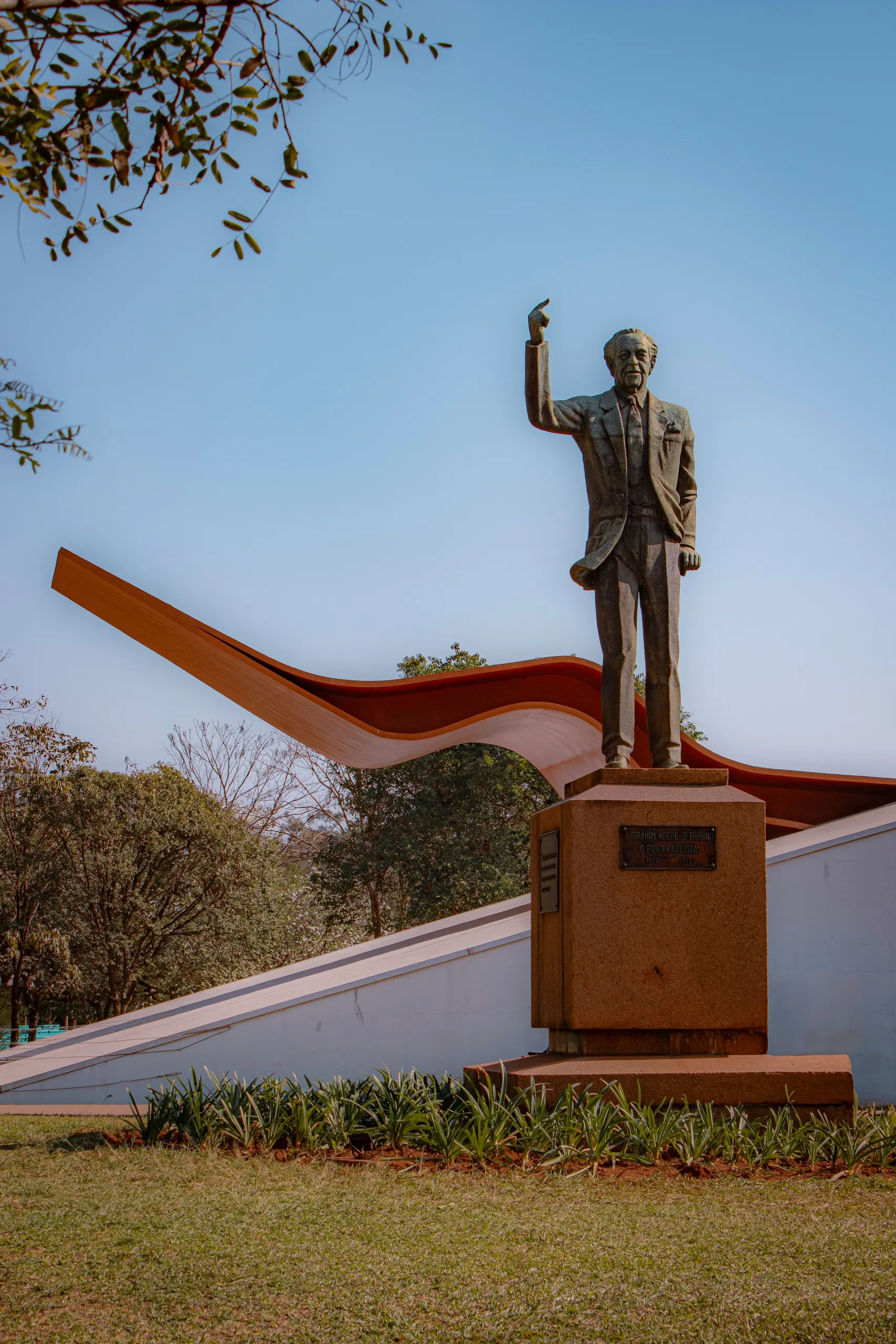
Monteiro Lobato
 Brazil
Also known as: José Bento Renato Monteiro Lobato, J.B. Monteiro Lobato
Birthday
April 18, 1882
Birth Sign
Aries
Birthplace
Taubaté, São Paulo, Brazil
Age
Died at 66
About
José Bento Renato Monteiro Lobato stands as the undisputed father of Brazilian children's literature, a title earned through his creation of the fictional universe Sítio do Picapau Amarelo (Yellow Woodpecker Farm). This imaginative world became a cornerstone of national culture, uniquely blending indigenous folklore with scientific concepts and sharp social commentary. Beyond his literary genius, Lobato was a man of immense energy who served as a diplomat, industrialist, and a pivotal figure in Brazil's publishing industry. He co-founded Companhia Editora Nacional (CEN), which democratized access to books and championed national authors during a transformative era. His influence extends far beyond fiction; he translated classic English works like Alice in Wonderland for Portuguese-speaking audiences and ran for the federal senate on a nationalist platform. Born in Taubaté on April 18, 1882, and dying in São Paulo on July 4, 1948, at age 66, Lobato left a legacy that continues to shape Brazilian education, media, and cultural identity. His work remains mandatory reading in schools, ensuring his voice resonates with new generations decades after his death.
Early Life & Background
Born into a wealthy family of coffee planters in the interior of São Paulo state, José Bento Renato Monteiro Lobato grew up on the Fazenda da Pedreira estate. His father, José Bento de Almeida Lobato, owned the land, while his mother, Maria Augusta de Almeida Lobato, provided him with an early education at home before he attended school in Taubaté. Unlike many of his contemporaries who pursued immediate literary careers, Lobato followed a traditional path for men of his class. He attended school in Taubaté before heading to São Paulo to study law at the prestigious Faculdade de Direito do Largo de São Francisco, graduating in 1903. He began working as a public prosecutor (*promotor público*) in various municipalities, including Araraquara and Pirassununga. This legal career exposed him to the harsh realities of rural Brazil, fueling the social criticism that would later permeate his writing. During this period, he married Maria da Pureza Natividade in 1905. The couple had no biological children who survived, though historical records mention a daughter named Maria Augusta who predeceased him. Lobato adopted his nephew, Nelson de Sampaio, after the death of his brother. His early interests were diverse; he was an avid reader of English literature and began translating works from a young age, setting the stage for his future career shift away from law toward journalism and publishing around 1910.
Career Growth
Lobato's career trajectory marked a decisive shift from traditional law to a dynamic blend of journalism, translation, and publishing. In 1911, he began working as a diplomat in the United States and Europe, serving as a secretary at the Brazilian Legation in Washington, D.C. During this time, he translated classic American and British literature into Portuguese, including The Jungle Book, Alice in Wonderland, and Peter Pan. These translations were instrumental in introducing global classics to Brazilian readers. In 1918, he published Urupês, a collection of short stories that shocked the Brazilian literary establishment by rejecting the romanticized portrayal of rural life common in the Parnassian era. Instead, it depicted the harsh, unvarnished reality of the Brazilian countryside, establishing Lobato as a modernist voice. Two years later, in 1920, he co-founded Companhia Editora Nacional (CEN) with Carlos Magalhães. CEN became the largest and most influential publishing house in Brazil, democratizing access to books and promoting national literature. The same year saw the launch of the Sítio do Picapau Amarelo series with the book Reinações de Narizinho (The Adventures of Little Nose). The series featured characters like Emília, a rag doll with a sharp tongue, Pedrinho, Narizinho, Visconde de Sabugosa, and Dona Benta. It blended fantasy, folklore, science, and social commentary, becoming a massive commercial success. Throughout the 1930s and 1940s, he continued to write prolifically, producing over 20 children's books and numerous adult novels. He also ventured into politics, running for the federal senate in 1936 on a nationalist platform, though he was unsuccessful. He remained active in publishing and writing until his final years, fighting against censorship and advocating for Brazilian cultural independence. His election to the Brazilian Academy of Letters in 1925 further cemented his status as a leading intellectual figure.
Career Timeline
Public Image & Style
Monteiro Lobato is portrayed as a visionary, a patriot, and a provocateur. His public image is that of a man who dared to challenge the status quo, both in literature and society. He is seen as a bridge between tradition and modernity, blending European influences with Brazilian realities. His writing style was direct and critical, often tackling difficult subjects like poverty and corruption in rural Brazil. As a publisher, he was known for his aggressive marketing and commitment to Brazilian authors, even when their work was controversial. His role as a diplomat and political candidate further cemented his reputation as a man of action, not just words. Contemporary descriptions portray him as a robust and energetic man, typical of the coffee baron class of his era. During his lifetime, Lobato was frequently featured in Brazilian magazines and newspapers due to his controversial views and publishing ventures. Notable mentions include extensive coverage in Revista do Brasil during the 1920s and 1930s for his role in the Modernist movement, and features in O Cruzeiro in the 1940s discussing his political campaigns and literary contributions. However, unlike modern celebrities, he did not appear on covers of international publications like TIME or Vogue.
Fame & Fandom (iFAMOUS Rankings)
According to the iFANN Global Fame Rankings evaluated in September 2026, Monteiro Lobato holds the position of the 53rd most famous person in Brazil. This placement reflects a sustained global attention that tracks media coverage, search behavior, and cultural consumption signals worldwide, anchoring him firmly as a central figure in Brazilian history. While he does not appear on global celebrity charts for living entertainers, his specific rank within the nation underscores his status as a foundational pillar of the country's cultural identity. There is no formalized fandom name for Monteiro Lobato in the modern sense. However, his readers are often referred to as "lobatianos" in academic and literary circles. The devotion to his work is deep and generational, with families passing down his books from parent to child. Fan activities include reading clubs, school performances, and online discussions about his themes and characters. His influence persists through the enduring popularity of Sítio do Picapau Amarelo, yet this devotion remains diffuse, manifesting in the continued publication of his novels and scholarly analysis rather than street gatherings or digital crusades. Official pages dedicated to his legacy, such as those run by the Brazilian Academy of Letters or the Monteiro Lobato Foundation, maintain a presence on platforms like Facebook and Instagram, sharing excerpts from his works and historical photos. Follower counts vary but generally reflect a niche audience of educators, historians, and literature enthusiasts.
Interesting Facts and Legends
Before writing his own stories, Lobato translated over 30 books, making Western classics accessible to Portuguese-speaking audiences. He was also involved in the production of rubber and other commodities, reflecting his interest in Brazil's economic development. Lobato held controversial racial views, expressing racist attitudes in some of his writings, which have sparked debate among modern scholars and critics. He ran for the Senate in 1936, advocating for nationalism and protectionism, though he lost the election. A persistent story from his era highlights his controversial stance on various national topics, which often sparked heated debate in the press. His descendants, including Cleo Lobato, continue to manage official legacy projects and lectures that keep his work alive. The story of how Lobato created Emília, a rag doll who could talk and argue, is legendary; he reportedly conceived the character while observing the lively conversations of his family and friends, aiming to create a character that could challenge authority and speak truth to power. The publication of Urupês in 1918 caused a scandal, breaking the conventions of Brazilian literature and marking the beginning of the Modernist movement. The fictional farm became so iconic that it is considered a real place in the minds of Brazilians, symbolizing a utopian vision of rural life and education. He was nominated for the Nobel Prize but never won, though he received the Grand Cross of the Order of the Southern Cross. The municipality of Monteiro Lobato in São Paulo state was named in his honor, and the Biblioteca Monteiro Lobato houses a dedicated Puppet Cabinet featuring original puppets from adaptations of his work. UNESCO has recognized his work for its contribution to children's literature globally.
Notable Quotes
“O Brasil é um país de futuros.”
“A literatura infantil não é apenas para crianças, é para todos.”
Family & Personal Life
Monteiro Lobato was born into a wealthy family of coffee planters in the interior of São Paulo state. His father, José Bento de Almeida Lobato, owned the Fazenda da Pedreira, a large coffee estate. His mother, Maria Augusta de Almeida Lobato, provided him with an early education at home before he attended school in Taubaté. He married Maria da Pureza Natividade Lobato in 1905. She was his lifelong partner and managed his household. There are no credible reports of other romantic relationships or affairs. The couple did not have surviving biological children together; however, Lobato adopted his nephew, Nelson de Sampaio, who later became a notable figure in his own right. Some accounts mention a daughter, Maria Augusta, who died in childhood. After Maria da Pureza's death, Lobato lived alone, focusing entirely on his work and legacy. He passed away without remarrying. His funeral was a significant event, attended by many prominent figures in Brazilian literature and politics, reflecting his status as a national icon. He was buried in the Cemitério da Consolação in São Paulo. Following his death, his family, particularly his niece and nephew, took over the management of his estate and intellectual property. The Companhia Editora Nacional continued to publish his works, ensuring their availability to new generations.
Notable Connections
Maria da Pureza Natividade Lobato, Carlos Magalhães, Rui Barbosa, Mário de Andrade
Relationships & Dating History
Monteiro Lobato was married only once. He wed Maria da Pureza Natividade in 1905. She was his lifelong partner and managed his household. There are no credible reports of other romantic relationships or affairs. The couple did not have surviving biological children together; however, Lobato adopted his nephew, Nelson de Sampaio, who later became a notable figure in his own right. Some accounts mention a daughter, Maria Augusta, who died in childhood. After Maria da Pureza's death, Lobato lived alone, focusing entirely on his work and legacy. He passed away without remarrying. At the time of his death in 1948, he was widowed. His primary focus shifted from law to literature and business around 1910, following his marriage and the birth of his daughter, though some sources suggest he had a son, José Bento Jr., who died young. The most consistent biographical account states he had one daughter, Maria Augusta, who predeceased him, and he remained devoted to his wife until her death. His relationship with his co-founder Carlos Magalhães was professional but close, as they built the publishing empire together. Rui Barbosa was his predecessor in the Brazilian Academy of Letters, a connection that highlighted his standing among the literary elite.
- MarriedMaria da Pureza Natividade Lobato1905 - 1948Lifelong partner; she died before him.
Death & Aftermath
Died
July 4, 1948 (aged 66)
Death Place
São Paulo, Brazil
Cause of Death
Natural causes (complications of age and illness)
The enduring prominence of Monteiro Lobato's work in Brazilian culture stands as the most immediate reflection of his passing, with his fictional creation Sítio do Picapau Amarelo remaining central to national identity long after his final days., vigils, or public memorials were recorded at the time of his death, the legacy of his approximately twenty-three fantasy novels for children and adolescents has ensured that figures like Reinações de Narizinho continue to be published and studied by subsequent generations. A dedicated foundation managed by descendants such as Cleo Lobato now exists to promote his literary contributions through books, products, and lectures, securing his place as a foundational figure in modern Brazilian literature without the need for contemporary fanfare.
Monteiro Lobato died on July 4, 1948, in São Paulo, Brazil, at the age of sixty-six. He had been born on April 18, 1882, in Taubaté, São Paulo, and remained active in publishing and writing until his final years despite facing censorship and political challenges. The specific medical cause of his death was natural causes, attributed to complications of age and illness, coroner reports, or family declarations regarding the exact pathology are available in the historical record. His posthumous impact is defined by the continued commercial success of his intellectual property rather than immediate institutional honours or awards granted shortly after 1948.
The valuation of his estate reflects ongoing revenue generated by his works, yet the distribution of assets and the handling of his financial affairs were not subjects of public litigation or detailed reporting. His status as a leading intellectual figure was cemented by his election to the Brazilian Academy of Letters in 1925, a distinction that preceded his death and remains the primary marker of his professional standing.
Net Worth (Estate Value)
$15 Million
iFANN Editorial Team estimate
As a deceased historical figure, Monteiro Lobato does not have a current net worth in the sense of liquid assets held by an individual. However, his estate remains highly valuable due to the enduring commercial success of his intellectual property. Research by the iFANN Editorial Team puts his estate value at approximately $15 Million. This valuation reflects the ongoing revenue generated by the Sítio do Picapau Amarelo franchise through book sales, television adaptations, films, and merchandise in Brazil. Major revenue streams include continuous publication of his works by Companhia Editora Nacional and other publishers. Media adaptations such as television series, animated films, and stage plays contribute significantly to the estate's income. Merchandising featuring characters like Emília and Narizinho also generates substantial revenue. Licensing rights for educational content and digital media add to the financial portfolio. The estate is managed by his descendants and the Companhia Editora Nacional, which continues to operate under the family's influence. The value of the IP is estimated to be in the tens of millions of reais, equivalent to several million USD, depending on exchange rates and licensing deals. As of 2026, news items related to Lobato primarily concern cultural heritage preservation, such as renovations to the Monteiro Lobato Library in São Paulo and discussions about his role in Brazilian history. New animated series and digital versions of Sítio do Picapau Amarelo are periodically produced, keeping the revenue streams active. Annual celebrations and exhibitions honoring his work, particularly around the anniversary of his birth and death, further sustain the brand's visibility and economic impact.
Awards Won (3)
While Lobato did not win international awards like the Nobel Prize during his lifetime, he received numerous posthumous honours and distinctions. He was elected to the Brazilian Academy of Letters in 1925 to Seat No. 12, succeeding Rui Barbosa. He received the Grand Cross of the Order of the Southern Cross. His work has been recognized by UNESCO for its contribution to children's literature globally. He is inducted into various Brazilian literary halls of fame, cementing his status as a foundational figure in Brazilian culture.
1925 · Literary Honor
General Contribution
1930 · National Honour
Service to Nation
Known For
Sítio do Picapau Amarelo
1920 · Author
Urupês
1918 · Author
Reinações de Narizinho
1920 · Author
Keywords
Sources
Quick Facts
- Profession
- writer, journalist, publisher
- Born
- April 18, 1882
- Birthplace
- Taubaté, São Paulo, Brazil
- Died
- July 4, 1948
- Death Place
- São Paulo, Brazil
- Gender
- Male
- Spouse
- Maria da Pureza Natividade Lobato
- Birth Sign
- Aries
Personal Details
- Full Name
- José Bento Renato Monteiro Lobato
- Spouse
- Maria da Pureza Natividade Lobato
- Children
- Nelson de Sampaio (adopted nephew)
- Education
- Faculdade de Direito do Largo de São Francisco
Frequently Asked Questions
Who is Monteiro Lobato?
When did Monteiro Lobato die?
What is Monteiro Lobato famous for?
Did Monteiro Lobato have children?
Is Monteiro Lobato still relevant today?



Join the community
fans discussing