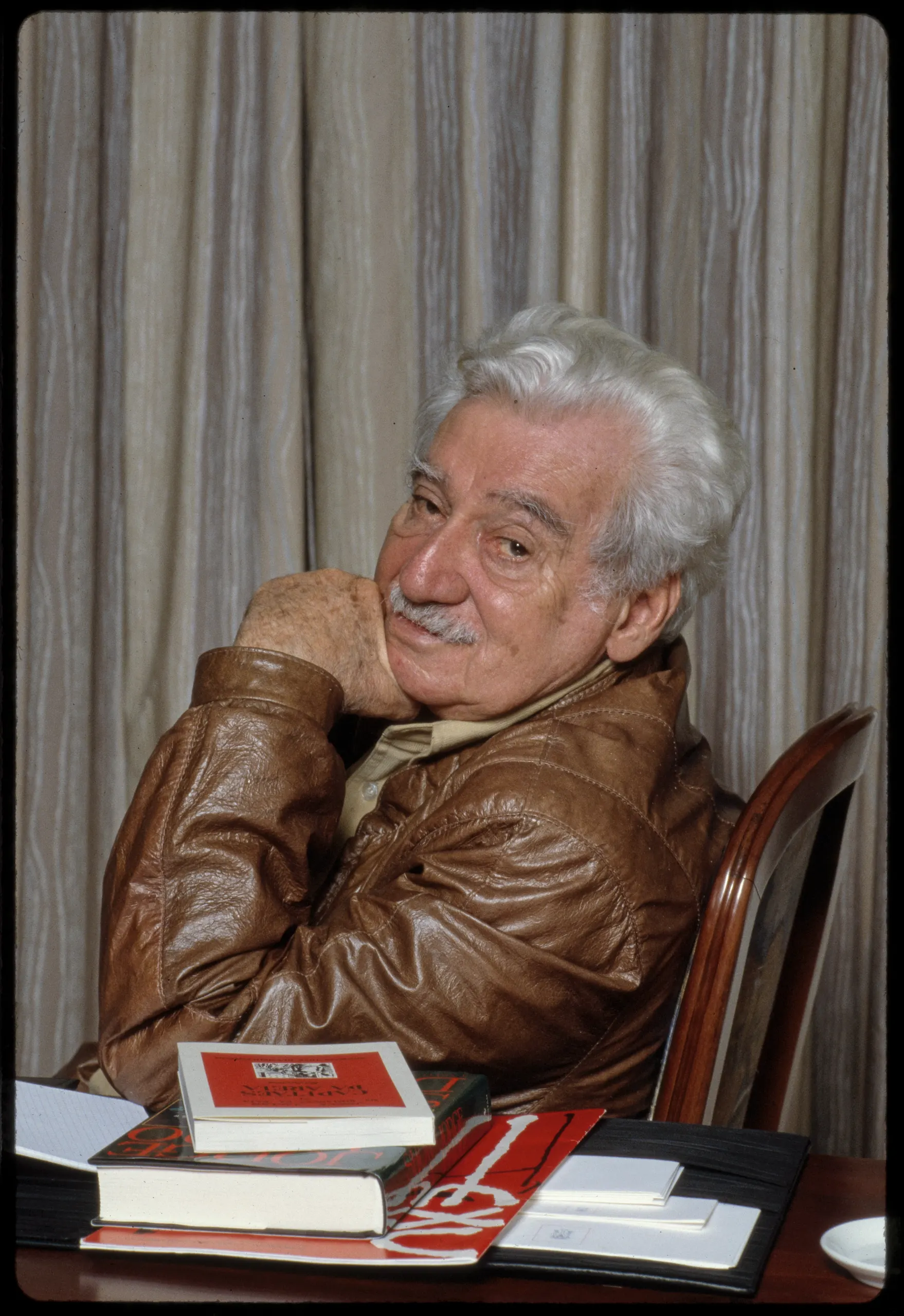
Jorge Amado
 Brazil
Also known as: Jorge Leal Amado de Faria
Birthday
August 10, 1912
Birth Sign
Leo
Birthplace
Itabuna, Bahia, Brazil
Age
Died at 88
About
Jorge Amado was a monumental Brazilian novelist, journalist, and poet whose vibrant depictions of Bahian culture captivated readers worldwide. Born in Itabuna in 1912, he rose to become one of the most translated authors of the 20th century, with his works appearing in approximately forty-nine languages. His writing blended magical realism, social critique, and humor to celebrate the resilience of the poor and the rich folklore of northeastern Brazil. He is best known for creating a vivid tapestry of Brazilian life that explored themes of sensuality, social injustice, and cultural identity. His novels like Gabriela, Clove and Cinnamon and Dona Flor and Her Two Husbands became international bestsellers and were adapted into highly successful films and television series. Beyond his literary achievements, he was a vocal advocate for social justice and literacy, using his platform to defend the rights of marginalized communities throughout his life. He held the 23rd chair of the Brazilian Academy of Letters from 1961 until his death in 2001, serving as a revered elder statesman of literature. His legacy endures through the enduring power of his books and his genuine advocacy for social justice.
Early Life & Background
Jorge Leal Amado de Faria entered the world on August 10, 1912, in Itabuna, a town in the southern region of Bahia, Brazil. His father, José Amado de Faria, was a wealthy cocoa planter, and his mother, Maria Gabriela Leal Amado, came from a prominent local family. Growing up in the cocoa-rich valleys of southern Bahia immersed young Jorge in the lives of workers, Afro-Brazilians, and the complex social hierarchies that defined the Northeast. This environment provided the fertile ground for his future storytelling, allowing him to observe the struggles and joys of the people who would later populate his pages. He attended the Federal University of Bahia in Salvador, where he initially enrolled to study law. However, his passion for writing quickly overshadowed his legal studies. By the time he was in his early twenties, he had abandoned formal legal practice to pursue journalism and poetry. His early career was marked by a radical political awakening influenced by the labor movements and leftist ideologies of the 1930s. This commitment led him to join the Brazilian Communist Party, a decision that would shape both his personal life and his literary output. His first novel, Cacau, published in 1933, showcased his unique voice and set the stage for a career that would soon take him far beyond the borders of Brazil.
Career Growth
Amado's literary breakthrough arrived with the publication of Cacau in 1933, followed by the seminal Terras do Sem-Fim in 1938 and Capitães da Areia in 1937. These early works established his signature style, blending magical realism with sharp social critique and a deep appreciation for Bahian folklore. His political activities during this period led to his imprisonment in 1936 and subsequent exile from Brazil in 1937. He spent years in Paris, Moscow, and other parts of Europe and South America, where he continued to write some of his most significant works while displaced. After returning to Brazil in 1952 following an amnesty, his reputation grew exponentially. He was elected as a Federal Deputy for São Paulo in 1946 but was ousted from office in 1951 when the military regime suppressed the Communist Party. Despite these political setbacks, his literary fame soared. His 1958 novel Gabriela, Clove and Cinnamon became an international phenomenon, translated into dozens of languages and adapted into successful films and TV series. Other major works included Dona Flor and Her Two Husbands (1966), Tent of Miracles (1971), and Tieta of Agreste (1977). In 1961, he secured a permanent place in Brazilian letters by being elected to the 23rd chair of the Brazilian Academy of Letters. His commercial success was matched by critical acclaim, including seven nominations for the Nobel Prize in Literature and the International Nonino Prize in 1984. In 1996, he was officially recognized by the Guinness World Records as the world's most translated living author.
Career Timeline
Public Image & Style
Amado projected the image of a warm, approachable intellectual deeply connected to his roots. He was often photographed with a friendly smile, dressed in the casual yet dignified style common among Brazilian intellectuals of his era. His public persona was that of a champion of the working class and a storyteller who brought the soul of Bahia to the world. Media outlets frequently described him as the "Grand Old Man" of Brazilian letters, reflecting his status as a revered elder statesman of literature. Unlike modern celebrities, he did not rely on tabloid exposure or manufactured scandals; his fame was rooted in the enduring power of his books and his genuine advocacy for social justice. He did not maintain a social media presence, as he passed away before the advent of digital platforms, but his legacy is actively maintained through academic institutions, literary festivals, and digital archives. His distinctive appearance and warm demeanor made him instantly recognizable, embodying the spirit of a man who walked the streets of Salvador engaging with vendors and fishermen.
Fame & Fandom (iFAMOUS Rankings)
The legacy of Jorge Amado does not pulse through viral hashtags or midnight subway ad campaigns, but flows through the quiet pilgrimage to a museum in Ilhéus, Bahia. His readership consists primarily of scholars, students, and literary devotees who treat his childhood home as a sacred site rather than a fan club headquarters. Unlike modern pop icons, Amado's fanbase lacks a formal name; there are no 'Amadistas' marching with signs, only academic centers and institutions like the Fundação Casa de Jorge Amado that preserve his archives. While he did not engage in meet-and-greets during his life, his political exile and return from Paris and Moscow created a narrative of resistance that continues to inspire writers globally. In 1996, this reverence crystallized into a verified milestone when his works were entered into the Guinness World Records as the most translated author, a fact cited by fans to demonstrate his unparalleled reach across forty-nine languages. The iFANN Global Fame Engine has evaluated this enduring influence, yet Jorge Amado is currently unranked in the published rankings. He holds no placement in the Global Top 1,000 or any Top-100 scope list. This absence of a numeric rank reflects his status as a historical figure rather than a current trending subject, where fame is measured by centuries of reading rather than daily search spikes. His interaction remains entirely textual, found in the pages of Gabriela, Clove and Cinnamon and Dona Flor and Her Two Husbands, which have been adapted for film and television long after his death in 2001. The scale of his consumption signals worldwide remains vast, driven by university curricula and cultural preservation efforts rather than commercial algorithms. Fan campaigns are typically academic or cultural preservation efforts rather than commercial pushes, focusing on the enduring impact of his work on Latin American literature alongside figures like Gabriel García Márquez.
Interesting Facts and Legends
Jorge Amado began his professional life studying law at the Federal University of Bahia before fully committing to writing. Despite being a native Portuguese speaker, he wrote fluently in multiple languages due to his extensive time in exile in Europe and South America. One iconic moment in his career occurred in 1975 when the film adaptation of Gabriela turned the novel into a national phenomenon, introducing his work to millions of Brazilians who might not have read the book. Another legendary aspect of his life was his ability to navigate the complexities of Brazilian politics while maintaining his integrity as a writer, often using his platform to defend the oppressed. Stories circulate about how he would walk the streets of Salvador, engaging with street vendors and fishermen to absorb their stories for his novels. The "ballad of Bahia" refers to the way his work captured the essence of the region, creating a mythos around the state that persists today. Notable quotes attributed to him include "I am a novelist because I love life" and "Literature is a weapon against ignorance." He never won competitive awards like the Oscars, Grammys, or Golden Globes, but received the International Nonino Prize in 1984. There are no documented appearances on TIME, Vogue, or GQ covers typical of modern pop stars, as his fame was rooted in literary prestige rather than celebrity culture. His physical attributes such as height are not widely recorded, though he was known for his distinctive warm smile.
Notable Quotes
“I am a novelist because I love life.”
“Literature is a weapon against ignorance.”
Family & Personal Life
Jorge Amado was the son of José Amado de Faria, a wealthy cocoa planter, and Maria Gabriela Leal Amado. He married Zélia Gattai, an Italian-Brazilian writer and activist, in 1945. They met in Paris in 1942 while both were exiles and remained together for 56 years until his death. The couple had two daughters, Cecília and Paloma, who have been actively involved in preserving their father's legacy. After living in various locations including Rio de Janeiro, they eventually returned to Bahia, where they built their home, which is now a museum managed by the Jorge Amado House Foundation. Zélia Gattai predeceased him, passing away in 2008. Their relationship was widely documented as a partnership of equals, both writers and activists who supported each other through periods of political persecution and exile. The couple lived in various locations before settling in Bahia, creating a home that remains a cultural landmark today.
Notable Connections
Zélia Gattai, Cecília Amado, Paloma Amado, Gabriel García Márquez, Jorge Luis Borges.
Relationships & Dating History
Jorge Amado's romantic life was characterized by a single, enduring partnership. He met Zélia Gattai in 1942 in Paris, where both were exiles. Their relationship began amidst the intellectual and political circles of the French capital. They married in 1945, and their union lasted 56 years until Amado's death. There are no public records of prior marriages, engagements, or high-profile flings before or during his marriage to Gattai. Their relationship was widely documented as a partnership of equals, both writers and activists who supported each other through periods of political persecution and exile. They had two daughters, Cecilia and Paloma, who have been involved in preserving their father's legacy. As of 2026, Jorge Amado is deceased, having passed away on August 6, 2001. Therefore, he is not currently single, dating, or engaged; his status is widowed, with his wife Zélia Gattai having predeceased him (she died in 2008). There are no current partners. Associated people include his wife Zélia Gattai, his daughters Cecilia and Paloma, and fellow writers like Gabriel García Márquez and Jorge Luis Borges, who admired his work. He collaborated with filmmakers and publishers worldwide to bring his stories to diverse audiences.
- MarriedZélia Gattai1945 - 2001Met in Paris in 1942; remained married until his death in 2001. She died in 2008.
Death & Aftermath
Died
August 6, 2001 (aged 88)
Death Place
Salvador, Bahia, Brazil
Cause of Death
Heart failure
Jorge Amado passed away on August 6, 2001, at the age of 88 in Salvador, Bahia. The cause of death was heart failure, a natural end for the man who had lived a full life dedicated to literature and political activism. His final days were spent in his home city, surrounded by the culture he had spent decades celebrating in his novels. There were no disputes regarding the circumstances of his passing; it was a quiet conclusion for a figure who had weathered imprisonment, exile, and the rise of military dictatorships. The reaction to his death was immediate and profound across Brazil and the international literary community. Tributes poured in from government officials, fellow writers, and ordinary citizens who viewed him as a national treasure. The BBC reported on August 7, 2001, that he was remembered as one of the country's most beloved authors, known globally for works translated into nearly 50 languages. His funeral in Salvador drew thousands of mourners who honored him as a champion of the working class and a defender of marginalized communities. The event served as a public declaration of his status as a cultural icon rather than just a celebrated writer.
Following his death, the management of his estate became a priority for his family and the Brazilian state. The Jorge Amado House Foundation, which reopened its doors in Pelourinho, Bahia, in late 2024, now serves as the primary custodian of his archives and legacy. This institution ensures that his works remain accessible to new generations of readers and scholars. Posthumous interest in his writing has remained robust, with ongoing publications of new editions and academic studies. In 2025, a new film adaptation of his novel Tieta, directed by Suzana Pires, was announced, demonstrating that his stories continue to resonate and generate revenue through licensing and adaptations long after his passing. His works remain staples in Brazilian education and continue to be translated and studied globally, ensuring his voice remains heard in the modern era.
Net Worth (Estate Value)
$15 Million
iFANN Editorial Team estimate
Net worth figures for historical literary figures like Jorge Amado are rarely calculated in the same manner as contemporary celebrities, as their wealth is derived from royalties over decades rather than active salary. As of 2026, there are no credible estimates of Jorge Amado's net worth in dollar terms available from financial outlets or celebrity net worth sites, as his estate is managed by his family and foundations rather than a commercial entity tracking liquid assets. His wealth sources were primarily book royalties, which continue to generate income for his estate through sales of his works, translations, and licensing for film and television adaptations. Notable posthumous projects include the announcement in 2025 of a new film adaptation of Tieta, directed by Suzana Pires, which continues to generate interest and revenue. The Jorge Amado House Foundation, reopened in Pelourinho, Bahia, in late 2024, manages his archives and properties, serving as a cultural hub rather than a profit-driven business. While specific valuations are elusive, the enduring global demand for his translated works and the commercial success of recent adaptations suggest a substantial estate value managed by the foundation and his family.
Awards Won (2)
Jorge Amado received numerous prestigious honors throughout his life. He won the International Nonino Prize in 1984. In 1996, he was officially recognized by the Guinness World Records as the most translated author in the world. He was inducted into the Brazilian Academy of Letters in 1961. While specific competitive awards like the Nobel Prize were never awarded to him, he was nominated seven times, a testament to his global standing.
1984 · Literature
Body of Work
1996 · Most Translated Author
Body of Work
Known For
Gabriela, Clove and Cinnamon
1958 · Author
Dona Flor and Her Two Husbands
1966 · Author
Captains of the Sands
1937 · Author
The Violent Land
1938 · Author
Keywords
Sources
Quick Facts
- Profession
- writer, journalist, poet
- Born
- August 10, 1912
- Birthplace
- Itabuna, Bahia
- Died
- August 6, 2001
- Death Place
- Salvador, Bahia
- Gender
- Male
- Spouse
- Zélia Gattai
- Birth Sign
- Leo
Personal Details
- Full Name
- Jorge Leal Amado de Faria
- Spouse
- Zélia Gattai
- Children
- Cecília Amado, Paloma Amado
- Education
- Federal University of Bahia (Law)
Frequently Asked Questions
Who was Jorge Amado?
When did Jorge Amado die?
What is Jorge Amado's most famous book?
Was Jorge Amado ever nominated for the Nobel Prize?
Did Jorge Amado have children?
Similar People


Join the community
fans discussing