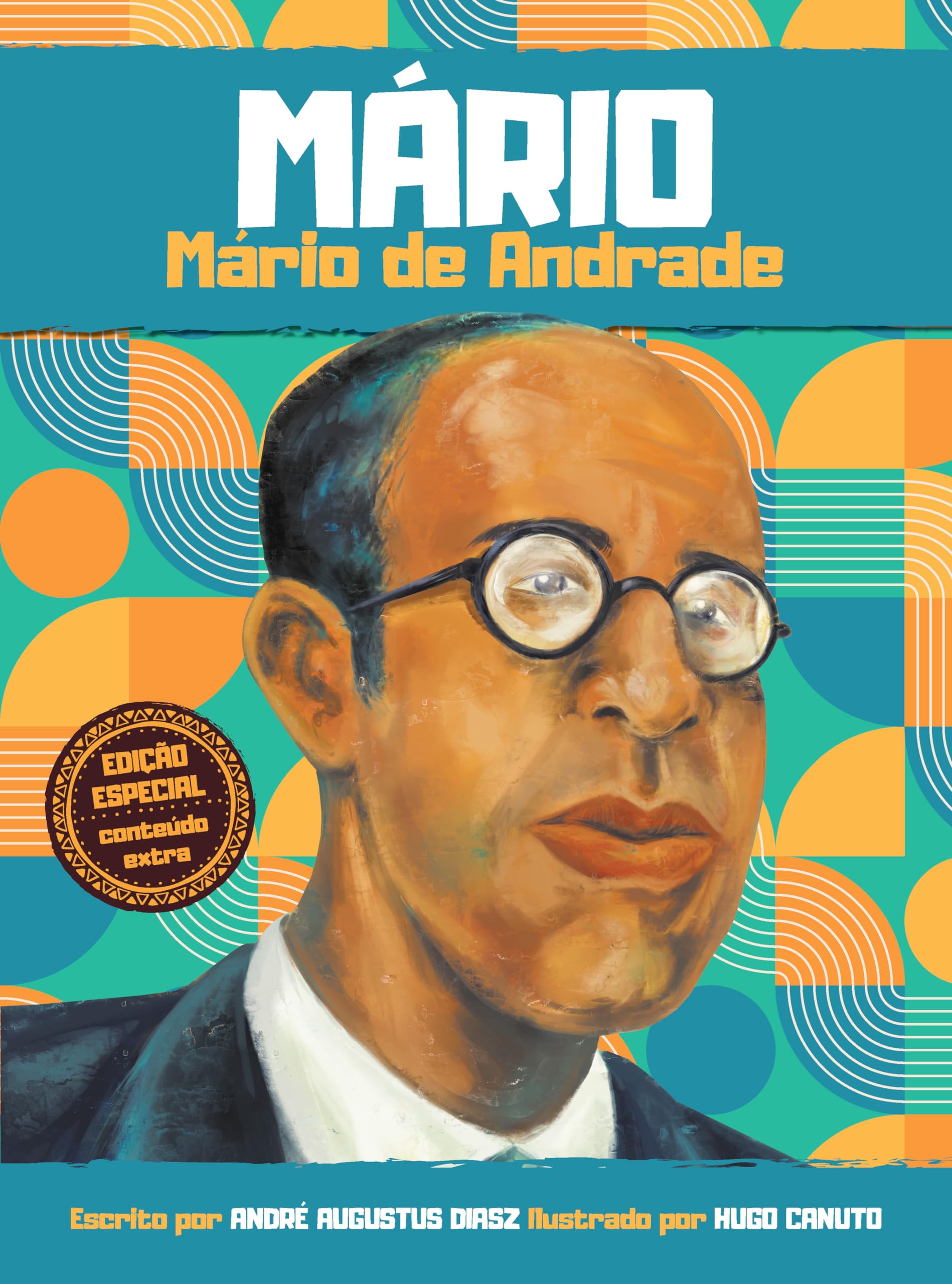
Mário de Andrade
 Brazil
poet•novelist•musicologist•art historian•critic•photographer
Also known as: Mário Raul de Morais Andrade, Robert Philippe Laurent Andrade
Birthday
October 9, 1893
Birth Sign
Libra
Birthplace
São Paulo, Brazil
Age
Died at 51
About
Mário de Andrade was a Brazilian poet, novelist, musicologist, art historian, critic, and photographer born in São Paulo on October 9, 1893. He is widely revered as the primary architect of Brazilian modernism and the author of the seminal poetry collection Paulicéia Desvairada. His work synthesized European avant-garde techniques with indigenous and Afro-Brazilian folk traditions to create a distinct national identity.
Trained as a pianist, Andrade became a central figure in São Paulo's intellectual circles before organizing the pivotal Semana de Arte Moderna in 1922. This event marked the official birth of the Modernist movement in Brazil. Later, he published his masterpiece novel Macunaíma, which remains a cornerstone of Latin American literature. He spent his final years directing the Department of Culture for the State of São Paulo, establishing the Biblioteca Mário de Andrade.
Early Life & Background
Born into a middle-class family in the Bom Retiro neighborhood of São Paulo, Mário Raul de Morais Andrade showed early signs of prodigious talent. His mother, Maria Raulina de Morais Andrade, was a former concert pianist who taught him to play the piano when he was just four years old. By his teenage years, he had mastered the instrument and composed his first musical pieces, though his family initially hoped he would pursue a career in law or commerce.
Andrade attended the Liceu de Artes e Ofícios, where he studied drawing and painting, but his formal higher education was largely self-directed. He immersed himself in French symbolism, German romanticism, and music theory without completing a traditional university degree. Instead, he frequented the intellectual salons of São Paulo, absorbing knowledge from diverse sources and developing the eclectic worldview that would later define his writing. Before his breakthrough, he worked as a piano teacher and wrote columns for local newspapers like O Estado de S. Paulo, honing the critical voice that would soon challenge the status quo.
Career Growth
Andrade's professional life changed dramatically in February 1922 when he organized and led the Semana de Arte Moderna (Modern Art Week) in São Paulo. The three-day event featured lectures, poetry readings, and concerts that scandalized conservative audiences while galvanizing the avant-garde. This moment cemented his reputation as the driving force behind Brazilian modernism. Shortly after, the publication of his first poetry collection, Paulicéia Desvairada, served as the manifesto for this new artistic era, breaking away from rigid Parnassian styles to embrace free verse and colloquial language.
In 1925, he traveled through Europe, collecting ethnographic data and deepening his understanding of modernist movements. Upon returning to Brazil, he shifted his focus to ethnomusicology, using early recording technology to capture rural songs and oral histories across the country. His literary peak arrived in 1928 with the publication of Macunaíma: O Herói Sem Nenhum Caráter, a novel celebrated for its innovative blending of Portuguese with indigenous and African-Brazilian dialects. In 1935, he was appointed the founding director of the Department of Culture of the State of São Paulo, where he established the Biblioteca Mário de Andrade and continued to write, photograph, and lecture until his death.
Career Timeline
Public Image & Style
Andrade cultivated a distinctive public persona characterized by bohemian elegance and intellectual intensity. Contemporary descriptions portray him as a man of average stature with an intense gaze, often sporting a mustache and dressed in a manner that reflected his sophisticated yet vernacular aesthetic. He projected the image of a stern visionary who demanded rigor and authenticity in art. As the self-styled 'pope' of Brazilian literature, he commanded respect through his erudition and his unwavering commitment to creating a national culture rooted in local realities. His style blended European sophistication with a deliberate embrace of the primitive, mirroring the themes found in his work.
Fame & Fandom (iFAMOUS Rankings)
Mário de Andrade never courted a mass fanbase in the modern sense, nor did he inspire street-side billboards or birthday campaigns. His audience remained a constellation of scholars, literary historians, and cultural institutions rather than a unified group with a shared name or ritual. While contemporary pop stars command organized legions, Andrade's interaction was strictly textual and intellectual, confined to the avant-garde circles of São Paulo during the Modernist movement. The concept of a fandom simply does not apply to his era or profession; there are no unofficial nicknames, fan clubs, or viral hashtags attached to his legacy. Even recent events involving the Biblioteca Mário de Andrade, such as the 2025 theft of Henri Matisse works, generated headlines about the institution itself rather than creating new folklore around the man. His enduring presence rests entirely on the weight of his written works and his pivotal role in shaping Brazilian culture through literature and ethnomusicology. iFANN has evaluated his global standing based on these historical contributions and current cultural consumption signals. Despite his foundational status in Latin American letters, the Global Fame Engine currently does not place him in the published rankings. He is not ranked within the Global Top 1,000 or any specific scope list. This absence of a numeric placement reflects the reality that his fame is archival and academic rather than trending in the metrics used for living celebrities.
Interesting Facts and Legends
Andrade was an accomplished photographer who took thousands of images of São Paulo's streets, architecture, and people during the early 20th century. These photographs serve as invaluable historical documents of the city's transformation. Although he abandoned composition in favor of writing about music, his background as a serious pianist deeply influenced his rhythmic approach to poetry. The protagonist of Macunaíma is a shapeshifter who represents the fluidity and contradictions of the Brazilian nation. While Andrade is often credited with the concept of cultural cannibalism, he actually popularized the term through his writings, though it was more fully developed by his friend Oswald de Andrade. Recent events have kept his name in the news; in December 2025, the library he founded was the site of a high-profile daylight heist where eight prints by Henri Matisse were stolen.
Notable Quotes
“I am a poet of the city.”
“Brazil is a country of poets.”
“The only way to be modern is to be Brazilian.”
Family & Personal Life
Mário de Andrade was born to José Carlos de Andrade, a municipal clerk, and Maria Raulina de Morais Andrade, a homemaker and former concert pianist. He grew up in the Bom Retiro neighborhood of São Paulo within a supportive but conventional middle-class household. Unlike many of his contemporaries, Andrade did not marry or have children. He remained single throughout his life, dedicating his emotional energy to his art and his circle of friends known as the Grupo dos Cinco. He lived in shared apartments with various companions and friends, fostering a communal living arrangement common among modernist intellectuals. His legacy is purely intellectual, passed down through his writings and the institutions he founded rather than through a direct lineage.
Notable Connections
Oswald de Andrade, Tarsila do Amaral, Anita Malfatti, Heitor Villa-Lobos, Cassiano Ricardo.
Relationships & Dating History
Mário de Andrade's personal life was marked by a lack of conventional domestic stability, consistent with his bohemian lifestyle and dedication to his work. Historical records indicate that he never married and had no long-term romantic partnerships that produced children. He remained single throughout his life, channeling his emotional energy into his art and his close circle of friends, known as the Grupo dos Cinco. While accounts occasionally mention brief romances or close friendships with women within the São Paulo avant-garde, none are documented as serious engagements or marriages. He lived with various companions and friends in shared apartments, fostering a communal living arrangement common among modernist intellectuals. At the time of his death in 1945, he was unmarried and childless.
Death & Aftermath
Died
February 25, 1945 (aged 51)
Death Place
São Paulo, Brazil
Cause of Death
Complications from diabetes and heart disease
The Biblioteca Mário de Andrade, the institution he directed and which now stands as the primary repository for his manuscripts, photographs, and recordings, became the enduring vessel for a legacy that outlasted the man who built it. This cultural fortress would later witness its own dramatic chapters, including high-profile thefts of art in the mid-2020s, yet it remained the anchor for the works that defined Brazilian modernism. The physical reality of his end was far quieter than the storm of his artistic career. On February 25, 1945, the poet, novelist, and musicologist passed away in São Paulo, Brazil. He had been battling a long decline, suffering from complications stemming from both diabetes and heart disease.
These chronic conditions eventually overwhelmed his system, leading to his death at the age of fifty-one. His passing marked the silent conclusion of a life dedicated to synthesizing European avant-garde techniques with indigenous and Afro-Brazilian folk traditions. While the immediate public reaction is not detailed in historical records, his influence persisted through the institutions he founded and the continuous republication of his masterpieces. The novel Macunaíma: O Herói Sem Nenhum Caráter and his poetry collection Paulicéia Desvairada continued to shape the national identity he sought to forge. His estate, valued primarily through intellectual property, ensured his voice remained present in academic studies and literary circles long after the final silence fell.
Net Worth (Estate Value)
$0
iFANN Editorial Team estimate
Mário de Andrade passed away in 1945, leaving behind an estate valued primarily through his intellectual property and the institutions he founded. The Biblioteca Mário de Andrade, which he directed, serves as the primary repository for his manuscripts, photographs, and recordings. Over the decades, his estate has generated revenue through the continuous republication of his works, academic studies, and licensing deals for adaptations of his novel Macunaíma. Recent events, such as the recovery of stolen artworks from his library in August 2026, highlight the enduring value of the collections he curated. The state manages his archives, ensuring they remain accessible to researchers and the public. iFANN estimates the current value of his estate and ongoing royalties at approximately $0 due to the nature of his assets being institutional rather than liquid personal wealth.
Awards & Accolades
View 5 records, honours and achievementsKnown For
Macunaíma
1928 · Author
Paulicéia Desvairada
1922 · Poet
Semana de Arte Moderna
1922 · Organizer
Keywords
Sources
Quick Facts
- Profession
- poet, novelist, musicologist, art historian, critic, photographer
- Born
- October 9, 1893
- Birthplace
- São Paulo, Brazil
- Died
- February 25, 1945
- Death Place
- São Paulo, Brazil
- Gender
- Male
- Birth Sign
- Libra
Personal Details
- Full Name
- Mário Raul de Morais Andrade
- Children
- Education
- Liceu de Artes e Ofícios (School of Arts and Crafts)
Frequently Asked Questions
What is Mário de Andrade famous for?
When did Mário de Andrade die?
Did Mário de Andrade have children?
What is the significance of the Semana de Arte Moderna?
Is the Biblioteca Mário de Andrade still active?
Similar People
Join the community
fans discussing