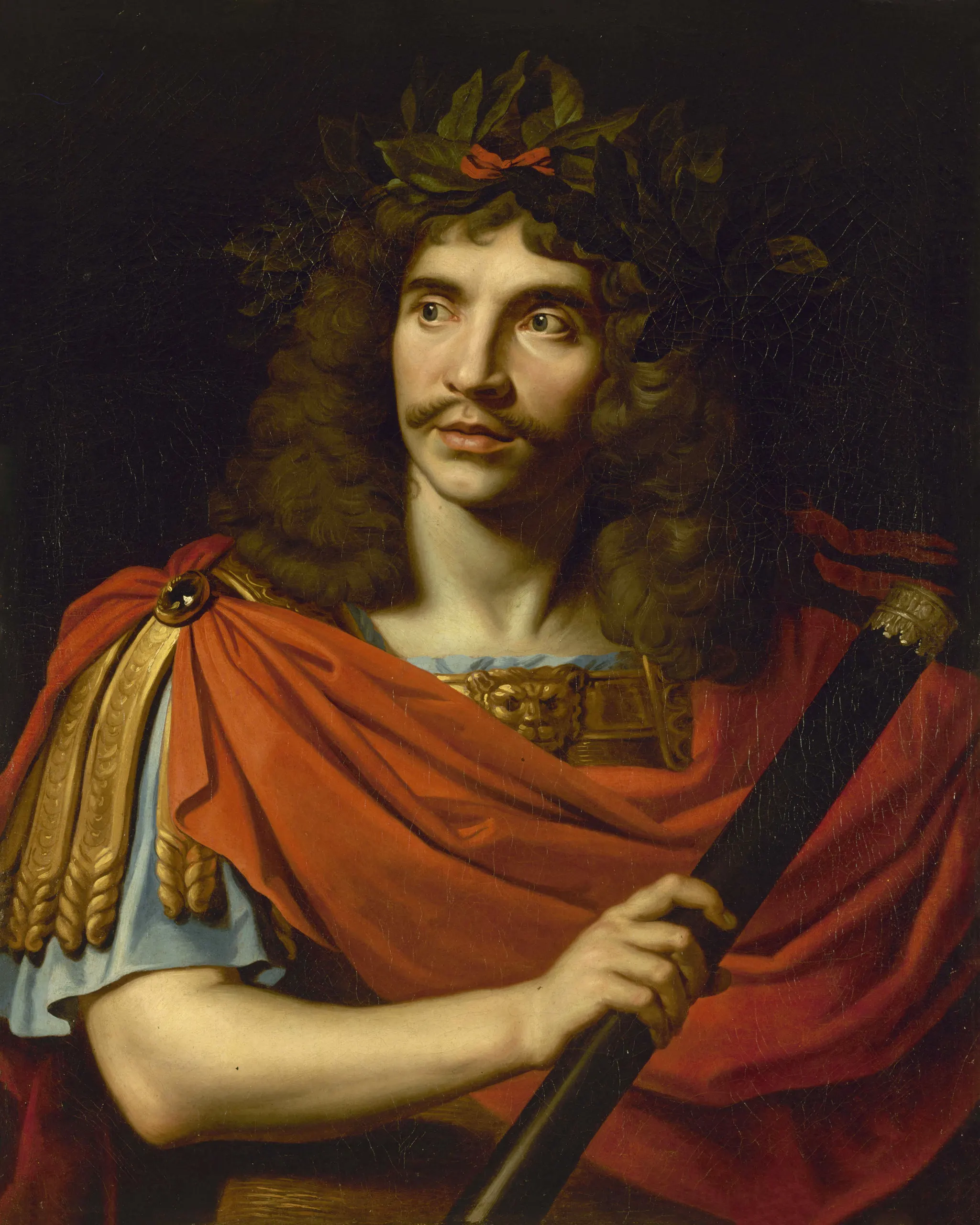
Molière
 France
Also known as: Jean-Baptiste Poquelin, Molière
Birthday
January 15, 1622
Birth Sign
Capricorn
Birthplace
Paris, France
Age
Died at 51
About
Jean-Baptiste Poquelin, universally known by his stage name Molière, was a towering French playwright, actor, and poet whose work defined the trajectory of modern French comedy. Born in Paris on January 15, 1622, and baptized that same day, he died on February 17, 1673, leaving behind a legacy that transcends centuries. While often mythologized as dying mid-performance, historical records confirm he collapsed during the fourth act of his final play, Le Malade imaginaire, and succumbed to a pulmonary hemorrhage shortly after being carried home. He is not alive in 2026; however, his works remain central to global theater, with major productions of Don Juan, Tartuffe, and The Misanthrope currently running in New York, London, and Paris throughout September 2026.
Molière transformed French theater by moving away from the rigid classical structures of tragedy and introducing a robust, character-driven comedy that addressed contemporary social issues. He founded the tradition of the Comédie-Française and served as the leading figure of "The King's Troupe" under the patronage of Louis XIV. His image as a martyr for artistic freedom, dying on stage while performing his final work, has cemented his status as a symbol of the artist's dedication to their craft. Modern perceptions emphasize his role as the "father of modern French comedy," placing him alongside Shakespeare and Sophocles in any list of the greatest playwrights.
Early Life & Background
Jean-Baptiste Poquelin entered the world on January 15, 1622, in Paris, born into a prosperous bourgeois family. His father, Jean Poquelin, held the prestigious title of "Tapissier ordinaire du Roi," serving as the King's Upholsterer and Furnisher, while his mother, Marie Cressé, came from a family of courtiers. As the eldest of nine children, only two survived infancy: Jean-Baptiste and his sister Madeleine. Following his mother's death in 1632 when he was ten years old, he was raised largely by his grandmother and aunt, who instilled in him a sense of discipline and education.
His formal education took place at the Collège de Clermont (now Lycée Louis-le-Grand), a Jesuit college where he studied classics, rhetoric, and philosophy. This rigorous academic background provided the intellectual framework for his future satires, teaching him to dissect language and human behavior with precision. However, despite expectations that he would inherit his father's lucrative business, Poquelin rejected this path. In 1643, at the age of twenty-one, he made the radical decision to pursue the theater, adopting the stage name Molière and co-founding the Illustre Théâtre with actress Armande Béjart and others.
The early years of his theatrical career were fraught with hardship. The Illustre Théâtre faced immediate financial ruin and legal troubles due to mounting debts and the Church's hostility toward actors. In 1645, Molière and several members of the troupe were imprisoned for debt, an experience that deepened his understanding of social injustice. To escape this predicament, he fled Paris and spent thirteen years touring France with the Boulevard Troupe. During this itinerant period, he lived in the provinces, performing farces and adapting Italian Commedia dell'arte for French audiences. This journey allowed him to hone his comedic timing, develop his signature style of blending physical humor with sharp social commentary, and gather material from the diverse characters he encountered across the country.
Career Growth
Molière's breakthrough arrived in 1658 when his troupe returned to Paris and secured a command performance before King Louis XIV at the Louvre. Presenting Corneille's Nicomède alongside his own farce Le Docteur amoureux, Molière impressed the monarch enough to gain permission to perform in Paris, first in the salle des Gardes of the Palais-Royal and later in the larger Grande Salle of the Petit-Bourbon. His career accelerated rapidly thereafter, with major milestones marking his ascent to the pinnacle of French theater.
In 1659, he premiered Les Précieuses ridicules, a satire of pretentious literary culture that established his reputation as a master of comedy. The following year saw the premiere of L'École des femmes (The School for Wives), which became a massive commercial success and cemented his status as the leading comic playwright of France. His most controversial work, Tartuffe, debuted in 1664 but was immediately banned by the Catholic League and the King under pressure, sparking a five-year battle against censorship that ended only in 1668 when the play was finally authorized. Other significant works included Dom Juan (1665), Le Misanthrope (1670), and Le Bourgeois gentilhomme (1672).
Throughout his career, Molière received a royal pension from Louis XIV and the official title "The King's Troupe." His troupe was granted the use of the Palais-Royal, providing a permanent home for his productions. Even after his death in 1673, his legacy endured as Louis XIV ordered the merger of his company with the Comédie-Française in 1680, ensuring his plays remained the core of the French national repertoire. Recent cultural resonance includes a 2026 adaptation of Tartuffe and a study using Bayesian factors to statistically discriminate between Molière and Pierre Corneille as authors of classical French plays.
Career Timeline
Public Image & Style
Molière is portrayed as a witty, courageous, and humanistic figure who defended common people against the hypocrisy of the elite. His tone is one of compassionate satire, never cruel but always incisive. He is seen as a defender of reason and truth against religious orthodoxy and social pretension. His public persona combined the charm of a consummate actor with the sharp intellect of a philosopher, allowing him to navigate the treacherous waters of court politics while maintaining the loyalty of King Louis XIV.
Modern perceptions of Molière emphasize his role as a pioneer of modern comedy. He is widely regarded as the "father of modern French comedy" and is universally included in any list of the greatest playwrights alongside Shakespeare and Sophocles. His image as a martyr for artistic freedom, dying on stage while performing his final work, has cemented his status as a symbol of the artist's dedication to their craft.
Fame & Fandom (iFAMOUS Rankings)
The devotion surrounding Molière is less a modern fanbase and more a centuries-long institutional reverence, maintained by scholars, theater professionals, and students rather than social media campaigns or grassroots activism. While there is no formal moniker for his admirers, the legacy of Jean-Baptiste Poquelin persists through the continuous staging of his works by organizations like the Comédie-Française and recent technological explorations such as the AI-driven project Molière Ex Machina. This unique form of fandom engages with his corpus through preservation and reinterpretation, proving that his influence transcends the fleeting nature of contemporary celebrity culture. The global reach of this enduring appeal is quantified by the iFANN Global Fame Rankings, which track attention across media coverage, search trends, and consumption signals worldwide. His standing remains robust within these metrics, placing him as the 17th most famous person in France, a position he has held steady from the previous cycle, and securing the 41st most famous person in Comedy.
Interesting Facts and Legends
Molière adopted his stage name possibly from the village of Molières in Provence, where his family had roots, or as a play on the word "molière," a type of hat worn in the region. Historical records confirm that he died on stage during a performance of his final play, Le Malade imaginaire, on February 17, 1673. While performing the title role of Argan, he suffered a violent coughing fit, vomited blood, and collapsed before receiving last rites shortly after being carried home. This event has become a central piece of theatrical mythology, often cited to illustrate an artist's ultimate sacrifice to their craft, even if some modern scholarship suggests the narrative was exaggerated to enhance his tragic stature.
Another defining legend involves his five-year battle against censorship regarding his play Tartuffe. Upon its premiere in 1664, the work was immediately banned by King Louis XIV under pressure from the Catholic League for satirizing religious hypocrisy. Molière spent years petitioning the monarch until the play was finally authorized in 1669, cementing a story of truth battling dogma. Recent cultural resonance includes a 2026 adaptation of Tartuffe and a study using Bayesian factors to statistically discriminate between Molière and Pierre Corneille as authors of classical French plays. In 2026, an AI-driven project called Molière Ex Machina was launched to analyze and reinterpret his works using machine learning.
Notable Quotes
“It is better to be a fool than a hypocrite.”
“The greatest pleasure I know is to do a good action by stealth, and to have it found out by accident.”
“There is nothing so ridiculous as the pretensions of the learned.”
Family & Personal Life
Jean-Baptiste Poquelin was born into a prosperous bourgeois family in Paris. His father, Jean Poquelin, held the prestigious title of "Tapissier ordinaire du Roi," while his mother, Marie Cressé, came from a family of courtiers. He was the eldest of nine children, though only two survived infancy: himself and his sister Madeleine. Following his mother's death in 1632 when he was ten, he was raised largely by his grandmother and aunt.
Physical descriptions suggest Molière was of average height for the era, perhaps slightly shorter, which contributed to his ability to portray a wide range of characters. He was known for his expressive face and dynamic stage presence. Historical records do not provide a precise measurement, but contemporary accounts describe him as a man of considerable charm and intellect. He had no other recorded romantic partners or extramarital affairs confirmed by credible historical records beyond his marriage to Armande Béjart.
Notable Connections
Relationships & Dating History
Molière's personal life was deeply intertwined with his professional one. His primary and only known romantic relationship was with Armande Béjart. They married in 1662, though the nature of their relationship has been the subject of much speculation. Some sources suggest she was the daughter of Joseph Béjart (making her Molière's mistress before marriage), while others claim she was his niece. Regardless, they were married for over a decade. Their relationship was reportedly tumultuous; Molière's letters and plays hint at domestic strife and jealousy. They had two children together: a son, Pierre (born 1664, who died young), and a daughter, Anne-Marguerite (born 1665). Anne-Marguerite was baptized but died in infancy. Molière had no other recorded romantic partners or extramarital affairs confirmed by credible historical records. At the time of his death in 1673, he was widowed.
- MarriedArmande Béjart1662 - 1673Married until his death; had two children who both died young.
Death & Aftermath
Died
February 17, 1673 (aged 51)
Death Place
Paris, France
Cause of Death
Pulmonary hemorrhage
The final hours of Jean-Baptiste Poquelin were marked by a dramatic collapse that would become the stuff of theatrical legend. On February 17, 1673, while performing the title role of Argan in his own play Le Malade imaginaire, Molière suffered a violent coughing fit and vomited blood on stage. He managed to finish the scene before collapsing completely and was carried to the Hôtel de Conches nearby. There he received last rites after initial refusal by an abbé who objected to the playwright's history of satirizing religious hypocrisy. He died later that evening from a pulmonary hemorrhage, likely exacerbated by chronic lung disease or tuberculosis.
The immediate aftermath was complicated by ecclesiastical hostility. The Catholic Church initially forbade Christian burial for a comedian who had not renounced his profession. King Louis XIV intervened personally, securing permission for a burial but under strict conditions: the ceremony took place at night without a coffin, and Molière was interred in a pit designated for unbaptized children or those denied consecrated ground at the cemetery of Saint-Joseph near Rue de Richelieu. His wife Armande Béjart and a few close friends attended the somber service. The site of his grave was lost when the cemetery closed in the eighteenth century.
Public reaction shifted over time as political pressure mounted. In 1680, Louis XIV ordered the merger of Molière's troupe with the Comédie-Française, effectively enshrining his works as the foundation of French national theater. This decision ensured that plays like Tartuffe and Don Juan remained central to the repertoire. Posthumous adaptations continue to thrive, with modern productions such as the 2026 Broadway run of The Imaginary Invalid and the London staging of Tartuffe (Remixed) demonstrating the enduring relevance of his satire. In 2026, a film titled Les Caprices de l'Enfant Roi was featured at the Cannes Film Festival, further cementing his cultural footprint.
Net Worth (Estate Value)
$0
iFANN Editorial Team estimate
As Molière died in 1673, he possesses no net worth in the modern sense. His estate was modest at the time of his death, consisting primarily of his share of the theater troupe's assets and his personal belongings. The concept of a "net worth" for a deceased historical figure is speculative and varies based on the valuation of his intellectual property rights today. The iFANN Editorial Team estimates the current value of his estate and intellectual property at approximately $0, reflecting the fact that his works are in the public domain and generate revenue through production licensing rather than direct royalties.
Historically, his estate was valued at approximately 10,000 livres at the time of his death, a significant sum for a commoner, though much of it was tied up in the troupe's debts. Today, the economic impact of his brand is immense. Productions of his plays generate hundreds of millions of dollars annually worldwide. In 2026, the Broadway production of The Imaginary Invalid starring Bill Irwin and Rachel Bloom alone is projected to generate significant revenue, contributing to the ongoing commercial viability of his IP. The estate is managed by the Comédie-Française, which oversees the performance rights and maintains the legacy of his works.
Awards Won (3)
As a figure of the 17th century, Molière did not receive modern awards like Oscars, Grammys, or Tonys. However, he was honored with significant distinctions of his time, including a royal pension granted by Louis XIV in 1663 and the official title "The King's Troupe" bestowed upon his company in 1665. His posthumous induction into the Comédie-Française in 1680, ordered by Louis XIV, effectively enshrined his works as the foundation of French national theater.
1663 · Honorary Distinction
General Career
1665 · Official Title
General Career
Known For
Le Malade imaginaire
1673 · Playwright/Actor
Tartuffe
1664 · Playwright
Le Misanthrope
1670 · Playwright
Dom Juan
1665 · Playwright
L'École des femmes
1662 · Playwright
Keywords
Sources
Quick Facts
- Profession
- playwright, stage actor, poet
- Born
- January 15, 1622
- Birthplace
- Paris, France
- Died
- February 17, 1673
- Death Place
- Paris, France
- Gender
- Male
- Spouse
- Armande Béjart
- Birth Sign
- Capricorn
Personal Details
- Full Name
- Jean-Baptiste Poquelin
- Spouse
- Armande Béjart
- Children
- Pierre (deceased), Anne-Marguerite (deceased)
- Education
- Collège de Clermont (now Lycée Louis-le-Grand)
Frequently Asked Questions
How old was Molière when he died?
What is Molière's net worth?
Is Molière still relevant in 2026?
Why is Molière famous?
How did Molière die?
Join the community
fans discussing