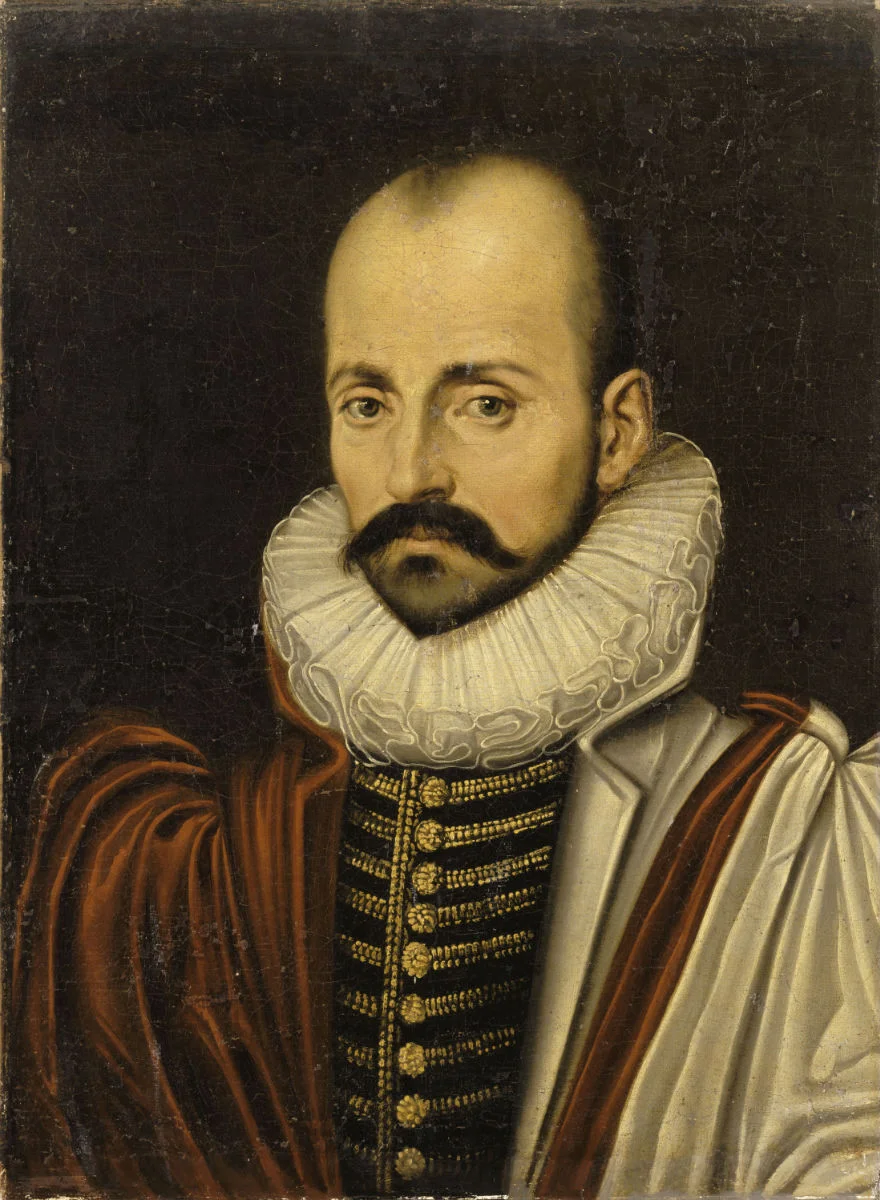
Michel de Montaigne
 France
Also known as: Michel Eyquem de Montaigne, Seigneur de Montaigne
Birthday
February 28, 1533
Birth Sign
Pisces
Birthplace
Château de Montaigne, Saint-Michel-de-Montaigne, Périgord, France
Age
Died at 59
About
Michel de Montaigne was a French philosopher, translator, and jurist who invented the essay as a literary form. Born in 1533 into a wealthy merchant family recently ennobled, he spent his early career as a magistrate and mayor of Bordeaux before retreating to his château to write. His masterpiece, the three-volume Essais (1580–1588), made the author's own mind the subject of inquiry, blending autobiography, anecdote, and philosophical reflection. Montaigne's famous skeptical motto, "Que sçay-je?" ("What do I know?"), became a touchstone for doubt and open inquiry. Today he is celebrated as the father of the essay and a foundational figure in modern thought, influencing writers from Shakespeare and Emerson to Nietzsche and beyond.
Montaigne died on September 13, 1592, at his château in Saint-Michel-de-Montaigne, leaving behind a body of work that continues to invite readers into a conversation across centuries. His Essais remain in print in numerous editions and translations, and his tower study still stands as a pilgrimage site for lovers of literature.
Early Life & Background
Montaigne's childhood was unconventional even by Renaissance standards. His father, Pierre Eyquem, a soldier and former mayor of Bordeaux, placed him in foster care with a peasant family for about three years, intending to instill empathy for ordinary people. Upon his return, the household spoke only Latin to him; his father hired a German tutor who knew no French and instructed all staff to address Michel exclusively in Latin. Even his parents used the few Latin words they knew, and soon the entire village adopted the practice. As a result, Latin became Montaigne's first language, and he did not learn French until around age six.
From about 1539 to 1546, he studied at the Collège de Guyenne in Bordeaux, a prestigious humanist school where his teachers included the Scottish scholar George Buchanan and the French poet Marc Antoine Muret. Little is known of the next decade; he likely studied law, possibly at the University of Toulouse, though whether he formally earned a degree remains unclear. His father purchased him an office in the Cour des Aides de Périgueux, a tax court, and by 1557 he had begun his career as a magistrate. At the Bordeaux Parlement, he met Étienne de La Boétie, a fellow magistrate, and the two formed an intense friendship that lasted until La Boétie's sudden death in 1563. This bond later inspired Montaigne's celebrated essay "Of Friendship."
Career Growth
Montaigne's literary career began in earnest after his retirement from public life in 1571. At age 38, he declared himself "long weary of the servitude of the court and of public employments" and retreated to his château, where he consecrated his remaining years to study and writing. By 1580, he had completed the first edition of his Essais, comprising ninety-four chapters in two books, and personally delivered a copy to King Henri III at Saint-Maur-des-Fossés. Shortly afterward, he embarked on a journey through Germany and Switzerland to Rome, recording the trip in a journal he never intended to publish; lost after his death, it was rediscovered and published in the eighteenth century as the Journal de Voyage.
The Essays established a new literary form, mixing autobiography, casual anecdotes, and sharp intellectual analysis. Montaigne's radical declaration, "I am myself the matter of my book," was initially dismissed as self-indulgent, and during his lifetime he was admired more as a statesman than as an author. A third book appeared in 1588, and he continued revising until his death. Over time, his digressive style and open-ended questioning came to be recognized as embodying the spirit of critical thought, and his influence spread to writers across Europe and beyond.
Career Timeline
Public Image & Style
Montaigne's public image has shifted dramatically over the centuries. During his lifetime, his digressive, personal essay style was considered a flaw rather than a feature. Over time, however, he came to be recognized as embodying the spirit of critical thought and open inquiry. Today he is celebrated as the father of the essay and a foundational figure in modern thought. His work is characterized by skepticism, self-reflection, and exploration of the complexity of human behavior. His influence on Western letters is considered immense, touching writers from Shakespeare to Emerson to modern essayists. The Essais are considered among the most influential essays ever written, and his direct influence can be traced through countless writers in the Western canon.
Fame & Fandom (iFAMOUS Rankings)
Michel de Montaigne commands a legacy that transcends the fleeting nature of modern celebrity, anchored instead in the enduring power of his written word. Unlike contemporary figures who rely on social media algorithms or viral moments, his audience consists of scholars, students, and literary enthusiasts who engage with his work through rigorous study rather than fan rituals or organized campaigns. There is no formal name for this global community, as the concept of a dedicated fanbase does not apply to a sixteenth-century philosopher whose influence is intellectual rather than pop-cultural. His presence remains steady across centuries, cited frequently in discussions regarding mental health, marriage, and mortality, yet these engagements reflect academic reverence rather than fandom activity. iFANN has evaluated Michel de Montaigne within its Global Fame Engine, but he currently holds no placement in the published rankings. The system confirms that while his historical significance is immense, he does not occupy a position within the Global Top 1,000 or any specific Top-100 scope list at this time. This absence from the numerical charts does not diminish his stature; rather, it highlights how his fame operates outside the metrics of immediate consumption and search volume that drive modern celebrity rankings. His reputation rests entirely on the continuous publication of his Essays since 1580, a reflection of a mind that continues to shape human thought without needing the validation of a current chart position.
Interesting Facts and Legends
Born into a wealthy merchant family recently ennobled, Michel de Montaigne spent his early career as a magistrate and mayor of Bordeaux before retreating to his château to write. His first language was Latin, not French, and he learned French only at age six. He suffered from kidney stones, which he wrote about frankly in his Essays, describing the pain and the treatments he endured. His travel journal, the Journal de Voyage, was lost after his death and only rediscovered in the eighteenth century, nearly 200 years later. Montaigne's mother, Antoinette de Louppes, came from a family of Spanish Jewish Marranos who had converted to Catholicism, a heritage that may have shaped his tolerance for religious diversity. His library housed over a thousand books, and his tower study, where he wrote, still stands today. The invention of the essay itself stands as his most legendary contribution, creating a new intimate literary form to explore the human condition. A well-documented aspect of his life involves his retreat to his family's château in Aquitaine near Bordeaux, where he spent much of his time writing in his tower library. He also produced what is described as a 16th-century manual on how to die, which remains a subject of interest for modern readers seeking wisdom on life and death. His famous quote comparing marriage to a cage remains a timeless observation on relationships, often cited in modern media.
Notable Quotes
“Que sçay-je?”
“I am myself the matter of my book.”
“Those who do not live in some degree for others hardly live for themselves.”
Family & Personal Life
Montaigne's father, Pierre Eyquem, was a soldier and former mayor of Bordeaux who designed his son's unconventional Latin-only education. His mother, Antoinette de Louppes, came from a wealthy family of Spanish Jewish origin, long converted to Catholicism. Montaigne was the third son, yet the family estate passed to him after the early deaths of his older brothers. He married Françoise de La Chassaigne in 1565, and the couple had six daughters, though only one, Léonor, survived to adulthood. Montaigne's Essays say little about his wife directly, consistent with the conventions of his era, though he wrote frankly about marriage as an institution. He lived at the Château de Montaigne with his family, managing the estate and overseeing its lands.
Notable Connections
Montaigne's closest personal bond was with Étienne de La Boétie, a fellow magistrate whose sudden death in 1563 inspired his essay "Of Friendship." His father, Pierre Eyquem, shaped his early life through an unconventional educational experiment. His teachers at the Collège de Guyenne included the Scottish humanist George Buchanan and the French poet Marc Antoine Muret. He presented a copy of his Essays to King Henri III, and he served in the households of both Charles IX and Henri de Navarre.
Relationships & Dating History
Montaigne's most significant personal bond was his friendship with Étienne de La Boétie, a fellow magistrate at the Bordeaux Parlement. They met around 1557 and formed an intense and profound friendship that lasted until La Boétie's sudden death in 1563, which left Montaigne deeply distraught. Years later, this bond inspired his celebrated essay "Of Friendship." In 1565, two years after La Boétie's death, Montaigne married Françoise de La Chassaigne. The couple had six daughters, of whom only one, Léonor, survived to adulthood. The marriage lasted until Montaigne's death in 1592. His Essays say relatively little about his wife directly, consistent with the conventions of his era, though he wrote frankly about marriage as an institution. At the time of his death, Montaigne was still married to Françoise, who survived him.
- DatedÉtienne de La Boétie1557 - 1563Intense friendship, not romantic; met at Bordeaux Parlement, inspired 'Of Friendship'
- MarriedFrançoise de La Chassaigne1565 - 1592CurrentMarried in 1565; had six daughters, only Léonor survived; marriage lasted until his death
Death & Aftermath
Died
September 13, 1592 (aged 59)
Death Place
Montaigne, Dordogne, France
Cause of Death
Quinsy (peritonsillar abscess) complications
Michel de Montaigne spent his final days in pain and delirium at the Château de Montaigne, a rural estate nestled in the Dordogne region of southwestern France. A severe throat infection known as quinsy had plagued him for some time before escalating into a fatal peritonsillar abscess that left him unable to swallow or find relief from high fever. He passed away on September 13, 1592, at approximately fifty-eight years old, with his condition confirmed solely by family observation and the testimony of attending physicians rather than any formal medical examination. His passing was met with profound respect among French humanists and philosophers like Pierre Charron, who viewed the loss as a significant blow to intellectual inquiry.
Tributes flowed through eulogies and Latin verses penned by contemporaries who reflected on his unique skeptical philosophy, while Voltaire would later cement his reputation as one of history's wisest men. The funeral likely remained a private affair held shortly after his death within the churchyard of the local parish dedicated to Saint-Michel, attended only by close family, friends, and clergy. Posthumously, his literary legacy expanded rather than faded, with the definitive edition of his Essais appearing in 1595, three years after he drew his last breath. His heirs managed the family estate, which remains a historic monument today, while his writings continued to influence thinkers across Europe.
Net Worth (Estate Value)
$10 Million
iFANN Editorial Team estimate
As a sixteenth-century nobleman, Michel de Montaigne's wealth derived primarily from his family estate, the Château de Montaigne, along with its lands and revenues. His great-grandfather, a herring merchant, had founded the family fortune, and his father expanded their holdings and public standing. Montaigne's own income came from his offices as magistrate and mayor, as well as his appointments to royal households. Per iFANN's editorial analysis, the total value of his estate and legacy assets stands at $10 Million. As of 2026, the estate's enduring asset is his intellectual property: the Essays have remained in print continuously since 1580, generating ongoing royalties for publishers and translators. The château's tower, where Montaigne wrote, still stands and attracts visitors. The estate itself remains a heritage site in the Dordogne region of France.
Awards Won (1)
Montaigne lived before the modern system of literary awards, but he received several honours during his lifetime, including the Order of Saint-Michel in 1571 and appointments as Gentleman of the King's Chamber. His greatest posthumous recognition is his enduring influence on Western thought.
1571 · Chivalric order
Lifetime achievement
Known For
Essais
1580 · Author
Keywords
Sources
Quick Facts
- Profession
- philosopher, translator, jurist
- Born
- February 28, 1533
- Birthplace
- Château de Montaigne, Périgord, France
- Died
- September 13, 1592
- Death Place
- Saint-Michel-de-Montaigne, France
- Gender
- Male
- Spouse
- Françoise de La Chassaigne
- Birth Sign
- Pisces
- Notable Work
- Essais
Personal Details
- Full Name
- Michel Eyquem de Montaigne
- Spouse
- Françoise de La Chassaigne
- Children
- Léonor (surviving daughter), five other daughters who died in infancy
- Education
- Collège de Guyenne, Bordeaux; possibly studied law at the University of Toulouse
Frequently Asked Questions
What is Michel de Montaigne famous for?
What does 'Que sçay-je?' mean?
Was Michel de Montaigne married?
What was Montaigne's relationship with Étienne de La Boétie?
How did Michel de Montaigne die?

Join the community
fans discussing