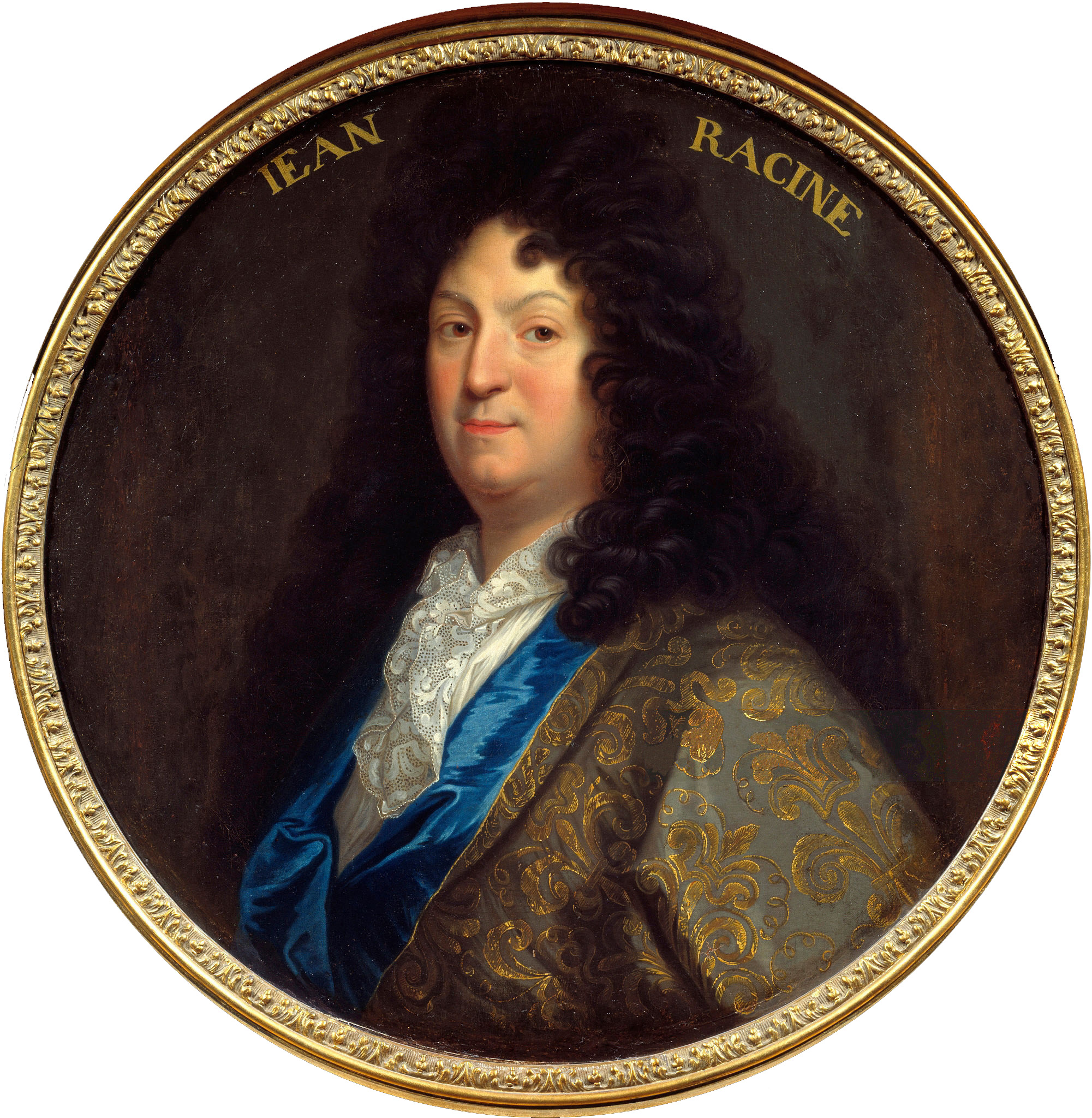
Jean Racine
 France
Birthday
+1639-12-22
Birth Sign
Sagittarius
Birthplace
La Ferté-Milon
Age
Died at 59
About
Jean Racine, born Jean-Baptiste Racine on 22 December 1639 in La Ferté-Milon, France, was a towering figure of 17th-century French drama, standing alongside Molière and Corneille as one of the era's three great playwrights. He devoted his career almost exclusively to tragedy, crafting works that became benchmarks of neoclassical perfection. His plays, including Phèdre, Andromaque, and Athalie, are celebrated for their psychological depth, elegant alexandrine verse, and the raw, often destructive passions of their characters. Racine's writing, described by poet Robert Lowell as having a "diamond-edge," combined purity of language with a fierce, electric intensity that set him apart from his contemporaries. He also ventured into comedy with Les Plaideurs, his sole work in that genre, and wrote Esther, a quieter, more restrained tragedy composed for young performers. Racine's influence extended far beyond his lifetime, shaping the course of French and world literature. He died on 21 April 1699 in Paris, leaving behind a legacy of dramatic mastery that continues to be studied and performed centuries later.
Fame & Fandom
Jean Racine stands as a towering figure of 17th-century French drama, his legacy cemented alongside Molière and Corneille. Yet in the modern tally of global celebrity, the playwright does not currently hold a placement in the published rankings. iFANN's Global Fame Engine has evaluated this historical titan, but he remains outside the Global Top 1,000 or any Top-100 scope list. This absence from contemporary charts reflects the distance of centuries rather than a lack of enduring influence. His fame exists in the quiet reverence of academic halls and the sustained performance of tragedies like Phèdre and Andromaque, not in viral metrics or fan-driven campaigns. The concept of a formal fandom with organized clubs or social media rituals is anachronistic to his era. Racine interacted primarily with critics, fellow writers, and the King's court, building his reputation through literary circles and intellectual elite patronage rather than mass public following. While ensembles like VOCES8 record his works and companies such as the American Repertory Theater stage them, these acts constitute artistic appreciation rather than fandom. No official name documents his admirers, and no modern fanbase organizes chart pushes or charity drives for him. The Cantique de Jean Racine by Gabriel Fauré remains a standard choral piece, yet it is a classical setting, not a tribute project born of fan devotion. His story is one of intense rivalry and late-life repentance, transforming him from a worldly dramatist into a pious historian at Port-Royal. This narrative of contradictions defines his mythos more than any crowd reaction could.
Interesting Facts and Legends
Born Jean-Baptiste Racine on 22 December 1639 in La Ferté-Milon, France, the playwright crafted works that became benchmarks of neoclassical perfection. Robert Lowell described his writing as having a "diamond-edge," combining purity of language with fierce intensity. A widely retold legend surrounds his rise as the rival of Pierre Corneille for the title of greatest French tragic dramatist. Early success challenging Corneille's dominance culminated in plays like Andromaque in 1667. Another enduring story frames his later years as those of an "enigma" who died as a penitent man after abandoning his secular career. Sources describe him as a figure filled with worldly desires yet ending his life in religious devotion at Port-Royal. He ceased writing tragedies around 1677 to focus on historiography and piety, a move that became part of his cultural mythology. The premiere of Phèdre in 1677 was a major cultural event among the educated elite of Paris, though specific details of crowd disruption remain undocumented. His masterpiece Phèdre continues to be a central topic in academic discourse regarding the gendered politics of desire. The Cantique de Jean Racine by Gabriel Fauré has become a standard in choral repertoire, immortalizing his text long after his death.
Death & Aftermath
Died
+1699-04-21 (aged 59)
Death Place
Paris
Cause of Death
Unknown
The final days of Jean Racine unfolded in the quietude of Paris, where the playwright had withdrawn from public life to embrace a rigorous existence of religious penitence following his retirement from the theater. On April 21, 1699, this devoted man passed away at the age of approximately fifty-nine or sixty, concluding a life defined by a fierce intensity that now settled into silence. Historical records confirm he died, leaving the precise medical cause unrecorded in the annals of the time. Tributes emerged not from modern vigils but from the literary and courtly circles of the era, who recognized him as the master of French classical tragedy whose eleven plays between 1664 and 1677 remained benchmarks of neoclassical perfection.
His funeral was a private affair befitting his status, held within the churchyard of Saint-Roch in Paris alongside immediate family and court officials. Posthumously, his legacy endured through the continued study of works like Phèdre and Athalie, eventually inspiring later artistic tributes such as Gabriel Fauré's choral work Cantique de Jean Racine.
Awards & Accolades
Keywords
Quick Facts
- Profession
- playwright, poet, translator
- Born
- +1639-12-22
- Birthplace
- La Ferté-Milon
- Died
- +1699-04-21
- Death Place
- Paris
- Gender
- Male
- Spouse
- Catherine de Romanet
- Birth Sign
- Sagittarius
Personal Details
- Spouse
- Catherine de Romanet
Join the community
fans discussing