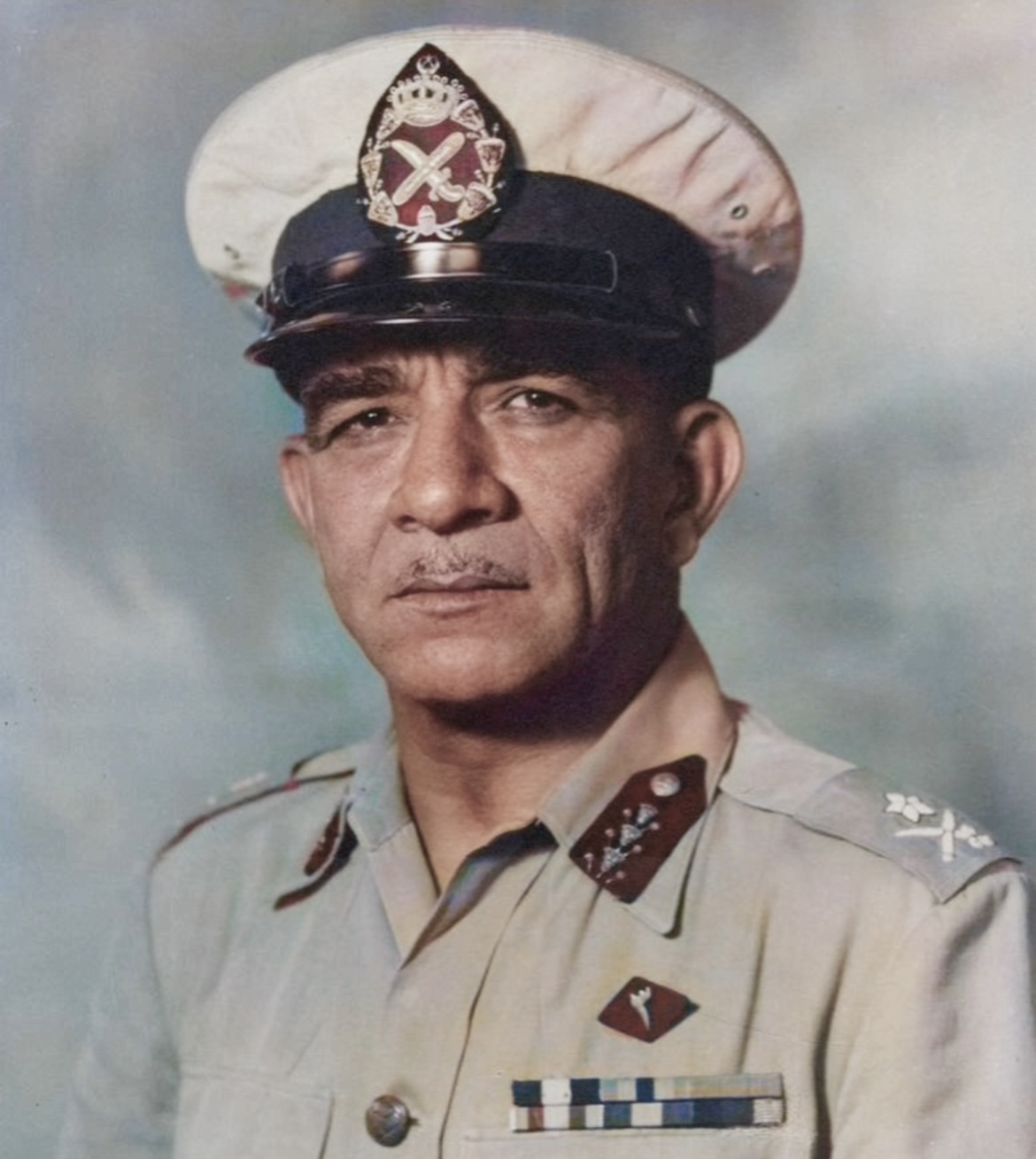
Mohamed Naguib
 Egypt
Egyptpolitician•military personnel•president
Birthday
+1901-02-20
Birth Sign
Sagittarius
Birthplace
Khartoum
Age
Died at 83
About
Mohamed Naguib, born on February 20, 1901, in Khartoum, was an Egyptian military officer and revolutionary who played a pivotal role in shaping modern Egypt. As a major general, he co-led the Free Officers movement with Gamal Abdel Nasser, which toppled the monarchy in 1952 and established the Republic of Egypt. Naguib's career spanned decades of military service, marked by bravery and leadership, and he became the country's first president after the revolution. Naguib's military path began early, and he distinguished himself in the 1948 Arab-Israeli War, where he was wounded in action. His reputation as a decorated and principled officer made him a natural leader for the Free Officers, a group of nationalist army officers frustrated by British influence and the corruption of King Farouk's regime. After the successful coup in July 1952, Naguib assumed multiple roles: head of the Revolutionary Command Council, Prime Minister, and eventually President. His leadership was instrumental in negotiating Sudan's independence from the Anglo-Egyptian condominium and securing the withdrawal of British troops from Egypt. However, Naguib's tenure was short-lived. Disagreements with fellow Free Officers, particularly Nasser, over the direction of the revolution led to his forced resignation in November 1954. He spent the rest of his life under house arrest, largely forgotten by the public until his death on August 28, 1984, at age 83. Despite his fall from power, Naguib's role as a founding father of the republic remains a critical chapter in Egypt's history.
Fame & Fandom
Mohamed Naguib stands as the 34th most famous person from Egypt, a position he has held steady through multiple cycles of global attention. This standing within the iFANN Global Fame Rankings reflects his enduring status as a foundational figure in modern Egyptian history rather than fleeting celebrity. His legacy is anchored by the pivotal role he played in the 1952 revolution and his tenure as the nation's first president, ensuring his name remains prominent in historical discourse.
Unlike modern entertainers who cultivate organized followings with specific names or rituals, Naguib did not have a formal fanbase in the pop culture sense. There is no documented fandom name for this historical statesman, nor are there records of fan-funded projects, birthday billboards, or social media campaigns dedicated to him. His supporters were primarily citizens, soldiers, and political allies during the revolutionary era. The reverence shown for him today manifests through historical memory, state institutions, and educational curricula rather than the interactive engagement typical of contemporary celebrities. He interacted with the public as a head of state, and his reputation rests on verified military service and leadership rather than performance lore or viral moments.
Interesting Facts and Legends
Historical accounts universally cite Mohamed Naguib as the principal leader of the Free Officers Movement that executed the bloodless coup against King Farouk. This event serves as the central pillar of his legend, marking the transition from monarchy to the Republic of Egypt. Following the coup, he formed his first cabinet and became the country's first president. A widely retold story in Egyptian political folklore details his eventual sidelining by Gamal Abdel Nasser, leading to his forced resignation and house arrest, a narrative often discussed regarding the erasure of early revolutionary leaders.
Naguib's military reputation was solidified during the 1948 Arab-Israeli War, where he distinguished himself as a professional soldier despite the defeat, an experience that fueled anti-monarchy sentiment within the army. His legacy is permanently etched into Egypt's military geography through the Mohamed Naguib Military Base, a major installation hosting significant international exercises like Bright Star. Although he died in 1984, his symbolic importance remains reinforced by state actions, such as the base's inauguration by President Abdel Fatah al-Sisi in 2017, keeping his memory alive as a national hero.
Death & Aftermath
Died
+1984-08-28 (aged 83)
Death Place
Cairo, Egypt
Cause of Death
Natural causes associated with advanced age
Mohamed Naguib spent his final decades in relative obscurity after being removed from public life by Gamal Abdel Nasser, living out the last thirty years away from the political spotlight that had once defined him. On August 28, 1984, the first President of Egypt passed away in Cairo at the age of 83, bringing an end to a life marked by revolutionary fervor and subsequent silence., contemporary accounts from The New York Times described his passing as following a long period of retirement, implying natural causes associated with advanced age rather than violence or accident. Public reaction to his death was characterized by official state tributes and a gradual historical re-evaluation rather than mass vigils or immediate fan gatherings.
The New York Times published an obituary highlighting his pivotal role in toppling King Farouk and establishing the republic, marking the end of an era for the revolutionary generation. Although specific details regarding the funeral ceremony remain unrecorded in available sources, it is standard protocol for a figure of his stature to receive a state funeral in Cairo, likely conducted with low profile due to the sensitive nature of his relationship with the Nasser regime. Posthumously, Naguib has seen a resurgence in recognition through institutional dedications rather than new artistic releases directly tied to his death in 1984. The most significant posthumous honor is the naming of the Mohamed Naguib Military Base west of Alexandria, inaugurated by President Abdel Fatah al-Sisi in July 2017, which serves as a lasting tribute to his military career and later hosted multinational exercises like Bright Star 25 in 2025.
In 2019, discussions emerged regarding the state's historical tendency to minimize the legacies of presidents like Naguib, suggesting that while his death was noted, his full historical significance was often downplayed in state media for decades.
Awards & Accolades
Keywords
Quick Facts
- Profession
- politician, military personnel, president
- Born
- +1901-02-20
- Birthplace
- Khartoum
- Died
- +1984-08-28
- Death Place
- Cairo
- Gender
- Male
- Birth Sign
- Sagittarius
Join the community
fans discussing