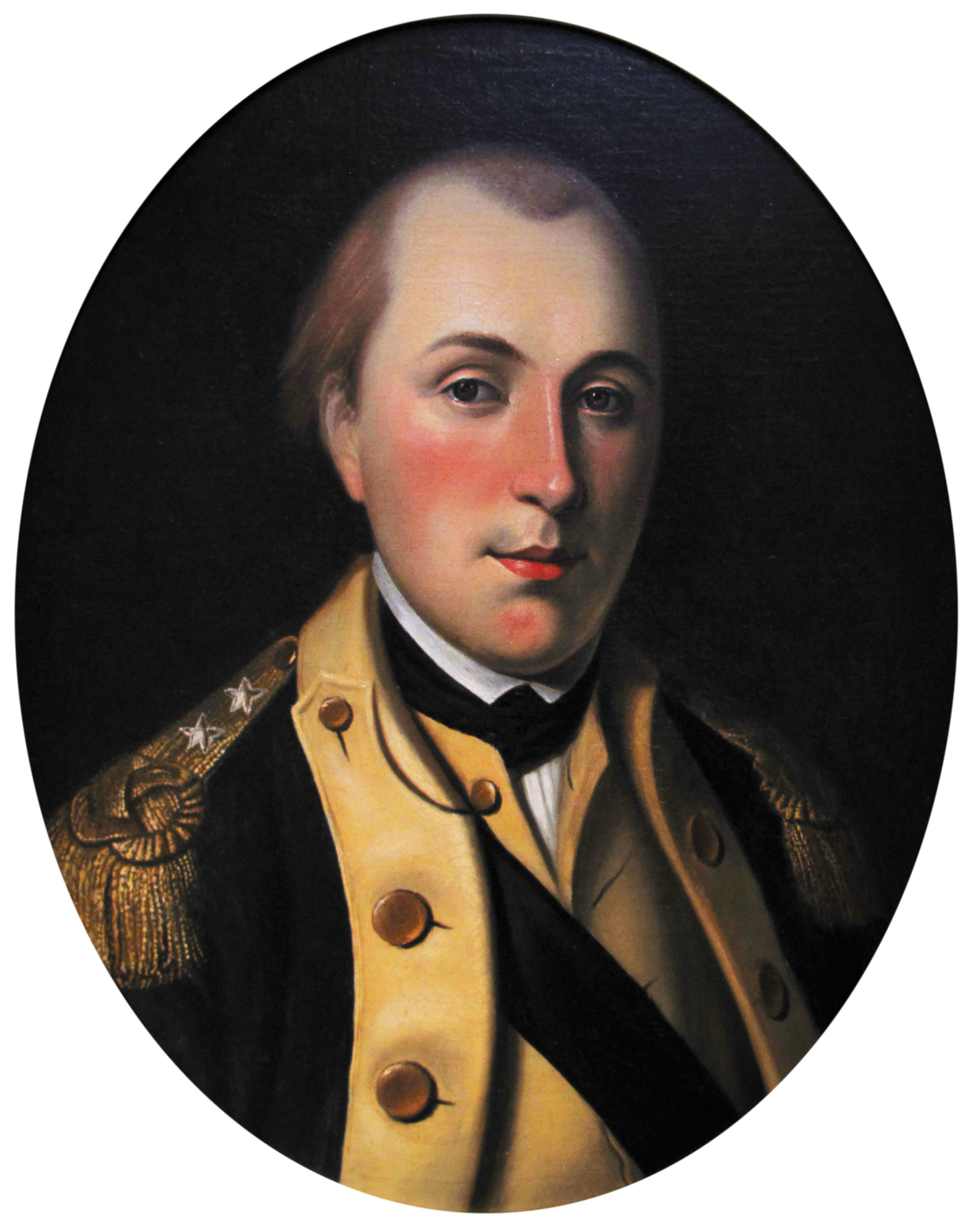
Marquis de Lafayette
 France
military officer•politician•aristocrat
Birthday
+1757-09-06
Birth Sign
Virgo
Birthplace
Chavaniac-Lafayette
Age
Died at 76
About
Born into French nobility in 1757, the Marquis de Lafayette embodied a spirit of adventure and conviction. He was a military officer and politician whose life became inextricably linked with two major global events: the American Revolution and the French Revolution. His early life in Chavaniac-Lafayette set the stage for a career that would see him command troops on foreign soil and shape the political landscape of his homeland.
Fame & Fandom
Marquis de Lafayette remains a towering figure in global history, currently holding the distinction of being the 65th most famous person from France, a position he has maintained steadily since the previous cycle. This standing within the iFANN Global Fame Rankings reflects a legacy that transcends simple biography, anchoring his name firmly in the collective memory of two nations. His influence is measured not just by past deeds but by an enduring resonance that keeps him relevant centuries after his passing.
While he does not command a modern, organized fandom with a specific name or ritualistic campaigns like contemporary pop icons, his legacy thrives through dedicated reenactors and institutional engagement. A notable recent surge occurred when Miles Taylor, a reenactor portraying Lafayette, sparked widespread digital conversation on TikTok in June 2026. Visitors at the French National Archives have also embraced the Marquis as a surprising selfie favorite during the France-America 250 commemorations, proving that historical reverence can manifest in modern, spontaneous ways. The fanbase consists primarily of historians, students, and enthusiasts who engage with his story through lectures, museum exhibitions, and participation in historical programs rather than chart-topping drives or branded merchandise. These interactions keep the spirit of the Hero of Two Nations alive without the need for formalized subcultures.
Interesting Facts and Legends
Born into French nobility in 1757, the Marquis de Lafayette sailed to America in 1777 at age nineteen, volunteering his services without pay to fight under General George Washington. This act of selfless devotion stands as the cornerstone of his legend as the "Hero of Two Nations." During the American Revolutionary War, his leadership proved instrumental at the Battle of Yorktown in 1781, a victory that effectively ended the conflict. He further cemented the bond between his adopted homeland and France by sending the key to the Bastille to Washington as a symbolic gift.
Lafayette's second legendary chapter unfolded during his Grand Tour of the United States from 1824 to 1825. After years of imprisonment in Europe, he returned to America as a celebrated hero, receiving extraordinary public reactions in every state. Streets were shut down for his processions, and he was treated with reverence comparable to a monarch, receiving thousands of gifts and tokens of affection over the course of more than a year. While no fans fainted or disrupted events in the manner of modern celebrity tours, the sheer scale of this reception became folklore, transforming verified historical facts into enduring myths about liberty and democracy that are still traced in exhibitions today.
Death & Aftermath
Died
+1834-05-20 (aged 76)
Death Place
Paris, Île-de-France, France
Cause of Death
Complications from fever and ruptured aneurysm
By the spring of 1834, the Marquis de Lafayette had largely withdrawn from the political fray in Paris following years of declining health and the restrictive policies of King Louis Philippe I. He spent his final days at the Hôtel de Noailles, his family home, where he experienced a sudden collapse that marked the end of a life spanning nearly three-quarters of a century. On May 20, 1834, he passed away at the age of 76, with official records attributing the event to complications arising from a severe fever and a ruptured aneurysm. The public reaction across both nations was immediate and profound. In Paris, the city observed three days of mourning with flags flown at half-mast, while tributes poured in from peers including King Louis Philippe I, who declared him a great man and ordered a state funeral.
Across the Atlantic, Congress adjourned in mourning and President Andrew Jackson directed a memorial service at the White House, followed by a massive procession in Washington, D.C., that drew tens of thousands of mourners. The demand for biographical pamphlets and eulogies surged immediately, reflecting a national outpouring of grief comparable to any modern commemoration. Lafayette's funeral took place on May 24, 1834, featuring a grand ceremony attended by dignitaries from France and the United States. Although initially buried in the Picpus Cemetery alongside his wife, Marie-Joseph Paul Yves Roch Gilbert du Motier, his remains were exhumed decades later. In accordance with his expressed wishes and a special act of the U.S.
Congress in 1840, his body was transferred back to France in September 1840 to rest in the crypt of the Hôtel des Invalides, while a cenotaph was erected at West Point to mark his legacy. His estate was managed by his son, Georges Washington de La Fayette, before passing to the next generation, leaving behind a foundation of scholarships and monuments dedicated to Franco-American relations.
Awards & Accolades
Keywords
Quick Facts
- Profession
- military officer, politician, aristocrat
- Born
- +1757-09-06
- Birthplace
- Chavaniac-Lafayette
- Died
- +1834-05-20
- Death Place
- former 1st arrondissement of Paris
- Gender
- Male
- Spouse
- Adrienne de Noailles, Mademoiselle d'Ayen
- Birth Sign
- Virgo
Personal Details
- Spouse
- Adrienne de Noailles, Mademoiselle d'Ayen
Join the community
fans discussing