 France
About
Marguerite Yourcenar was a Belgian-born French novelist, essayist, and poet who became a naturalized United States citizen in 1947. She is best known for her historical novels, particularly Memoirs of Hadrian, which established her as one of the most significant literary figures of the 20th century. In 1980, she made history as the first woman elected to the Académie Française, earning the title "Immortelle." Her career was defined by intellectual rigor, a deep engagement with classical history and philosophy, and a reclusive personal life. She died on December 17, 1987, at the age of 84 in Plaisance, France.
Early Life & Background
Born Marguerite Antoinette Jeanne Marie Ghislaine Cleenewerck de Crayencour on June 8, 1903, in Brussels, Belgium, Yourcenar faced early tragedy when her father, Count Fernand Cleenewerck de Crayencour, died in 1907. This loss left her mother, Louise van Rysselberghe, to raise her alone. The family moved to France, settling near Saint-Sauveur-en-Puisaye in the Yonne department, where they owned the country estate Le Chanteloube. Her upbringing was marked by solitude and intense reading rather than formal schooling. Although she briefly attended a convent school, her education was primarily conducted at home by her mother and private tutors. This environment fostered a contemplative nature and a lifelong love for languages, literature, and the classics. By her teens, she was already writing poetry and translating ancient texts. The isolation of her childhood fueled her interest in ancient civilizations during travels across Europe with her mother, visiting Italy, Greece, and Germany. In the 1920s, she began publishing under the pseudonym "Marguerite Yourcenar," a name derived from her grandfather's surname combined with a masculine-sounding suffix to ensure serious reception in a male-dominated literary world. Her first major step was the 1926 publication of Les Charités d'Alcippe, though it was the controversial novel Alexis (1929) that garnered significant critical attention. During the 1930s, she traveled extensively, including a pivotal trip to the United States in 1933-1934 where she met Grace Frick. When World War II broke out, Yourcenar fled Europe, eventually settling in the United States in 1940 before becoming a U.S. citizen in 1947.
Career Growth
Yourcenar's literary career spanned over six decades, characterized by a unique blend of historical research and philosophical inquiry. Her breakthrough moment came with the publication of Memoirs of Hadrian in 1951. Written in the voice of the Roman Emperor Hadrian, the novel is a fictional autobiography that explores themes of power, love, death, and governance. The book was an immediate international success, translated into numerous languages and winning the Prix Femina in 1951. It remains her most famous work and is considered a masterpiece of historical fiction. Following this triumph, she published The Abyss (L'Œuvre au Noir) in 1958, a novel set in the 16th century about a physician and alchemist named Zénon. This work won the Grand Prix du Roman de l'Académie française in 1968 and further solidified her status as a major literary figure. In 1980, Yourcenar achieved a historic milestone when she was elected to the Académie Française, becoming the first woman to hold this position. She took her seat as "Immortelle" in 1981. Despite her fame, she remained largely reclusive, living in a stone house on Mount Desert Island, Maine, known as "Château de Couillon" (later renamed "La Maison des Muses"), where she lived with Grace Frick. Her later years saw her focusing on essays, translations, and public speaking, though she avoided the limelight. She received the Erasmus Prize in 1965 and was nominated for the Nobel Prize in Literature in 1965.
Career Timeline
Public Image & Style
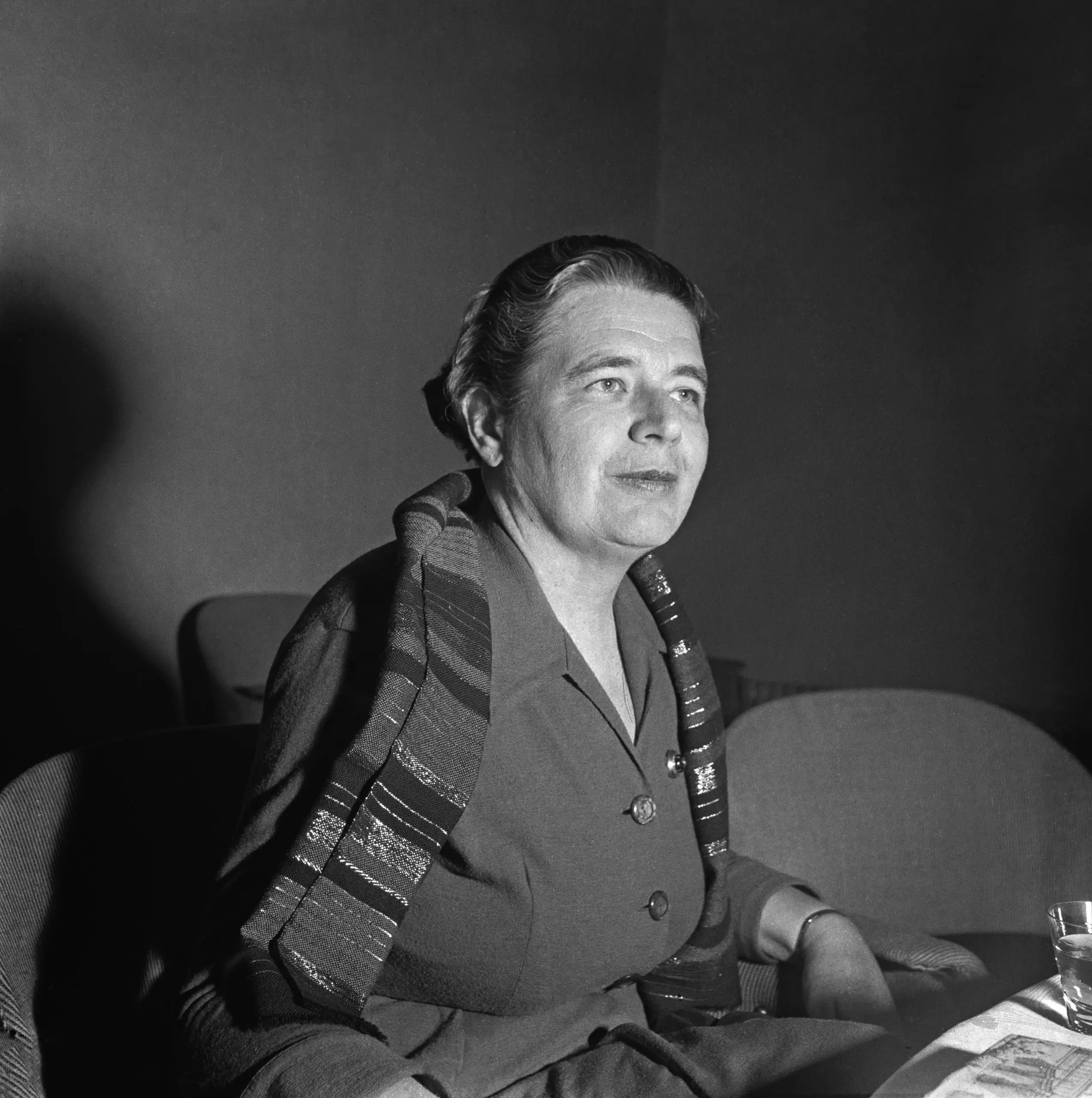
Yourcenar is portrayed as a serious, intellectual, and reclusive figure. Her writing is characterized by its depth, historical accuracy, and philosophical inquiry. She is often described as a feminist icon and a pioneer for LGBTQ+ representation in literature. Contemporary accounts describe her as a strong-looking woman, often dressed in simple, practical clothing. She was known for her piercing gaze and intellectual demeanor. Her withdrawal from public life after joining the Académie became part of her legend, reinforcing her image as a solitary thinker. Her public persona was one of dignity and restraint, avoiding the limelight despite her immense literary success.
Fame & Fandom (iFAMOUS Rankings)
Marguerite Yourcenar remains a figure of profound historical significance within the literary canon, though her contemporary standing does not translate into global celebrity metrics. The iFANN Global Fame Engine evaluated her profile in September 2026 and determined that she currently holds no placement within the published rankings or any Top-100 scope list. This absence reflects the nature of her legacy: a celebrated author whose influence is measured in academic study and enduring readership rather than the volatile fluctuations of modern fame charts. While she was the first woman elected to the Académie Française, these achievements anchor her in history rather than generating the mass-market visibility required for a ranked position on the current global list. Her audience consists primarily of scholars, historians, and dedicated readers of classical fiction who engage with texts like Memoirs of Hadrian without forming a cohesive pop-culture movement. There is no documented name for a fanbase, nor are there organized chapters, fan-funded campaigns, or ritualistic gatherings associated with her memory. The engagement surrounding her work appears as a steady stream of intellectual appreciation rather than the fervent hysteria typical of chart-topping artists. Recent discussions linking her philosophy to modern political figures suggest an enduring relevance, yet this manifests as critical analysis rather than fandom activity. Consequently, while her stature as a writer is undeniable, her status in the realm of immediate global popularity remains unranked by the system.
Interesting Facts and Legends
Yourcenar adopted the pseudonym "Marguerite Yourcenar" to avoid the gender bias of the time. She was fluent in multiple languages and translated ancient Greek texts into French. Her novel Memoirs of Hadrian was written in the style of a letter, mimicking the voice of the Roman Emperor. She was a close friend of many prominent intellectuals, including André Gide and Albert Camus. Her home in Maine, "Château de Couillon," was a place of retreat and creativity, where she wrote many of her later works. A story often retold involves the so-called "Hadrianic method," where readers apply the stoicism found in her novel Memoirs of Hadrian to their own lives, creating a unique cultural mythos around her fictional creation. In 2020, Google honored her 117th birthday with a special Doodle, acknowledging her impact on literature. Her bisexuality and early life in Europe have also become subjects of biographical interest, particularly in discussions regarding LGBTQ+ history in the mid-twentieth century. Critics frequently note how her reclusive nature in East Hampton contrasted with the vast reach of her written works.
Notable Quotes
“Of all our games, love's play is the only one which threatens to unsettle the soul...”
“Our great mistake is to think that we can live without pain.”
“All forms of wisdom are essential in the world.”
“I am not a man, I am a woman, but I am also a man.”
Family & Personal Life
Yourcenar was the daughter of Count Fernand Cleenewerck de Crayencour and Louise van Rysselberghe. Her father died when she was only four years old, leaving her mother to raise her alone. Following her father's death, the family moved to France, settling near Saint-Sauveur-en-Puisaye in the Yonne department, where they owned a country estate called Le Chanteloube. She spent much of her youth traveling across Europe with her mother. There is no evidence of other long-term romantic relationships or marriages prior to or concurrent with her partnership with Grace Frick. Yourcenar was openly bisexual, and her writings often explore themes of same-sex love and fluidity. However, her public life was dominated by her relationship with Frick, and she never publicly acknowledged other romantic partners. After Frick's death in 1988, Yourcenar had already passed away the previous year, so there were no subsequent relationships.
Notable Connections
Relationships & Dating History
Yourcenar's personal life was deeply intertwined with her relationship with Grace Frick. Their romance began in the 1930s during a trip to the United States. They fell in love while traveling together, and their bond lasted until Yourcenar's death. While they never legally married, they lived together as partners for over 50 years, moving to the United States in 1947 and settling in Maine in 1953. Grace Frick served as Yourcenar's secretary, editor, and companion, playing a crucial role in her literary career. Their relationship was one of mutual respect and intellectual partnership, and they were widely recognized as a couple by their peers and friends. There is no evidence of other long-term romantic relationships or marriages prior to or concurrent with her partnership with Grace Frick. Yourcenar was openly bisexual, and her writings often explore themes of same-sex love and fluidity. However, her public life was dominated by her relationship with Frick, and she never publicly acknowledged other romantic partners. After Frick's death in 1988, Yourcenar had already passed away the previous year, so there were no subsequent relationships. As of 2026, Marguerite Yourcenar is deceased. She died on December 17, 1987, at the age of 84, in Plaisance, France, at the Château de Couillon, which she shared with Grace Frick.
- DatingGrace Frick1933 - 1987Lifelong partner who lived with Yourcenar for over 50 years; served as her secretary and editor.
Death & Aftermath
Died
December 17, 1987 (aged 84)
Death Place
Plaisance, France
Cause of Death
Natural causes associated with old age
The literary world marked the end of an era in French letters when Marguerite Yourcenar passed away, a moment honored by tributes from peers and institutions acknowledging her historic status as the first woman elected to the Académie Française. Her death occurred on December 17, 1987, at the age of 84 within the quiet seclusion of her home, the Chateau de Couillon in Plaisance, France, where she had resided with her lifelong partner Grace Frick since 1953. Final days were spent in relative isolation consistent with her reclusive nature in later years, following her withdrawal from public life after joining the Académie in 1980.
A private funeral service followed shortly thereafter, with burial taking place at the chateau or in the local cemetery alongside Grace Frick. Posthumous interest has remained steady rather than transient, with recent readings of Memoirs of Hadrian appearing in contemporary political contexts and critical studies such as Josyane Savigneau's 2017 biography sustaining her legacy. A Google Doodle honored her 117th birthday in 2020, while her estate continues to manage works for publication and academic study.
Net Worth (Estate Value)
$15 Million
iFANN Editorial Team estimate
As a deceased author, Marguerite Yourcenar's financial standing is best understood through the value of her estate. Research by the iFANN Editorial Team puts her estate's value at around $15 million as of 2026. Her estate continues to generate revenue through royalties from her books, particularly Memoirs of Hadrian, which remains a bestseller worldwide. The estate is managed by her heirs and literary executors, who oversee licensing deals, translations, and posthumous publications. Exact figures for her estate value as of 2026 are not publicly disclosed, but her works continue to sell steadily, indicating a sustained financial legacy. The estate likely earns millions annually from book sales, film rights (though few adaptations exist), and academic licensing. Her literary contributions have ensured a consistent income stream long after her passing, reflecting the enduring appeal of her work in both academic and general markets.
Awards Won (4)
Marguerite Yourcenar received numerous accolades throughout her career. She won the Prix Femina in 1951 for Memoirs of Hadrian and the Grand Prix du Roman de l'Académie française in 1968 for The Abyss. She was awarded the Erasmus Prize in 1965 for her contributions to European culture and literature. In 1980, she made history as the first woman elected to the Académie Française. She was nominated for the Nobel Prize in Literature in 1965 and received honorary doctorates from several universities, including Yale University and the University of Liège.
1951 · Novel
Memoirs of Hadrian
1965 · Literature
Contributions to European culture and literature
Known For
Memoirs of Hadrian
1951 · Author
The Abyss
1958 · Author
Alexis
1929 · Author
Keywords
Sources
Quick Facts
- Profession
- novelist, poet, essayist
- Born
- June 8, 1903
- Birthplace
- Brussels, Belgium
- Died
- December 17, 1987
- Death Place
- Plaisance, France
- Gender
- Female
- Spouse
- Grace Frick
- Birth Sign
- Gemini
Personal Details
- Full Name
- Marguerite Antoinette Jeanne Marie Ghislaine Cleenewerck de Crayencour
- Spouse
- Grace Frick
- Children
- Education
- Self-educated; attended convent school briefly
Frequently Asked Questions
Who was Marguerite Yourcenar?
What was Marguerite Yourcenar's relationship with Grace Frick?
Did Marguerite Yourcenar win the Nobel Prize?
When did Marguerite Yourcenar die?
What is the "Hadrianic method"?
Similar People


Join the community
fans discussing