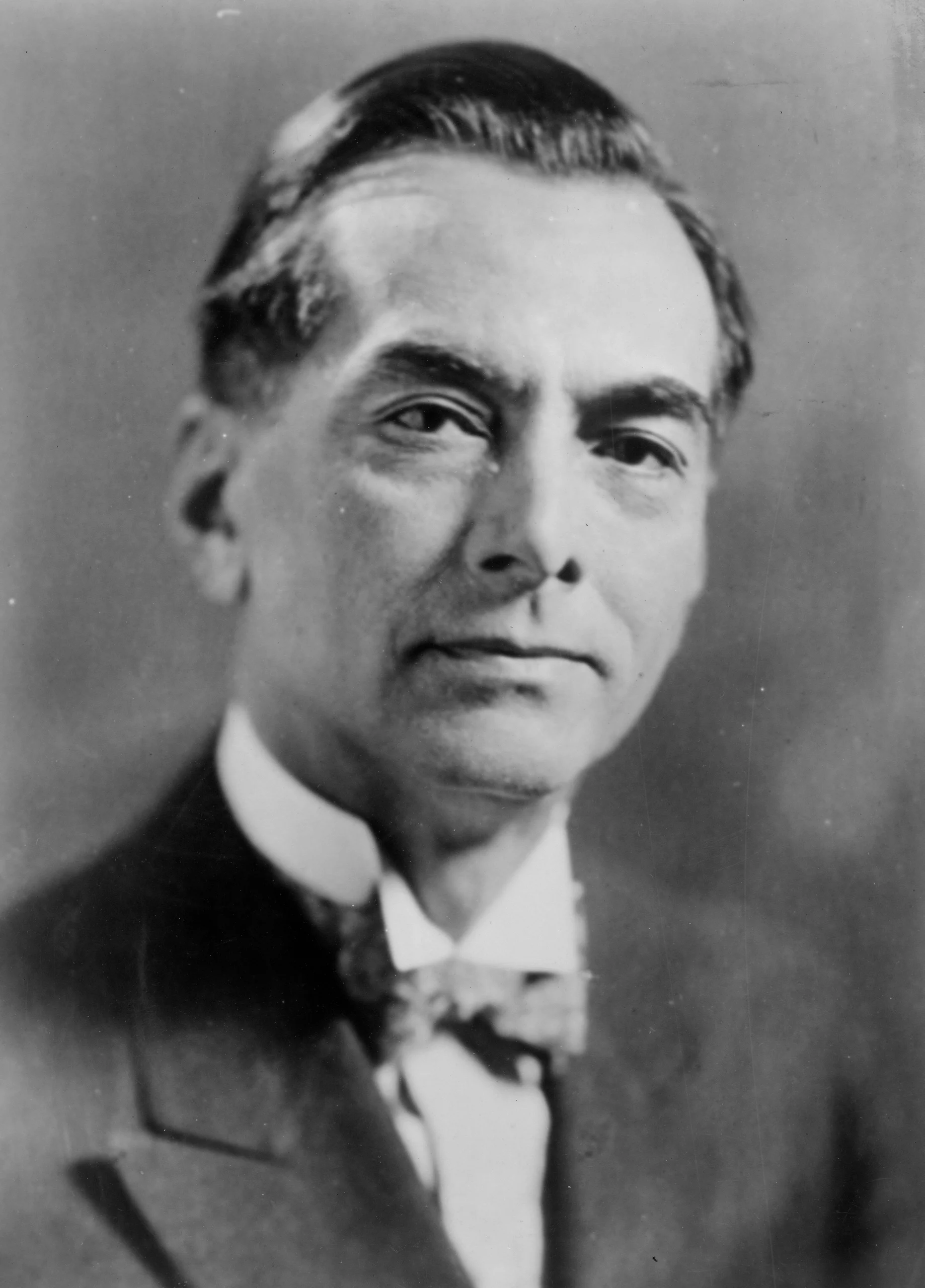
Manuel L. Quezon
 Philippines
Also known as: MLQ, Manuel Luis Quezon, M. L. Q.
Birthday
August 19, 1878
Birth Sign
Leo
Birthplace
Baler, Tayabas Province (now Aurora), Luzon
Age
Died at 65
About
Manuel Luis Quezon y Molina, known universally as MLQ, was a Filipino statesman, soldier, and lawyer who served as the second president of the Philippines and the first president of the Commonwealth. Born in Baler in 1878, he rose from provincial roots to become the first Filipino to govern the entire archipelago. His tenure as president began in 1935 following his victory over Emilio Aguinaldo in the presidential election. Quezon's leadership defined the pre-war era, characterized by aggressive nation-building, land reform efforts, and the preparation of the islands for eventual independence.
His presidency concluded tragically in exile during World War II. Facing the Japanese invasion in 1941, Quezon evacuated to the United States to establish a government-in-exile, ensuring the continuity of Philippine sovereignty. He worked closely with President Franklin D. Roosevelt to secure aid for the liberation of the islands. Quezon died in 1944 in New York, leaving behind a legacy that includes the founding of Quezon City and the establishment of the national language.
Early Life & Background
Manuel Luis Quezon y Molina entered the world on August 19, 1878, in Baler, a remote town in the province of Tayabas on the island of Luzon. His father, Lucio Quezon, worked as a schoolteacher and local official, while his mother, Marcela Molina, came from a prominent family. Despite modest means, the family valued education, and young Manuel attended the municipal school in Baler before moving to Lucena for secondary studies. His academic performance stood out early, leading him to pursue higher education in Manila.
He enrolled at the University of Santo Tomas to study law, graduating with honors in 1902. During his university years, Quezon distinguished himself as a skilled debater and orator, qualities that would later define his political career. Before entering national politics, he served as a municipal councilor in Baler and later as the governor of Tayabas province. In these local roles, he implemented infrastructure projects and modernized governance, laying the groundwork for his future rise to national prominence.
Career Growth
Quezon's ascent to national power began in the early 1900s under American colonial rule. In 1906, he was elected as the Resident Commissioner to the U.S. House of Representatives, a position he held until 1916. During this period, he tirelessly lobbied for Philippine autonomy and self-governance. Upon returning to the Philippines, he became a senator in 1916 and quickly emerged as the leader of the Nacionalista Party.
A pivotal moment arrived with the 1935 presidential election, where Quezon defeated Emilio Aguinaldo to become the head of the newly formed Commonwealth of the Philippines. His presidency, lasting from 1935 until his death in 1944, was marked by significant reforms. He reorganized the military, initiated land redistribution programs, and championed the development of Mindanao. When World War II erupted and Japanese forces invaded in 1941, Quezon evacuated to the United States. There, he established a government-in-exile to maintain Philippine sovereignty, working closely with President Franklin D. Roosevelt to prepare for the liberation of the islands.
Career Timeline
Public Image & Style
Quezon is remembered as a fiery orator and a pragmatic leader who centralized power to navigate the complexities of a commonwealth on the brink of war. Some scholars describe his leadership style as a "de facto dictatorship" due to his removal of term limits and the transformation of the Senate into an extension of the executive. Yet others see a necessary consolidation of authority to protect the nation during the Great Depression and the looming threat of war. His public persona was defined by a fierce advocacy for sovereignty and a commitment to improving the lives of ordinary Filipinos. He is often depicted in historical imagery as a commanding figure, standing tall against the backdrop of colonial transition.
Fame & Fandom (iFAMOUS Rankings)
Manuel L. Quezon stands as a towering figure in Philippine history, currently recognized as the 47th most famous person in Philippines, a position that has risen from 50th last cycle. His influence extends globally through the 23rd most famous person from Philippines ranking, a standing he has maintained steadily against new contenders. These placements reflect his enduring resonance within the iFANN Global Fame Rankings, which track global attention across media coverage, search, and consumption signals worldwide. While modern pop stars often rely on viral campaigns, Quezon's fame is rooted in the quiet reverence of a nation that remembers his leadership during the Commonwealth era and his tragic death in exile. There is no formal fanbase name for this historical statesman, nor do citizens organize under a specific collective moniker like those seen with contemporary idols. Instead, his legacy is upheld by government bodies and historians who manage annual commemorations, such as the Holy Mass and tomb blessing held on August 1, marking his 82nd death anniversary. The release of the biopic titled Quezon in October 2025 sparked significant public reaction when Enrique Ricky Quezon, the president's grandson, publicly criticized filmmakers for historical inaccuracies. This moment highlighted that the guardians of his story are his descendants and scholars rather than a grassroots fan club. Unlike modern celebrities whose fans drive streaming numbers or billboard projects, Quezon's supporters engage through institutionalized remembrance and educational media, ensuring his voice remains a vital part of the national conversation.
Interesting Facts and Legends
Manuel L. Quezon was the first Filipino to serve as a Resident Commissioner in the U.S. Congress, a role he used to advocate for independence. He is credited with initiating the "Filipino First" policy, which prioritized Filipino interests in economic matters. One of his most famous quotes encapsulates his stance on sovereignty: "I would rather have a government run like hell by Filipinos than one run like heaven by Americans." Beyond politics, Quezon demonstrated remarkable moral courage by sheltering Jewish refugees during the Holocaust, an act recently highlighted by UNRC remarks in January 2026. Private letters sent to his wife also offer a rare glimpse into his personal life, where he pleaded, "Please don't doubt me... My love has never changed," serving as a defense against rumors of infidelity that occasionally surface in historical discourse.
Notable Quotes
“I would rather have a government run like hell by Filipinos than one run like heaven by Americans.”
“Please don't doubt me... My love has never changed.”
“The Filipino people are capable of self-government.”
Family & Personal Life
Manuel L. Quezon was married only once to Aurora Aragon on March 28, 1903. The couple remained together until his death, sharing a deep bond documented in their extensive correspondence. They met through mutual acquaintances in Baler, and their marriage was marked by loyalty and shared political struggle. Aurora served as the First Lady during the Commonwealth era and accompanied her husband into exile in the U.S. Historical records confirm that despite rumors occasionally surfacing regarding infidelity, Quezon explicitly defended his fidelity to his wife. There were no children born to them. After his death, Aurora managed his legacy until her own passing in 1949.
Notable Connections
Franklin D. Roosevelt, Emilio Aguinaldo, Aurora Quezon, Manuel Roxas, Sergio Osmeña.
Relationships & Dating History
Manuel L. Quezon was married only once. He wed Aurora Aragon on March 28, 1903. The couple remained together until his death, sharing a deep bond documented in their extensive correspondence. They met through mutual acquaintances in Baler. Their marriage was marked by loyalty and shared political struggle; Aurora served as the First Lady during the Commonwealth era and accompanied her husband into exile in the U.S. There were no children born to them. Historical records and private letters, such as those cited in recent 2026 analyses, confirm that despite rumors occasionally surfacing regarding infidelity, Quezon explicitly defended his fidelity to his wife, stating, "Please don't doubt me... My love has never changed." As of the historical record, Quezon died widowed, leaving his spouse to manage his legacy until her own passing in 1949. There are no other recorded romantic relationships or marriages.
- MarriedAurora Aragon Quezon1903 - 1944Remained married until his death; no children.
Death & Aftermath
Died
August 1, 1944 (aged 65)
Death Place
Saranac Lake, New York, USA
Cause of Death
Pulmonary tuberculosis
While leading the Philippine government-in-exile during World War II, Manuel L. Quezon traveled to Saranac Lake, New York, to seek specialized medical care for a condition that had plagued him for years. He spent his final days at the Saranac Lake Sanitarium, continuing to address the Filipino people and international allies regarding the liberation of their nation until his health deteriorated too severely to sustain travel or extensive work. On August 1, 1944, he passed away at the age of 65 from pulmonary tuberculosis, a diagnosis confirmed by hospital statements and medical records. The news of his passing triggered immediate grief across both the Philippines and the United States. President Franklin D. Roosevelt expressed deep sorrow over the loss of a close friend and ally, while schools, government offices, and churches throughout the archipelago observed moments of silence.
His remains were initially interred with full military honors at Arlington National Cemetery on August 8, 1944, before being repatriated to the Philippines after the war ended. On October 30, 1946, his body was reinterred at the Quezon Memorial Circle in Quezon City, a site designed specifically to house his mausoleum as a national monument. Posthumously, Quezon received the Philippine Legion of Honor and other distinctions, while his family established the Quezon Foundation to support educational and social welfare initiatives. His legacy endures through annual commemorations of his birth and death anniversaries, and his name remains immortalized in Quezon City and Quezon Province.
Net Worth (Estate Value)
$0
iFANN Editorial Team estimate
As a deceased historical figure who lived in the early 20th century, Manuel L. Quezon does not have a modern net worth in the context of celebrity finance. His estate value is not tracked in contemporary currency terms as he left no personal fortune in the modern sense; his wealth was tied to his political office and land holdings, which were largely managed by the state or distributed through his foundation. Any estimates of "net worth" found online are speculative or refer to the economic value of his legacy assets today, which are not quantified by credible financial sources. The iFANN Editorial Team confirms that no credible financial data exists for his personal estate valuation.
Awards Won (3)
Quezon received numerous posthumous and lifetime honors for his service, including the Philippine Legion of Honor and the Order of the British Empire (KBE). His Presidential Papers were inscribed on the UNESCO Memory of the World Register in 2006. He is widely regarded as a national hero, though not officially declared via specific legislation like Rizal.
1944 · Distinguished Service
Posthumous Award
1944 · Honorary Knight Commander
Allied War Effort
Known For
President of the Philippines
1935 · Second President / First Commonwealth President
Quezon City
1938 · Founder
Keywords
Sources
Quick Facts
- Profession
- politician, lawyer
- Born
- August 19, 1878
- Birthplace
- Baler, Tayabas Province
- Died
- August 1, 1944
- Death Place
- Saranac Lake, New York
- Gender
- Male
- Spouse
- Aurora Quezon
- Birth Sign
- Leo
Personal Details
- Full Name
- Manuel Luis Quezon y Molina
- Spouse
- Aurora Aragon Quezon
- Children
- Education
- University of Santo Tomas, Bachelor of Laws (1902)
Frequently Asked Questions
Who was Manuel L. Quezon?
When did Manuel L. Quezon die?
Did Manuel L. Quezon have children?
What is Manuel L. Quezon famous for?
Is there a movie about Manuel L. Quezon?
Join the community
fans discussing