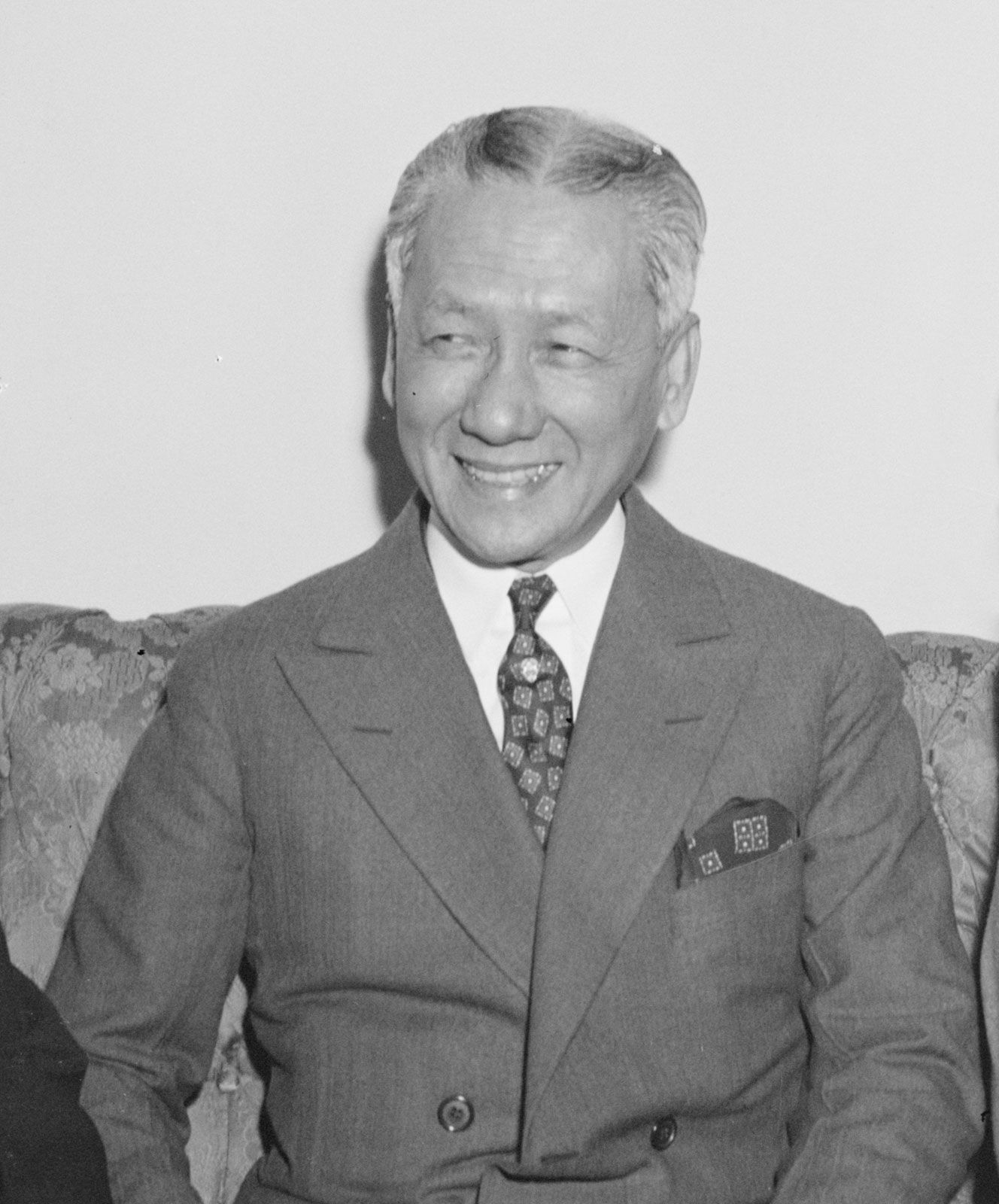
Sergio Osmeña
 Philippines
Also known as: Sergio Osmeña Sr., Grand Old Man of Cebu
Birthday
September 9, 1878
Birth Sign
Virgo
Birthplace
Cebu City, Philippines
Age
Died at 83
About
Sergio Osmeña Sr. was a Filipino lawyer and statesman who served as the fourth president of the Philippines from 1944 to 1946. He holds the distinction of being the first Visayan to reach the presidency and the first vice president to ascend to the office. Osmeña's political career spanned five decades, marked by his role as a founding figure of the Nacionalista Party, governor of Cebu, and the first speaker of the House of Representatives.
His presidency, though the shortest in Philippine history at just over a year, came at a pivotal moment: he led the country during the final months of World War II and the transition toward independence. Osmeña is remembered for his quiet resolve, intellectual rigor, and commitment to democratic governance. He died on October 19, 1961, leaving behind a political dynasty that continues to shape Philippine public life.
Early Life & Background
Sergio Osmeña was born on September 9, 1878, in Cebu City to Don Antonio Sanson, a wealthy Chinese mestizo businessman, and Juana Osmeña y Suico. Because his father was already married, Osmeña was considered illegitimate and took his mother's surname. He grew up in a household shaped by this complex family dynamic, yet his mother ensured he received a strong education.
He studied at the Colegio de San Carlos in Cebu before moving to Manila to attend San Juan de Letran College, where he met Manuel L. Quezon, a friendship that would shape Philippine politics. Osmeña pursued law at the University of Santo Tomas, graduating in 1903 and placing second in the bar examinations. His early career included work as a journalist for the newspaper El Nuevo Dia, which he co-founded, and later as a court clerk.
At age 25, Osmeña was appointed acting provincial governor of Cebu in 1904, a role that marked his entry into public service. He later served as provincial fiscal for Cebu and Negros Oriental, building a reputation for integrity and competence that would carry him to the governorship in 1906.
Career Growth
Osmeña's breakthrough came in 1907 when he was elected as a delegate to the first Philippine National Assembly. He became its first speaker, a position he held for 15 years, during which he helped craft the legislative foundation of the American colonial government. In 1916, he co-founded the Nacionalista Party with Manuel L. Quezon, cementing his role as a central figure in the independence movement.
After his speakership, Osmeña served as senator for thirteen years, becoming Senate president pro tempore. In 1935, he joined Quezon's ticket as vice president, winning the election and serving through the Commonwealth era. When Quezon died in August 1944, Osmeña succeeded him, returning to the Philippines with the Allied forces during the liberation. His presidency focused on reconstruction and preparing the nation for independence, but he was defeated by Manuel Roxas in the April 1946 elections.
Career Timeline
Public Image & Style
Osmeña was widely regarded as a dignified and principled leader, earning the nickname the Grand Old Man of Cebu. His public persona was that of a reserved, intellectual statesman who prioritized national interest over personal ambition. Media and colleagues often praised his honesty and dedication to public service. He was seen as a unifying figure during the turbulent transition from colonial rule to independence, and his legacy is celebrated in Philippine history as a model of democratic leadership.
Fame & Fandom (iFAMOUS Rankings)
Sergio Osmeña commands a unique form of reverence that transcends the typical celebrity fanbase. His admirers are not gathered in digital forums or driven by commercial campaigns, but are instead institutional custodians of history, scholars, students, and Cebuano communities who preserve his legacy through academic seminars and government commemorations rather than birthday billboards or streaming parties. This audience treats him less as an entertainer and more as a foundational pillar of national identity, finding their connection in the quiet dignity of his wartime leadership and the enduring political lineage of his family. The narrative surrounding him is one of solemn respect, where the most passionate interactions involve deep dives into legislative history or discussions about the recent DNA revelations that reshaped his personal mythology. His fanbase has no formal name. His standing in the global consciousness remains robust, anchored by authoritative metrics from the iFANN Global Fame Rankings. These placements reflect his sustained presence across media coverage, search trends, and cultural consumption signals worldwide. Sergio Osmeña is currently the 59th most famous person in Philippines, holding steady from the previous cycle. Furthermore, among those born in the region, he ranks as the 51st most famous person from Philippines, also holding steady from the previous cycle. These figures confirm his status as a towering historical figure whose influence continues to ripple through modern discourse without fading.
Interesting Facts and Legends
Beyond his well-documented legal acumen and frugal habits, Osmeña's life was marked by extraordinary intellectual feats and dramatic historical turns. He possessed a photographic memory that allowed him to recall complex legal precedents and legislative details without notes, a skill that served him well during his decades-long tenure as a statesman. Despite his high office, he remained famously humble, often patching his own clothes and maintaining a personal library of over 3,000 volumes. In his retirement years, he found solace tending to his garden in Cebu, far removed from the corridors of power. Modern lore has added new layers to his story. For decades, it was believed his father was a wealthy Chinese-Filipino businessman named Pedro Gotiaoco, until a viral scientific revelation in June 2023 confirmed via DNA testing that his biological father was actually Antonio Sanson. This discovery sparked intense debate regarding his mother's age at his birth, adding a dramatic chapter to his biography while his family maintained that these findings would not alter his legacy. Additionally, his assumption of the presidency inside the Malinta Tunnel on Corregidor during World War II remains a legendary moment of resolve, where he swore in under direct Japanese threat to continue the fight for independence.
Family & Personal Life
Osmeña married Estefania Chiong Veloso, and the couple had ten children: Nicasio, Vicenta, Edilberto, Milagros, Emilio, Maria Paloma, Jesus, Teodoro, José, and Sergio Jr. After Estefania's death in 1918, he married Esperanza Limjap in 1920, with whom he had three more children: Ramón, Rosalina, and Victor. The Osmeña family became a political dynasty; his son Sergio Jr. served as senator, and his grandsons Sergio III, John Henry, Lito, and Tomas all entered politics. The family home in Cebu, the Osmeña Residence, remains a heritage landmark.
Notable Connections
Sergio Osmeña was closely associated with Manuel L. Quezon, his political ally and predecessor, with whom he co-founded the Nacionalista Party. He was also connected to Manuel Roxas, who succeeded him. His family includes son Sergio Osmeña Jr. and grandsons Sergio Osmeña III, John Henry Osmeña, Lito Osmeña, and Tomas Osmeña, all of whom served in Philippine politics.
Relationships & Dating History
Sergio Osmeña married Estefania Chiong Veloso in the late 1890s, and the couple had ten children together. Estefania passed away in 1918 after a long illness. In 1920, Osmeña married Esperanza Limjap, a younger woman from a prominent Manila family. They had three children. Osmeña remained married to Esperanza until his death in 1961. His family life was marked by deep bonds and a shared commitment to public service, with many of his children and grandchildren following in his footsteps.
- MarriedEstefania Chiong Veloso1898 - 1918First wife, mother of his first ten children, died in 1918.
- MarriedEsperanza Limjap1920 - 1961Second wife, mother of three children, married until his death.
Death & Aftermath
Died
October 19, 1961 (aged 83)
Death Place
Cebu City, Philippines
Cause of Death
Natural causes associated with advanced age
Sergio Osmeña spent his final years in relative seclusion within Cebu City, the hometown that anchored his political base and personal life. His health declined steadily through the early months of 1961, leaving the elder statesman in quiet repose before he passed away peacefully on October 19, 1961, at the age of 83. Historical accounts attribute this natural end to frailty associated with advanced age, occurring without sudden trauma or disputed circumstances surrounding his passing. Public reaction across the Philippines was marked by deep respect and mourning, as government officials and political peers honored a foundational figure who had guided the nation through the final months of World War II and the transition toward independence.
Tributes poured in from institutions recognizing his calm leadership and role in securing the country's sovereignty. The funeral and burial took place in Cebu City, where Osmeña was laid to rest in the family mausoleum in a private affair attended by close associates and family members. Posthumous recognition has continued to evolve, notably when a DNA test in June 2023 revealed his biological father was Antonio Sanson, resolving a century-old mystery regarding his birth status. Descendants like Tomas Osmeña emphasized that these genetic findings would not alter his historical standing.
Net Worth (Estate Value)
As a public servant who died in 1961, Osmeña's personal wealth was modest, reflecting his reputation for frugality. He earned a government salary throughout his career, but his estate primarily consisted of his family home and personal belongings. His legacy, however, is immeasurable in terms of political influence, with his descendants continuing to hold public office. The Osmeña family's financial standing today is tied to their political and business ventures, but specific figures are not publicly documented.
Awards & Accolades
Known For
President of the Philippines
1944 · 4th President
Vice President of the Philippines
1935 · Vice President
Speaker of the House
1907 · First Speaker
Keywords
Sources
Quick Facts
- Profession
- politician, lawyer
- Born
- September 9, 1878
- Birthplace
- Cebu City
- Died
- October 19, 1961
- Death Place
- Quezon City
- Gender
- Male
- Spouse
- Esperanza Limjap
- Birth Sign
- Virgo
- Education
- University of Santo Tomas
Personal Details
- Full Name
- Sergio Osmeña y Suico
- Spouse
- Esperanza Limjap (m. 1920); Estefania Chiong Veloso (m. ?–1918)
- Children
- Nicasio, Vicenta, Edilberto, Milagros, Emilio, Maria Paloma, Jesus, Teodoro, José, Sergio Jr., Ramón, Rosalina, Victor
- Education
- Colegio de San Carlos, San Juan de Letran College, University of Santo Tomas
Frequently Asked Questions
When and where was Sergio Osmeña Sr. born?
What was Sergio Osmeña Sr.'s role in Philippine politics?
What is Sergio Osmeña Sr. known for?
Who were Sergio Osmeña Sr.'s immediate family members?
When did Sergio Osmeña Sr. die?
Similar People
Join the community
fans discussing